 Ferndale
 Siding Built for Blaine's Coastal Whatcom County Climate
Blaine sits about as close to saltwater and the Canadian border as a Whatcom County home can get, and that location shapes what your siding has to put up with year-round. Homes near the water deal with a steady drift of salt-laden air, wind-driven rain that comes in sideways off the Strait of Georgia and Semiahmoo Bay, and a long, damp shoulder season where moss and algae get every advantage. We've worked on homes throughout this stretch of the county, and the pattern is consistent: siding that isn't built for a marine environment fails faster here than it would ten or fifteen miles inland.
Ferndale Siding installs James Hardie fiber cement siding exclusively. We don't offer vinyl, LP SmartSide, Cemplank, Allura, or wood siding, and that's a deliberate choice we're happy to explain rather than gloss over. This page walks through what Blaine homes actually face, how we approach siding, roofing, window, and deck work for this area, and why we think Hardie is the only product worth putting our name behind out here.
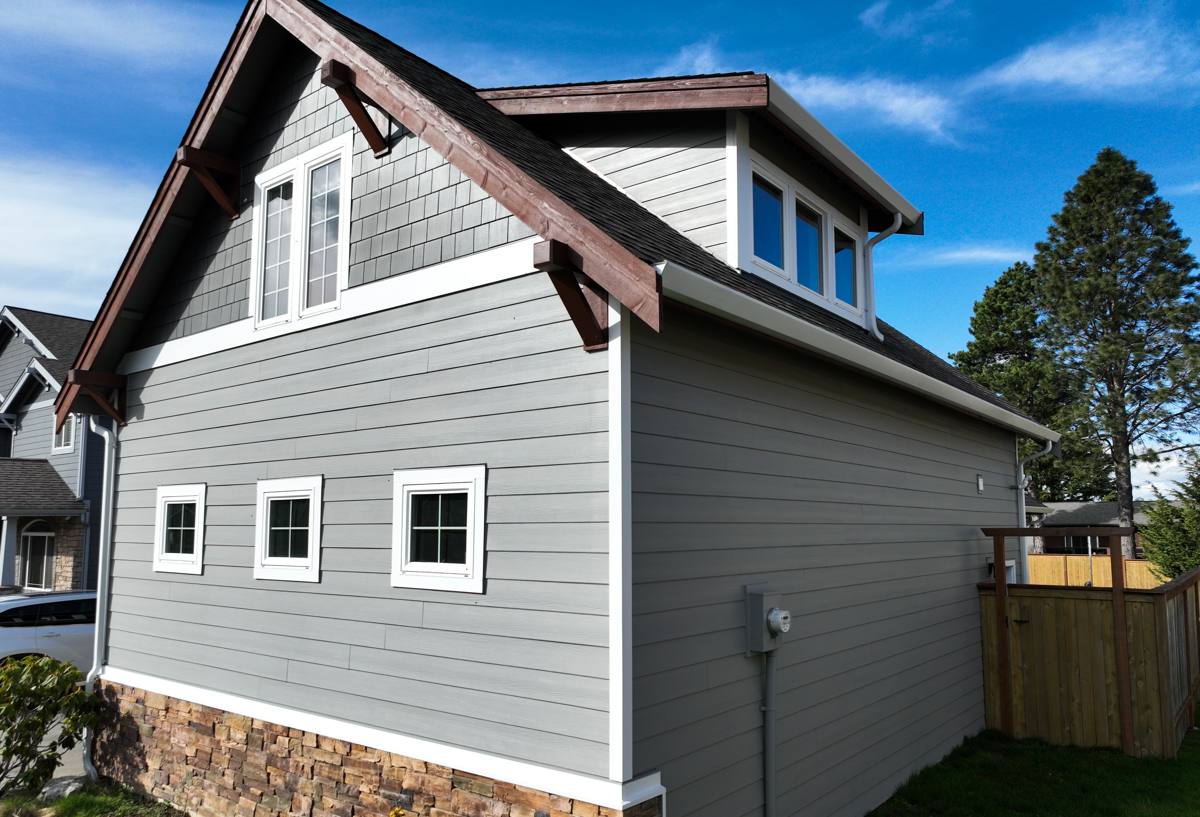
What Blaine's Climate Does to Exterior Siding
Salt Air and Corrosion
Proximity to saltwater means airborne salt settles on every exterior surface, not just the siding but fasteners, trim, and flashing too. Salt accelerates corrosion in lower-grade metal components and can degrade certain coatings and caulks faster than manufacturers' standard warranties anticipate. It's a slow, cumulative process — you won't see damage in year one, but by year eight or ten on an under-built product, the difference is obvious next to a comparable home with a properly engineered siding system.
Driving Rain and Wind Exposure
Blaine's open exposure to the water means wind-driven rain hits siding at an angle, not just straight down. That matters because it pushes moisture into laps, seams, and butt joints that a calmer inland location would rarely test. Siding systems that rely on tight seams and consistent caulking to stay watertight are more likely to show gaps, warping, or moisture intrusion where that wind-driven rain concentrates — typically upper stories, gable ends, and any wall facing the water.
Moss, Algae, and the Long Wet Season
Whatcom County's wet season runs long, and Blaine's marine air keeps humidity elevated even between rain events. That's ideal growing conditions for moss and algae on north-facing walls, under eaves, and anywhere airflow is limited. Siding that absorbs and holds moisture gives moss more to grab onto and stays damp longer between dry spells, which speeds up surface breakdown and paint failure.
Why We Don't Install Vinyl, LP SmartSide, or Wood Siding Here
Every siding product on the market gets something right, and we're not going to pretend otherwise. Vinyl is inexpensive and low-maintenance in mild climates. LP SmartSide and other engineered wood products offer a wood-look at a lower cost than real wood. Cedar and primed wood have genuine aesthetic appeal. But a coastal, wet-climate town like Blaine tests every weakness in those products at once.
- Vinyl siding expands and contracts more than fiber cement in temperature swings, and salt air can dull and chalk its finish faster than inland installations. It also isn't a moisture management system on its own — it relies heavily on correct water-resistive barrier installation behind it, and any gap becomes a long-term problem in this rainfall pattern.
- LP SmartSide and other engineered wood products use wood strand or wood fiber substrates that are vulnerable to swelling and rot if the factory-applied coating is compromised at a cut edge, fastener hole, or joint. In a climate with this much sustained moisture exposure, maintaining that coating perfectly for the life of the siding is a real burden on the homeowner.
- Cedar and primed wood siding require the most ongoing maintenance of any option — recoating, caulking, and moisture monitoring on a schedule most homeowners don't want to keep up with, especially somewhere as consistently damp as Blaine.
We made the call to standardize on one product line because we'd rather stand fully behind a system we trust in this specific climate than offer several options and let homeowners discover the trade-offs themselves five or ten years in.
Why James Hardie Fiber Cement Fits Blaine Homes
James Hardie siding is a cement-based composite — not wood, not vinyl — which changes its relationship with moisture and salt air fundamentally. It doesn't swell, rot, or feed moss growth the way organic materials can, and it doesn't chalk or degrade under UV and salt exposure the way some vinyl formulations do over time. Hardie also engineers specific product lines for different climate zones, and homes on this stretch of coast qualify for their HZ5 line, designed for regions with significant moisture and freeze-thaw cycling.
ColorPlus Factory Finish
Most Hardie siding we install uses the ColorPlus finish — a baked-on, factory-applied color coat that's more consistent and more UV- and moisture-resistant than field-applied paint. It also comes backed by its own finish warranty separate from the substrate warranty, so you're not relying on a painter's touch-up job to protect the material underneath.
Non-Combustible Material
Fiber cement is non-combustible, which matters for insurance considerations and for homeowners thinking about wildfire-adjacent risk even in a wetter part of the state. It's a material property vinyl and wood-based sidings simply can't match.
Transferable, Long-Term Warranty
James Hardie backs its siding with a strong limited warranty that's transferable to a new owner if you sell — a detail that adds real value if you ever list the home, since a documented, professionally installed Hardie exterior is a selling point buyers in this area increasingly recognize.
How We Approach a Siding Project in Blaine
Correct installation matters more than the product itself in a climate like this. Fiber cement performs the way it's designed to only when the water-resistive barrier, flashing, fastening pattern, and clearances are done to manufacturer spec — and that's true whether the home is a block from the water or further inland toward Ferndale.
- On-site assessment of your current siding, sheathing condition, and any moisture damage already present, particularly on water-facing and north-facing walls.
- Review of trim, window, and flashing details specific to your home's exposure — coastal wind-driven rain calls for closer attention to lap joints and butt seams than a sheltered inland lot.
- Installation to James Hardie's published specifications, including correct fastener type and spacing to resist both wind load and salt-air corrosion.
- Coordination with roofing, window, or deck work if you're tackling more than one exterior project at once — planning flashing and drainage across all of it together avoids the gaps that show up when different trades work in isolation.
Siding, Roofing, Windows, and Decks — One Local Crew
Most of the moisture problems we find on Blaine homes aren't isolated to the siding. A roof that's shedding water incorrectly, a window that's not flashed properly, or a deck ledger board that's trapping moisture against the house can all undermine even a well-installed siding system. We handle siding, roofing, windows, and decks as one crew, which means we're looking at your home's whole exterior water management picture rather than one component in isolation. If your roof is due for attention at the same time as your siding, or your deck ledger is showing rot where it meets the house, we'll flag it — that's often cheaper and more effective to address together than to patch separately over a few years.
What Siding Replacement Typically Involves
| Factor | What It Affects |
|---|---|
| Home size and complexity | Square footage, number of stories, and trim detail all drive labor and material scope |
| Current siding removal | Tear-off of old vinyl, wood, or damaged siding adds time versus installing over sound sheathing |
| Sheathing and moisture repair | Any rot or water damage found underneath needs repair before new siding goes on |
| Product line and finish | HardiePlank, HardiePanel, or HardieShingle, plus ColorPlus vs. field-painted, affect material cost |
| Trim and flashing detail work | Windows, corners, and water-facing walls need extra attention in this climate |
Signs Your Blaine Home May Need New Siding
- Visible moss or algae buildup that returns quickly after cleaning, especially on north or water-facing walls
- Cracking, warping, or soft spots you can press in with light pressure
- Paint that's peeling or bubbling rather than just fading evenly
- Rising heating costs that may point to compromised insulation behind failing siding
- Visible gaps at seams, corners, or around window and door trim
- Rust staining or streaking near fasteners or metal flashing
Getting Started
If you're noticing any of the signs above, or you're just planning ahead for a home on this stretch of coast, we're glad to take a look. We'll walk your exterior, point out anything we see — moisture concerns, aging siding, roof or window issues that connect to the same problem — and give you a straightforward assessment of what James Hardie siding would involve for your specific home. There's no pressure and no obligation. Reach out for a free estimate using the form below.