 Ferndale
 Siding in a Coastal, Wet-Season Climate
Bellingham sits close enough to Bellingham Bay and the Salish Sea that salt-laden air is a real factor on exterior materials, especially on homes with any exposure toward the water or open to prevailing winds. Add in the driving, wind-pushed rain that comes through Whatcom County for much of the year, and a moss and algae season that can run from fall through spring, and you have a climate that is genuinely hard on siding. This isn't a place where you can install whatever product is cheapest and expect it to look good in ten years. It's a place where the material and the installation both have to be right from day one.
We're based in Ferndale and work throughout this part of Whatcom County, including Bellingham. That local footprint matters here more than it does in drier climates, because the failure patterns we see on wet-side siding jobs are specific to this region, and knowing what to look for before it becomes a problem is most of the job.
Why We Standardized on James Hardie Fiber Cement
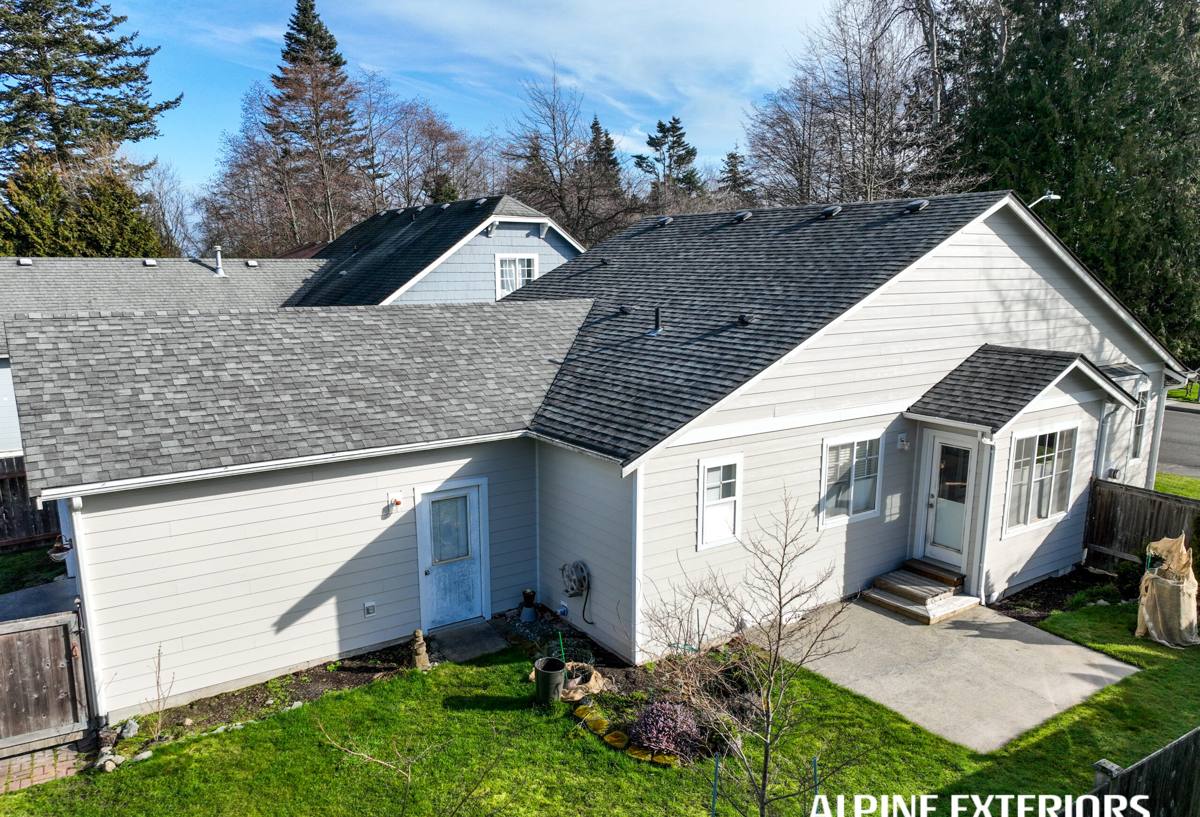
We install James Hardie fiber cement siding exclusively. We don't install vinyl, LP SmartSide, Cemplank, Allura, or unfinished wood siding like primed spruce or cedar. That's not a marketing position — it's a decision built around what actually holds up in this climate over decades, not just the first few years after installation.
Built for This Kind of Wet, HZ5 Engineering
Hardie manufactures its siding in climate-specific formulations, and the HZ5 line is engineered for regions like ours that see sustained moisture, freeze-thaw cycling, and heavy moss and mildew pressure. Fiber cement itself doesn't absorb and swell the way engineered wood products can, and it doesn't have the seams and expansion behavior that vinyl relies on to survive temperature swings. In a climate where siding stays damp for long stretches of the year, how a material handles sustained moisture exposure — not just an occasional rainstorm — is the whole ballgame.
Factory Finish vs. Field-Applied Paint
Hardie's ColorPlus finish is baked on at the factory under controlled conditions, which gives it far more consistent coverage and adhesion than paint applied on-site after installation, especially when that on-site painting happens during a narrow weather window between rain events. A factory finish also resists the fading and streaking that shows up fastest on south- and west-facing walls exposed to sun and wind-driven rain. For homeowners, that translates into a longer stretch before repainting is even a conversation.
Non-Combustible Composition
Fiber cement is non-combustible, which matters for insurance conversations and for wildfire-adjacent risk more broadly across Western Washington in recent summers. It's not the primary reason we chose Hardie for a wet coastal market like Bellingham, but it's a real, tangible benefit that comes with the product.
What We Actually See on Bellingham Homes
A lot of our Bellingham work isn't new construction — it's replacing siding that failed earlier than it should have. The common threads we run into:
- Vinyl siding that's warped, buckled, or gapped at the seams after years of temperature cycling and wind exposure
- Engineered wood siding with soft, swollen bottom edges where moisture wicked in at butt joints or ground contact points
- Moss and algae staining that's worked into a porous or poorly finished surface and won't fully wash off anymore
- Caulk joints that failed years before the siding itself did, letting water behind the cladding
- Trim and flashing details that were never properly integrated with the siding, creating entry points for water even though the siding panels themselves looked fine
Most of these aren't failures of a single bad product — they're usually a combination of material limitations and installation shortcuts that don't show up until the second or third wet season. That's exactly the pattern we're trying to avoid by controlling both what we install and how we install it.
Full Exterior Work: Siding, Roofing, Windows, and Decks
Siding doesn't function in isolation. On a coastal, high-rainfall property, siding, roofing, window flashing, and even deck ledger connections all interact at the points where water is trying to get in. We handle all four so those transitions are addressed as one system rather than four separate contractors each assuming someone else covered the gap.
Roofing
Roof-to-wall flashing and kick-out flashing at roof lines are two of the most common places we find water damage tracing back into wall assemblies. When we're also doing the roofing, those transitions get built correctly the first time.
Windows
Window flashing integration is one of the highest-risk details on any wet-climate exterior. Improperly flashed windows are a frequent source of hidden rot behind siding that otherwise looks fine from the outside, which is why we treat window replacement and siding work as connected scopes, not separate line items.
Decks
Ledger board attachment and any siding that meets a deck surface need careful water management, since that's a spot where standing moisture and debris collect. We build and repair decks with that same climate in mind.
Installation Details That Matter Here
James Hardie publishes specific installation requirements — fastener spacing, clearances, caulking, and flashing details — and following them to spec is what actually determines whether the product performs for its expected lifespan. Cutting corners on these details is common in the industry because they don't affect how the job looks on install day; they only show up years later.
| Installation Detail | Why It Matters in Bellingham's Climate |
|---|---|
| Proper clearance above rooflines, decks, and grade | Prevents standing water and wicking during our extended wet season |
| Correct fastener type and spacing | Keeps panels secure through wind-driven rain events and seasonal wood movement |
| Rain screen / drainage plane behind siding | Lets incidental moisture drain and dry rather than sitting against the wall assembly |
| Sealed and properly lapped joints | Reduces entry points that lead to hidden moisture damage over time |
| Correct caulking at trim and penetrations | Slows the caulk failure that's often the first crack in an otherwise sound system |
Why a Local Crew Is Worth Something Here
A crew that works this specific area regularly builds a feel for which walls take the worst weather exposure, which older Bellingham and Ferndale-area homes tend to have particular flashing or moisture issues, and how the moss season actually behaves on different siding orientations year over year. That's not something you get from a general regional contractor who treats every job the same regardless of where it sits relative to the water and prevailing wind. Being local also means we're available for a warranty callback or a follow-up question without a long drive, which matters more once the job is finished and you're the one living with it.
What Drives Cost on a Bellingham Siding Project
| Factor | Why It Affects Price |
|---|---|
| Home size and wall complexity | More corners, dormers, and transitions mean more cutting, flashing, and labor time |
| Extent of existing damage | Rot or sheathing repair found once old siding comes off adds scope beyond the siding itself |
| Siding profile and trim selection | Lap width, panel vs. board-and-batten, and trim detailing all affect material and labor |
| Access and site conditions | Tight lots, second stories, or landscaping obstacles change staging and labor time |
| Combined scope with roofing, windows, or decks | Bundling work can reduce redundant setup costs versus separate projects done later |
We won't give you a number without seeing the house, but these are the variables that actually move a quote, and we'll walk through them with you honestly during an estimate.
A Simple Maintenance Checklist for This Climate
Whatever siding is currently on a Bellingham home, a few habits go a long way toward catching problems before they're expensive:
- Rinse siding once or twice a year to keep moss and algae from taking hold, especially on shaded or north-facing walls
- Walk the exterior each fall and check caulk joints around windows, doors, and trim for cracking or gaps
- Look for soft or discolored spots near ground level, deck ledgers, and roof-to-wall intersections
- Keep gutters clear so overflow isn't running down the siding face during heavy rain
- Trim back vegetation that keeps a wall surface shaded and damp longer than the rest of the house
Ready When You Are
If you're weighing a siding, roofing, window, or deck project on a Bellingham-area home, we're happy to come take a look and give you an honest, no-pressure estimate — including what we're seeing on your specific walls and what it would take to get it right for this climate. Fill out the form below and we'll get in touch.