 Ferndale
 Fiber Cement Siding, Sized to What Bellingham's Weather Actually Does
Bellingham sits close enough to Bellingham Bay and the Salish Sea that its exterior materials deal with a specific combination of stress most inland siding jobs never see: salt-tinged marine air, rain that arrives sideways as often as it falls straight down, and a moss season that can run most of the year on shaded or tree-covered walls. Fiber cement siding is a good match for that combination, but "fiber cement" covers a range of products and installation quality, and not every version of it, or every crew installing it, handles Bellingham's conditions the same way. This page is specifically about James Hardie fiber cement siding for Bellingham properties, what the material needs to do here, what a correct installation actually involves, and why it matters that the crew doing the work already knows this stretch of Whatcom County.
We're based in nearby Ferndale and work Bellingham regularly, which means the climate description below isn't theoretical for us. It's what we see on tear-offs, repair calls, and finished installs across both towns.
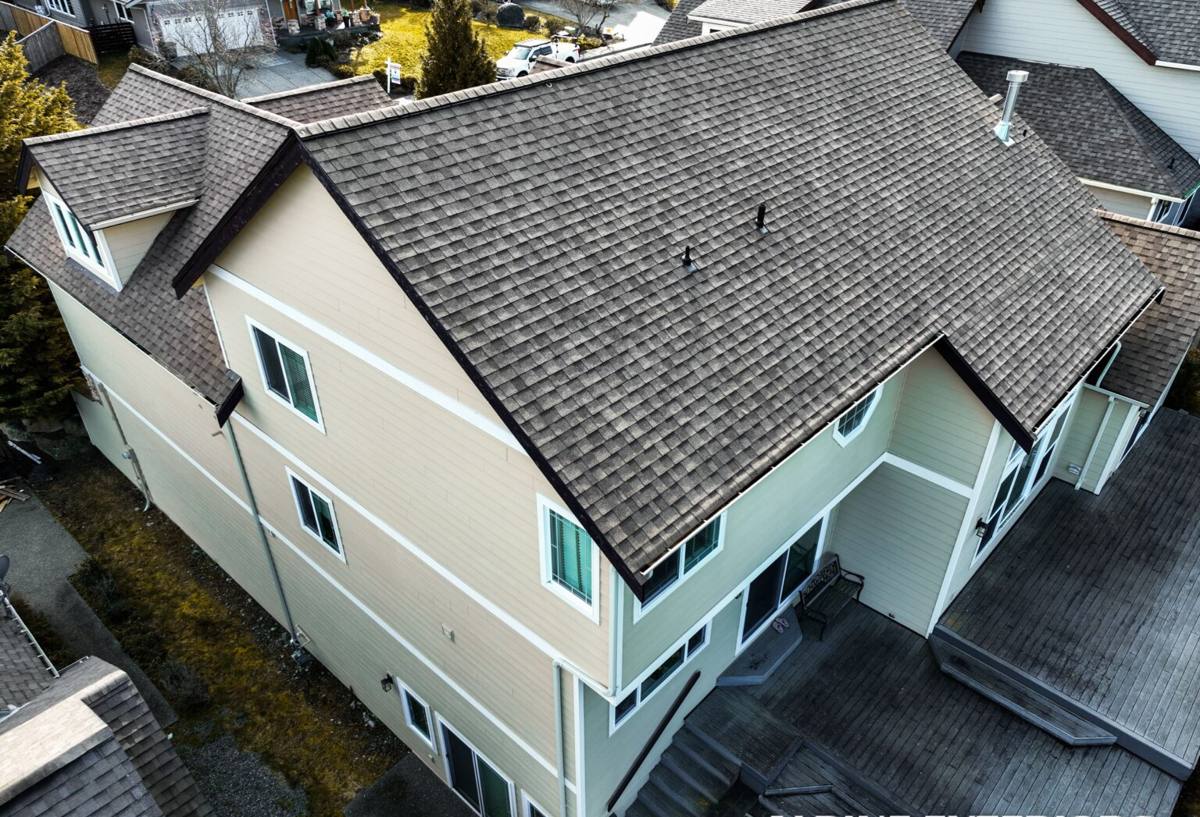
What Bellingham's Climate Asks of a Siding Material
Salt Air and Bay Exposure
Bellingham's setting on the bay means a steady presence of moisture-laden, salt-tinged air moving through the city, not just during storms. Over years, that kind of exposure is harder on fasteners, trim hardware, and lower-grade finishes than a drier inland climate would be. It's a slow, cumulative kind of wear, which is exactly why it's easy to underestimate when you're choosing a siding product based on a sample board rather than its long-term behavior.
Wind-Driven Rain
Rain in this part of Whatcom County frequently comes in at an angle, pushed by wind off the water rather than falling straight down. That matters for fiber cement specifically because the material itself can be excellent and still let water in if the joints, laps, and flashing details weren't built to handle rain hitting a wall sideways. A siding system's real performance here is less about the panel and more about how the whole assembly, panel, house wrap, and flashing, manages water that's being driven into seams from an angle.
A Long Moss and Mildew Season
Mild temperatures, consistent dampness, and tree cover add up to extended moss and mildew growth on north-facing and shaded walls across Bellingham, often for most of the calendar year. Fiber cement's inorganic core doesn't feed that growth the way an organic material can, but a compromised finish or a joint that's holding moisture against the substrate still gives moss and mildew something to grow on. Correct detailing at those joints is what keeps that from becoming a recurring problem.
Why James Hardie Specifically, Not Fiber Cement in General
We install James Hardie fiber cement exclusively, not a generic "fiber cement" spec. The distinction matters because Hardie's HZ5 product line is engineered for regions with sustained moisture exposure and freeze-thaw cycling, which is a closer match to Bellingham's bay-influenced climate than a formulation built for a national average. Hardie's ColorPlus finish is baked onto the board at the factory under controlled conditions, rather than painted on site, which gives it meaningfully better resistance to fading and moisture intrusion than field-applied paint has to work against salt air and UV exposure year after year. Hardie also backs its products with a long, transferable warranty, provided the installation follows its specified details, which is a real consideration on a coastal property where a homeowner wants confidence the material will still be performing a decade or two out.
We don't install LP SmartSide, vinyl, Cemplank, Allura, primed spruce, or cedar. Those are legitimate products and other contractors use them well. We made a professional decision to standardize on one system we trust completely for this climate rather than offer cheaper alternatives whose maintenance burden or moisture sensitivity tends to show up a few years down the road, after the homeowner has already moved on to other projects and stopped watching the walls closely.
What a Correct Fiber Cement Installation Involves
Buying the right material is only half the job. A James Hardie installation performs the way it's engineered to only when several details are handled correctly and handled together, not as separate checkbox steps:
- Fastening patterns that match Hardie's specification for the specific product and exposure, not a generic nailing schedule
- Proper clearance from grade, roofline, and any horizontal surface where standing water or splash-back could reach the bottom edge
- Joints and laps that are cut, sealed, and lapped in the direction that sheds wind-driven rain rather than catching it
- House wrap and flashing integrated as one continuous water-management system, not installed as isolated steps that happen to sit next to each other
- Caulking and sealant used at the specific points Hardie's install guide calls for, and not as a substitute for proper flashing elsewhere
Rushed or corner-cut installation is one of the most common reasons a genuinely good siding product ends up with a bad reputation on a specific house. We treat these details with the same seriousness as the material choice itself, because a fiber cement wall that's installed casually can still develop moisture problems in this climate, even with the right product on it.
How We Approach a Bellingham Fiber Cement Job
We start by walking the property and assessing the existing wall assembly, not just measuring square footage. That includes checking for soft spots, moisture staining, and signs of trapped water behind the current siding, since those findings change the real scope of the job. From there we talk through tear-off versus overlay, confirm substrate condition once the old siding is off, install the Hardie system to spec with the fastening, clearance, and flashing details above, and walk the finished job with you before we consider it done. If tear-off reveals rot or moisture damage in the sheathing, we tell you plainly what we found and what it takes to fix it correctly, rather than siding over a problem that's still there underneath.
Repair or Full Replacement?
Not every Bellingham siding issue means a full re-side. Isolated impact damage, a section that failed around a window or door, or trim that's come loose can often be repaired and matched into existing Hardie siding without redoing the whole house. But when moisture has clearly been tracking behind the wall for a while, or the existing siding is an older material that's simply reached the end of its service life, a patch usually just delays a bigger job by a year or two. Part of our job on the initial visit is telling you honestly which situation you're actually in, even when the honest answer is smaller and cheaper than a full replacement.
Fiber Cement Cost Factors for Bellingham Homes
| Factor | What It Affects | Why It Matters in Bellingham |
|---|---|---|
| Tear-off vs. overlay | Labor scope and substrate access | Tear-off exposes hidden moisture damage that's common under decades-old siding in this climate |
| Substrate condition | Repair cost before new siding goes on | Years of trapped moisture behind failing siding can rot sheathing before it's ever visible from outside |
| Home age and wall complexity | Total material and labor | Bellingham's older hillside homes often have more dormers, trim, and roof intersections where wind-driven rain works its way in |
| Trim and ColorPlus selection | Material cost and finish longevity | Factory finishes hold up longer against salt air and UV exposure than field-applied paint |
| Site access and terrain | Labor time and equipment needs | Sloped lots and mature tree cover common in Bellingham neighborhoods can add staging and setup time |
Real numbers depend on the specific house and what tear-off actually reveals, which is why we walk the property before quoting instead of pricing off square footage alone.
Signs Your Bellingham Home's Siding Needs Attention
- Moss or dark staining that returns quickly after cleaning, especially on shaded or north-facing walls
- Soft or spongy siding near the base of the wall or around window and door trim
- Peeling paint, bubbling, or visible warping on existing siding boards
- Cracked, chipped, or missing sections after a windstorm off the bay
- Visible gaps at seams, corners, or trim joints where water can track in
- A rising heating bill that may point to a wall assembly that's no longer sealing properly
Why a Ferndale-Based Crew Working Bellingham Matters
A crew that already works this stretch of Whatcom County regularly sees how salt air, wind-driven rain, and moss actually behave on real houses over a full year, not just how a product performs on a spec sheet. That translates into practical decisions on install day: which wall orientations stay wet longest, where extra flashing attention genuinely pays off, and which shortcuts aren't worth taking even though they'd save an hour. Bellingham's mix of bay-facing lots, hillside terrain, and older housing stock isn't identical to Ferndale's more open, rural-edge properties, and a crew with regular hands-on experience in both places treats each home's actual exposure differently instead of applying one generic approach to every job.
Being close by also means we're not a one-time crew that disappears after the invoice clears. If a question comes up two years after installation, or a storm does something unexpected to a section of trim, we're a short drive away, not a call center routing you to whoever's available.
Roofing, Windows, and Decks Alongside Your Siding
Siding problems in Bellingham rarely start with the siding itself. A leaking roof valley, a window that was flashed incorrectly, or a deck ledger board trapping moisture against the house can all surface as siding damage even though the siding is just where the water finally shows itself. Because we also handle roofing, windows, and decks, we can look at a Bellingham property as one connected exterior system and trace a problem back to where it actually started, rather than installing new fiber cement over a leak that's still active underneath.
If your Bellingham home needs new fiber cement siding, a repair, or just a straight answer about what's actually going on behind an aging wall, we're glad to take a look. Reach out using the form below to schedule a free, no-pressure estimate.