 Ferndale
 Life on Lummi Island: What Your Home's Exterior Is Up Against
Lummi Island sits out in the Salish Sea, and that location is exactly what makes it such a beautiful place to live — and exactly what makes it a tougher environment for a home's exterior than most of Whatcom County. Water surrounds the island on every side, which means salt-laden air, near-constant marine humidity, and weather that arrives with more force and less warning than it does a few miles inland in Ferndale or Bellingham.
If you own a home on Lummi Island, you've probably already noticed the difference: paint fades faster, metal hardware corrodes sooner, and anything with a seam or a weak spot tends to find trouble quicker than it would on the mainland. None of that is a reason to avoid the island — it's just a reason to be deliberate about what materials go on your house and how they're installed.
Salt Air and Corrosion
Salt-laden air is persistent. It settles into every crevice, works into fasteners, and slowly breaks down finishes that aren't built to resist it. Over years, this shows up as rust streaking on trim, pitting on lower-grade metal flashing, and paint that chalks and peels well before its rated lifespan. Materials and fasteners chosen for salt exposure hold up; materials chosen for a typical inland lot often don't.
Driving Rain and Wind-Driven Moisture
Whatcom County gets a lot of rain in general, but island exposure adds wind to the equation. Storms coming off the water don't just drop rain straight down — they drive it sideways, into siding laps, window frames, and anywhere a seal has started to fail. A house that would stay dry in a calm rain further inland can take on real moisture during a wind-driven storm on Lummi Island if the exterior envelope isn't tight.
A Long Moss and Mildew Season
Between the marine humidity and the tree cover common on the island, moss and mildew have a long growing season here — often close to year-round on north-facing walls and roof sections that don't get much sun. Siding and roofing that hold moisture at the surface, or that have seams and joints where organic growth can get a foothold, will show green and black staining faster than materials built to shed water cleanly.
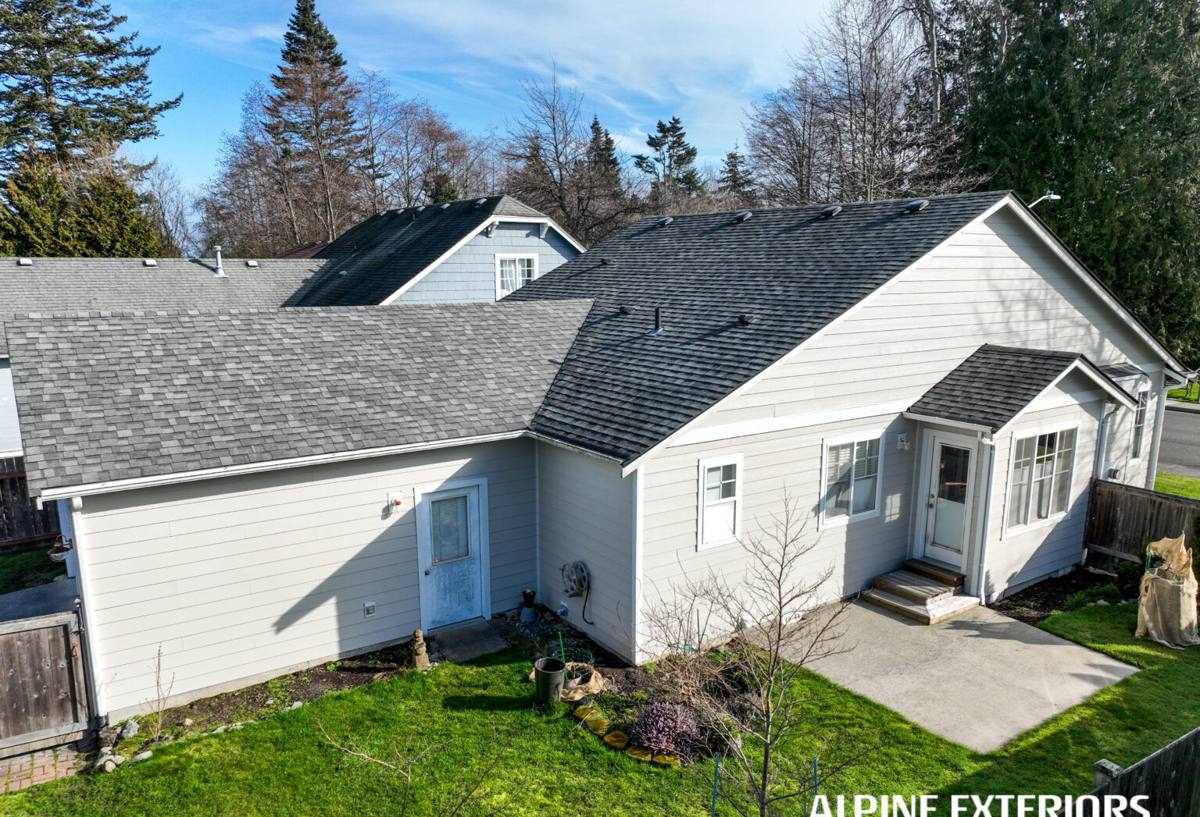
Why Siding Choice Matters More Here Than Inland
Every siding material behaves differently in a salt-air, high-moisture environment. Some hold up well with routine maintenance; others need more frequent attention or are simply more vulnerable to the specific stresses an island climate creates.
| Material | How It Handles Salt Air & Moisture | Maintenance Demand |
|---|---|---|
| Vinyl siding | Can become brittle and discolored with prolonged UV and salt exposure; seams are a moisture entry point | Low, but limited lifespan in harsh coastal exposure |
| Cedar (natural wood) | Absorbs moisture readily; prone to rot, warping, and moss growth without diligent upkeep | High — regular refinishing and inspection |
| Primed spruce / engineered wood composites | Vulnerable at cut edges and joints if moisture gets behind the coating | Moderate to high — coating integrity is critical |
| James Hardie fiber cement | Non-combustible, dimensionally stable, engineered finish resists fading and moisture intrusion | Low — periodic cleaning and inspection |
This isn't a knock on every homeowner's choice — plenty of people love the look of natural cedar, and vinyl has its place in mild climates. But on an island where salt, wind-driven rain, and moss all stack up against a home's exterior, we've made a professional decision about what we're willing to put our name behind.
Why We Install Only James Hardie Fiber Cement
We install James Hardie siding exclusively — no vinyl, no LP SmartSide, no Cemplank, no Allura, no primed spruce or cedar. That's a deliberate standard, not a limitation in what we're capable of installing.
James Hardie fiber cement is non-combustible, which matters on a wooded island where wildfire risk is part of the conversation for rural Pacific Northwest properties. It's also dimensionally stable — it won't swell, warp, or rot the way wood-based products can when they take on moisture repeatedly. The ColorPlus factory finish is baked on under controlled conditions, which gives it far better fade and moisture resistance than field-applied paint, and it comes with a strong, transferable manufacturer warranty that follows the home even if it's sold.
Hardie's HZ5 product line is specifically engineered for climates with more moisture and temperature swing — exactly the profile of a Salish Sea island. For a home that's going to spend decades facing salt air and driving rain, we think that engineering matters more than a lower sticker price up front.
Roofing for Island Exposure
Salt air and wind don't just affect siding — they're hard on roofing too. Flashing, fasteners, and underlayment all take more abuse near the water than they do a few miles inland. On Lummi Island, we pay close attention to the details that keep water out during wind-driven storms: proper flashing at valleys and penetrations, correctly lapped underlayment, and fastener choices that resist corrosion rather than staining and weakening over time. A roof that's watertight in a light rain can still leak in a sideways storm if those details were rushed.
Windows: Sealing Out Wind-Driven Rain
Window failures on the island are rarely about the glass itself — they're almost always about the seal around the frame. Wind-driven rain finds any gap in flashing or caulking and pushes moisture into the wall cavity, where it can sit and cause rot long before it's visible from inside the house. When we replace windows here, proper flashing integration with the siding and weather-resistant barrier is just as important as the window unit itself. A great window installed with a sloppy seal will still leak.
Decks Built for Salt Air and Moisture
Decks on Lummi Island face a similar set of pressures: metal hardware exposed to salt air, wood or composite decking that sits under near-constant moisture for parts of the year, and ledger connections that need to stay watertight where the deck meets the house. We build with corrosion-resistant fasteners and hardware, proper flashing at the ledger board, and materials chosen to handle sustained moisture exposure rather than just look good on installation day.
Why a Local Crew Matters on Lummi Island
Working on the island isn't the same as working a standard mainland job. Ferry scheduling shapes how a project day is planned — materials, crew, and equipment all need to be staged and timed around the sailing schedule, not just loaded onto a truck and driven over. A crew unfamiliar with that logistics reality can turn a straightforward project into a frustrating one, with wasted trips or delayed timelines.
Being based out of Ferndale, we're close enough to the island to plan around the ferry efficiently, and we've worked in enough of Whatcom County's coastal microclimates to know that a house facing open water needs a different approach than one tucked into a more sheltered inland lot. That local familiarity — not just with the island itself, but with how Whatcom County's marine weather behaves through the seasons — shapes decisions on materials, sequencing, and detailing before the first piece of siding ever goes up.
What to Expect From an Exterior Project Here
- An on-site assessment that accounts for your home's specific exposure — direction it faces, tree cover, proximity to the water
- A project plan and material delivery schedule built around ferry timing, so work isn't stalled waiting on materials
- Corrosion-resistant fasteners and hardware used throughout, not just on the most exposed elevations
- Careful attention to flashing and sealing at every penetration, seam, and transition
- A clear, honest explanation of why we recommend James Hardie siding for your specific situation — not a sales pitch, a professional recommendation
- A written estimate before any work begins, with no pressure to commit on the spot
Maintenance Checklist for Island Homes
Whatever your siding, roofing, and decking are made of, a little seasonal attention goes a long way on Lummi Island. A few things worth checking regularly:
- Rinse salt buildup off siding and railings a couple of times a year, especially on ocean-facing walls
- Check caulking and sealant around windows and doors annually for cracking or gaps
- Look for moss or algae starting to establish on north-facing roof sections and shaded siding, and address it early
- Inspect deck hardware and fasteners for early signs of rust or corrosion
- Keep gutters clear so wind-driven rain has somewhere to go rather than backing up under roofing or siding
Staying ahead of small issues — a failing seal, an early patch of moss, a loose piece of flashing — is far cheaper than fixing what happens if they're ignored through a few more wet seasons.
Get a Free, No-Pressure Estimate
If you own a home on Lummi Island and you're weighing your options for siding, roofing, windows, or a deck, we're glad to come take a look and give you a straight answer about what your home actually needs. There's no obligation and no pressure — just an honest assessment from a crew that works this stretch of Whatcom County regularly. Use the form below to request your free estimate.