 Ferndale
 Building Along Birch Bay's Shoreline
Birch Bay sits right on the water in Whatcom County, and that changes what a house has to deal with year-round. Homes here range from older beach cottages that have been winterized into full-time residences to newer builds set back from the shore, and both face a version of the same problem: the exterior takes a beating from the bay itself. Salt-laden air moves inland with the wind, driving rain comes in sideways during winter storms, and the surrounding trees and shaded lots keep moisture around longer than homes further from the water. We're based out of Ferndale, a short drive from Birch Bay, and we've built our siding, roofing, window, and deck work around exactly this kind of coastal exposure.
A house a few blocks from the water ages differently than one fifteen minutes inland, even in the same county. Paint fails faster, fasteners corrode sooner, and wood trim that would last a decade elsewhere can start showing rot in half that time. None of that means Birch Bay is a bad place to own a home — it just means the exterior has to be chosen and installed with the coastline in mind, not treated like any other Whatcom County property.
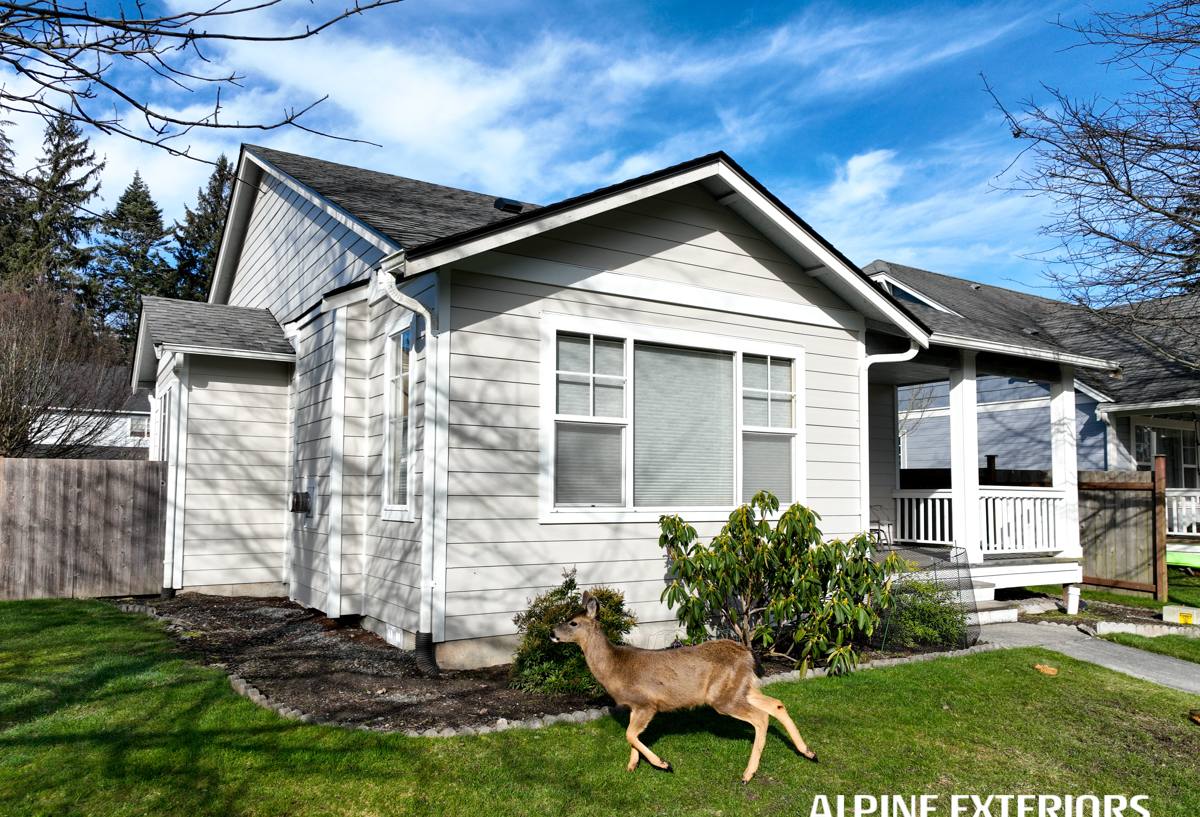
What Birch Bay's Climate Actually Does to a House
Salt Air and Corrosion
Airborne salt is the part of coastal living that's easy to underestimate. It doesn't just affect boats and docks — it settles on siding, trim, and any exposed metal fasteners, and it accelerates corrosion and finish breakdown over time. Cheaper fasteners and unprotected metal flashing are usually the first things to show it, followed by paint and caulking that dries out and cracks sooner than it would a few miles inland.
Driving Rain
Storms coming off the water tend to push rain sideways instead of straight down, which means it hits wall surfaces, window edges, and butt joints with real force — not just the roof. Siding systems and flashing details that work fine on a sheltered inland lot can let water in around Birch Bay if they weren't installed with wind-driven rain in mind. This is a big reason we pay close attention to house wrap overlap, flashing at every penetration, and proper caulking at trim joints on every job here.
Moss, Shade, and Long Wet Seasons
Whatcom County's wet season runs long, and Birch Bay's mix of waterfront exposure and tree-shaded inland lots means moisture lingers in different ways depending on where a house sits. Shaded roofs and north-facing walls stay damp longer, which is exactly what moss needs to take hold. Moss holds moisture against roofing and siding surfaces, and over years that trapped dampness is what actually causes damage — not the moss itself, but what it lets sit against the building.
Wind Exposure
Open shoreline lots see more direct wind than sheltered inland ones, which raises the stakes on how well siding, trim, and roofing are actually fastened down. It's not usually a single storm that causes a problem — it's fasteners or seams that were marginal from day one finally giving way after repeated wind loading over several seasons.
Why We Only Install James Hardie Fiber Cement Siding
For a stretch of coastline like Birch Bay, the siding material matters as much as the installation. We install James Hardie fiber cement exclusively — we don't install vinyl, LP SmartSide, Cemplank, Allura, or unprimed wood siding like spruce or cedar. That's a deliberate standard, not a sales preference, and it comes down to how each of those materials actually performs against salt air, driving rain, and years of damp shade.
What Rules Out the Alternatives
- Vinyl siding can warp or become brittle under UV exposure and temperature swings, and its seams and J-channels give wind-driven rain more places to work its way behind the cladding over time.
- LP SmartSide and other engineered wood products are wood-based, which means they depend heavily on intact factory coating and careful field sealing at every cut edge — a tough standard to hold on an exposed coastal lot for the life of the siding.
- Cemplank and Allura are also fiber cement, and reasonable products in their own right, but we've standardized on one manufacturer's system, warranty structure, and factory finish so every job we do meets one consistent standard, not a different set of specs per product line.
- Unprimed cedar or spruce looks great going up, but bare wood siding needs ongoing refinishing to hold up against salt air and rain, and that maintenance burden only grows on a shoreline property.
James Hardie fiber cement is non-combustible, dimensionally stable, and comes with a factory-applied ColorPlus finish that's baked on and backs it with a stronger, more consistent warranty than field-painted finishes. Hardie's HZ5 product line in particular is engineered for exactly the kind of moisture and climate exposure a place like Birch Bay sees. It costs more up front than vinyl, but it's a one-time decision instead of a recurring maintenance line item.
How We Approach a Birch Bay Siding Job
Assessment Before Anything Else
We start by actually looking at what's happening at the wall assembly, not just the surface. That means checking existing house wrap or building paper condition, looking for soft spots around windows and doors, and checking flashing at every roof-to-wall transition and penetration. On a coastal property, problems are often hiding behind siding that still looks fine from the yard.
Installation Details That Matter Here
Fastener choice and spacing, proper rain-screen or drainage gap where the assembly calls for it, correctly lapped and sealed house wrap, and careful flashing at windows, doors, and any deck or roof intersection — these are the details that separate siding that holds up on the water from siding that fails early. We follow James Hardie's published installation specifications closely, because doing so is also what keeps the manufacturer's warranty intact.
| Factor | Inland Whatcom County Home | Birch Bay / Shoreline Home |
|---|---|---|
| Salt exposure | Minimal | Ongoing, airborne year-round |
| Wind-driven rain | Occasional | Frequent, especially in storm season |
| Moss/moisture risk | Depends on shade | Elevated on shaded and north-facing walls |
| Fastener corrosion risk | Lower | Higher — corrosion-resistant fasteners matter more |
| Recommended siding | James Hardie fiber cement | James Hardie HZ5, detailed for coastal exposure |
Roofing, Windows, and Decks Around the Same Exposure
Siding doesn't work in isolation — the roof, windows, and any deck or porch structure all deal with the same salt air and driving rain, and they all need to work together as one system. Roofing near the water benefits from attention to flashing, ventilation, and moss-resistant maintenance practices given the shaded, damp conditions many Birch Bay lots have. Windows facing the bay need solid flashing and sealing at the rough opening, since that's a common entry point for wind-driven rain if it's rushed. Decks exposed to salt air and rain need fasteners and structural hardware rated for the exposure, plus proper drainage so water doesn't sit against ledger boards or framing. We handle all four — siding, roofing, windows, and decks — because treating them as one connected exterior system, rather than four separate projects, is what actually keeps water out.
Why a Local Crew Matters Here
Birch Bay isn't generic coastal Washington — it's a specific stretch of Whatcom County shoreline with its own wind patterns, lot orientations, and seasonal rhythms, and a crew that works in this area regularly picks up on that over time. We're based in Ferndale, close enough to be on-site quickly and to know the difference between a waterfront lot that takes wind straight off the bay and an inland Birch Bay property a mile back that deals more with shade and moss than salt spray. That local familiarity shapes real decisions on a job: how much flashing overlap to use, where a rain-screen gap earns its keep, and which details are worth extra time given what this specific stretch of coast throws at a house.
What to Check Before You Hire
- Ask whether the contractor is a manufacturer-certified James Hardie installer, not just someone who has installed it occasionally
- Confirm they'll pull any required permits and are properly licensed and insured to work in Whatcom County
- Ask specifically how they handle flashing and house wrap at windows, doors, and roof-to-wall intersections
- Get a clear, written scope — siding, trim, flashing, and any roofing, window, or deck work spelled out separately
- Ask how they account for wind-driven rain and salt exposure specifically, not just general siding installation practices
- Check that fastener and flashing materials specified are corrosion-resistant, not standard inland-grade hardware
Getting Started
If you're dealing with siding that's showing its age, a roof with a persistent moss problem, windows that let in drafts or moisture, or a deck that needs attention, we're happy to take a look and walk through what we're seeing and why. We offer a free, no-pressure estimate for Birch Bay homeowners — use the form below to get in touch and we'll set up a time to come out.