 Ferndale
 Siding Built for Fairhaven's Coastal Conditions
Homes along the Fairhaven area sit close enough to the water that salt air is simply part of daily life. Combine that with the driving rain that rolls in off the Salish Sea for much of the year, plus a moss and algae season that can stretch from fall through spring, and you have one of the tougher exterior environments in Whatcom County. Siding here doesn't just need to look good on install day — it needs to hold up to years of wind-driven moisture, salt exposure, and shade-grown organic growth without warping, swelling, or losing its finish.
We're a local crew based out of the Ferndale area, and Fairhaven is well within our regular service territory. We've seen firsthand what this climate does to the wrong siding material over five, ten, and fifteen years, and it's shaped a hard rule for our business: we install James Hardie fiber cement siding, and nothing else. This page explains why, and what that means for a Fairhaven home specifically.
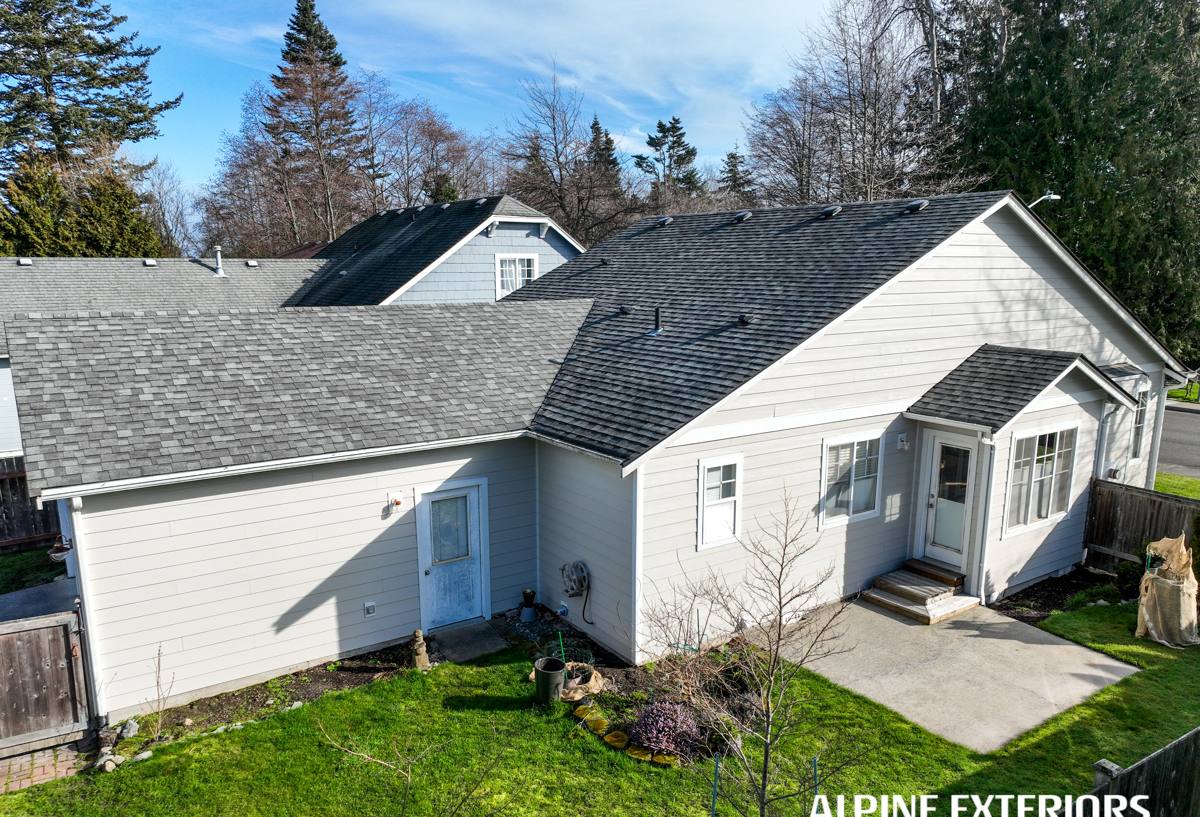
What Salt Air and Driving Rain Actually Do to a Home's Exterior
Salt Air
Airborne salt is corrosive and hygroscopic — it pulls moisture out of the air and holds it against whatever surface it lands on. On metal fasteners and trim, that means accelerated corrosion. On wood-based siding products, it means the material's surface stays damp longer than it would a few miles inland, which speeds up rot, checking, and paint failure.
Driving Rain
Rain that comes in sideways, rather than falling straight down, finds its way into laps, seams, and fastener penetrations that a product designed for calmer climates was never tested against. Over time, water intrusion behind siding is one of the most common — and most expensive — problems we get called out to diagnose, usually after it's already caused sheathing or framing damage that isn't visible from the outside.
Moss and Algae
Whatcom County's long, cool, damp stretches of the year are ideal growing conditions for moss and algae, especially on north-facing walls, under eaves, and anywhere tree cover keeps a wall shaded and slow to dry. Organic growth on siding isn't just cosmetic — it holds moisture against the surface and, on some materials, works its way into seams and joints.
How Common Siding Materials Hold Up in This Climate
We get asked a lot why we don't offer more options. The honest answer is that we've watched these materials perform — or not — in exactly this kind of coastal, high-moisture environment, and we're not willing to install something we don't trust to last on a customer's home.
| Material | Moisture Behavior | Maintenance Burden | Typical Real-World Fit for Fairhaven |
|---|---|---|---|
| Vinyl | Doesn't rot, but seams and edges can allow water behind the panel with nowhere to dry out; can warp or crack in temperature swings and wind exposure | Low, but hides problems behind it rather than resisting them | Weak — poor at coastal wind and driving-rain resistance, and repairs rarely match faded panels |
| LP SmartSide (engineered wood) | Treated to resist moisture, but still a wood-based product — edge and cut-end sealing is critical and easy to miss | Moderate — needs caulking and paint upkeep to stay watertight | Sensitive — installation quality matters enormously, and salt-air exposure raises the stakes on any gap |
| Cedar | Naturally rot-resistant when new, but absorbs and releases moisture constantly, especially in shaded, damp spots | High — needs regular refinishing, staining, or sealing | Beautiful but high-upkeep — moss and algae take hold quickly in shaded coastal microclimates |
| Primed Spruce | Bare wood under a factory primer coat; performs only as well as the field paint job applied after install | High — repaint cycles come faster in salt air and constant damp | Weak — the least forgiving option in this climate |
| James Hardie Fiber Cement | Engineered cement-based composition that doesn't absorb water the way wood does, doesn't rot, and isn't a food source for moss or fungus | Low — factory-applied finish holds up for years without repainting | Strong — built and warrantied for exactly this kind of wet, coastal exposure |
Why We Install Only James Hardie Fiber Cement
James Hardie's fiber cement siding is made from cement, sand, and cellulose fibers, engineered to resist moisture, hold paint far longer than wood-based products, and stand up to wind-driven rain without swelling or delaminating. A few specifics matter for a home in this part of Whatcom County:
- Non-combustible core — fiber cement won't ignite or contribute fuel to a fire, unlike wood-based siding products.
- ColorPlus factory finish — the color is baked on at the factory under controlled conditions, rather than field-painted on-site, which gives a more consistent, longer-lasting finish that resists fading and chipping.
- Climate-engineered HZ product lines — Hardie manufactures different formulations for different climate zones, accounting for moisture and temperature exposure rather than using one generic product everywhere.
- A strong, transferable warranty — backed by the manufacturer, and structured to carry over to a new owner if the home is sold, which matters for resale in a market like this one.
None of that matters, though, if the installation is sloppy. Fiber cement is a precise product — it needs correct fastener placement, proper clearances, and attention to flashing and joints. We install to Hardie's specifications because that's what the warranty requires and what actually keeps water out over the long run.
Beyond Siding: Roofing, Windows, and Decks for the Same Conditions
Siding is only one part of a home's defense against this climate. We also handle roofing, windows, and decks, and the same coastal logic applies to all of them. A roof in this area needs materials and flashing details that account for wind-driven rain and moss growth, not just straight-down precipitation. Windows need to be properly flashed and sealed into the wall assembly — a common source of hidden leaks isn't the window itself, but a poor tie-in to the siding around it. Decks facing salt air and standing moisture need materials and fastener choices that won't corrode or trap water against the structure.
Handling all four trades under one crew means fewer handoffs and fewer gaps where one contractor assumes another handled the flashing detail between, say, a window and the siding around it.
Why a Local Crew Matters in Fairhaven
A crew that works this specific stretch of Whatcom County regularly knows which walls take the worst of the weather, which detailing choices actually hold up here, and what a reasonable timeline looks like given the region's wet stretches. We're not learning this climate on your home — we're applying what we've already seen on homes nearby. That also means we're accessible for a warranty question or a follow-up visit long after the crew has packed up, rather than being a name from out of the area that's hard to reach a year later.
What a Fairhaven Siding Project Typically Involves
Every home is different, but a fiber cement siding project generally follows the same sequence:
- An on-site assessment of the existing siding, sheathing, and any moisture damage that needs to be addressed before new siding goes on.
- Removal of the old siding and inspection of the wall assembly underneath — this is often where hidden water damage from years of driving rain first becomes visible.
- Repair of any damaged sheathing or framing, and installation of a proper weather-resistive barrier.
- Installation of James Hardie fiber cement siding and trim to manufacturer specifications, with attention to flashing at windows, doors, and roof lines.
- Final inspection and cleanup.
Homes with existing moisture damage — which isn't uncommon on older coastal properties — may need extra time for repairs before the new siding goes up. We'll walk through exactly what we find before any work begins.
Signs Your Current Siding Is Losing the Battle
Coastal exposure tends to show its effects gradually, so it's worth knowing what to watch for:
- Persistent moss or dark streaking that returns shortly after cleaning
- Soft or spongy spots when you press on wood-based siding
- Paint that's peeling, bubbling, or chalking faster than expected
- Visible gaps, warping, or buckling at seams and panel edges
- Rising energy bills that could point to moisture-compromised insulation behind the siding
- Musty odors near exterior walls, which can indicate trapped moisture
Any one of these on its own isn't necessarily an emergency, but they're worth having a professional take a look at before they turn into a sheathing or framing repair.
Cost Factors Worth Understanding
Every project is priced based on the specific home, but a few factors consistently move the number up or down:
| Factor | Why It Matters |
|---|---|
| Existing moisture damage | Rot or compromised sheathing found during tear-off needs repair before new siding can go on correctly |
| Home size and complexity | More corners, gables, and trim detail means more labor and material |
| Siding profile and finish choice | Hardie offers multiple plank widths, textures, and ColorPlus color options at different price points |
| Access and site conditions | Landscaping, slope, or limited access can affect labor time |
| Scope beyond siding | Bundling roofing, window, or deck work can sometimes be more efficient than separate projects |
We provide a written, itemized estimate before any work begins — no vague ranges, no surprises added later.
If you're weighing your options for a home in the Fairhaven area, we're happy to take a look and talk through what we're seeing — no pressure, no obligation. Reach out using the form below to schedule a free estimate.