 Ferndale
 Siding in Marietta: A Different Set of Conditions
Marietta sits low and close to the water on the edge of Ferndale, tucked along Bellingham Bay in Whatcom County. It's a different exposure than homes further inland in Ferndale proper or out toward Lynden. Houses here deal with salt-laden air coming off the bay, wind-driven rain that hits siding sideways instead of straight down, and a wet season that stretches on long enough to grow moss on anything that stays damp for more than a few days. If you own a home in Marietta, you've probably already noticed how differently your siding, trim, and paint hold up compared to a friend's place a few miles inland.
We're a local siding, roofing, window, and deck contractor, and Marietta is exactly the kind of neighborhood where the choice of exterior cladding actually matters — not as a marketing point, but as a real difference in how many years pass before you're dealing with rot, mold, or a repaint.
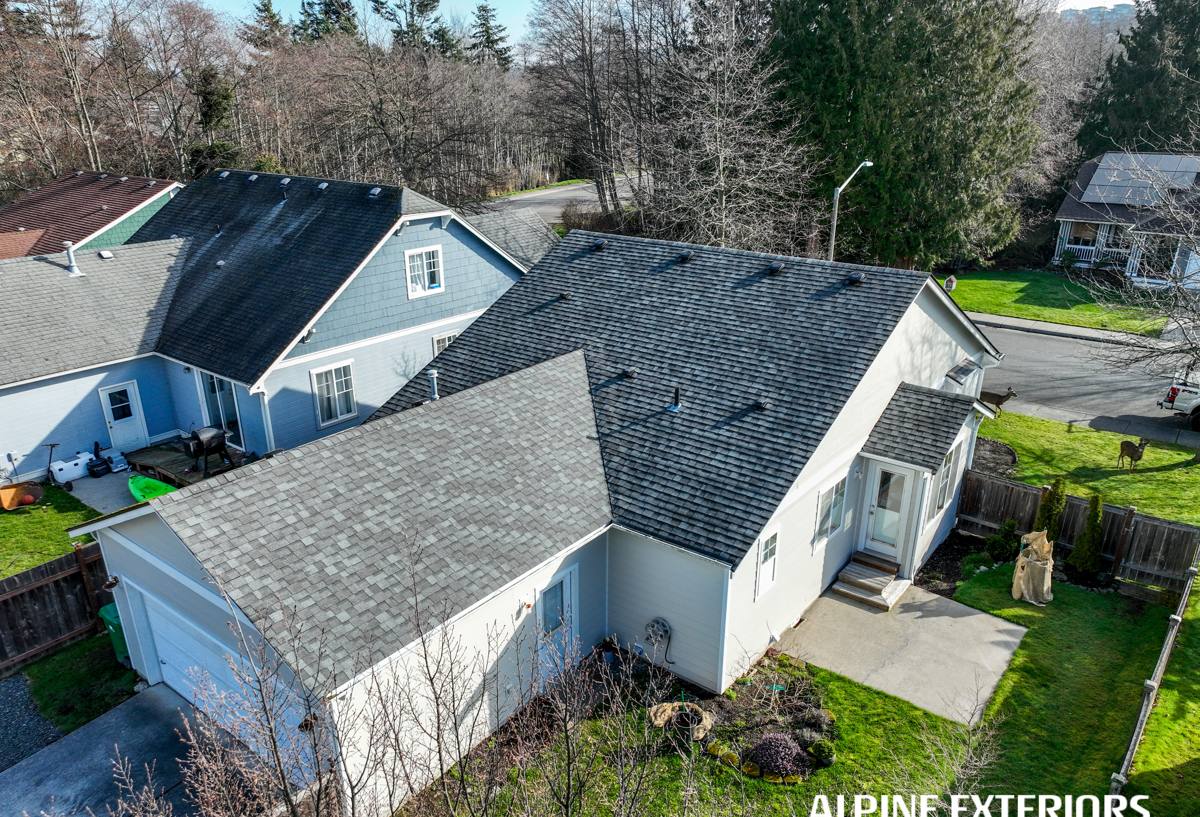
What Marietta's Climate Does to a House
Salt Air and Corrosion
Homes closer to Bellingham Bay get airborne salt in a way that inland Ferndale doesn't experience nearly as much. Salt accelerates corrosion on fasteners, flashing, and any metal trim that isn't rated for coastal exposure. It also settles into porous or absorbent siding materials and can contribute to premature finish breakdown, especially on south- and west-facing walls that catch the prevailing weather.
Driving Rain
Whatcom County doesn't get the heaviest rainfall totals in Western Washington, but Marietta's open exposure to wind off the water means rain often arrives at an angle, not straight down. That matters because driving rain finds every gap, seam, and butt joint in a siding system. Materials that rely on paint film alone for water resistance are more exposed here than they would be on a sheltered, tree-lined inland lot.
The Long Moss Season
Between the marine humidity and the tree cover common around Ferndale, moss and algae growth on siding, roofing, and trim can be a near year-round issue rather than a seasonal one. Moss holds moisture against the surface it's growing on, which is exactly the condition that causes wood substrates and lower-grade composite products to soften and fail over time.
Why We Only Install James Hardie Fiber Cement
We made a decision as a company to install one siding system: James Hardie fiber cement. We don't install vinyl, LP SmartSide, Cemplank, Allura, primed spruce, or cedar. That's not because those products are worthless — plenty of them have a place — but because after years of working on homes in this exact climate, we found the trade-offs weren't ones we were willing to keep explaining to homeowners after the fact.
| Material | Where it struggles in Marietta's climate |
|---|---|
| Vinyl | Can warp or deform in temperature swings; seams and butt joints are a common water entry point in driving rain; color is baked in with no factory refinish option |
| LP SmartSide (engineered wood) | Wood-based substrate; edges and cut ends need diligent sealing or moisture can wick in, especially with sustained coastal humidity |
| Cedar / primed spruce | Natural wood movement, high maintenance repainting cycle, susceptible to moisture absorption and moss/algae staining |
| Cemplank / Allura (other fiber cements) | Similar base material to Hardie but without the same climate-specific engineering, factory finish warranty, or regional track record we've built with Hardie |
| James Hardie fiber cement | Non-combustible, engineered moisture resistance, factory-cured ColorPlus finish, HZ5 product line built for the Pacific Northwest |
James Hardie is non-combustible fiber cement — it doesn't rely on a surface paint film as its only defense against the elements the way wood and some composites do. Hardie's ColorPlus Technology finish is baked on at the factory under controlled conditions, which gives it a more consistent, fade-resistant finish than field-applied paint, and it comes with its own finish warranty separate from the substrate. Hardie also engineers specific product lines — the HZ5 line — for climates like ours, with formulations meant to handle sustained moisture exposure better than a generic fiber cement blank.
None of that means Hardie is maintenance-free. It still needs to be installed correctly, caulked and flashed at every penetration, and kept clear of soil and mulch contact. But it gives us a system where the material itself isn't the weak link — the installation quality is what determines the outcome, and that's something we control.
Why Installation Quality Matters as Much as the Material
Fiber cement siding is only as good as the flashing, gapping, and fastening behind it. In a wind-driven rain environment like Marietta's, the details that don't show up in a sales brochure are the ones that keep water out for the next twenty years:
- Correct fastener placement and spacing so panels aren't over-driven or under-secured
- Proper rainscreen or drainage gap behind the siding so any incidental moisture can escape rather than sit against the wall
- Flashing integration at every window, door, and roofline transition — the single most common failure point on any siding job
- Sealed and primed cut ends, since a factory finish only protects what was finished at the factory
- Correct clearance from grade, decks, and roof lines to avoid standing moisture and soil contact
A crew that's worked exclusively with one material system, in this specific climate, catches these details as a matter of habit. That's the case we'd make for hiring local and hiring a crew that specializes rather than one that installs whatever product a homeowner picked off a big-box shelf.
Roofing, Windows, and Decks in the Same Coastal Conditions
Siding rarely fails in isolation. In Marietta, a roof that's shedding granules or holding moss, windows with failed seals letting moisture into the wall cavity, or a deck that's trapping water against the house all put extra stress on the siding system around them. We handle all four — siding, roofing, windows, and decks — because on a coastal Whatcom County home, they're one connected exterior envelope, not four separate projects. When we look at a Marietta home, we're checking how water moves across the whole exterior, not just whether the siding looks good from the street.
What a Siding Project Looks Like Here
Assessment
We start by looking at exposure — which walls take the worst of the wind and rain off the bay, where moss and staining are already showing, and whether there's evidence of moisture behind the current siding (soft spots, staining at seams, paint failure).
Removal and Sheathing Check
Once old siding comes off, we can see the sheathing and framing underneath. This is often the point where hidden rot or past water damage from failed flashing gets found and addressed before new siding goes up over it.
Weather Barrier and Rainscreen
A proper weather-resistant barrier and drainage gap go on before any Hardie panel. This step matters more in a driving-rain environment like Marietta than it does on a sheltered inland lot.
Hardie Installation
Panels, trim, and fasteners go on to manufacturer specification, with attention to the flashing and sealing details that determine long-term performance.
Final Detailing
Caulking, touch-up, and a check of all transitions — roofline, windows, decks — to make sure the whole envelope works together.
Cost Factors for Marietta Homes
| Factor | Why it affects your project |
|---|---|
| Home size and wall complexity | More corners, dormers, and transitions mean more flashing and trim work |
| Current siding condition | Hidden rot or moisture damage found during tear-off adds repair scope |
| Exposure level | Walls facing the bay and prevailing wind may need extra flashing detail or a different Hardie product line |
| Siding profile and color | Lap width, shingle-style panels, and ColorPlus color selection affect material cost |
| Access and site conditions | Waterfront or sloped lots can affect staging and labor time |
We don't quote a project without seeing the house — a lot depends on what's actually going on with the existing siding and framing once we're up close.
Signs It's Time to Look at Your Siding
- Persistent moss or algae growth that comes back shortly after cleaning
- Paint that's peeling, bubbling, or chalking faster than a normal repaint cycle
- Soft or spongy spots when you press on siding or trim
- Visible warping, cupping, or gaps at panel seams
- Staining or discoloration concentrated near flashing, windows, or the roofline
- Rising energy bills that might point to a compromised wall assembly
Why a Local Crew Matters in Marietta
Marietta isn't a huge subdivision with a single builder's worth of identical homes — it's a mix of older coastal properties and newer construction, each with its own exposure and history. A contractor who works this specific stretch of Whatcom County, rather than treating it like any other job in Western Washington, knows to expect salt air corrosion on fasteners, to plan around the wind direction off the bay, and to budget for the moss and mildew cleanup that's part of normal upkeep here. That local knowledge doesn't replace a good installation — it's what tells us where to pay extra attention on a given house.
If you're weighing a siding, roofing, window, or deck project on a Marietta home, we're happy to take a look and give you a straightforward, no-pressure estimate — just fill out the form below.