 Ferndale
 Point Roberts: A Unique Corner of Whatcom County
Point Roberts sits on a small peninsula that dangles off the bottom of the Tsawwassen Peninsula in British Columbia, which makes it a geographic oddity: part of Whatcom County, Washington, but cut off from the rest of the U.S. mainland by water and by the Canadian border. It's a quiet, close-knit community, and the same water that gives it those views also gives its homes a harder job to do than a house twenty miles inland.
Ferndale Siding has worked across Whatcom County long enough to know that "coastal" isn't one climate — it's several, depending on exposure, tree cover, and how much wind a lot actually catches off the water. Point Roberts, surrounded on three sides by the Strait of Georgia and Boundary Bay, sits at the more exposed end of that range. Anything on the exterior of a home here — siding, roofing, trim, windows, decking — is dealing with salt, moisture, and shade in combinations that a lot of siding products simply weren't built for.
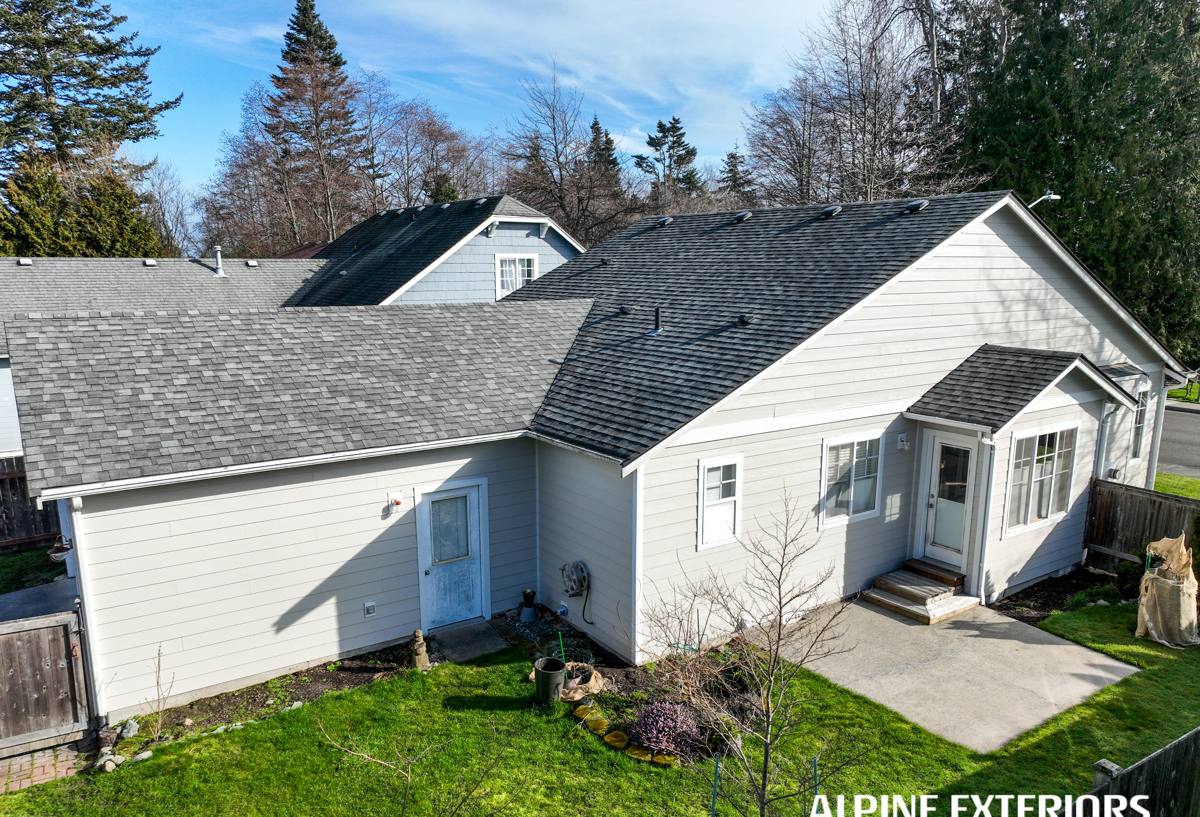
What the Local Climate Does to Siding
Salt Air
Being nearly surrounded by saltwater means airborne salt is a constant, low-level presence on exposed surfaces. It doesn't act like a single storm event — it's a slow, cumulative process. Salt-laden air accelerates corrosion on fasteners and metal trim, and it can degrade certain paint films and coatings faster than the same product would wear inland. Siding facing the water, or sitting in a spot that catches onshore wind, takes the brunt of it.
Driving Rain
Point Roberts gets wind-driven rain off open water, which behaves differently than rain falling straight down. Driving rain gets pushed sideways into laps, seams, and butt joints — the places where a siding system's water management either works or doesn't. Products that rely on face-sealing (caulk and paint alone, rather than an engineered drainage plane) tend to show their weaknesses first in exactly this kind of exposure.
Moss Season
Between the marine humidity, tree cover on many lots, and long stretches of gray Pacific Northwest weather, Point Roberts effectively has a moss and algae season that runs much of the year. Moss holds moisture against a surface far longer than open air would, which is a problem for any siding material that can absorb water or swell when it stays damp — and it's a bigger problem on north-facing walls and shaded elevations that never fully dry out between rains.
Why We Install Only James Hardie Fiber Cement
Ferndale Siding installs James Hardie fiber cement exclusively. We don't install vinyl, LP SmartSide, Cemplank, Allura, or unfinished wood siding like primed spruce or cedar. That's not a marketing position — it's a standard we hold because of what we've seen these products do, and not do, in exactly this kind of coastal exposure.
Fiber cement is cement, sand, and cellulose fibers, which means it doesn't rot, doesn't feed insects, and doesn't swell and buckle the way wood-based or wood-composite products can when they take on moisture repeatedly. It's also non-combustible, which matters more every year as wildfire smoke and ember exposure become a broader regional concern, even in wetter counties like Whatcom.
James Hardie's HZ5 product line is engineered specifically for climates with more moisture exposure and freeze-thaw cycling — a good match for a peninsula community that sees more wind and rain than the county average. The factory-applied ColorPlus finish is baked on under controlled conditions and backed by its own finish warranty, so the color coat isn't relying on field application to hold up against salt air the way a job-site paint job would.
We're honest that fiber cement isn't the cheapest option up front, and it isn't a DIY material — it's heavier, requires specific fastening and clearances, and needs to be installed to Hardie's published specs to perform and to keep the warranty valid. For a location that's already asking a lot of its exterior, we think that's a fair trade for a siding system that's engineered not to be the weak point.
Beyond Siding: The Whole Exterior Envelope
Siding doesn't work in isolation — it's one part of a system that includes the roof, windows, and any exterior structures like decks. In a marine environment, all of these are fighting the same battle against moisture intrusion, so it's worth thinking about them together rather than one at a time.
- Roofing: A roof that's shedding water properly, with intact flashing and clean valleys, protects the top course of siding and the walls below it from the water that would otherwise run down the face of the house.
- Windows: Window flashing and sealant are common failure points in wind-driven rain. Poorly flashed windows can push water behind the siding regardless of how good the siding itself is.
- Decks: Exterior decks in a salt-air, high-moisture environment need materials and fasteners rated for that exposure, plus attention to how the deck ledger meets the house so it doesn't become a moisture entry point into the wall assembly.
Because we handle siding, roofing, windows, and decks, we can look at a Point Roberts home's exterior as one connected system instead of a set of disconnected trades — which matters when the goal is keeping water out for the next 30-plus years, not just the next project.
Why a Local Crew Matters Here
Point Roberts' geography isn't just a climate factor — it's a logistics factor too. Because the peninsula is only reachable by land through Canada (or by water), it sees fewer contractors willing to routinely service it, and scheduling, material delivery, and warranty follow-up all take more planning than they would for a job a few miles off I-5 in Ferndale.
A crew that's based in Whatcom County and already used to working across the county — including the logistics of getting materials and equipment to Point Roberts — is in a better position to show up when scheduled, source Hardie product without delay, and come back promptly if something needs attention after the job is done. That's a practical reason to hire local, separate from the climate argument, but it matters just as much.
What to Expect From a Siding Project in Point Roberts
Every project starts with an honest look at the existing siding, the home's exposure to wind and water, and any moisture damage already present — which is common to find under old siding in this area, especially on north and west-facing walls. From there we walk through product selection, colors, and a realistic timeline that accounts for weather windows, since installation quality suffers if crews rush fiber cement work in poor conditions.
| Cost Factor | What It Affects |
|---|---|
| Home size and wall complexity | More corners, gables, and trim details mean more cutting, fitting, and labor time |
| Existing damage | Rot or moisture damage found during tear-off adds repair work before new siding goes up |
| Siding profile and accessories | Lap width, trim style, and factory finish options shift material cost |
| Site access and logistics | Delivery and staging on a peninsula site can affect scheduling and cost more than an equivalent mainland job |
| Tear-off vs. new construction | Removing and disposing of old siding adds labor compared to new-build installation |
We provide a clear, written estimate before any work begins, so there's no guessing about scope or price once the crew is on site.
Maintenance Checklist for Salt Air and Moss Season
Even a well-installed, durable siding system benefits from basic seasonal attention, especially in an environment like this one:
- Rinse salt residue off exterior walls periodically, particularly on elevations facing open water
- Keep gutters clear so overflow doesn't run down the siding face and feed moss growth
- Trim back tree limbs and shrubs that keep walls shaded and damp longer than necessary
- Check caulking around windows, doors, and trim annually and reseal where it's cracked or pulled away
- Inspect north- and west-facing walls each fall for early moss or algae growth and address it before it spreads
- Have flashing and fastener points checked periodically for early signs of corrosion or wear
A Straightforward Approach for a Not-So-Straightforward Location
Point Roberts homeowners are used to planning around the realities of where they live, whether that's a grocery run or a home improvement project. We approach siding, roofing, window, and deck work here the same way: with a clear plan, materials chosen for the actual conditions on your lot, and a crew that follows through after the job is done rather than disappearing across the border.
If you're dealing with aging siding, visible moss and moisture damage, or you're simply planning ahead for a home that's taking a beating from the marine climate, we're happy to take a look and talk through what makes sense. Reach out for a free, no-pressure estimate using the form below.