 Ferndale
 Siding Built for the Nooksack Area's Weather
Homes around Nooksack sit inland from the water, but that doesn't mean they escape the moisture problem that defines exterior work across Whatcom County. Marine air off the Salish Sea moves up the river valleys, and the Nooksack River corridor itself adds its own dose of humidity, morning fog, and shaded ground that stays damp longer than open land. Add a wet season that can stretch from fall through spring, plus tree cover that blocks sun and airflow on a lot of rural and semi-rural properties out here, and you get siding that's under near-constant low-grade stress even when there's no storm in the forecast.
The practical result is a long moss and algae season. Anything organic-based or prone to holding moisture — bare wood, some engineered wood products, even vinyl where water gets trapped behind it — starts showing green streaking, soft spots, or panel warping years before it should. We've built our business around not installing those materials for exactly this reason. It's not a marketing angle; it's what we've seen happen to siding in this climate over and over.
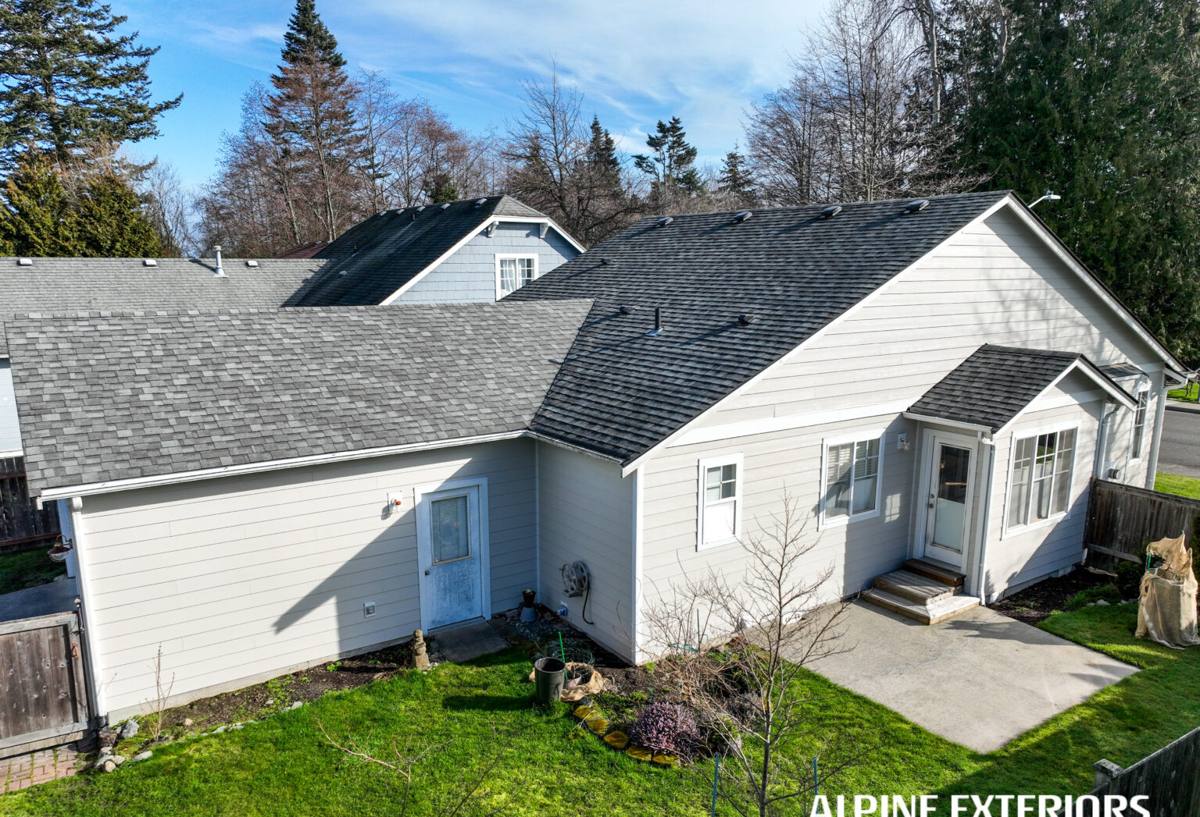
Why We Install Only James Hardie Fiber Cement
Ferndale Siding installs one exterior siding product: James Hardie fiber cement. We don't offer LP SmartSide, vinyl siding, Cemplank, Allura, primed spruce, or cedar, and we're upfront about why. Each of those products has legitimate uses and each has real trade-offs that matter more in a wet, moss-prone climate like ours than they might somewhere drier.
Vinyl Siding
Vinyl is affordable and low-maintenance in the sense that it doesn't need painting, but it's a thin plastic product that expands and contracts with temperature swings, can crack in cold snaps, and traps moisture behind it if house wrap and flashing details aren't perfect. In a region with as much sustained rain as ours, any gap in the water management behind vinyl tends to show up eventually as rot in the sheathing nobody can see until it's a bigger repair.
LP SmartSide and Other Engineered Wood
Engineered wood siding has improved a lot over the decades, but it's still a wood-strand product with a resin binder, and wood-based products are the most sensitive to the moisture and moss conditions that define a Whatcom County winter. Edge swelling, especially at butt joints and cut ends, is the failure mode we see most, and it's harder to catch early because it starts from the inside of the panel.
Cedar and Primed Spruce
Cedar looks great and has real fans, but it's a natural material that needs ongoing refinishing, is a combustible material in a state that takes wildfire risk seriously, and is genuinely hard to keep ahead of in a climate with this much sustained dampness and shade. Primed spruce carries similar wood-moisture risk with less natural rot resistance than cedar.
What Hardie Gets Right
James Hardie fiber cement is cement, sand, and cellulose fiber — it doesn't feed moss the way organic siding does, it's non-combustible, and it's engineered specifically for wet Pacific Northwest weather in its HZ5 product line. The ColorPlus factory finish is baked on and warranted separately from the substrate, so you're not repainting every few years, and the product carries a long transferable limited warranty when installed to Hardie's specifications. It's not the cheapest siding option on day one, but it's the one we're willing to put our name behind for how it performs after year five, ten, and twenty.
| Material | Moisture Behavior | Maintenance | Combustibility |
|---|---|---|---|
| James Hardie fiber cement | Does not absorb/swell like wood; engineered for wet climates | Occasional wash; factory finish holds color | Non-combustible |
| Vinyl | Doesn't absorb, but traps moisture behind panels if sealed wrong | Low, but cracks/fades over time | Combustible, can warp near heat |
| LP SmartSide / engineered wood | Prone to edge swell at cuts and joints | Repaint/reseal on a cycle; watch joints closely | Combustible |
| Cedar | Absorbs moisture; needs airflow to dry | Regular refinishing, moss treatment | Combustible |
Siding Services for Nooksack-Area Homes
Most of the calls we get from the Nooksack area fall into a few categories: full siding replacement on older homes where the original material is failing, partial repairs after storm damage or a rot discovery during another project, and new construction or additions where a homeowner wants Hardie from the start. We handle all three the same careful way.
- Full tear-off and replacement with James Hardie lap, panel, or shingle-style siding
- Repair and replacement of damaged sections, including hidden rot found behind old siding
- Trim, fascia, and soffit work to match new siding and close off moisture entry points
- House wrap and flashing detail correction as part of any siding job, not as an upsell
- Color and profile selection from Hardie's ColorPlus lineup for the look you want
Because a lot of Nooksack-area properties are on larger rural or semi-rural lots, we also see more standalone structures — shops, barns converted to living space, detached garages — where owners want the same durable exterior on outbuildings that they're putting on the house. Hardie works well for those too.
Roofing, Windows, and Decks — The Whole Exterior
Siding doesn't work in isolation. A roof that's shedding water onto a wall, a window that's not flashed correctly, or a deck ledger board that's trapping moisture against the house all undermine even a perfect siding job. Ferndale Siding handles roofing, windows, and decks alongside siding so the whole exterior envelope gets looked at together, not as separate projects that never talk to each other.
Roofing
A roof in poor condition is one of the most common causes of siding failure we find during tear-off — water running down behind a fascia board or through a bad valley flashing does its damage on the wall below long before anyone notices a leak inside. We evaluate roof condition as part of any siding estimate.
Windows
Old or poorly flashed windows are a direct path for water into the wall assembly. When we replace siding around existing windows, we check and correct flashing details at every opening — this is often where past problems started.
Decks
Deck ledger boards attach directly to the house structure, and a poorly flashed ledger is a well-known source of hidden rot. If you're planning deck work in addition to siding, doing both together lets us make sure the connection point is sealed correctly the first time.
What Correct Installation Actually Involves
Fiber cement siding is only as good as its installation. James Hardie publishes detailed installation requirements — fastener spacing, clearances from grade and roof lines, caulking specifications, panel gaps for expansion — and skipping steps is the most common way a good product ends up performing poorly. In a climate with this much rain and this long a wet season, installation shortcuts show up faster than they would somewhere dry.
- Remove old siding and inspect sheathing for existing rot or moisture damage
- Repair or replace damaged sheathing before anything new goes up
- Install or correct house wrap and flashing at every window, door, and penetration
- Install Hardie siding to manufacturer clearance and fastening specifications
- Caulk and seal per Hardie's requirements, not general best-guess practice
- Final inspection of trim, corners, and transitions before the job is called done
Skipping the sheathing inspection step is one of the more common corners cut in this trade, because it's invisible once new siding goes up. It's also the step most likely to cause a callback five years later.
Maintaining Hardie Siding in a Wet, Mossy Climate
James Hardie is genuinely low-maintenance compared to wood or vinyl, but "low-maintenance" isn't "no-maintenance," especially with the moss season this region gets. A short annual routine keeps siding performing the way it's supposed to for decades.
- Rinse siding annually with a garden hose to clear pollen, dust, and early moss growth
- Keep gutters clear so overflow doesn't run down the wall face
- Trim back vegetation and tree limbs that keep siding in constant shade and dampness
- Check and re-caulk joints and trim transitions every few years
- Watch for moss or algae buildup on north-facing or heavily shaded walls and address it early
- Inspect after major windstorms for loose trim or dislodged panels
Why a Local Crew Matters Out Here
Contractors who work all over the region know the difference between siding a house in a dry, open subdivision and siding one tucked into a shaded lot along the Nooksack River valley with heavier moss pressure and different sun exposure. Knowing the local building department, understanding how Whatcom County's weather patterns actually behave through the seasons, and having done this kind of work on this kind of terrain repeatedly all show up in the quality of the finished job. It also matters for warranty follow-through — a company based in the area is going to be around and reachable if a question comes up two or five years down the road.
Get a Free, No-Pressure Estimate
If you're weighing a siding replacement, dealing with a repair, or planning roofing, window, or deck work for a home in the Nooksack area, we're happy to come take a look and walk you through what we're seeing and what it would take to do the job right. There's no pressure and no obligation — just a straight assessment and a clear estimate using the form below.