 Ferndale
 Siding in Sandy Point: Built for a Waterfront Climate
Sandy Point sits close enough to the water that homes there deal with a different set of exterior pressures than houses further inland in Whatcom County. Salt-laden air off the Strait of Georgia, near-constant onshore moisture, and long stretches of overcast, damp weather put real stress on exterior siding, trim, and paint. If you own a home in this area, you've probably already noticed how fast moss creeps across a north-facing wall, how quickly caulk lines start to fail, or how a paint job that looked great for a couple of years now looks tired and chalky.
Ferndale Siding works throughout Whatcom County, and Sandy Point is one of the areas where the choice of siding material genuinely matters more than in a typical inland neighborhood. This page walks through what local homes are up against, how our siding, roofing, window, and deck work applies to waterfront and near-waterfront properties, and why we standardized on one exterior product rather than offering a menu of options.
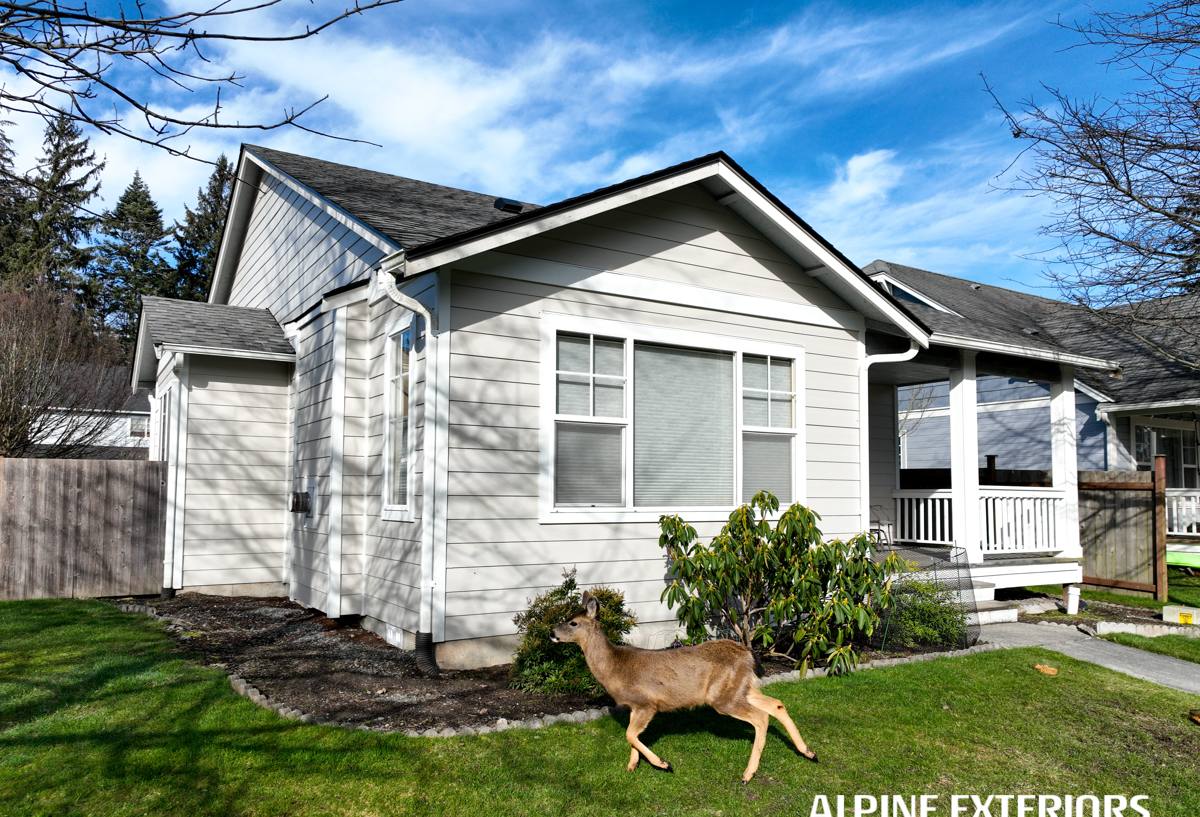
What Sandy Point Homes Face
Salt Air and Corrosion
Proximity to the water means airborne salt settles on every exterior surface, not just the siding. Over years, that salt exposure accelerates corrosion on fasteners, flashing, and any metal trim that isn't properly rated or protected. It also interacts with certain siding materials in ways that shorten their useful life — wood substrates absorb moisture more readily in salt-humid air, and some engineered wood products are more vulnerable to edge swelling when salt and moisture work together.
Driving Rain and Wind-Driven Moisture
Storms coming off the water don't just drop rain straight down — wind pushes it sideways into wall assemblies, window trim, and anywhere there's a seam or gap. Homes here need siding systems and flashing details that account for wind-driven rain, not just vertical runoff. This is as much about installation quality — proper flashing, house wrap integration, and caulking at penetrations — as it is about the siding material itself.
The Long Moss and Mildew Season
Whatcom County's damp season stretches long, and shaded or north-facing walls in Sandy Point can stay wet for days after a storm passes. That constant moisture is exactly what moss, algae, and mildew need to take hold. Some siding materials resist this better than others — surface texture, paint film quality, and how the material handles repeated wetting and drying all play a role in how much maintenance a homeowner ends up doing.
Our Full Exterior Services in Sandy Point
We're a full exterior contractor, not just a siding installer. Most homes near the water eventually need coordinated work across several systems, since siding, roofing, windows, and decks all interact at the same vulnerable points — eaves, window openings, deck ledger boards, and wall penetrations.
- Siding: James Hardie fiber cement installation and full re-siding, including trim, corner boards, and water-managed detailing suited to a coastal-influenced climate.
- Roofing: Roof replacement and repair with attention to the same wind-driven moisture and moss issues that affect siding.
- Windows: Replacement windows installed with proper flashing integration so the window opening doesn't become a leak point in the wall system.
- Decks: Deck construction and repair built to handle repeated wetting, using materials and fastening details suited to a damp, salt-air environment.
Because these systems overlap, we look at the whole exterior envelope when we're on site, not just the piece we were called out for. A siding estimate often turns up a flashing issue at a window, or a roof-to-wall transition that needs attention — we'll point it out honestly, whether or not it's part of the immediate job.
Why We Install Only James Hardie Fiber Cement
Ferndale Siding installs one siding system: James Hardie fiber cement. We don't install vinyl, LP SmartSide, Cemplank, Allura, primed spruce, or cedar. That's a deliberate standard, not a lack of options, and it matters more in a place like Sandy Point than almost anywhere else we work.
Non-Combustible Material
James Hardie siding is fiber cement — it doesn't burn. In a region where wildfire smoke and fire risk have become a bigger part of the conversation for homeowners, a non-combustible exterior is a meaningful, tangible benefit that wood-based and some engineered products simply can't match.
Engineered for Moisture, Not Just Painted Over It
Fiber cement's core composition resists moisture absorption and swelling in a way that wood and wood-fiber composite products struggle to match, especially at cut edges and butt joints — the exact spots where water intrusion tends to start. That matters directly for a salt-air, high-rainfall area like Sandy Point, where wall assemblies stay damp longer than they would inland.
ColorPlus Factory Finish
James Hardie's ColorPlus finish is baked on at the factory under controlled conditions, not brushed or sprayed on site. It holds color and resists fading, chalking, and peeling far longer than field-applied paint, which is a real advantage in an environment where UV, salt, and moisture all work against a finish at the same time.
Climate-Engineered HZ Product Lines
James Hardie manufactures regional HZ (HardieZone) product formulations specifically for different climate zones, including the wetter, milder conditions of the Pacific Northwest. That's a level of climate-specific engineering that most competing siding materials don't offer.
A Warranty Backed by the Manufacturer
James Hardie backs its products with a strong, transferable limited warranty — an asset when you eventually sell the home, and a sign of the confidence the manufacturer has in the product's long-term performance.
We've seen firsthand what damp coastal conditions do to lower-cost siding materials over 10, 15, or 20 years. That experience is exactly why we made the call to install Hardie exclusively rather than offering a range of products with a range of long-term outcomes.
What Correct Installation Looks Like Here
Material choice is only half the equation — installation quality is what actually determines how a wall performs over time, especially in a wind-driven rain environment. On every Sandy Point project we pay close attention to:
- Proper house wrap and weather-resistive barrier integration behind the siding
- Correct flashing at windows, doors, and any wall penetration
- Manufacturer-specified fastening patterns and clearances, including ground clearance to limit splash-back moisture
- Sealed, back-primed cut edges where the siding is field-cut
- Proper joint and butt seam treatment to keep water from tracking behind the cladding
Skipping any one of these steps can undercut even the best siding material. It's a big part of why we treat installation detail as seriously as the product itself.
Comparing Common Siding Materials in a Coastal Climate
| Material | Moisture Resistance | Finish Durability | Fire Resistance | Typical Maintenance |
|---|---|---|---|---|
| James Hardie Fiber Cement | High — engineered core, resists swelling | ColorPlus factory finish, long-lasting | Non-combustible | Low — periodic washing |
| Vinyl | Moderate — can warp/crack in temperature swings | Color molded in but can fade and chalk | Combustible, can deform under heat | Low, but limited repairability |
| LP SmartSide / Engineered Wood | Moderate — vulnerable at cut edges and joints | Field or factory finish, needs upkeep | Combustible | Moderate — edge sealing, inspection |
| Cedar | Lower — absorbs moisture, prone to rot in damp climates | Needs regular refinishing | Combustible | High — staining/painting cycle |
This is a general comparison, not a claim that every alternative product fails — it's meant to show why moisture and fire performance carry extra weight for a property this close to the water.
Planning a Siding Project in Sandy Point
Signs It's Time to Look at Your Siding
- Moss or algae staining that comes back within months of cleaning
- Paint that's chalking, peeling, or fading faster than expected
- Soft spots, cracking, or visible swelling at seams and corners
- Rising energy bills that may point to a failing wall assembly behind the siding
- Visible gaps or separation at trim, corner boards, or window openings
What to Expect From an Estimate
When we walk a Sandy Point property, we're looking at more than just the siding surface — we check trim condition, flashing at windows and rooflines, and any signs of moisture getting behind the current cladding. That gives you an honest picture of the full scope, not just a number for new siding panels.
Why a Local Crew Matters
A crew that works regularly in Whatcom County's coastal and near-coastal neighborhoods understands the difference between a standard inland installation and one that needs extra attention to flashing, moisture management, and material selection. We know which walls in this area take the brunt of the weather, how moss and salt exposure actually play out over years, and what installation details hold up versus what fails early. That local, repeated experience is hard to replace with a general contractor who only occasionally works this close to the water.
Get an Estimate
If you're dealing with moss buildup, fading paint, or you're just planning ahead for your home's exterior in Sandy Point, we're glad to take a look. Reach out for a free, no-pressure estimate — we'll walk the property, answer your questions honestly, and give you a straightforward picture of what your home needs.