 Ferndale
 Exterior Work in Sudden Valley: Built for What This Corner of Whatcom County Throws at a House
Sudden Valley is a residential community in Whatcom County, and like most homes in this part of Washington, the properties here spend a good part of the year dealing with a damp, moss-friendly marine climate — the kind of weather that rewards durable, correctly installed exterior materials and quietly punishes anything that cuts corners. We handle siding, roofing, windows, and decks for homes throughout the area, and the standards we build to come from watching, over years of local work, what actually holds up under salt-tinged air, driving rain, and a moss season that can stretch across most of the calendar.
On siding specifically, we install James Hardie fiber cement and nothing else. That's not a manufacturer relationship or a marketing angle — it's a professional standard we settled on after seeing repeatedly which materials shrug off this climate and which ones slowly lose the fight against it.
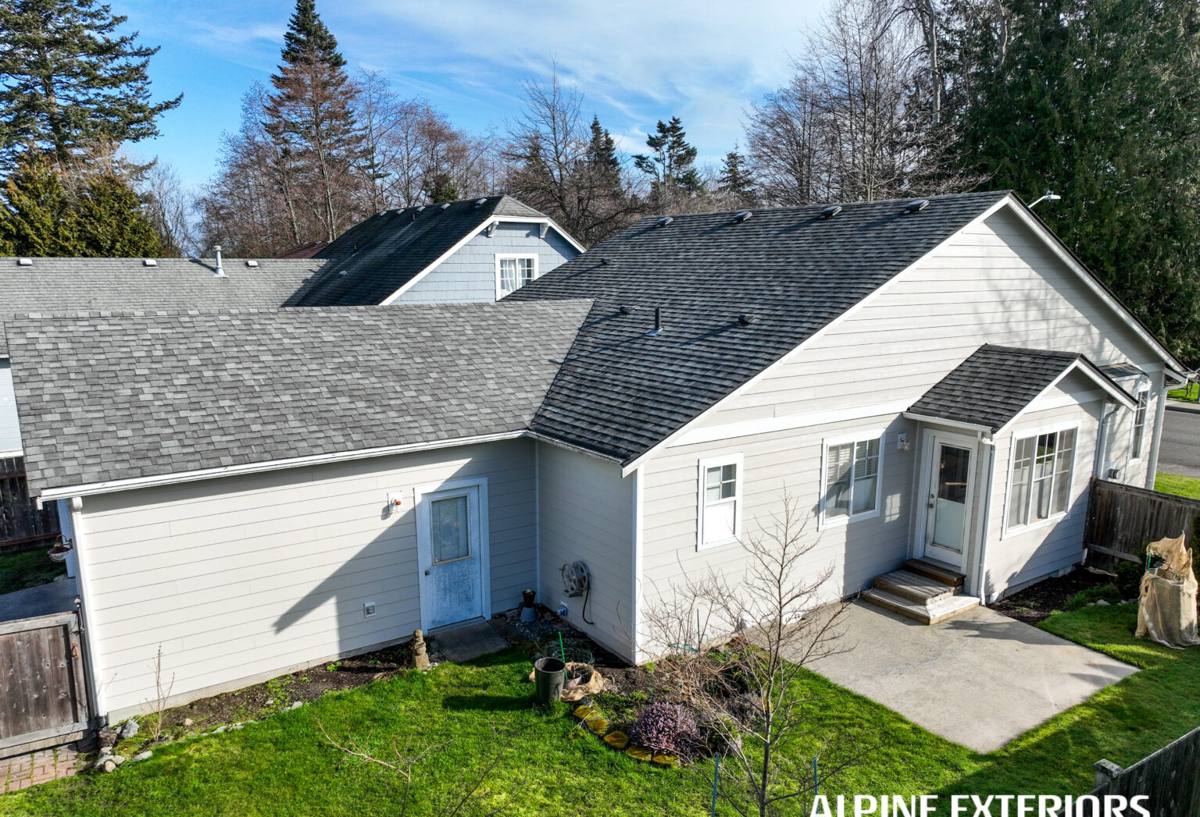
What Whatcom County's Climate Does to a House
Salt Air and Coastal Influence
Homes in this part of Washington sit within a broader marine climate zone, and the air carries a degree of salt and moisture even at properties that aren't directly on the water. That salt-laden humidity is harder on unprotected metal fasteners, uncoated trim, and porous siding materials than a dry inland climate would be. It doesn't destroy a house overnight, but over years it accelerates corrosion and finish breakdown on anything not built or installed with that exposure in mind.
Driving Rain, Not Just Steady Drizzle
Whatcom County gets plenty of the gentle, all-day drizzle the Pacific Northwest is known for, but it also gets wind-driven storms that push rain sideways into wall assemblies, window openings, and roof-to-wall transitions. That kind of driving rain finds every weak seam, poorly lapped flashing detail, or gap in a siding installation that a straight-down rain never would. Exterior systems here need to be built assuming water will hit walls at an angle, not just fall straight onto the roof.
A Long Moss and Mildew Season
Cool temperatures, high humidity, and limited sun exposure through much of the fall, winter, and spring add up to a moss and mildew season that runs far longer here than in drier parts of the country. Roofs are usually the first place it becomes visible, especially on north-facing slopes and in valleys where debris collects, but moisture-retentive siding materials pick it up too, particularly in shaded corners of a property. A house that never fully dries out between storms is a house where moss, algae, and mildew get a real foothold.
Why We Only Install James Hardie Siding
We used to offer a wider range of siding products, the way most contractors do. We stopped, and the decision came directly from what we kept finding on service calls and tear-offs on Whatcom County homes — not from a sales pitch or a supplier incentive.
- Non-combustible core: Fiber cement doesn't feed a fire the way wood-based siding products can, which matters for safety and, in many cases, for insurance underwriting.
- Factory-applied ColorPlus finish: The color is baked on under controlled factory conditions rather than brushed on in the field, and it resists fading, chalking, and moisture intrusion far longer than site-applied paint — a real advantage in a climate that stays damp for months at a stretch.
- Climate-engineered HZ product lines: Hardie's HZ5 formulation is built specifically for regions with heavy moisture exposure and freeze-thaw cycling, which is a close match for Whatcom County's wet, marine-influenced conditions.
- Dimensional stability: Fiber cement doesn't swell, cup, or warp the way engineered wood products can after repeated wetting cycles, especially on shaded or salt-exposed elevations that rarely get a full day of direct sun.
- Strong transferable warranty: Hardie backs its products with one of the more substantial warranty structures in the siding industry, provided the installation follows their published specifications.
We won't install LP SmartSide, vinyl siding, Cemplank, Allura, primed spruce, or cedar. Each of those products has a legitimate place in the market, and plenty of homeowners elsewhere are satisfied with them. But for a climate that combines salt air, driving rain, and a long moss season, we've made a professional call that we'd rather stand fully behind one system than offer a cheaper alternative that quietly shifts long-term maintenance risk back onto the homeowner.
What Correct Hardie Installation Actually Requires
Fiber cement only performs the way it's engineered to when it's installed to Hardie's published specifications — correct fastener type and spacing, proper clearance from grade and roof lines, drainage or rain-screen detailing where the wall assembly calls for it, and properly sealed and lapped joints. In a climate with driving, wind-blown rain, those details aren't optional finishing touches; they're the difference between a wall system that sheds water the way it's designed to and one that slowly lets moisture in behind the surface.
Roofing in This Climate
Roofs take the most direct hit from this weather. Between prolonged damp periods, moss that establishes itself quickly on shaded or low-slope sections, and the corrosive effect of salt-tinged air on unprotected metal, a roof in this part of Whatcom County needs underlayment, flashing, and ventilation detailing built around that specific combination rather than a generic installation.
- Moss buildup in valleys or on shaded slopes that returns quickly after cleaning
- Granule loss showing up in gutters or at the base of downspouts
- Rust staining or corrosion at metal flashing, vents, or fasteners
- Soft spots or sagging near penetrations, eaves, and roof-to-wall transitions
- Water staining on interior ceilings near exterior walls following a heavy or extended storm
Correctly lapped step flashing at every roof-to-wall intersection, properly sealed penetrations, and ventilation that lets the roof deck dry out between storms are the baseline we build to, not upgrades we sell separately.
Roof Ventilation and Why It Matters More Here
A roof deck that can't breathe traps moisture underneath the roofing material, which speeds up rot in the sheathing and shortens the life of the roofing itself, regardless of how good the shingles or panels are. In a climate where the roof rarely gets a long, uninterrupted dry stretch, balanced intake and exhaust ventilation is one of the most cost-effective things a homeowner can get right, and one of the easiest things for a rushed installation to skip.
Windows That Actually Keep Water Out
Window performance in this climate comes down to flashing and installation quality as much as the window unit itself. A well-built window with poor flashing integration will still leak once wind-driven rain starts testing the seams around it, and that's a common failure point during Whatcom County's harder storms. We pay close attention to how new window flashing integrates with the surrounding wall and siding assembly, since that transition is one of the most common places water finds its way into a wall system.
Signs a Window Installation Wasn't Done Right
- Staining or bubbling on interior drywall or trim around a window frame
- Visible daylight or drafts around the sash even when the window is fully closed
- Soft or spongy trim boards at the sill or corners
- Condensation building up consistently between panes on newer windows
Decks Built for Salt Air, Rain, and Shade
Decks in this climate deal with a specific combination of stresses: salt-tinged humidity that accelerates corrosion in fasteners and structural connectors, rain that keeps wood-based decking damp longer than it would stay in a drier climate, and shaded corners of a property where moss and algae build up on walking surfaces. That combination speeds up rot in lower-grade decking materials and can turn a deck surface slick and hazardous well before the structure itself is actually failing. We use hardware rated for this kind of damp, salt-influenced environment, and we walk homeowners through the real maintenance differences between wood and composite decking so the choice fits their property and their tolerance for upkeep, not a one-size-fits-all pitch.
Comparing Common Exterior Siding Materials in This Climate
| Material | Moisture Behavior | Salt Air Resistance | Typical Longevity Here |
|---|---|---|---|
| James Hardie fiber cement | Dimensionally stable; resists swelling and cupping | Factory finish resists salt-driven fading and corrosion at fasteners when installed correctly | 30+ years with correct installation |
| Vinyl siding | Can trap moisture behind panels in poorly ventilated wall assemblies | Panels can become brittle over time; seams are a common water entry point | Variable; shorter under sustained wind-driven rain |
| LP SmartSide / engineered wood | Wood-based core is moisture-sensitive at cut edges and joints | Edge sealing degrades faster in salt-humid conditions | Depends heavily on installation quality and upkeep |
| Cedar / primed wood | Absorbs and releases moisture readily | Needs frequent refinishing to hold up to salt and rain | Shorter without consistent, disciplined maintenance |
Why a Local Crew Matters for Sudden Valley Homes
A contractor who works regularly in this part of Whatcom County already understands how the local climate changes the calculus on exterior work — which wall orientations take the worst of the wind-driven rain, where moss establishes itself first, and which fastener and flashing details actually hold up to a long, damp season rather than just looking right on installation day. That familiarity shows up in decisions homeowners often never see directly: the drainage detailing behind a rain-screen assembly, the corrosion-resistant hardware choice for a shaded deck, the flashing lap sequence on a roof valley. Those choices are what separate an exterior system that lasts one wet season from one that lasts several decades.
A Simple Checklist Before Hiring for Exterior Work in Sudden Valley
- Ask what siding material they install and why, and whether they'll put that recommendation in writing along with a manufacturer warranty
- Confirm they carry current Washington contractor licensing and active liability insurance
- Ask specifically how they handle flashing at roof-to-wall transitions and window openings, since that's where most local leaks originate
- Ask what fastener and hardware grade they use, given the area's salt-influenced air
- Get a clear, written scope of work and timeline before signing any contract
Cost Factors Homeowners Should Understand Upfront
Exterior project costs in this area vary based on a handful of factors that are worth understanding before getting quotes, so a homeowner can tell the difference between a fair estimate and one that's cutting corners to look cheaper on paper.
| Factor | Why It Affects Cost |
|---|---|
| Existing siding removal and substrate condition | Hidden moisture damage found during tear-off can add scope once walls are opened up |
| Wall complexity and elevation count | More corners, dormers, and roof-to-wall intersections mean more flashing detail and labor time |
| Drainage or rain-screen detailing | Proper moisture management behind the siding adds material and labor but reduces long-term risk |
| Access and site conditions | Tree cover, slope, and limited access can add time for scaffolding, staging, and cleanup |
Our Process
We start with an on-site assessment of the existing exterior — siding, roofing, windows, or decking, depending on what's being addressed — and pay close attention to how moisture, shade, and salt exposure have affected different elevations of the home, since that can vary more from wall to wall than homeowners expect. From there we put together a clear, written scope and timeline before any work begins, and we treat proper flashing, drainage, and moisture management as standard practice for this climate, not as optional upgrades tacked onto a quote.
If you're weighing options for siding, roofing, windows, or a deck on a Sudden Valley property, we're happy to walk the exterior with you and give an honest read on what it actually needs. Reach out below for a free, no-pressure estimate.