 Ferndale
 Homes along the Semiahmoo-area coastline northwest of Ferndale live in a different climate than houses ten miles inland. The water changes everything. Salt-laden air moves off the Strait of Georgia and Semiahmoo Bay almost daily, wind-driven rain hits siding at angles that never touch a sheltered lot, and the long gray stretch from October through April keeps exterior surfaces damp far longer than most manufacturers assume when they write their warranty fine print. If you own or manage property in this part of Whatcom County, you already know your house works harder than the ones a few miles away.
We're a local exterior contractor that works this stretch of coastline regularly — siding, roofing, windows, and decks. This page covers what coastal exposure actually does to a home's exterior here, how we approach the work differently because of it, and why we've standardized on one siding product instead of offering a menu of options.
What Coastal Exposure Does to a House Here
Three things define exterior wear near the water in this area: salt, wind-driven moisture, and moss. None of them are dramatic on their own, but stacked together year after year, they shorten the life of materials that would hold up fine somewhere drier.
Salt Air
Airborne salt is corrosive to exposed metal fasteners, flashing, and hardware, and it accelerates the breakdown of finishes that aren't built to resist it. On siding specifically, salt exposure combined with UV and moisture cycling is what causes paint films to chalk and fade faster than the same product would inland. Caulk joints and trim edges take the brunt of it because that's where water sits longest after it's been driven in by wind.
Driving Rain
This isn't gentle Pacific Northwest drizzle. Storms coming off the water push rain sideways into wall assemblies, which puts real stress on horizontal laps, window and door flashing, and any seam where water can find a path behind the cladding instead of running off the face of it. A siding system that performs fine on a calm, sheltered lot can fail early here if it wasn't installed with wind-driven rain in mind.
Moss and Prolonged Dampness
Whatcom County's wet season runs long, and homes near the water often stay shaded and damp even longer due to marine air and cloud cover. That means moss and algae growth on roofs, decks, and north-facing siding isn't occasional — it's a recurring maintenance item. Materials and finishes that can't shed water quickly or resist organic growth end up needing more frequent cleaning, repainting, and repair.
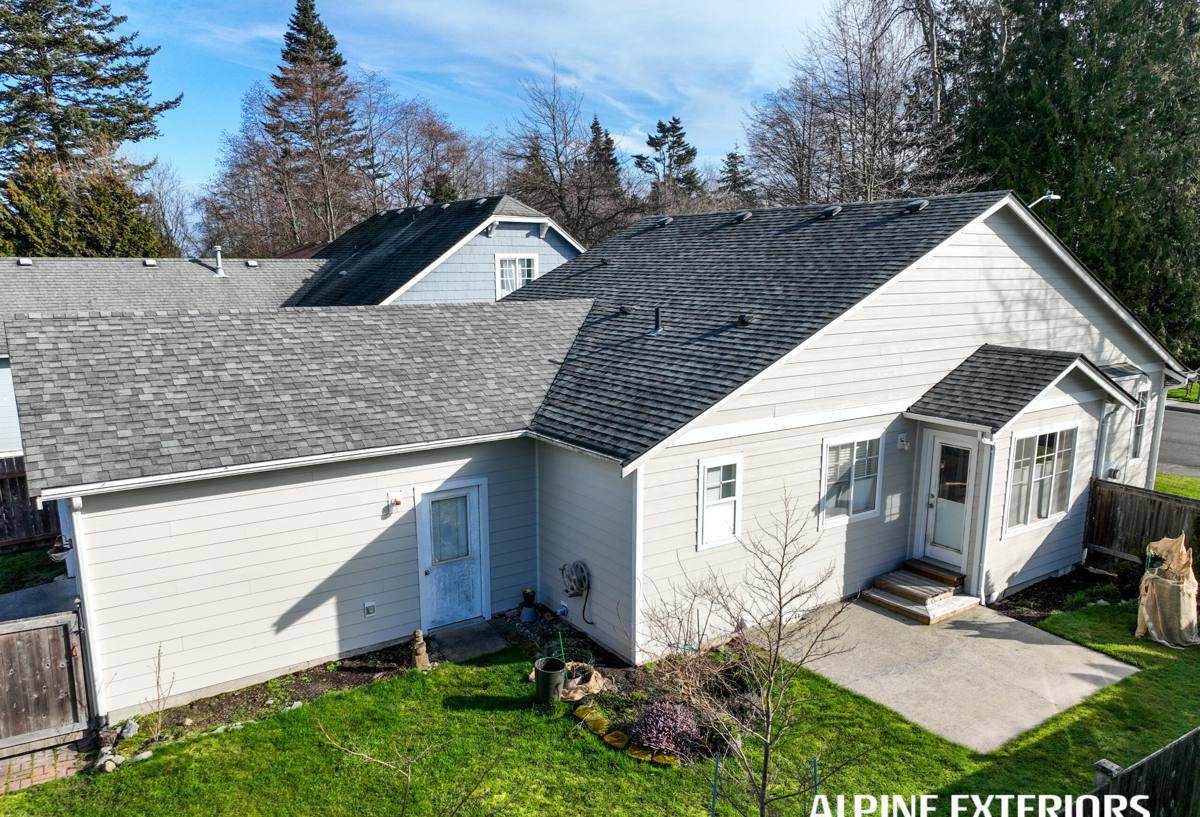
Why We Install Only James Hardie Fiber Cement Siding
We don't offer vinyl, LP SmartSide, Cemplank, Allura, primed spruce, or cedar. That's a deliberate standard, not a lack of options, and in a coastal environment like Semiahmoo it matters more than it would somewhere drier.
Non-Combustible and Dimensionally Stable
James Hardie fiber cement is non-combustible, which is a genuine safety advantage regardless of climate. Just as important for this location, it's dimensionally stable — it doesn't expand, contract, warp, or rot the way wood-based products can when they're cycling between saturated and dry conditions for months at a stretch.
ColorPlus Factory Finish
Hardie's ColorPlus finish is baked on in a controlled factory setting rather than field-applied, which produces a more consistent, UV- and fade-resistant coating than site-painted siding typically achieves. In a salt-air environment where finishes take extra abuse, starting with a factory-cured finish rather than a job-site paint job is a real advantage, not a marketing detail.
Climate-Engineered HZ Product Lines
Hardie manufactures HZ5 product specifically engineered for the moisture and freeze-thaw conditions of the Pacific Northwest, as opposed to a single generic formulation sold everywhere. That regional engineering is part of why we trust it in a marine exposure zone rather than a product built to a lowest-common-denominator national spec.
Warranty Structure
Hardie backs its siding with a strong, transferable limited warranty on the product itself, plus a separate finish warranty on ColorPlus color. A transferable warranty also matters to resale — it's one less unknown for a future buyer inspecting a coastal-exposed exterior.
Why We Don't Install the Alternatives
Every product on the market gets something right, and we're not going to pretend otherwise. Here's the honest trade-off case for each one we don't install, framed as why it didn't meet our standard for this climate — not as a claim that it's defective everywhere.
| Product | What it does well | Why we don't install it here |
|---|---|---|
| Vinyl siding | Low upfront cost, easy availability | Can warp or deform in heat/cold swings, seams and panels are more vulnerable to wind-driven rain intrusion, and it's a combustible material |
| LP SmartSide | Engineered wood strength, workable installation | Wood-strand core is more moisture-sensitive at cut edges and joints than fiber cement, which is a real liability in a wet, salt-air climate |
| Cemplank / Allura | Fiber cement basics at a lower price point | We've standardized on one manufacturer's engineering, warranty backing, and finish system rather than mixing fiber cement brands |
| Primed spruce / cedar | Natural wood appearance, traditional look | Requires ongoing repainting and sealing to resist rot and moisture, a maintenance burden that's amplified by this area's long wet season |
The short version: in a climate where salt, wind-driven rain, and prolonged dampness are constants rather than occasional stress events, we'd rather install one product we know performs and stand behind it fully than offer a lineup and let a homeowner unknowingly pick the option that costs them more in five years.
How This Shows Up in Roofing, Windows, and Decks Too
Siding gets most of the attention, but the same coastal stress applies to the rest of the building envelope, and we treat all four trades as one connected system rather than separate jobs.
Roofing
Moss growth and prolonged dampness are the two biggest issues we see on roofs in this area. Proper ventilation, flashing detail at valleys and penetrations, and material selection that resists organic growth all matter more here than in a drier inland location.
Windows
Window flashing and sealant integration are where a lot of hidden water damage starts on coastal homes — not from the glass or frame failing, but from water finding a path around the window opening during a wind-driven storm. Correct flashing sequencing at install is non-negotiable in this exposure.
Decks
Decks facing the water take direct salt spray and sun exposure on top of the moisture load, which is a tough combination for fasteners, ledger connections, and surface materials. Ledger flashing and proper drainage away from the house are especially important where a deck meets siding in a wet climate.
Why a Local Crew Matters for This Area
A crew that mostly works inland or in a different climate zone doesn't have daily, ongoing exposure to what salt air and wind-driven rain actually do to a house over time. Working this coastline regularly means we see the failure patterns first-hand — where caulk gives out first, which flashing details actually hold up, which north-facing walls need the most attention for moss. That's knowledge you build by being here, not by reading a spec sheet.
It also means we're accountable locally. If something needs a warranty follow-up or a maintenance check a few years down the road, we're not a crew that came through once and moved on to the next region.
What to Expect From an Estimate
A siding, roofing, window, or deck estimate in this area starts with an honest look at your home's specific exposure — how much direct wind and rain it takes, which walls stay damp longest, and what condition the current exterior is in. From there we walk through material and scope options and give you a straightforward number, not a lowball that grows once work starts.
- Exterior walk-around noting exposure direction, moisture damage, and moss/algae buildup
- Inspection of existing siding, trim, flashing, and any visible rot or water staining
- Discussion of James Hardie product line and color options suited to your home
- Written estimate covering material, labor, and realistic project timeline
- No-pressure conversation about phasing the work if siding, roofing, windows, and decks all need attention
Cost Factors Homeowners Should Know
Every home is different, but a few factors consistently move the price on coastal exterior work in this area.
| Factor | Why it matters |
|---|---|
| Extent of existing water damage | Hidden rot behind old siding or trim adds repair scope before new material goes up |
| Home size and wall complexity | More corners, dormers, and trim detail increase labor time regardless of material |
| Flashing and window integration needs | Correct flashing at every penetration is critical in this exposure and takes real install time |
| Access and site conditions | Waterfront lots, slopes, and limited staging area can affect equipment and labor logistics |
| Scope bundling | Combining siding with roofing, window, or deck work can reduce redundant setup costs |
Maintenance That Actually Fits This Climate
Even the right material benefits from a little seasonal attention in a marine environment. A rinse-down of siding once or twice a year removes salt residue before it has time to work into caulk joints and finishes. Keeping gutters and downspouts clear during the wet season prevents water from backing up against trim and fascia. And an annual look at roof valleys and north-facing surfaces for early moss growth is far cheaper than letting it establish and spread.
Let's Take a Look at Your Home
If you're dealing with a tired, damaged, or moss-covered exterior on a home near Semiahmoo, or you're just planning ahead before the next wet season sets in, we're happy to come take a look. The estimate is free, there's no pressure, and you'll get a straight answer about what your home actually needs — use the form below to get started.