 Ferndale
 Siding Installation Built for Bellingham's Climate
Bellingham sits in a tough spot for exterior building materials. You've got Bellingham Bay pushing salt-laden air inland, storms rolling off the Strait of Georgia that drive rain sideways into wall assemblies, and a long, gray wet season that keeps north-facing walls damp for months at a time. Add in the tree cover common on many Bellingham lots and you get a fourth problem: moss and algae that thrive in shaded, moisture-retaining conditions. Any siding installed here has to handle all four at once, not just one or two.
We install siding throughout Whatcom County, and Bellingham jobs come with their own pattern of failure points we've learned to plan around — different from what we see on more sheltered inland properties. This page covers what a correctly installed, climate-appropriate siding job looks like for a Bellingham home, and why we've standardized on one product system instead of offering a menu of options.
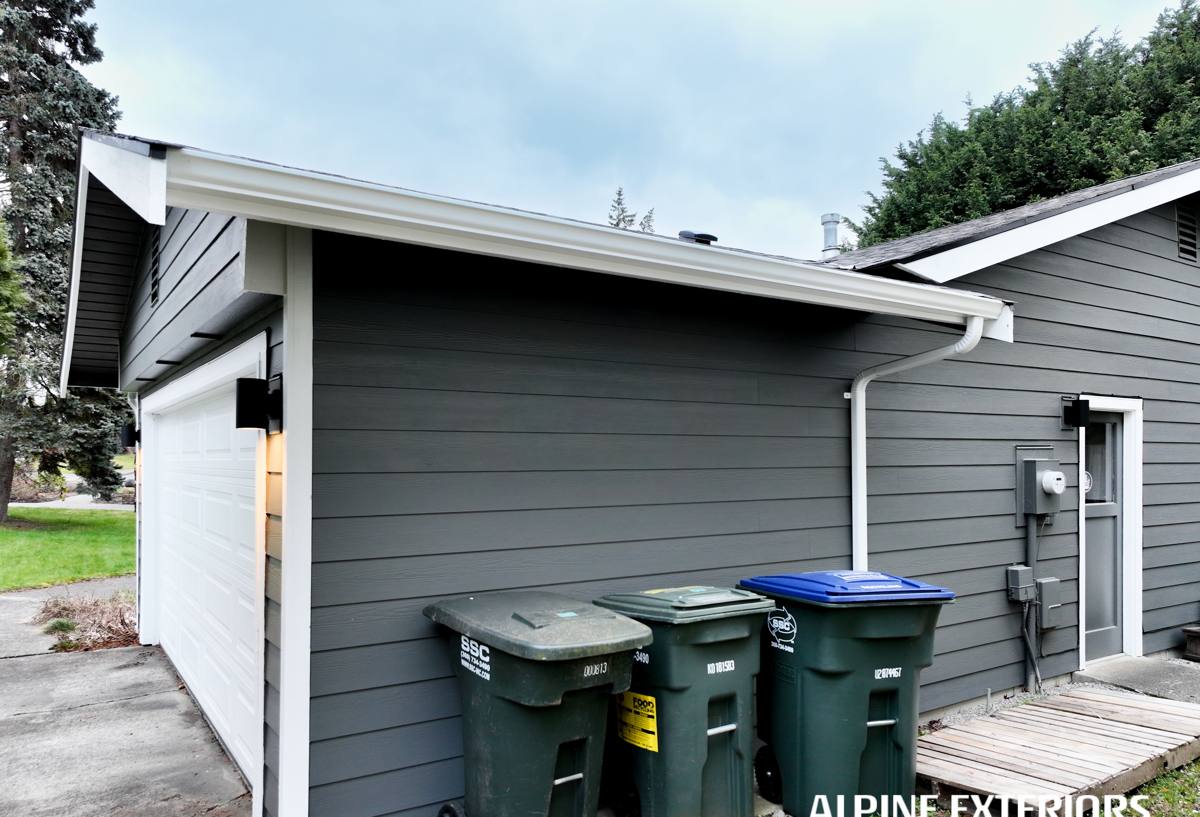
What Bellingham's Climate Actually Does to Siding
Salt Air and Coastal Exposure
Homes closer to the bay and the water's edge deal with airborne salt that accelerates corrosion on fasteners, flashing, and any exposed metal trim. It also degrades certain paint films and coatings faster than inland weathering would. Siding material and finish matter here — a product that isn't engineered to hold up in marine-influenced air will chalk, fade, or fail at the surface well ahead of its expected lifespan.
Driving, Wind-Driven Rain
Bellingham doesn't just get a lot of rain — it gets rain that comes in at an angle during winter storm systems. That matters more than total rainfall. Wind-driven rain gets forced up and under laps, into butt joints, and behind trim if those details aren't built correctly. A siding system can be technically "waterproof" on paper and still let water in if the installation doesn't account for wind pressure at joints and penetrations.
Long Wet Season, Slow Drying
Western Washington's siding problems are rarely about a single storm — they're about a wall assembly that stays damp for weeks because it never gets a real drying window between rain events. Materials that absorb moisture and hold it against the wall sheathing are working against the climate instead of with it. What you want is a material that sheds water at the surface and a wall assembly that can dry out when the weather finally breaks.
Moss, Algae, and Shade
Bellingham's mature tree canopy is part of what makes the area attractive, but shaded, low-airflow wall sections stay damp longer and are prime real estate for moss and algae growth. On the wrong siding material, that growth isn't just cosmetic — it holds moisture directly against the surface and can accelerate deterioration underneath.
Why We Install Only James Hardie Fiber Cement
We don't offer vinyl, LP SmartSide, cedar, primed spruce, Cemplank, or Allura. That's a deliberate standard, not a limitation of what we're capable of installing. Here's the reasoning specific to Bellingham conditions:
- Non-combustible core: Fiber cement doesn't burn, which matters increasingly across Washington as wildfire risk and insurance underwriting both tighten.
- Engineered for wet, coastal climates: James Hardie's HZ10 product line is specifically formulated for regions like ours — wetter, harsher weather patterns — rather than a one-size-fits-all national product.
- Factory-applied ColorPlus finish: The color and protective coating are baked on in a controlled factory environment, which holds up better against salt air and UV than field-applied paint and resists the fading and chalking that coastal exposure accelerates.
- Dimensionally stable: It doesn't swell, cup, or warp with repeated wet-dry cycles the way wood-based products can, which keeps joints and laps tight over time instead of opening gaps that water can exploit.
- Resists moisture absorption at the surface: Combined with correct installation, this reduces the conditions moss and algae need to take hold compared to more porous materials.
We're not going to tell you every other product on the market is junk — that's not honest, and it's not our call to make about how someone else's home was built. What we will say is that after years of installing and repairing siding in this exact climate, we stopped offering products we didn't think gave Bellingham homeowners the best long-term outcome, and standardized on the one we do.
What a Correct Installation Involves
Fiber cement is only as good as the installation behind it. Most of the siding failures we get called out to inspect in Whatcom County trace back to installation shortcuts, not the material itself. On a Bellingham job, we pay particular attention to:
Water-Resistive Barrier and Flashing
A correctly lapped weather-resistive barrier behind the siding, with proper flashing at every window, door, and penetration, is what actually keeps wind-driven rain out of the wall. The siding is the first line of defense; the barrier and flashing behind it are what save the house if that first line ever gets breached during a hard storm.
Rainscreen or Drainage Gap
Where conditions call for it, we build in a drainage gap behind the siding so any moisture that does get past the surface has somewhere to go and a way to dry out, instead of sitting against the sheathing. This is especially relevant on shaded, slower-drying wall sections common on tree-covered Bellingham lots.
Fastening and Clearances
James Hardie specifies exact fastener types, spacing, and clearances from grade, decks, and roof lines. Skipping these — using the wrong nail, fastening too close to panel edges, or leaving insufficient ground clearance — is one of the most common causes of premature siding failure we see, and it voids the manufacturer warranty.
Joint and Trim Detailing
Butt joints, corners, and trim transitions are where wind-driven rain finds its way in if they're not caulked, flashed, and sequenced correctly. This is detail work that separates a durable installation from one that looks fine on day one and starts failing in year three.
Our Installation Process
- On-site assessment: We walk the property, check existing siding and sheathing condition, note exposure direction, shade patterns, and any moisture or moss issues already present.
- Product and color selection: We help you choose the right Hardie plank profile, panel type, and ColorPlus finish for your home's style and exposure.
- Prep and moisture check: Old siding removal, sheathing inspection and repair as needed, and confirmation the wall assembly is dry and sound before anything new goes on.
- Weather barrier and flashing installation: Correctly lapped house wrap and flashing at every opening and penetration.
- Siding installation to manufacturer spec: Proper fastening, clearances, and joint treatment throughout.
- Final inspection and cleanup: A walk-through with you before we consider the job done.
Cost Factors for a Bellingham Siding Installation
Every home is different, and we'll give you a real number after walking your property — but these are the main factors that move the price:
| Factor | Why It Matters |
|---|---|
| Home size and wall complexity | More corners, dormers, and trim details mean more labor and material cuts |
| Current siding removal | Tear-off and disposal of existing material adds time versus new construction |
| Sheathing or moisture damage | Repair work found once old siding is off can affect scope and timeline |
| Product profile and finish | Lap width, panel style, and ColorPlus color selections vary in material cost |
| Access and site conditions | Tree cover, tight lot lines, and slope on Bellingham properties can affect staging and labor |
| Trim and flashing detail level | Homes with more window/door openings need more precise, time-intensive flashing work |
Signs Your Bellingham Home May Need New Siding
- Visible warping, cupping, or gaps opening up between siding boards
- Persistent moss or algae growth that returns quickly after cleaning
- Soft or spongy spots when pressed, especially near the bottom courses
- Paint that's peeling, bubbling, or failing faster than a normal repaint cycle
- Visible daylight or drafts at trim and corner boards
- Rising energy bills that suggest the wall assembly isn't performing as it should
- Siding that's simply original to a home 20-plus years old and nearing the end of its service life
Why Hire a Crew That Already Works Bellingham
Siding installation isn't just about the product — it's about knowing how a specific area's weather patterns actually behave against a wall. A crew that primarily works drier, more sheltered inland regions may not build in the same drainage detailing or flashing sequencing that a bay-adjacent, storm-exposed Bellingham property needs. We work across Whatcom County regularly, which means we've seen how salt air, wind-driven rain, and shaded, moss-prone lots specifically affect siding here — and we build accordingly, not off a generic national spec sheet.
We're also a fiber cement specialist, not a general contractor who occasionally installs siding alongside a dozen other trades. That focus means our crews are trained specifically on James Hardie installation requirements, not juggling techniques across four different siding brands.
Get a Free, No-Pressure Estimate
If your Bellingham home's siding is showing its age, or you're planning ahead of the next wet season, we're happy to come take a look and give you a straightforward assessment — no pressure, no hard sell. Use the form below to request a free estimate and we'll get back to you to schedule a time that works.