 Ferndale
 Decks Built for Birch Bay's Waterfront Climate
Birch Bay sits right where Whatcom County's marine weather does its worst work on outdoor structures. The bay throws salt-laden air onto everything within a mile or more of the shoreline, wind-driven rain finds its way into joints that would stay dry a few miles inland, and the long, gray stretch from October through April keeps every horizontal surface damp long enough for moss and algae to take hold. A deck built to a generic spec sheet does not last here the way one built for this specific stretch of coastline does. When we design and frame a custom deck for a Birch Bay property, every material choice and every detail — from the fasteners to the gap between boards — gets picked with that exposure in mind.
This page is specifically about custom deck construction for homes in and around Birch Bay. If you're comparing decking material broadly or looking at deck work elsewhere in Ferndale or Whatcom County, the considerations shift somewhat inland — but for a bay-facing or near-shore property, the salt, wind, and moisture load change nearly every decision described below.
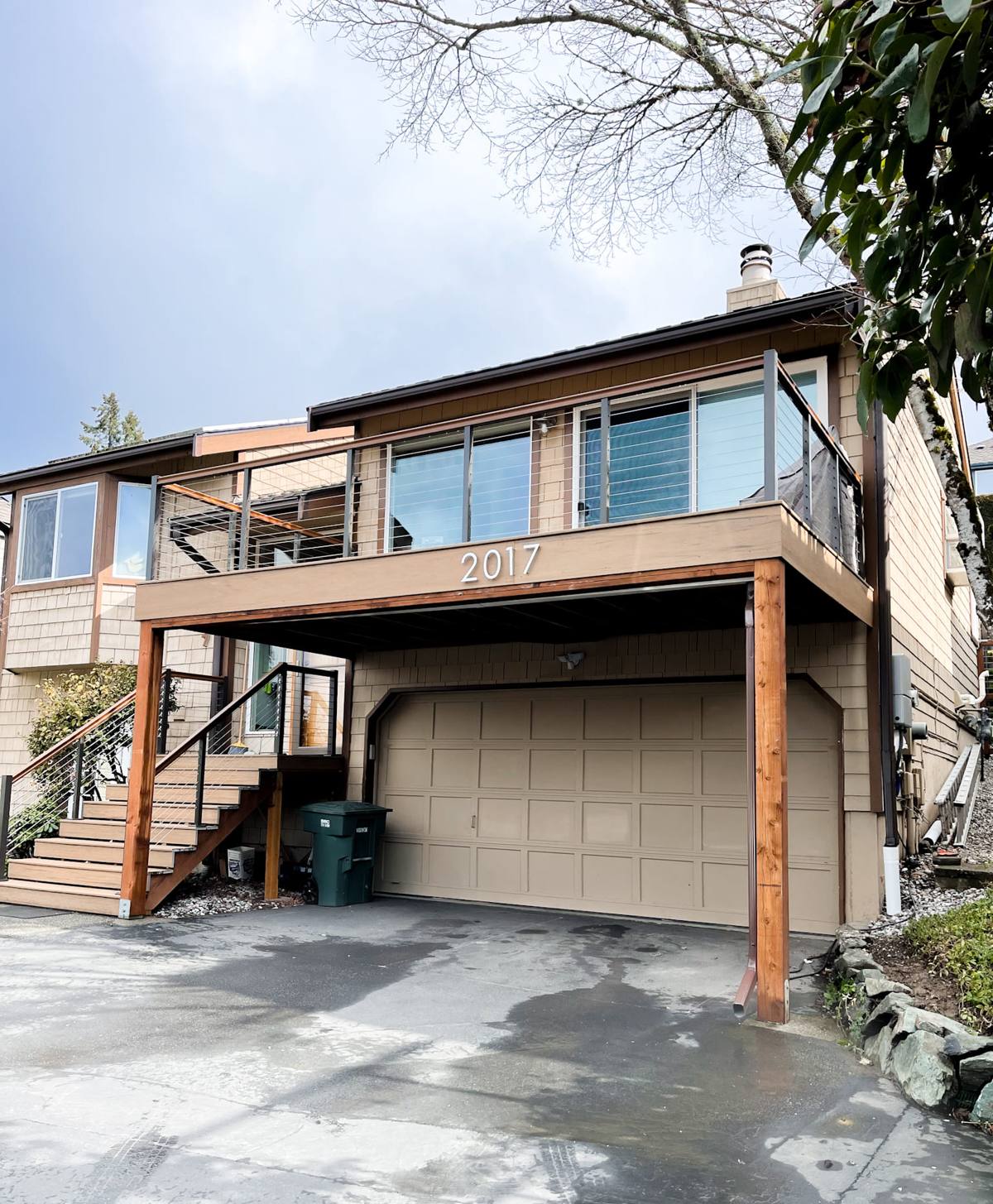
What Birch Bay Homes Actually Need From a Deck
Three things separate a deck that performs well here from one that starts failing within a few years: resistance to salt corrosion, real drainage planning, and surfaces that don't turn into a skating rink under moss growth.
Salt Air and Metal Fasteners
Salt spray carried on wind off the bay accelerates corrosion on any exposed metal — nails, screws, joist hangers, bolts. Fasteners that would hold up fine on a deck in a dry inland yard can start rusting and staining the decking around them within a couple of seasons this close to the water. This isn't a minor cosmetic issue; corroding hardware loses holding strength, and a deck's structural integrity depends on every hanger and fastener doing its job for the life of the structure.
Moss, Algae, and Deck Surfaces
Whatcom County's wet season runs long, and a deck that stays shaded or doesn't drain well will grow moss and algae on the surface almost every winter. Beyond the maintenance headache, a mossy deck board is genuinely slick — this is a safety issue for stairs and any walking surface, not just an appearance one. Board spacing, surface texture, and how much sun and airflow a deck gets all factor into how much of a moss problem a given design will have.
Choosing the Right Decking Material for Birch Bay
There's no single "best" decking material — the right pick depends on how close to the water you are, how much maintenance you're willing to do, and your budget. Here's how the common options compare for this specific climate.
| Material | Salt air / moisture behavior | Maintenance | Typical lifespan here |
|---|---|---|---|
| Pressure-treated wood | Needs sealing to resist moisture cycling; can cup or check without upkeep | Annual cleaning, re-sealing every 1-2 years | 10-15 years with consistent maintenance |
| Cedar | Naturally moisture- and rot-resistant; still benefits from periodic sealing near the shore | Cleaning and oil/sealer every 1-2 years | 15-20 years with upkeep |
| Composite decking | Doesn't absorb moisture or rot; capped boards resist salt staining well | Periodic washing to keep algae/moss from gripping the surface texture | 25+ years, manufacturer-dependent |
| PVC decking | Fully synthetic, no wood fiber to hold moisture or feed mold/algae | Low — occasional washing | 25+ years |
For homes with direct bay exposure, we lean homeowners toward composite or PVC decking more often than we would inland, simply because there's less upkeep riding on the homeowner's schedule and less material for salt and moisture to work on over time. That said, plenty of Birch Bay homeowners want the look and feel of real wood, and a well-built cedar deck with a realistic maintenance plan is a legitimate choice — we'll lay out the honest trade-offs for your specific site rather than push one material by default.
Framing and Structure: Getting the Bones Right
The decking surface gets all the attention, but the framing underneath is what determines whether a deck is still solid in fifteen years. This is where corner-cutting shows up years later, quietly, as soft spots or movement in the structure.
Footings and Ledger Attachment
Whatcom County's soil and drainage conditions vary block to block, so footing depth and sizing get set for the actual site, not a generic minimum. Where a deck attaches to the house (the ledger board), proper flashing is non-negotiable — this is the single most common point of water intrusion into a home's framing, and it matters more here than in a drier climate because there's simply more rain hitting that joint over the course of a year.
Fasteners and Hardware
Given the salt air issue described above, we spec stainless steel or heavy hot-dip galvanized fasteners and connectors rated for coastal exposure on decks in and around Birch Bay, rather than standard-grade hardware. It costs a bit more up front. It's also the difference between hardware that's still solid at year fifteen and hardware that's visibly rusting and staining the decking by year five.
Our Custom Deck Process in Birch Bay
- Site walk and consultation. We look at sun exposure, wind direction relative to the bay, existing drainage patterns, and how the deck will connect to the house before talking materials or layout.
- Design and material selection. We go over decking material, railing style, and layout options together, with honest pros and cons for your specific exposure and budget — not a one-size answer.
- Permitting. We handle the permit application and inspection scheduling required for Whatcom County or the applicable jurisdiction, so you're not chasing paperwork.
- Framing. Footings, ledger flashing, joists, and hardware get installed to spec, with coastal-rated fasteners throughout.
- Decking and railing installation. Board spacing, fastening pattern, and railing details get set with drainage and moss resistance in mind.
- Final walkthrough. We go over the finished deck with you, including what maintenance it actually needs and on what schedule.
Railings, Fascia, and Finishing Touches for Coastal Exposure
Railings and fascia boards take a lot of the same weather abuse as the decking itself, sometimes more, since vertical and horizontal surfaces both catch wind-driven rain. Metal railing components need the same coastal-rated hardware consideration as the framing underneath. Cable railing systems, while a popular look for a bay view, use stainless steel cable and fittings specifically because standard-grade versions corrode and lose tension near salt water faster than most homeowners expect. Wood fascia and trim benefit from the same sealing schedule as any wood decking on the project — skipping it because it's "just trim" is a common way small rot problems start.
Drainage and Layout Details That Matter Here
Beyond the footings and ledger flashing already covered, the overall layout of a deck affects how well it sheds water and resists moss. A few things we weigh on every Birch Bay project:
- Board spacing wide enough for water to drain through rather than pool on the surface
- Deck orientation and any structure above it (like a roof overhang) that affects how much sun and airflow reach the surface to dry it out between rain events
- Grading and drainage at ground level under and around the deck, so water doesn't collect against footings or the house foundation
- Stair and landing placement relative to prevailing wind and rain direction, since these tend to collect the most moss due to shade and foot traffic wear
Maintenance Realities for a Birch Bay Deck
Every deck material needs some upkeep in this climate — the differences are in how much and how often. Here's a realistic checklist regardless of what material you choose:
- Rinse or sweep the deck surface regularly through the wet season to keep organic debris from feeding moss and algae growth
- Check and clean gaps between boards where debris and moisture like to collect
- Inspect fasteners and hardware annually for early signs of rust or corrosion, especially on wood decks
- Re-seal or re-stain wood decking on the schedule appropriate to the product — don't wait until it's visibly weathered
- Address any soft spots, movement, or staining near the house ledger promptly, since these are early signs of water intrusion
- Keep gutters and downspouts near the deck clear so runoff isn't dumping extra water onto or under the structure
Permitting and Whatcom County Considerations
Most custom deck projects in this area require a building permit, and requirements can vary depending on the deck's height, size, and attachment to the house. We handle the permit process as part of the project so you're not left figuring out county requirements on your own. This also matters at resale — an unpermitted deck can complicate a home sale down the road, so getting it done right the first time protects your investment as well as your safety.
Why Hire a Crew That Already Works Birch Bay
A contractor who mostly works inland, drier parts of Whatcom County can build a technically sound deck that still underperforms here, simply because the fastener grade, sealing schedule, and drainage details that work fine in a low-salt, better-draining setting aren't enough for a bay-facing property. Working regularly in Birch Bay means we're not guessing at how a given material or hardware grade holds up to this specific combination of salt air, driving rain, and a long damp season — we've seen it play out on decks in this exact area and build accordingly from the start. That local knowledge shows up in decisions you won't see on a spec sheet: which fastener grade actually holds up, how much board spacing is worth the slightly wider gaps, and where drainage tends to go wrong on this kind of site.
If you're planning a new custom deck or replacing one that's showing its age in Birch Bay, we're happy to walk the site and talk through honest options for your budget and exposure. Reach out for a free, no-pressure estimate using the form below.