 Ferndale
 Decks in the Lummi Nation Area Take a Different Kind of Beating
Homes along the water near Ferndale and the Lummi Nation sit in one of the toughest microclimates in Whatcom County for exterior wood. You've got salt-laden air coming off Bellingham Bay and the Strait, driving rain that comes in sideways for months at a stretch, and a moss season that can run from October clear through May. A deck that would hold up fine twenty miles inland can be structurally tired here in half the time. If you're looking at soft boards, rusted fasteners, or a deck that just feels different underfoot than it used to, you're not imagining it — the environment is doing exactly what it does to every deck out here eventually.
This page is specifically about replacing decks for homes in and around the Lummi Nation community. It's not a generic deck page with the city name swapped in — the material choices, fastener specs, and drainage details we use here are picked because of what this particular stretch of coastline does to a structure over time.
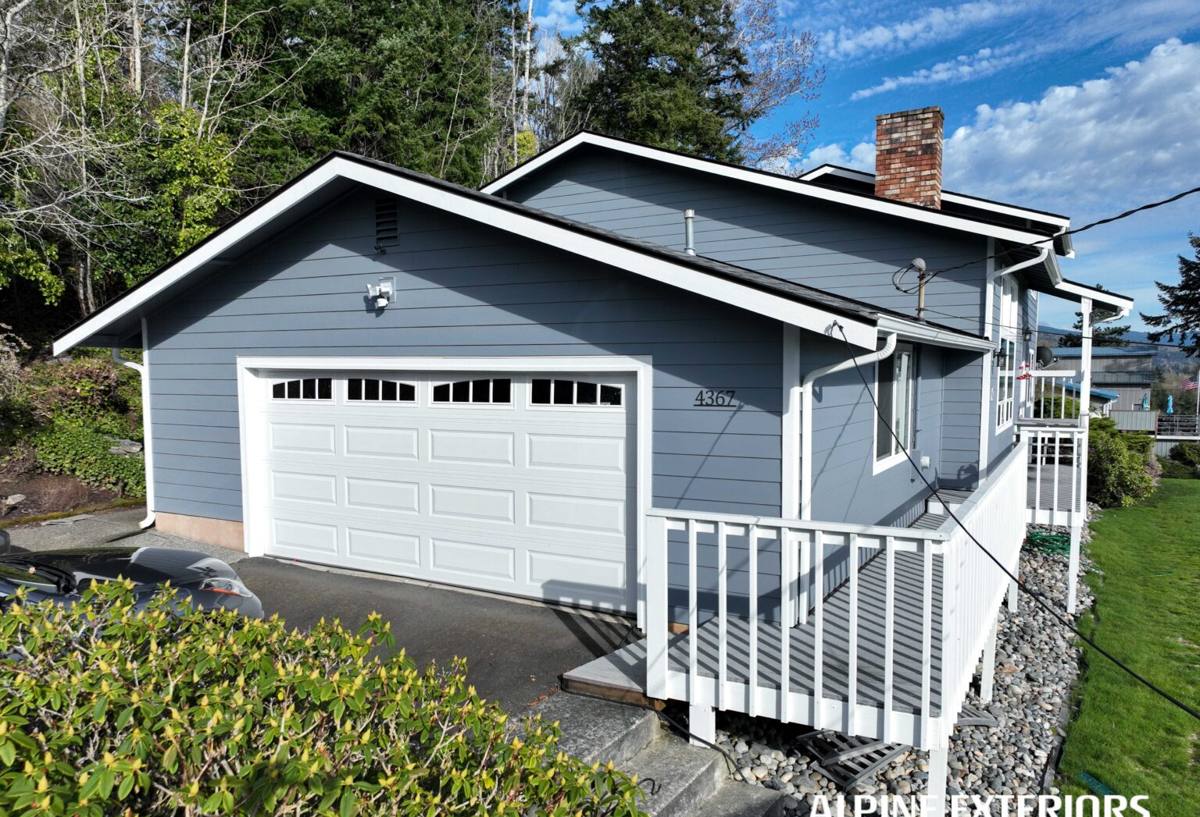
What Salt Air, Rain, and Moss Actually Do to a Deck
Salt Air and Metal Fatigue
Airborne salt accelerates corrosion on anything metal — nails, screws, joist hangers, post bases. On a lot of older decks built with standard galvanized hardware, you'll see rust bleeding through the wood around fastener heads well before the boards themselves look bad. Once hardware starts corroding, it loses holding strength, and that's a structural issue, not a cosmetic one.
Driving Rain and Trapped Moisture
Whatcom County rain doesn't just fall — in a lot of storms it drives in at an angle, which means water gets pushed into joints, under ledger boards, and into end grain that a straight-down rain would never reach. Decks that were built without real drainage planning — no gap-and-slope detailing, no flashing behind the ledger — end up holding water where it can't dry out, and that's where rot starts.
Moss and the Long Wet Season
A long moss season means more months where a deck surface stays damp and shaded, especially under trees or against the house. Moss holds moisture directly against the board surface, and on wood decking that means faster surface decay and a slicker, more slip-prone walking surface. On composite or wood alike, moss buildup also traps organic debris in the gaps between boards, which keeps drainage channels wet longer than they should be.
Signs a Deck Needs Replacement, Not Just Repair
Not every tired deck needs a full teardown. But there's a point where patching individual boards is throwing money at a structure that's already compromised underneath. Here's what tells us it's time to talk replacement instead of repair:
- Soft or spongy spots when you walk across the deck, especially near the house or stair landings
- Visible rust streaking from fastener heads or joist hangers
- Ledger board separation or gaps where the deck meets the house
- Posts that wobble or show soft wood at the base where they meet the footing
- Widespread moss or algae staining that keeps coming back after cleaning
- Boards that are cupping, splitting, or pulling away from fasteners
- A deck more than 15-20 years old that's never had the substructure inspected
If it's just a handful of surface boards showing wear and the framing underneath is solid, repair is the honest answer and that's what we'll tell you. Replacement makes sense once the framing, ledger, or footings are in question — patching decking on top of compromised framing just delays a bigger problem.
What a Correct Deck Replacement Actually Involves
Substructure First
Everything starts underneath. That means checking footings for movement or frost heave, sizing joists and beams correctly for the actual span and load, and using hardware rated for the exposure this location gets — not just whatever's cheapest at the yard. In a salt-air, high-rain environment, we treat fastener and hardware selection as a structural decision, not an afterthought.
Ledger and Flashing
The ledger board connection to the house is one of the most common failure points on any deck, and it's almost invisible once the deck is built. Proper flashing behind and over the ledger keeps water from working its way into the house rim joist — this is the detail that separates a deck that lasts from one that quietly rots the band board behind it.
Decking Material
What goes on top matters, but it's the last decision, not the first — see the comparison below.
Fasteners and Hardware
We spec corrosion-resistant fasteners and connectors sized for this coastal exposure. Standard interior-grade hardware is a false economy here — it corrodes faster than the wood or decking around it, and once fasteners weaken, the whole structure is compromised even if the boards look fine.
Drainage and Slope
A deck surface should shed water, not hold it. That means correct board spacing, a slight slope away from the house, and — where a deck sits over living space or a patio below — a real drainage system underneath rather than just gaps and hope.
Choosing a Decking Material for This Climate
There's no single "best" decking material — there's a best fit for your budget, maintenance appetite, and how much shade and moss exposure your particular lot gets. Here's how the common options actually perform in a salt-air, high-rain, moss-prone setting:
| Material | Moisture Behavior | Maintenance | Typical Lifespan Here |
|---|---|---|---|
| Pressure-treated wood | Absorbs water; needs sealing to resist moss and rot | Annual cleaning and re-sealing recommended | 10-15 years with upkeep |
| Cedar | Naturally rot-resistant but still needs sealing in this rainfall | Periodic cleaning and finish renewal | 15-20 years with upkeep |
| Composite decking | Doesn't absorb water like wood; surface can still hold moss/algae | Periodic washing, no sealing/staining | 25-30 years, manufacturer-dependent |
| PVC/capped composite | Fully moisture-resistant surface | Lowest maintenance; occasional washing | 25-30+ years |
Composite and PVC products cost more up front but remove the sealing and staining cycle entirely, which matters a lot in a climate where wood needs re-sealing more often than the manufacturer's mainland-average recommendation suggests. Wood costs less initially but only holds up if the maintenance actually happens every year — skip a season or two of sealing here and moss and moisture get ahead of you fast. We'll walk through the real trade-offs for your specific deck rather than push one product line.
Our Deck Replacement Process
- On-site assessment — we inspect the existing deck, ledger connection, footings, and framing to determine what's actually salvageable versus what needs to go.
- Honest scope and estimate — you get a clear breakdown of what's being replaced and why, with material options and straightforward pricing ranges.
- Tear-out — full removal of the old decking and any compromised framing, with the site protected and debris hauled off.
- Framing and ledger work — new or reinforced substructure, corrosion-resistant hardware, and proper ledger flashing.
- Decking installation — your chosen material installed with correct spacing and fastening for expansion, drainage, and this climate's moisture load.
- Final walkthrough — we go over the finished deck with you, including any maintenance recommendations specific to the material you chose.
Site and Permitting Considerations
Deck replacement projects near the water and around the Lummi Nation can involve site-specific considerations that don't come up on a typical inland lot — proximity to shoreline setbacks, drainage requirements, and, depending on the specific property, jurisdictional review that differs from standard county permitting. We don't guess on this. Before work starts, we help homeowners identify what applies to their specific property and make sure the project is squared away with whatever authority has jurisdiction over that site, whether that's Whatcom County or another applicable body. Getting this sequence right up front avoids delays once the crew is on-site.
Why Working With a Crew That Already Knows This Area Matters
A contractor who's replaced decks around the Lummi Nation and greater Ferndale coastline already knows which hardware holds up to the salt air here, how much slope and drainage a deck actually needs given the rainfall pattern, and which materials are worth the extra upfront cost versus which ones are fine for a given budget and exposure level. That's not something you get from a crew that mostly works drier inland neighborhoods and treats every coastal deck like a standard build. It shows up in fastener selection, in flashing details, and in whether the deck is still solid in ten years instead of needing another rebuild.
After Installation: Keeping a New Deck Ahead of the Climate
Whatever material you choose, a little seasonal attention goes a long way here. Wood decks need their sealant checked annually, ideally before the wet season sets in. Composite and PVC decks are lower-maintenance but still benefit from an annual wash to clear moss spores and organic debris out of the board gaps before they take hold. Keeping gutters and downspouts clear near the deck also matters — a lot of moisture problems on decks near the house start with water that had nowhere else to go.
If your deck is showing its age, or you just want an honest read on whether it needs repair or full replacement, we're happy to come take a look. Fill out the form below for a free, no-pressure estimate.