 Ferndale
 Window Installation Built for Nooksack's Wet Climate
Nooksack sits inland from Bellingham Bay, but that doesn't spare it from Whatcom County's defining weather pattern: long stretches of low-pressure systems pushing moisture off the Pacific and dumping it across the county for months at a time. Add in the shade and dampness that settle into rural properties near the river bottoms and tree lines around Nooksack, and you get a climate that is genuinely hard on window openings. Driving rain finds gaps that would go unnoticed in a drier region, and a long moss season keeps siding, trim, and window sills damp far longer than homeowners in most parts of the country ever deal with.
Windows are one of the most common places where that moisture gets into a house. A window that's slightly out of level, under-flashed, or sealed with the wrong material might look fine for a year or two and then start showing soft trim, fogged glass, or a draft that wasn't there before. In our experience working on homes throughout Whatcom County, most window failures aren't the window itself — they're the installation.
What Nooksack Homes Need From a Window Installation
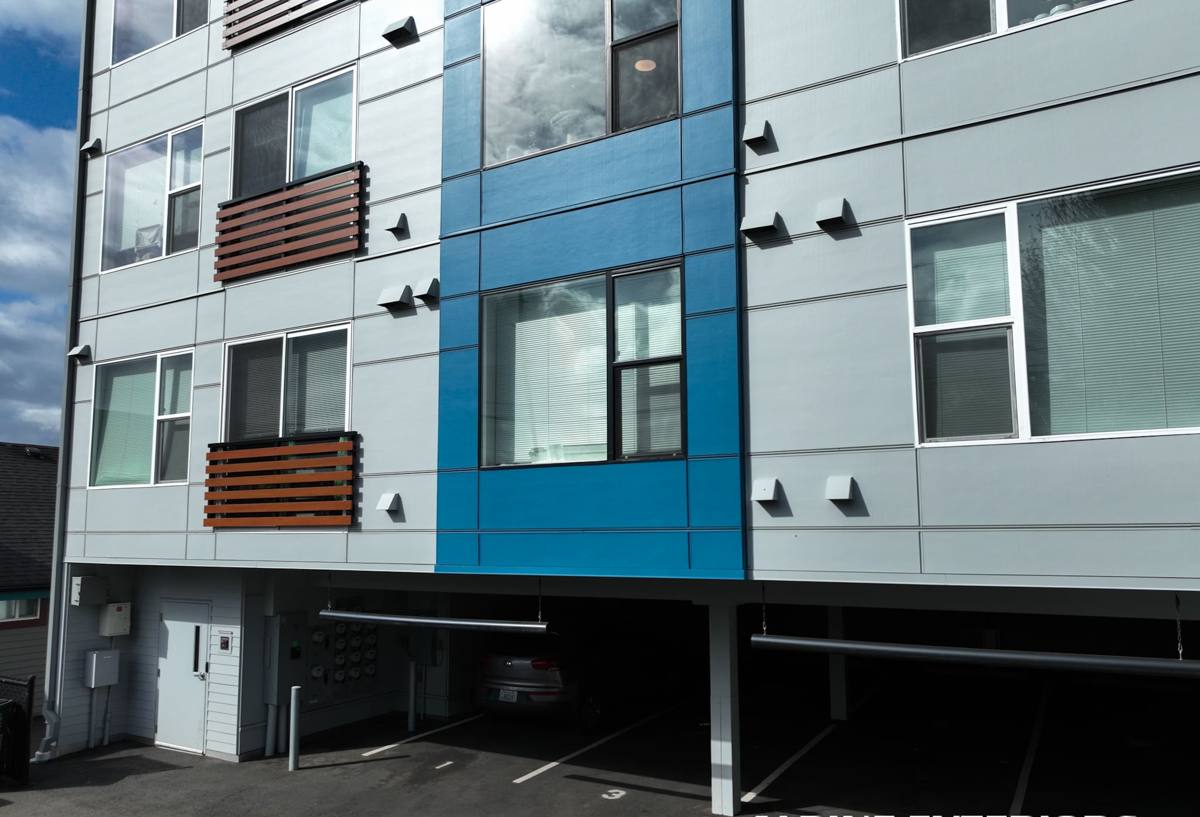
Nooksack has a mix of older farmhouses, mid-century ranch homes, and newer construction spread across a rural, semi-agricultural landscape. That mix means we see a wide range of window conditions — from original single-pane wood windows in older homes to aging vinyl units installed during a 1990s or 2000s remodel that are now failing at the seals.
Common issues we find on service calls
- Failed seals on double-pane units, showing up as fog or moisture between the glass panes
- Wood rot at sills and jambs from years of driving rain and slow-drying moss buildup
- Missing or degraded flashing behind the trim, letting water track down into the wall cavity
- Poor caulking or expanding foam used as the primary air seal instead of proper flashing
- Windows installed without adequate shimming, causing them to bind, sag, or operate poorly
- Condensation on interior glass in winter, often a sign of poor seal performance or ventilation issues rather than a window defect
Any of these can be made worse by the amount of rain Whatcom County sees over a typical winter. A window that leaks even a small amount during a heavy driving rain event will keep re-wetting the same wall cavity or sill year after year until the underlying wood structure is compromised.
What a Correct Window Installation Actually Involves
Replacing a window is not just removing the old unit and fitting a new one into the same hole. Done correctly, it's a sequence of steps where the flashing and sealing details matter more than the window product itself.
Our installation sequence
- Remove the old window and inspect the rough opening for rot, soft framing, or prior water damage
- Repair or rebuild any compromised framing before a new window ever goes in
- Install a sloped sill pan flashing so any water that gets past the window sheds outward, not into the wall
- Apply weather-resistive barrier and flashing tape in the correct shingle-lap order — sill first, then sides, then head flashing over the top
- Set the window level, plumb, and square, shimmed properly so the sash operates smoothly for years, not just on day one
- Insulate the gap between the frame and rough opening with a low-expansion foam or backer rod, never packed tight enough to bow the frame
- Seal and trim the exterior with a sealant rated for the temperature swings and constant moisture exposure typical of this region
Skipping the sill pan or head flashing step is one of the most common shortcuts we see from installations that later fail. It costs very little time to do correctly and is the single biggest factor in whether a window installation holds up through a Whatcom County winter.
Choosing the Right Window for a Nooksack Property
We install primarily vinyl and fiberglass-framed windows for this climate. Both hold up well against constant moisture exposure without the ongoing maintenance burden of a wood-clad frame, which can trap water at joints and require repainting or re-sealing on a recurring schedule. For homeowners who want the look of wood on the interior with better exterior durability, composite and fiberglass options give you that appearance without the exterior upkeep.
Glass and gas fill options
Double-pane, low-E glass with an argon gas fill is our standard recommendation for this region. It performs well in both our wet winters and warmer summer months, and low-E coatings help reduce heat loss without noticeably darkening the room. Triple-pane glass is available for homeowners who want the added performance, though for most single-family homes in Nooksack the added cost doesn't always match the benefit — we'll walk through that trade-off honestly during your estimate.
| Factor | What to consider for this area |
|---|---|
| Frame material | Vinyl or fiberglass resist moisture better than wood with less ongoing maintenance |
| Glass package | Double-pane low-E with argon fill is standard; triple-pane is an upgrade, not a necessity, for most homes |
| Flashing detail | Sill pan and shingle-lap flashing matter more to long-term performance than the window brand |
| Sealant type | Needs to handle repeated wet-dry cycling and temperature swings without cracking or pulling away |
| Rough opening condition | Older homes often need framing repair before the new window goes in — budget for the possibility |
| Operating style | Casement windows tend to seal tighter against driving rain than sliders; double-hung is the common middle ground |
Why Window Style Matters in a High-Rain Area
Not all operating styles handle wind-driven rain equally well. Casement windows, which crank outward and seal against the frame like a door, generally resist driving rain better than horizontal sliders because the sash compresses against the weatherstripping rather than sliding past it. Double-hung windows are a reasonable middle ground and remain the most common style in this area because they're familiar, easy to clean, and perform adequately when installed correctly. We'll talk through the trade-offs for your specific elevations — a window on the side of the house that takes the brunt of prevailing storms may be a better candidate for casement than a slider, even if the rest of the house uses a different style.
Our Process for Nooksack Homeowners
We start with an on-site visit to look at your existing windows, check for any signs of rot or water intrusion around the openings, and take accurate measurements. From there we walk you through window options and give you a written estimate with no pressure to decide on the spot.
What to expect on installation day
- Work areas covered and protected, both inside and outside the home
- Old windows removed one at a time so openings aren't left exposed longer than necessary
- Any rot or framing issues found are documented and discussed with you before we proceed
- Flashing and sealing done to the sequence above, not shortcut for speed
- Interior and exterior trim finished cleanly, with job site debris hauled away
- A final walkthrough so you can test every window before we consider the job done
We schedule around Whatcom County's weather rather than fighting it — installation is planned for dry windows where possible, since an open rough opening in the middle of a driving rain event is exactly the scenario we're trying to prevent for the long term.
Maintenance That Extends the Life of Your Installation
Even a correctly installed window benefits from basic upkeep in a climate like ours. A long moss season means organic growth can build up on nearby siding and trim, holding moisture against the window frame if it's not kept clear. We recommend homeowners rinse debris and moss buildup away from window trim a couple of times a year, check that exterior caulking lines remain intact, and keep gutters clear so overflow isn't running directly down onto window heads. None of this is expensive or time-consuming, but it meaningfully extends the service life of any window installation in this region.
Why Local Experience in Nooksack Matters
A crew that already works throughout Whatcom County understands how this specific climate behaves — not generic "rainy weather," but the particular combination of driving wind-driven rain, prolonged damp shoulder seasons, and moss growth that defines a Whatcom County winter. That experience shows up in the small decisions: how much slope to build into a sill pan, which sealants actually stay flexible through our temperature swings, and which framing details are most likely to have hidden rot in homes of a certain age in this area. It's the difference between an installation that looks fine at handoff and one that's still performing correctly ten winters from now.
If you're dealing with drafty, foggy, or aging windows on a Nooksack property, we're happy to take a look and give you a straightforward, no-pressure estimate. Use the form below to get started.