 Ferndale
 Why Bellingham Roofs Wear Differently Than Roofs Inland
A roof in Bellingham doesn't age the same way a roof does forty miles east. The combination of salt-laden air off Bellingham Bay, long stretches of driving rain, and a moss season that can run from October through May puts a different kind of stress on asphalt shingles than dry-side or inland climates ever see. None of that means shingle roofing is a bad fit for this area — it's one of the most practical, cost-effective options available — but it does mean the material choice, the underlayment, and the installation details all need to account for what this coastal corner of Whatcom County actually throws at a roof.
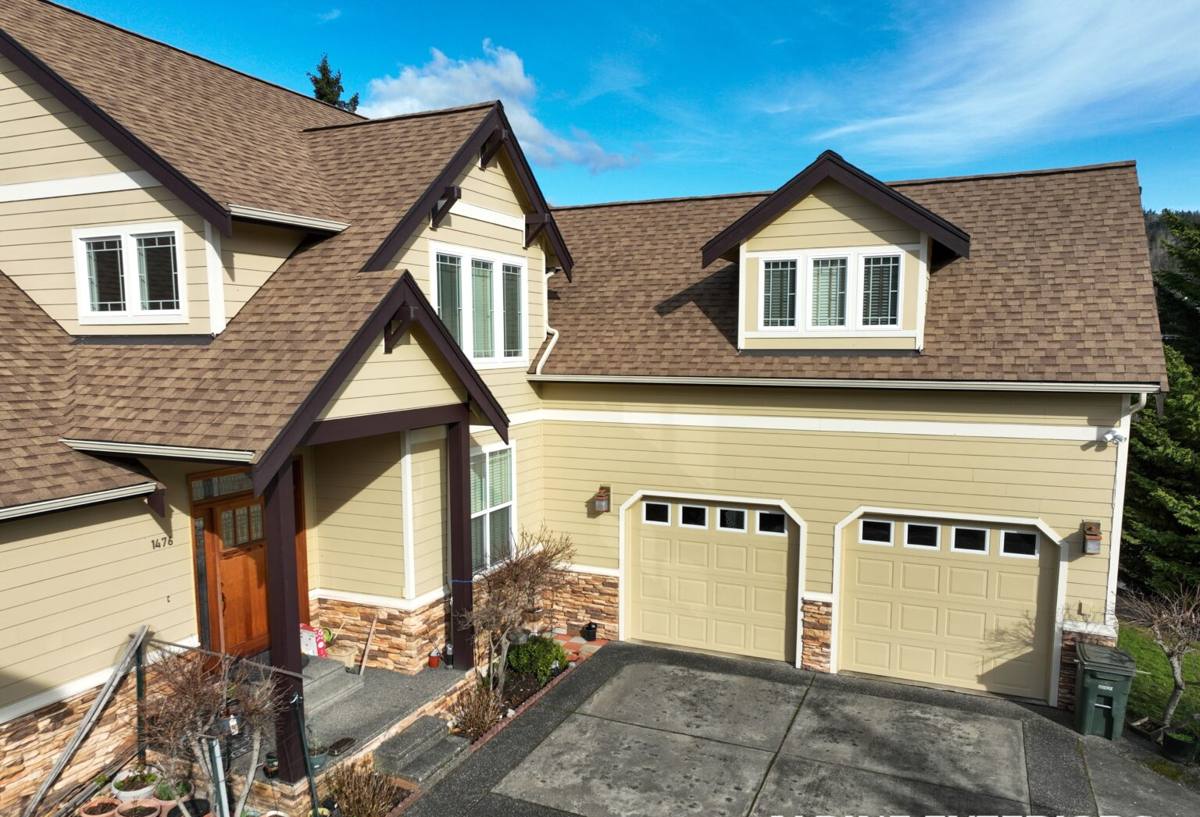
We install asphalt shingle roofing across Ferndale, Bellingham, and the surrounding communities, and the roofs that hold up longest here aren't necessarily the most expensive ones. They're the ones installed with the right sequence of underlayment, flashing, and ventilation, using shingles rated for wind and algae resistance rather than whatever's cheapest at the yard.
What Bellingham's Climate Actually Does to a Roof
Moisture that never fully lets up
Bellingham gets a lot of rain, but it's the persistence of it — weeks of low-intensity, wind-driven moisture — that matters more than any single storm. Water finds its way in through poorly lapped underlayment, under-flashed penetrations, and nail patterns that don't match the shingle's exposure line. A roof that would be fine in a drier climate can start leaking here within a few seasons if those details are rushed.
Moss, algae, and shaded roof planes
Tree cover and cool, damp conditions are ideal for moss and algae growth on north-facing and shaded roof slopes. Once moss gets a foothold under shingle tabs, it lifts them, holds water against the deck, and accelerates granule loss. Algae staining is mostly cosmetic, but heavy moss growth is a real structural concern if it's left unaddressed for years.
Salt air and wind exposure
Homes closer to the water deal with salt-laden air that can accelerate corrosion on exposed metal — flashing, fasteners, and vent hardware in particular. Add in wind gusts off the bay, and shingle wind rating becomes more than a spec sheet number; it's the difference between a roof that stays put in a windstorm and one that loses tabs.
What a Correctly Installed Shingle Roof Needs Here
"Correct" for this area means a few specific things beyond just laying shingles in rows:
- A synthetic or high-quality underlayment as full water-shedding backup, not just a code-minimum layer
- Ice-and-water shield or self-adhered membrane at eaves, valleys, and any low-slope transitions
- Corrosion-resistant flashing and fasteners at all penetrations, chimneys, and wall intersections
- Balanced intake and exhaust ventilation so moisture doesn't condense inside the attic
- A shingle rated for at least 110–130 mph wind exposure, sealed properly in cooler install temperatures
- Algae-resistant (copper- or zinc-infused) granules on shaded or north-facing slopes
Skip any one of these and the roof will likely still look fine for a year or two — the problems that come from cutting corners here tend to show up as leaks, granule loss, or moss infestation three to seven years down the road, not immediately.
Signs a Bellingham Roof Needs Attention
Homeowners often wait for an active leak before calling, but by the time water is showing up inside, the underlayment and deck have usually already taken damage. Earlier warning signs worth acting on:
- Moss visibly growing on shaded slopes, especially if it's thick enough to hold tabs open
- Granules collecting in gutters or downspouts after rain
- Shingle tabs that look curled, cupped, or lifted at the edges
- Dark streaking (algae) spreading across a slope
- Soft spots in the decking felt when walking the roof, or sagging visible from the ground
- Daylight or water staining visible in the attic near the roof deck
Catching these early usually means a repair. Waiting on them usually means a full tear-off.
Our Process for Bellingham Shingle Roofing Projects
Inspection and honest scoping
We start by getting on the roof, not just looking at it from the driveway. That means checking the deck condition, existing ventilation, flashing details, and moss or algae extent before recommending repair versus replacement. If a repair genuinely solves the problem, we'll say so.
Tear-off and deck check
Old shingles come off down to the deck so we can actually see what's underneath — soft or delaminated sheathing gets replaced before anything new goes down. Covering over a compromised deck is one of the most common shortcuts in this trade, and it guarantees an early failure.
Underlayment and flashing
We install underlayment sized for our rain patterns, self-adhered membrane at vulnerable areas, and new flashing at every penetration and wall intersection rather than reusing old metal.
Shingle installation and ventilation
Shingles go down per manufacturer spec for nail placement and exposure, with attention to sealing performance at the install temperature. We check or correct attic ventilation as part of the job, since a well-installed roof still fails prematurely if the attic beneath it is trapping moisture.
Final walkthrough
We walk the finished roof and the attic with the homeowner, explain what was done, and point out anything worth watching over the first year.
Shingle Options for Whatcom County Homes
Not every asphalt shingle performs the same in a marine climate. Here's how the common tiers compare for this area specifically:
| Shingle Type | Wind Rating | Algae Resistance | Typical Lifespan Here | Best For |
|---|---|---|---|---|
| 3-tab (economy) | Lower (60–70 mph) | Minimal unless upgraded | 12–18 years | Budget projects, low-slope simple roofs |
| Architectural / laminate | Moderate-high (110–130 mph) | Available with algae-resistant granules | 20–30 years | Most Bellingham homes — the standard choice |
| Premium/designer laminate | High (up to 130+ mph) | Built-in algae resistance standard | 25–35+ years | Higher-exposure or high-visibility roofs |
For most homes in this area, a mid-tier architectural shingle with algae-resistant granules is the practical sweet spot — enough wind and moss resistance to handle the climate without paying premium-tier pricing for a standard house.
Cost Factors for Bellingham Shingle Roofing
Every roof is different, but the price swings on a shingle roofing project here usually come down to a handful of factors, not the shingle brand alone:
| Factor | Why It Matters |
|---|---|
| Roof pitch and complexity | Steep slopes, multiple valleys, and dormers add labor time and safety requirements |
| Deck condition | Rotted or soft sheathing found during tear-off requires replacement before shingles go down |
| Layers to remove | Roofs with existing multiple layers take longer to strip and haul away |
| Ventilation upgrades needed | Adding or correcting intake/exhaust venting is often necessary but not always visible upfront |
| Shingle tier chosen | Economy, standard, and premium lines carry different material and warranty costs |
| Access and site conditions | Tree cover, steep lots, or limited staging space affect labor and disposal logistics |
We give a firm, itemized quote after inspection rather than a rough phone estimate — deck condition in particular is impossible to price accurately until the old roofing is off.
Maintenance That Actually Extends Roof Life Here
A shingle roof in this climate isn't maintenance-free, but the upkeep it needs is manageable if it's done consistently:
- Clean gutters and downspouts at least twice a year so water doesn't back up under the eaves
- Remove moss buildup on shaded slopes before it spreads under shingle tabs — done carefully, without pressure-washing the shingles
- Trim overhanging branches to reduce shade, debris, and abrasion on the roof surface
- Check attic ventilation isn't blocked by insulation at the eaves
- Have the roof inspected after any major windstorm, not just on a routine schedule
- Address small flashing or sealant issues promptly instead of waiting for a leak
Why It Matters to Hire a Crew That Already Works Bellingham
A lot of roofing problems in this area aren't installation failures in the obvious sense — they're the result of a crew building the same way they would in a drier, less mossy, less coastal market. Underlayment choices, ventilation calculations, and shingle selection all shift when moss season runs half the year and salt air is corroding fasteners faster than it would inland.
Working Whatcom County roofs regularly means we're not guessing at what holds up here — we're seeing which details actually matter over years, not just at the final walkthrough. That's the difference between a roof that needs attention again in five years and one that goes the full distance of its shingle warranty.
If you're weighing a repair against a full replacement, or just want an honest read on what condition your roof is really in, we're happy to take a look. Reach out for a free, no-pressure estimate using the form below.