 Ferndale
 Storm Damage Roof Repair for Bellingham Homes
Bellingham sits close enough to the water and open enough to Whatcom County's weather patterns that roofs here take a different kind of beating than roofs further inland. Wind off the Strait, driving rain that comes in sideways during a real blow, and long stretches of damp shade that never quite dry out all add up over a winter. When a storm rolls through and knocks something loose, the damage isn't always obvious from the ground, and waiting to deal with it usually turns a small fix into a bigger one. This page covers what storm damage repair actually looks like for a home in this area, what we check for, and how our process works from the first call to the finished job.
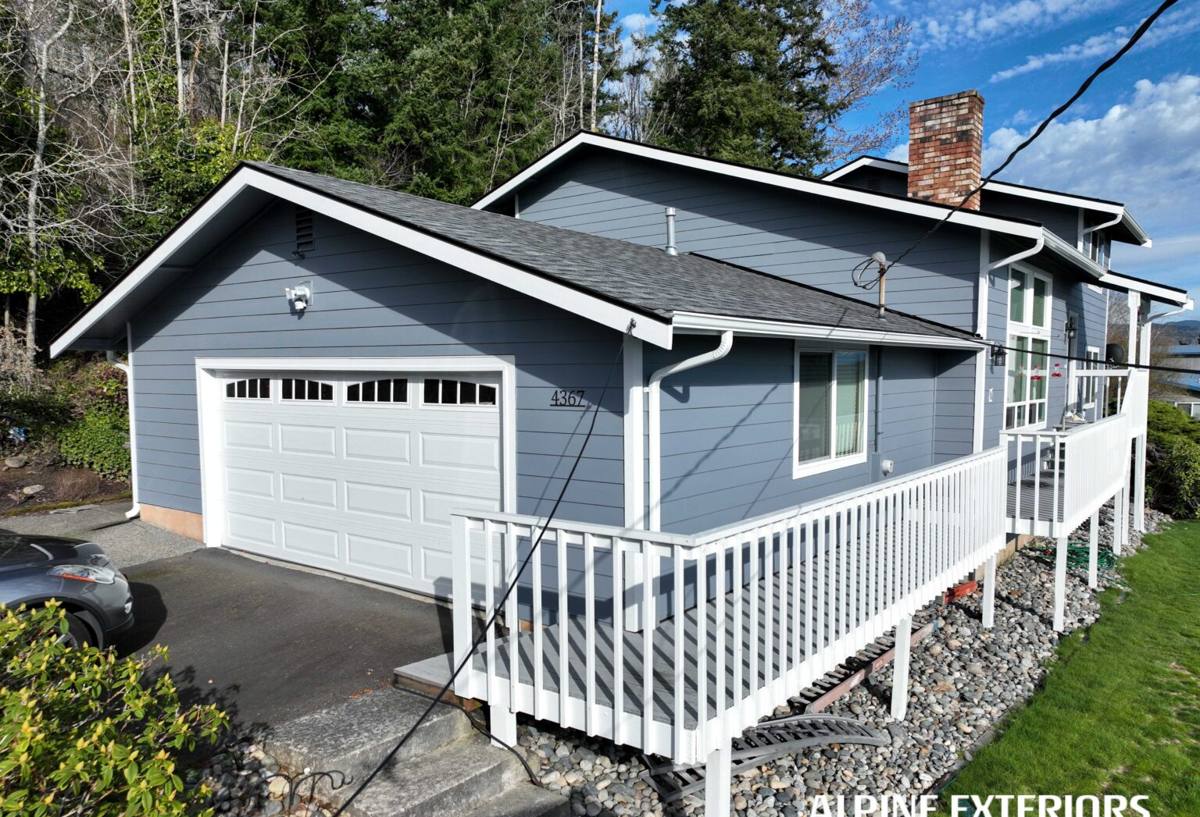
Signs Your Roof Has Storm Damage
Some storm damage is obvious — a branch through the roof deck, a section of shingles peeled back, visible daylight in the attic. Most of it isn't. After any significant wind or rain event, it's worth doing a quick walk-around and attic check for the following:
- Shingles that look lifted, curled, or creased, especially along ridge lines and roof edges
- Granules collecting in gutters or downspouts after a storm (a sign of shingle surface wear or impact)
- Flashing around chimneys, vents, or skylights that looks bent, separated, or missing altogether
- Water stains on ceilings or interior walls that appeared or grew after a storm
- Damp insulation, musty smell, or visible daylight when you look up from inside the attic
- Debris on the roof surface — branches, moss clumps, or granule buildup in valleys
- Gutters pulling away from the fascia or sagging under the weight of trapped water and debris
None of these by themselves mean you need a new roof. But any one of them is worth a closer look before the next storm finds the weak spot.
Why Bellingham's Coastal Exposure Matters
Wind-Driven Rain
A roof doesn't have to leak straight down to leak. When wind pushes rain sideways during a storm, water can work its way up under shingle tabs and around flashing that would hold up fine in a calm, straight-down rain. This is one of the most common reasons a roof that "looks fine" from the street ends up with a wet spot on the ceiling after a windy system moves through.
Salt Air
Bellingham's proximity to the water means metal roof components — flashing, fasteners, gutter hardware — face more corrosion pressure than the same materials would inland. It doesn't happen overnight, but over years, salt-influenced air accelerates rust on lower-grade metal, which is why the flashing and fastener choices we make matter as much as the shingles themselves.
Moss Season
Whatcom County's long wet season gives moss and algae plenty of time to establish on north-facing slopes and shaded valleys. Moss doesn't just look bad — it holds moisture against the shingle surface, works its way under tabs, and can lift shingles enough that wind and rain get underneath them during the next storm. A lot of what looks like "storm damage" after a bad winter is really moss-related deterioration that a storm finally exposed.
What a Correct Storm Damage Repair Actually Involves
Inspection Before Anything Else
A proper repair starts with actually getting on the roof (weather permitting) and in the attic, not just eyeballing it from the driveway. We're checking the decking underneath the shingles, not just the shingles themselves — a soft or delaminated deck board changes the whole scope of the repair.
Emergency Protection
If there's an active leak or exposed decking, the first priority is stopping water intrusion — tarping or temporary sealing — before scheduling the permanent fix. This matters more in our climate than in drier regions, since the next rain is rarely far off.
Decking Repair
Any decking that's soft, delaminated, or water-damaged gets replaced, not covered over. Shingling over bad decking is one of the more common shortcuts we see, and it just guarantees a repeat problem.
Flashing Done Right
Flashing failure is behind a large share of the leaks we get called out for, especially around chimneys, skylights, and roof-to-wall transitions. Correct flashing repair means proper step flashing and counter-flashing integration, not just a bead of sealant over the old metal — sealant is a short-term patch, not a fix.
Shingle Matching
When we're repairing a section rather than the whole roof, we match the existing shingle profile and color as closely as the product line allows. Exact matches aren't always possible if the original shingles have weathered or the product's been discontinued, and we'll tell you honestly up front if that's the case rather than let you find out later.
Our Process, Start to Finish
- Call or request an estimate. Tell us what you're seeing — a leak, visible damage, or just wanting a post-storm check.
- On-site inspection. We get on the roof and in the attic to find the actual source, not just the visible symptom.
- Written scope and estimate. You get a clear explanation of what's damaged, what needs to happen, and an honest cost range before any work starts.
- Temporary protection if needed. If there's active water intrusion, we address that first regardless of when the full repair is scheduled.
- Repair work. Decking, flashing, and shingle work completed to match the surrounding roof as closely as possible.
- Final walkthrough. We show you what was done and what to watch for going forward.
Repair vs. Replacement: How We Decide
Not every storm-damaged roof needs to come off. The decision usually comes down to a few honest factors:
| Factor | Repair Usually Makes Sense | Replacement Usually Makes Sense |
|---|---|---|
| Roof age | Under 12–15 years, or a newer roof with isolated damage | Near or past the material's expected service life |
| Extent of damage | Localized to one slope, valley, or penetration | Widespread across multiple slopes or repeated leak points |
| Decking condition | Solid, dry decking under the damaged area | Multiple soft or delaminated sections found during inspection |
| Repair history | First or second repair on this roof | Third or more repair in a short span — a pattern, not an incident |
| Material availability | Existing shingle line still available or close enough to match | Discontinued product with no reasonable match |
Cost ranges vary a lot depending on scope — an isolated flashing or small shingle section repair often runs into the low hundreds to low thousands of dollars, while damage that involves significant decking replacement or a full slope can run into several thousand. We won't know which category your roof falls into until we've actually looked at it, and we'd rather tell you that than guess over the phone.
Insurance Claims and Storm Damage
If the damage is significant enough that you're considering a homeowner's insurance claim, documentation matters. We can provide a written inspection report describing what we found and what caused it, which your adjuster will want to see. We're not in the business of inflating a claim or telling you what an insurer wants to hear — our job is to document the actual condition of the roof accurately, which is what holds up when a claim is reviewed.
Why a Ferndale-Based Crew That Works Bellingham Matters
We're not driving in from out of the county to look at your roof once and disappear. Working Ferndale and Bellingham regularly means we're familiar with how local roofs age under this specific combination of coastal wind, moss pressure, and rain patterns — which is different from what a crew based in a drier or more inland market deals with day to day. It also means if something needs a follow-up check after the next storm, we're not far away and not starting from scratch on your roof's history.
Reducing Future Storm Risk
A repair fixes the current problem. A few ongoing habits reduce how often storm damage happens in the first place:
- Keep gutters and downspouts clear, especially heading into fall storm season
- Trim back branches that overhang the roof — both for direct impact risk and to reduce shaded, moss-prone areas
- Have moss addressed before it works its way under shingle tabs, not after
- Get an inspection after any major wind event, even if nothing looks obviously wrong from the ground
- Address small flashing or shingle issues promptly rather than waiting for the next storm to make them worse
If you're dealing with storm damage now, or just want a roof checked out after a recent blow, we're happy to come take an honest look. The estimate is free, there's no pressure to move forward, and you'll get a straight answer about what your roof actually needs.