 Ferndale
 Why Birch Bay Roofs Take a Different Kind of Beating
Birch Bay sits right up against the water, and that changes what a roof has to deal with compared to homes a few miles inland in Whatcom County. Salt-laden air, wind-driven rain off the water, and a moss season that runs longer than most homeowners expect all work on a roof at the same time, year after year. A repair that would hold up fine in a dry inland climate can fail fast out here if it doesn't account for these three things.
Salt Air and Metal Fasteners
Salt air speeds up corrosion on exposed metal — nail heads, flashing edges, gutter fasteners, and vent boots all take the hit first. A repair that reuses corroded fasteners or unsealed metal is a repair that's already counting down to its next failure. We factor salt exposure into what hardware and sealants we use on every Birch Bay job, not just the ones right on the water.
Driving Rain and Wind-Driven Water
Storms coming off the water don't just drop rain straight down — they push it sideways, up under shingle edges and into laps that were never designed to shed water horizontally. This is why so many "small" leaks in Birch Bay actually trace back to flashing and underlayment gaps rather than a hole in the shingle itself. A patch that only addresses the visible damage often misses the water path entirely.
The Long Moss Season
Whatcom County's damp, shaded conditions give moss and algae a long window to establish themselves, and Birch Bay's tree cover and marine humidity make it worse than many surrounding areas. Moss doesn't just look bad — it holds moisture against the roof surface, lifts shingle edges as it grows, and channels water into seams that were otherwise fine. Any repair that ignores existing moss growth is treating the symptom, not the cause.
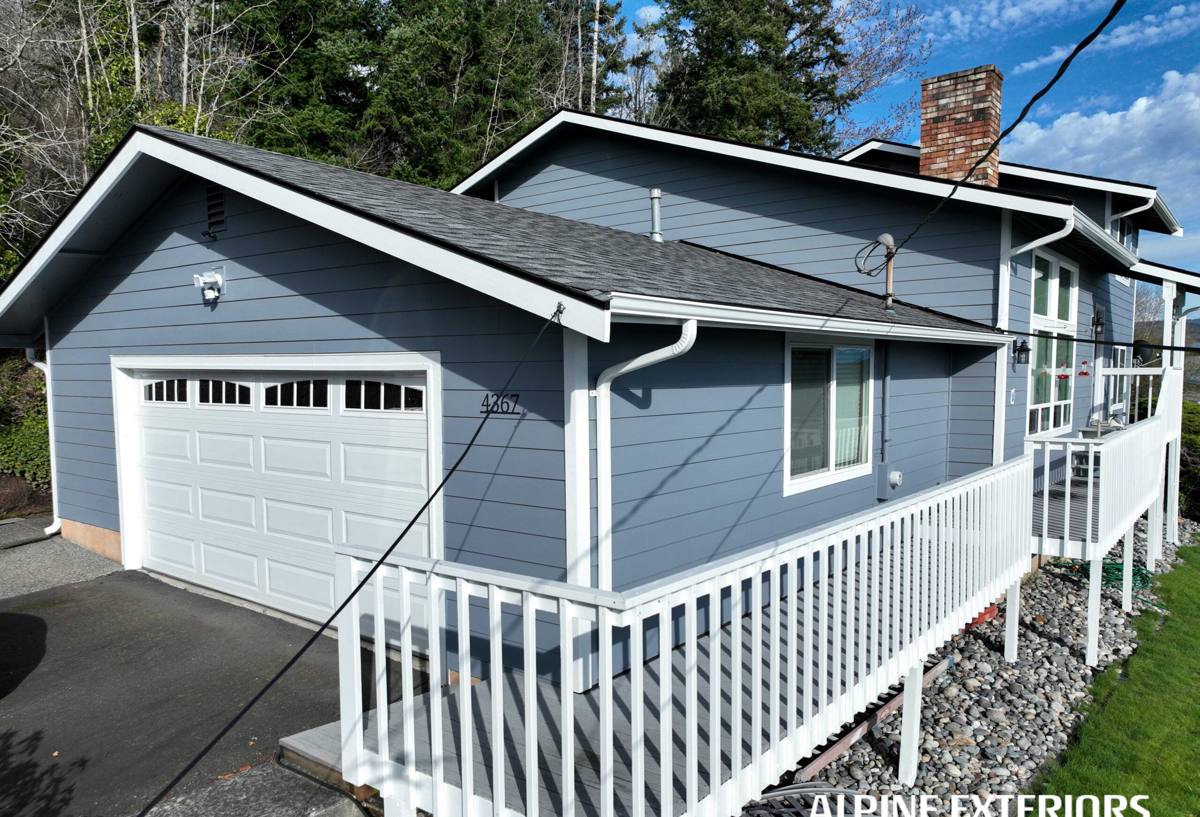
Common Roof Repair Issues We See in Birch Bay
Most repair calls in this area fall into a handful of recurring categories. Knowing which one you're dealing with helps set expectations before we even get on the roof.
| Issue | Likely Cause Locally | What the Fix Involves |
|---|---|---|
| Interior ceiling stain, no visible roof damage | Wind-driven rain forced under flashing or shingle laps | Locate the actual water entry point, not just the stain location; rebuild flashing or lap detail |
| Lifted or cupped shingles | Moss growth pushing up edges; sun and salt-air aging | Remove moss and debris, replace affected shingles, treat surface to slow regrowth |
| Corroded flashing or fasteners | Salt air accelerating metal breakdown | Replace with corrosion-appropriate materials, reseal properly |
| Granule loss / bald patches | Age combined with constant damp-dry cycling | Assess remaining shingle life; patch if isolated, flag for replacement planning if widespread |
| Sagging or soft decking near a leak | Long-term moisture intrusion before the leak was noticed | Cut back to sound decking, replace, then address the original water path |
What a Correct Roof Repair Actually Involves
A roof repair done right is more than swapping out damaged shingles. It's a diagnosis first, then a fix that matches the original roofing system.
Diagnosis Beyond the Leak Point
Water travels. A stain on a bedroom ceiling might come from a flashing failure ten feet away, running along a rafter before it shows up. We trace the path, not just the symptom — checking flashing, valleys, penetrations (vents, chimneys, skylights), and the underlayment condition around the visible damage before deciding on a fix.
Matching Materials and Techniques
A repair should blend into the existing roof system in both material and installation method — same general shingle profile and weight where possible, flashing details that shed water the same way the surrounding roof does, and fasteners suited to a marine climate. A mismatched patch can create a new weak point right at its own edges, which is a common reason "repaired" roofs leak again within a year or two.
Our Process for Birch Bay Roof Repair Calls
- Inspection first. We look at the roof surface, attic or crawlspace access where available, and the areas most exposed to wind and rain off the water.
- Honest diagnosis. We explain what's actually causing the problem, in plain terms, before recommending any work.
- Written scope and estimate. You know what's being done and roughly what it will cost before we start.
- Repair using climate-appropriate materials. Corrosion-resistant fasteners, properly lapped flashing, and underlayment that holds up to sustained damp conditions.
- Cleanup and a final check. We confirm the fix addresses the actual water path, not just the visible symptom, before we consider the job done.
Repair vs. Replacement: Making the Right Call
Not every roof problem needs a full replacement, and not every leak can be permanently solved with a patch. The honest answer depends on a few factors.
| Factor | Leans Toward Repair | Leans Toward Replacement |
|---|---|---|
| Age of roof | Well within expected lifespan for the material | At or past typical service life for the material |
| Extent of damage | Isolated to one section or penetration | Spread across multiple slopes or repeated leak history |
| Underlying decking | Sound, no soft spots found | Soft, delaminating, or repeatedly wet decking |
| Moss/algae history | Recent, surface-level growth | Long-term growth that's degraded the shingle mat underneath |
| Cost over time | Repair cost is small relative to remaining roof life | Repeated repairs are approaching the cost of replacement |
We'll tell you straight if a repair is a reasonable, durable fix or if it's just delaying a replacement you'll need soon anyway. There's no benefit to us talking a homeowner into work the roof doesn't need.
Moss, Algae, and Long-Term Roof Health
Given how much moss season affects roofs in this part of Whatcom County, the work that happens between repairs matters almost as much as the repair itself. A few habits go a long way toward keeping a Birch Bay roof out of trouble.
- Keep overhanging branches trimmed back so roof surfaces get more sun and dry out faster after rain.
- Clear gutters and valleys of needles and debris before they hold moisture against the roof edge.
- Have moss physically removed rather than just treated on the surface — chemical treatment alone doesn't undo the lifting it's already caused.
- Watch for granule buildup in gutters, which signals accelerated shingle wear.
- Get a roof looked at after any major windstorm off the water, even if nothing looks obviously wrong from the ground.
- Don't wait on a small ceiling stain — by the time it's visible inside, the water has usually been getting in for a while.
Why a Crew That Already Works Birch Bay Matters
A contractor who mostly works drier, inland jobs can still do competent general roofing work, but they may not default to the fastener grade, flashing details, or moss-prevention steps that make sense for a property exposed to salt air and driving rain. Working Birch Bay and the surrounding Ferndale area regularly means we're not guessing at what holds up here — we're applying what we've seen actually last through another wet Pacific Northwest winter versus what fails early. That local pattern recognition is most of what separates a repair that holds from one you'll be calling about again next year.
What to Expect: Timeline, Access, and Materials
Timeline
Most straightforward repairs — a section of flashing, a run of damaged shingles, a resealed penetration — are a one-day job once we're on site. Repairs tied to hidden water damage (soft decking, for example) take longer because the extent isn't fully known until we open up the area. We'll always tell you if a "quick fix" call turned into something bigger once we can see the decking underneath.
Materials and Access
We match materials to what's already on the roof wherever a good match is available, and we use fasteners and flashing rated for coastal, humid conditions rather than whatever is cheapest. Weather windows matter too — we won't install a repair in conditions that compromise how it seals, which occasionally means scheduling around a stretch of driving rain rather than pushing through it.
Ready for a Straight Answer on Your Roof?
If you're dealing with a leak, moss buildup, or storm damage on a Birch Bay home, it's worth getting an honest, local look before assuming the worst — or before assuming a quick patch will hold. Reach out for a free, no-pressure estimate using the form below, and we'll tell you plainly what we see and what it would take to fix it right.