 Ferndale
 Why Siding Takes a Different Beating in Birch Bay
Birch Bay sits right where Whatcom County's weather gets amplified by open water. Homes here don't just deal with generic Pacific Northwest rain — they deal with salt-laden air coming off the bay, wind-driven rain that hits siding at an angle instead of falling straight down, and a moss season that can run most of the year in shaded, north-facing exposures. None of that is dramatic on its own, but stacked together over years, it's exactly the combination that finds every weak seam, every gap in caulking, and every spot where a siding installation cut a corner.
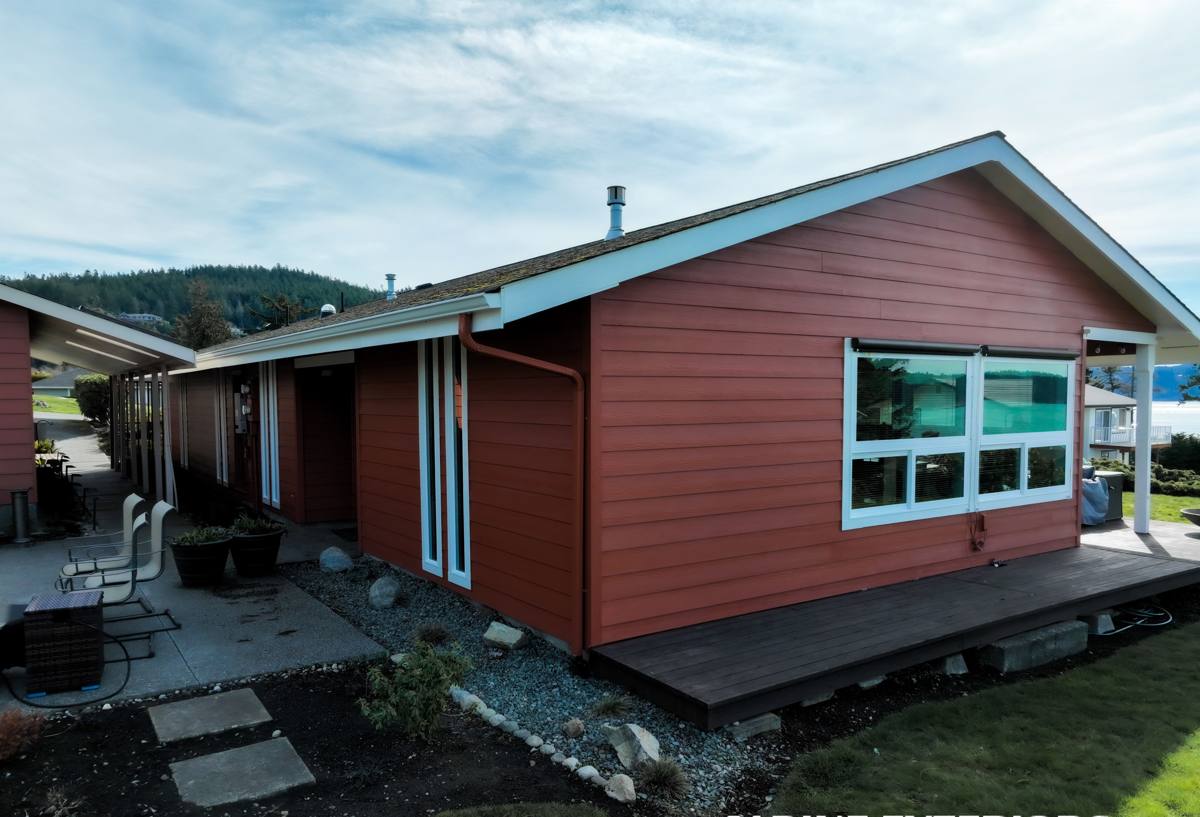
We do repair work throughout Ferndale and the surrounding Whatcom County coastline, and Birch Bay siding calls have a recognizable pattern: damage clusters on the water-facing and shaded sides of the house, it shows up earlier than you'd expect on newer homes, and it's often worse than it looks from the ground. This page is about what that means for repair work specifically — not full replacement, not siding in general, but fixing what's actually wrong with the siding on a Birch Bay home the right way.
The Early Warning Signs Worth a Repair Call
Salt Air and Corrosion Damage
Salt air doesn't just affect metal — though you'll often see it first on flashing, nail heads, and trim fasteners that start showing rust streaks or bleed-through stains on the siding below them. On fiber cement, the bigger concern is what corroded or failing fasteners do to the siding itself: a fastener that's lost its grip lets a board work loose, and a loose board is an open door for water.
Moss, Mildew, and Trapped Moisture
Birch Bay's tree cover and marine humidity keep shaded wall sections damp longer than homes further inland. Moss and mildew growth on siding is often treated as a cosmetic problem, but it's really a moisture-retention problem — moss holds water against the surface and keeps it there, softening caulk joints, degrading paint film, and eventually reaching the substrate underneath. A green or black-streaked wall is worth a look even if nothing looks physically damaged yet.
Wind and Storm Damage
Open exposure to the bay means wind gusts hit harder and more often than they do a few miles inland. That shows up as cracked or split boards, popped or backed-out fasteners, and lifted corner trim — damage that's easy to miss from the ground but that opens a direct path for driving rain behind the siding.
Caulking, Trim, and Seam Failures
Every siding system depends on its joints as much as its panels. Caulking around windows, doors, and butt joints has a service life, and in this climate it tends to fail faster than manufacturer estimates suggest. Cracked, shrunken, or missing caulk at seams is one of the most common — and most fixable — causes of water intrusion we find on repair calls.
Repair or Replace? How We Make That Call
Not every damaged section means a full re-side. The honest answer depends on how much of the wall is affected, what's underneath it, and how the damage got there in the first place. Here's how we think through it on a typical Birch Bay home:
| Situation | Usually a Repair | Usually a Replacement |
|---|---|---|
| Damage extent | Isolated boards, corners, or a single wall section | Damage spread across multiple sides of the house |
| Cause | Impact damage, a failed seam, aging caulk, isolated fastener failure | Systemic moisture intrusion behind the siding, rot in the sheathing |
| Material underneath | Sheathing and house wrap are sound when opened up | Sheathing shows soft spots, staining, or rot on inspection |
| Existing siding age/material | James Hardie or another sound fiber cement system in good general condition | Original material is failing broadly, discontinued, or was never installed correctly |
| Cost logic | Repair cost is a fraction of full re-siding and solves the problem | Repeated repairs would cost more over time than one correct replacement |
We won't recommend replacing a wall that just needs a few boards, and we won't patch over a moisture problem that's going to reappear behind new caulk in eighteen months. Part of the estimate visit is telling you honestly which category your home falls into.
What a Correct Siding Repair Actually Involves
Diagnosing the Cause First
The most common mistake in siding repair isn't bad workmanship on the visible patch — it's fixing the symptom and leaving the cause in place. A cracked board might be the result of a fastening error, a drainage problem behind the wall, or a one-time impact. Each of those needs a different fix, and guessing wrong means the same repair call again in a year or two.
Matching Material, Not Just Color
Repairing James Hardie siding correctly means using Hardie boards, Hardie trim, and compatible fasteners and caulking — not a close-enough substitute from a different manufacturer. Board profile, thickness, and reveal all need to match what's already on the wall, or the repair will read as a visible patch instead of blending in.
Restoring the Water Management System
Siding is only one layer of a wall's defense against water. Behind it should be intact house wrap, correctly lapped flashing, and proper clearances at the bottom edge and around penetrations. A repair that reinstalls siding without checking or restoring that layer is cosmetic, not structural — and on a bay-facing wall, that's the layer that actually matters most.
Why We Repair — and Install — Only James Hardie Fiber Cement
We don't work with vinyl, LP SmartSide, primed wood, or other fiber cement brands, and that standard applies to repair work the same as new installations. James Hardie is non-combustible, engineered specifically for wet marine climates through its HZ10 product line, and finished at the factory with ColorPlus technology rather than field-applied paint — which matters directly for repair work, since factory-cured finish holds up to salt air and UV exposure far better than paint applied on site. When we repair a Hardie wall, we're working with a system we know how to match and warranty correctly. When a home has a different material, we'll tell you honestly what we see and, if it's reached the point of real failure, explain why our recommendation for the replacement is Hardie rather than another product with the same trade-offs.
Our Process for a Birch Bay Repair Call
- Inspection: We walk the full exterior, not just the section you called about — coastal damage rarely stays isolated to one spot.
- Diagnosis: We identify whether the cause is fastener failure, seam failure, impact damage, or moisture intrusion behind the wall, and check the sheathing where we have access.
- Written estimate: A clear scope of what needs repair, what materials match your existing siding, and an honest repair-versus-replace recommendation if the damage is more extensive than expected.
- The repair: Matching Hardie material, correct fastening, restored flashing and water management where needed, and color-matched finish work.
- Cleanup and walkthrough: We show you what was found and what was fixed, so you know what to watch for going forward.
Between-Repair Maintenance: A Birch Bay Homeowner's Checklist
Most of what shortens siding's service life on the bay is preventable with a few habits between professional visits:
- Rinse salt residue and grime off siding once or twice a year, especially on walls facing the water
- Trim back trees and shrubs that keep any wall section shaded and damp longer than the rest of the house
- Check and clear gutters before the fall rains — overflow is one of the most common causes of hidden water damage at the siding's bottom edge
- Walk the exterior after major windstorms looking for lifted trim, popped fasteners, or cracked boards
- Address soft, discolored, or shrunken caulk at joints and seams before it fails completely
- Treat visible moss or mildew growth early rather than letting it establish on the surface
Why Hiring a Crew That Already Works This Coastline Matters
Siding repair in a marine climate is a different skill set than general siding repair. A contractor who mostly works inland may not think to check flashing behind a corroded fastener, or may not recognize how much worse moss-related moisture gets on a shaded wall two blocks from the water compared to one further inland. Crews who work Birch Bay and the rest of Ferndale's coastal stretch regularly see the same failure patterns often enough to diagnose them quickly and fix the actual cause — not just patch the visible symptom.
If you're seeing damage, staining, or moss buildup on your siding, we're happy to take a look and give you a straight answer about what's going on and what it would take to fix it. Reach out for a free, no-pressure estimate using the form below.