 Ferndale
 Why Siding Takes More Abuse Near the Water
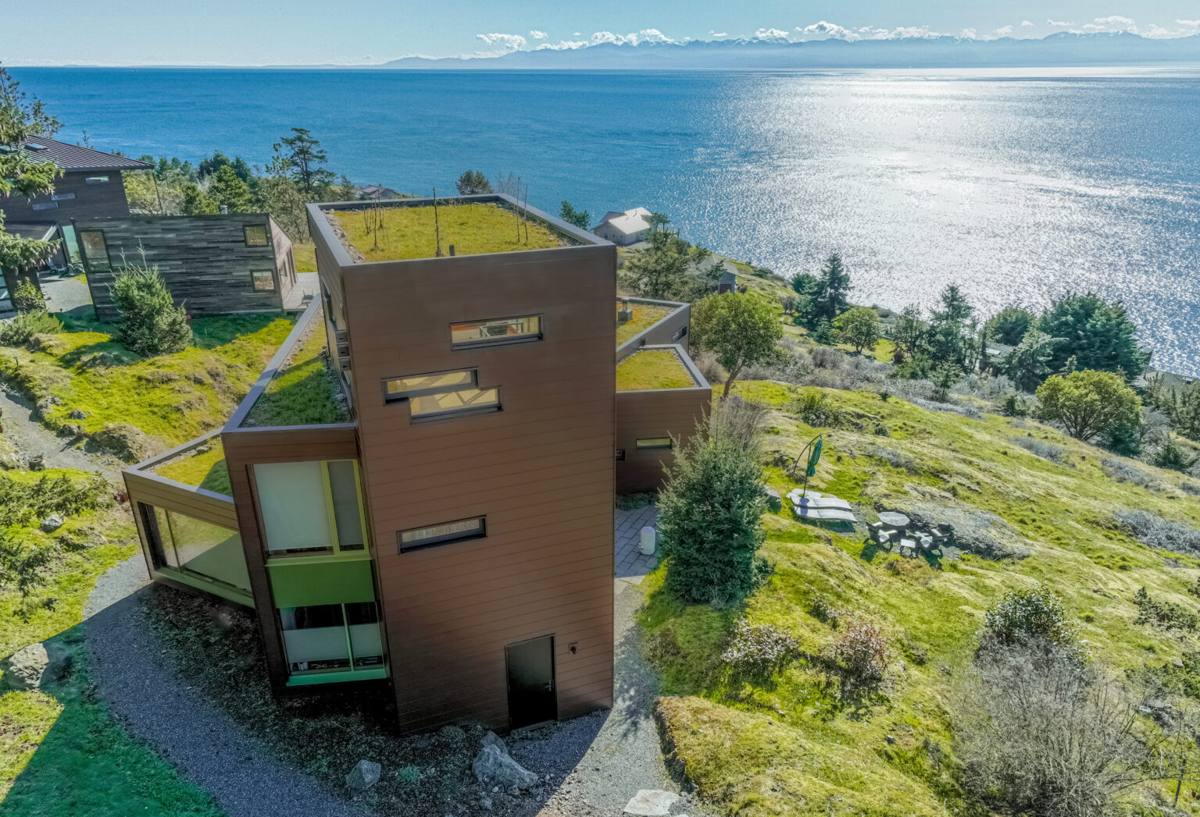
Homes in and around the Lummi Nation sit close enough to Bellingham Bay and the open water of the Salish Sea that siding has to deal with conditions a lot of inland Whatcom County houses never see. Salt-laden air moves in off the water and settles on exterior surfaces daily, not just during storms. Combine that with the driving rain that comes sideways off the water during a southwesterly blow, and you've got siding that's wet, salty, and under wind pressure far more often than the average product spec sheet assumes.
Then there's the shade. Mature trees, close lot lines, and north- and east-facing walls in this part of the county stay damp for days after a storm passes. That combination of moisture and low sun exposure is exactly what moss and algae need to take hold, and once it gets a foothold on siding it doesn't let go on its own. A four- or five-month "moss season" isn't an exaggeration here — it's a normal stretch of the year that siding has to shed water and resist growth through.
None of this is unique to any one street or lot. It's the baseline for waterfront and near-waterfront property throughout this stretch of Whatcom County, and it's why the siding material and the installation details matter more here than they would forty miles inland.
What Salt Air, Rain, and Moss Actually Do to Siding
- Salt air accelerates the breakdown of paint films, fasteners, and any exposed wood fiber — it's mildly corrosive and it never fully dries off in this climate.
- Driving rain forces water sideways into laps, seams, and fastener penetrations that a product designed for calmer climates isn't built to shed.
- Standing moisture behind siding — from a missing rainscreen gap or a poorly lapped house wrap — feeds rot in wood-based products and can eventually damage sheathing, framing, and insulation, even when the siding face still looks fine.
- Moss and algae hold moisture against the surface, which speeds up whatever damage is already happening underneath and shortens the life of any paint or factory finish.
The materials and details that hold up 40 minutes from the water don't automatically hold up here. That's the whole reason we standardized on one product and one installation standard rather than offering a menu of options.
Why We Install James Hardie and Nothing Else
We install James Hardie fiber cement siding exclusively — not vinyl, not LP SmartSide, not Cemplank or Allura, not primed spruce or cedar. That's a deliberate call, not a brand preference. Fiber cement is cement, sand, and cellulose fiber; it doesn't have the wood component that gives moisture somewhere to feed rot, and it doesn't have the thermal expansion and contraction behavior that causes vinyl to buckle, gap, or crack in wind. James Hardie also engineers specific product lines for different climate zones, and the HZ5 line is built for the wetter, wind-exposed conditions found through the Pacific Northwest, including this part of Whatcom County.
The factory-applied ColorPlus finish is a big part of the case too. It's baked on in a controlled environment with UV-cured coats, which holds color and resists fading, chalking, and peeling from salt air and sun far better than field-applied paint typically does over the same years of exposure. Every product has trade-offs — Hardie siding is heavier to install, more sensitive to installation errors, and not the cheapest option on the shelf — but for homes taking this level of coastal exposure, the trade-offs run the other way when the material isn't built for it.
What a Correct Installation Involves
James Hardie siding performs the way it's engineered to only when it's installed to the manufacturer's specification. Skipping details doesn't usually show up as a problem in year one — it shows up as a callback in year five or six, often after the warranty coverage that depended on correct installation has already been voided.
The details that actually matter here
- A drainage gap (rainscreen) behind the siding so any moisture that gets past the surface has somewhere to go instead of sitting against the wall assembly.
- Weather-resistive barrier lapped correctly, shingle-style, so water is always directed outward and down, never trapped behind a seam.
- Flashing at every window, door, and roofline intersection — this is where wind-driven rain finds its way in if it's rushed.
- Fasteners set at the correct depth and location — overdriven nails crack the board's fiber cement matrix and create a weak point that salt air and freeze-thaw cycles will exploit over time.
- Butt joints and gaps sized exactly to Hardie's spec, not caulked shut as a shortcut — caulk is not a substitute for a proper gap and it fails faster than the siding does.
- Field-cut edges primed before installation, since an unsealed cut edge is the fastest way for a fiber cement board to take on moisture.
- Minimum ground clearance maintained so splash-back and standing moisture at grade don't sit against the bottom course.
Every one of these is a small thing individually. Together, they're the difference between siding that shrugs off a wet coastal winter for decades and siding that develops moisture problems behind a surface that still looks fine from the driveway.
Choosing the Right Hardie Product and Finish for This Area
James Hardie makes several siding profiles, and the right one depends on the house, not just personal taste:
- HardiePlank lap siding — the most common choice, available in several exposure widths and textures, and the workhorse for most home styles in this area.
- HardiePanel — vertical panel siding, often used for accent sections, gables, or a more modern look.
- HardieShingle — for homes going for a shingle-style look without the maintenance burden of actual cedar shingles.
On the finish side, ColorPlus factory-applied color is worth the upcharge on most coastal jobs. It's more UV- and salt-stable than field-applied paint, and because it's baked on before installation, touch-up product is formulated to match exactly rather than requiring a re-mix years later. Darker colors will show pollen and moss growth differently than lighter ones, and homeowners near the water sometimes lean toward finishes that hide the fine salt residue that settles between rains — that's a conversation worth having before you commit to a color, not after installation.
Permitting, Access, and Site Considerations
Projects in and around the Lummi Nation sometimes involve permitting and jurisdictional requirements that differ from a standard Whatcom County permit process, depending on exactly where the property sits. We don't guess on that — it's confirmed for each property before work starts, not assumed based on a neighboring job.
Site access is also worth planning for on waterfront and near-waterfront lots: narrower driveways, limited staging area for material delivery, and trees or landscaping close to the house all affect how a crew sequences a tear-off and install. None of that changes the installation standard, but it does change scheduling, and it's part of why we walk every site before quoting rather than pricing from a photo or a satellite view.
How Our Process Works
- On-site walk-through — we measure, check the condition of the existing siding and sheathing where accessible, and look for moisture issues that need to be addressed before new siding goes on, not after.
- Product and color selection — we go over the right Hardie profile, exposure, and ColorPlus finish for the house and its exposure to weather and salt air.
- Written estimate — scope, product, and cost laid out clearly, with no pressure to sign on the spot.
- Tear-off and prep — old siding removed, sheathing inspected and repaired where needed, weather-resistive barrier and rainscreen installed correctly before a single board goes up.
- Installation to spec — fastening, flashing, gapping, and clearances done to James Hardie's published installation standard, which is also what keeps the manufacturer's warranty intact.
- Final walk-through — we go over the finished job with the homeowner and register the warranty.
Cost Factors on a Job Like This
| Factor | Why It Matters Here |
|---|---|
| Home size and complexity | More corners, gables, and trim details mean more cutting, flashing, and labor time. |
| Existing sheathing condition | Salt air and driving rain can hide moisture damage behind old siding; repairs found during tear-off affect scope. |
| Product line and profile | HZ5 boards, exposure width, and shingle vs. lap vs. panel all carry different material costs. |
| ColorPlus vs. field-applied finish | Factory finish costs more upfront but holds up longer against salt air and UV exposure. |
| Site access | Tight driveways or limited staging area near the water can affect labor time and delivery logistics. |
| Tear-off and disposal | Removing and hauling old siding is a real line item, especially with multiple layers of prior siding. |
We don't quote off a square-footage rule of thumb — every one of these factors gets confirmed on the walk-through so the estimate reflects the actual house, not an average one.
What Maintenance Looks Like After Installation
Correctly installed James Hardie siding is low-maintenance, not no-maintenance. In a climate with this much salt air and moss pressure, a little attention goes a long way:
- Rinse the siding down once or twice a year with a garden hose to clear salt residue and airborne debris — a pressure washer isn't necessary and can force water into seams if used carelessly.
- Keep gutters clear so water isn't sheeting down the wall face during heavy rain.
- Trim back vegetation and trees that keep shaded wall sections damp longer than they need to be — this is the single biggest factor in how fast moss takes hold.
- Check caulking at trim and penetrations every year or two and re-caulk where it's cracked or pulled away.
- Touch up any chips or scratches promptly with matched touch-up paint so bare fiber cement isn't left exposed to moisture.
Why Local Experience on This Type of Project Matters
A crew that's worked homes in and around the Lummi Nation already knows what a wall assembly here is up against — the salt exposure, the wind direction storms tend to come from, the shaded sides of a lot that will always be the first place moss shows up. That's not something you learn from a spec sheet; it's something you learn from having done the work in this specific stretch of coastline. Combined with a James Hardie installation done to the manufacturer's actual standard, it's the difference between siding that needs attention again in a decade and siding that quietly does its job for the length of the warranty and beyond.
If you're planning a siding project on the Lummi Nation or nearby, we're happy to walk the property, look at what the current siding and sheathing are telling us, and put together a straightforward, no-pressure estimate using the form below.