 Ferndale
 Decking Built for Nooksack's Weather, Not Just Its Views
Nooksack sits close enough to the water and the river bottoms that homes here deal with a specific combination of punishment: salt-laden air drifting in off the Strait, long stretches of driving rain from fall through spring, and a moss season that seems to start earlier and last longer every year. A deck that looks great in a showroom in April can be slick, stained, or sagging by the following winter if it wasn't built with this climate in mind. We install composite decking specifically to handle what Whatcom County throws at it, not what a national brochure assumes about a "typical" backyard.
This page is about one job in one area: composite deck installation for homes in and around Nooksack. If you're comparing materials, weighing whether composite is worth the upfront cost over wood, or just trying to understand what a correct installation actually involves before you hire someone, this is written for you.
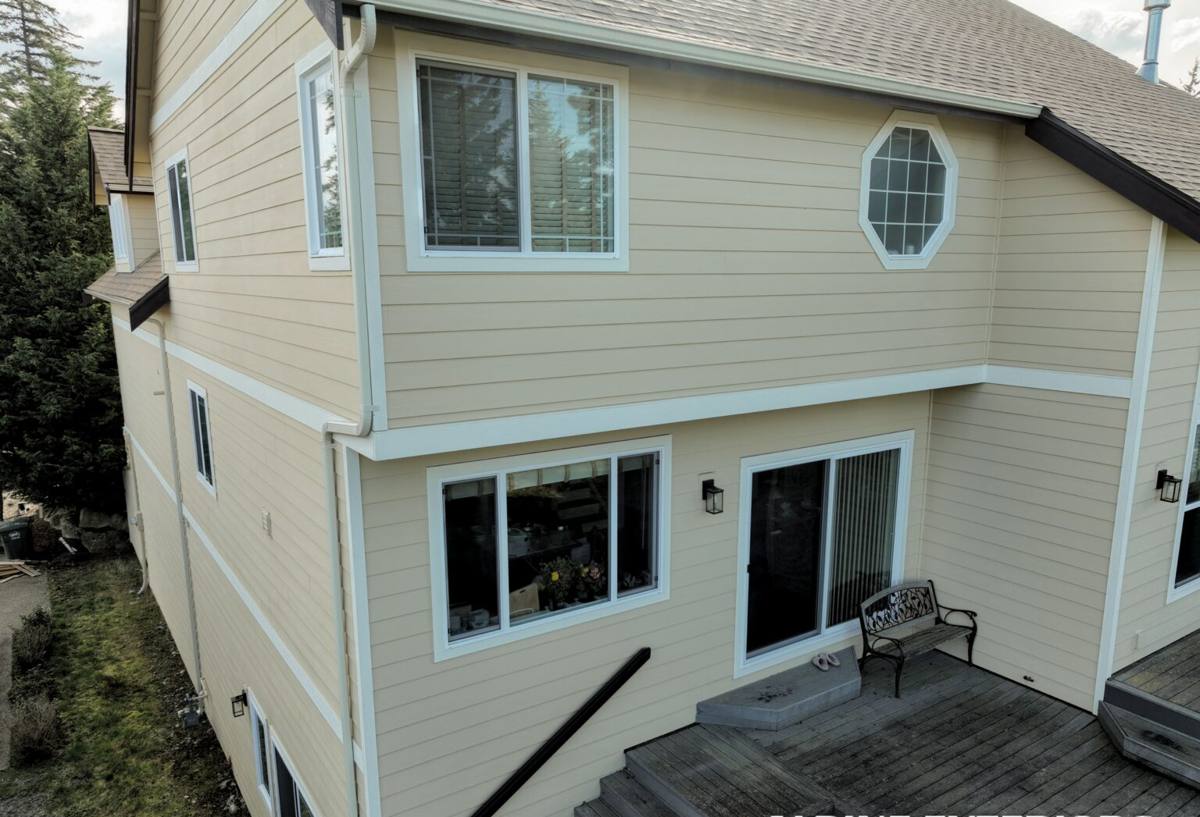
Why Composite Makes Sense in This Climate
Wood decking isn't a bad product — it's just a high-maintenance one in a wet, mossy, salt-air environment. Untreated or under-maintained wood in this area starts graying, splintering, and growing moss in the shaded spots within a season or two. Composite decking was designed to solve exactly that problem: it doesn't absorb water the way wood does, it doesn't need annual staining or sealing, and its surface resists the kind of organic growth (moss, algae, mildew) that thrives in our damp, low-sun winters.
What Salt Air and Moisture Actually Do to a Deck
Salt air accelerates corrosion in any exposed metal fasteners, hinges, and railing hardware. Combined with near-constant moisture from driving rain and morning dew, it also drives water into any seam, end-cut, or fastener hole that isn't properly sealed or capped. Over time this shows up as fastener bleed-through, soft spots around post bases, and — on wood decks especially — cupping boards and rot at the joist level where nobody looks until it's a real problem.
Composite doesn't eliminate every risk from this environment, but it removes the biggest one: the board itself soaking up water and breaking down from the inside. What's left to manage is moisture at the structure — framing, fasteners, flashing, and drainage — which is where installation quality matters far more than which composite brand you choose.
What a Correct Composite Deck Installation Involves
A composite deck is only as good as what's underneath it. Most of the failures we get called out to inspect on other people's installs — squeaks, soft spots, boards that have shifted or bowed — trace back to the substructure or the fastening method, not the decking material itself.
The Framing and Substructure
We build or verify the substructure to handle the actual moisture load of this area, including joist spacing tightened up from typical wood-deck spacing (composite generally needs closer joist spacing than solid-sawn lumber to prevent long-term sag), joist tape or another moisture barrier on top of the framing to keep standing water off exposed wood, and proper ledger board flashing where the deck ties into the house, since this is the single most common point of hidden water intrusion.
Drainage and Airflow
Because this area gets sustained rain rather than isolated storms, we pay close attention to slope, so water actually sheds off the deck surface instead of pooling, and ventilation underneath the deck, so the substructure can dry out between rain events instead of staying damp for weeks at a stretch. A deck that never gets a chance to dry out is a deck that's working against you regardless of what the top boards are made of.
Fasteners and Hardware
Given the salt air, we use corrosion-resistant, coated fasteners and hardware rated for coastal or high-moisture exposure — not standard interior-grade hardware that looks fine going in but starts staining and weakening within a couple of seasons. Hidden fastener systems, where the boards clip together without face screws, also reduce the number of penetration points where water and salt can start corrosion at the fastener itself.
Comparing Decking Approaches for This Area
| Factor | Wood Decking | Composite Decking |
|---|---|---|
| Moisture absorption | Absorbs water; prone to cupping, splitting, rot without regular sealing | Minimal absorption; core resists water damage |
| Moss and algae resistance | Low — untreated wood is a preferred surface for moss in shaded, damp spots | Higher — smoother, less porous surface resists organic growth |
| Maintenance | Annual or biannual staining/sealing recommended | Periodic washing; no staining or sealing required |
| Fastener corrosion risk (salt air) | Depends entirely on hardware choice; face screws are exposed | Lower with hidden fastener systems and coated hardware |
| Upfront cost | Generally lower material cost | Higher material cost, offset over time by lower maintenance |
| Expected service life with proper install | Long, but maintenance-dependent | Long, with manufacturer warranties typically running 25 years or more |
Neither option is "wrong" — it's a trade-off between upfront cost and ongoing maintenance. We'll walk you through both honestly when we're on site, including what a wood deck actually costs to maintain properly over ten or fifteen years in this climate versus the composite premium.
Our Process for a Nooksack Composite Deck
- On-site assessment. We look at your existing deck or the build site, check drainage patterns, sun/shade exposure, and how close you are to prevailing weather and salt exposure from the water.
- Substructure evaluation or design. If we're replacing an existing deck, we inspect the framing underneath — this is often where we find problems the homeowner didn't know about. New builds get framing designed around composite's specific requirements from the start.
- Material selection. We'll go over board profiles, color/fade performance, and railing options that fit your home and budget, without steering you toward whatever happens to be sitting in a warehouse.
- Installation. Framing and flashing work first, then decking, with attention to expansion gaps (composite expands and contracts with temperature more than people expect), proper board spacing for drainage, and clean, consistent fastening.
- Final walkthrough. We check the deck surface, railing security, stair details, and drainage before we consider the job done — not just that the boards are down.
Practical Checklist Before You Sign a Deck Contract
- Does the quote specify joist spacing, or just "standard framing"?
- Is a moisture barrier (joist tape or equivalent) included over the framing?
- Are fasteners specified as corrosion-resistant/coastal-rated, or left unstated?
- Is ledger board flashing addressed specifically, not just mentioned in passing?
- Does the quote separate material warranty from installation warranty, and who backs each one?
- Is drainage/slope discussed as part of the plan, or only the visible decking material?
Moss Season and Ongoing Care
Composite decking cuts down dramatically on moss and mildew compared to untreated wood, but it isn't maintenance-free in a climate like ours. Shaded areas under trees or near the house can still develop a thin film of organic growth over a long, wet winter. The fix is simple: an occasional wash with a soft-bristle brush and a mild deck cleaner, or a low-pressure rinse, keeps most composite surfaces looking like new. We'll tell you specifically what your board manufacturer recommends, since pressure-washing settings and cleaner chemistry vary by product line and can void a warranty if done wrong.
What Not to Do
Avoid high-pressure washing directly into board grooves or fastener points — it can drive water into places it shouldn't be and, on some composite lines, damage the surface texture. Avoid oil-based deck treatments meant for wood; composite doesn't need them and some can discolor the surface or interfere with warranty coverage.
Railings, Fascia, and Finishing Details
The decking boards themselves get most of the attention, but railings and fascia are where a lot of the weathering damage actually shows up first, since they take more direct wind-driven rain and salt exposure than the horizontal deck surface. We match railing material and hardware to the same coastal-duty standard as the decking fasteners, and we detail fascia board joints and end caps to keep water from working behind the trim over time. A deck that looks finished but has exposed, unsealed cut ends on fascia boards is one of the fastest ways to get premature swelling and discoloration in this climate.
Why Local Installation Experience Matters
Composite decking installation isn't complicated in theory, but doing it correctly in a place like Nooksack means accounting for conditions that a generic installation guide doesn't cover: how close you are to salt air, how long moss season actually runs here versus a drier region, and how sustained Whatcom County rain behaves differently than isolated storms elsewhere. A crew that installs decks and siding across Ferndale and the surrounding communities year-round has already seen what fails here and why — sagging boards from wide joist spacing, corroded face screws, ledger flashing that was skipped to save an hour. We build to avoid the specific failure points we've actually seen locally, not a generic national spec sheet.
If you're planning a new composite deck or replacing an aging wood one, we're happy to come take a look and give you a straightforward, no-pressure estimate — no obligation, just an honest read on what your project needs. Use the form below to get started.