 Ferndale
 Why Blaine Roofs Wear Differently Than Inland Homes
Blaine sits close enough to the water that roofs here take a different kind of beating than roofs twenty or thirty miles inland. Salt-laden air corrodes exposed metal faster — nails, flashing, vent caps, and fastener heads all show it first. Driving rain off the Strait doesn't just fall straight down; wind-driven rain gets pushed sideways and upward under shingle tabs and around penetrations that would stay dry in a calmer climate. And Whatcom County's long, mild, wet fall-through-spring stretch means roofs stay damp for months at a time, which is exactly the environment moss and algae need to take hold.
None of this means Blaine needs exotic materials or a radically different roof. It means the details — fastener choice, flashing laps, ventilation, and moss prevention — carry more weight here than they would on a drier, more sheltered lot. A roof replacement that ignores those details will still look fine on install day and still fail early.
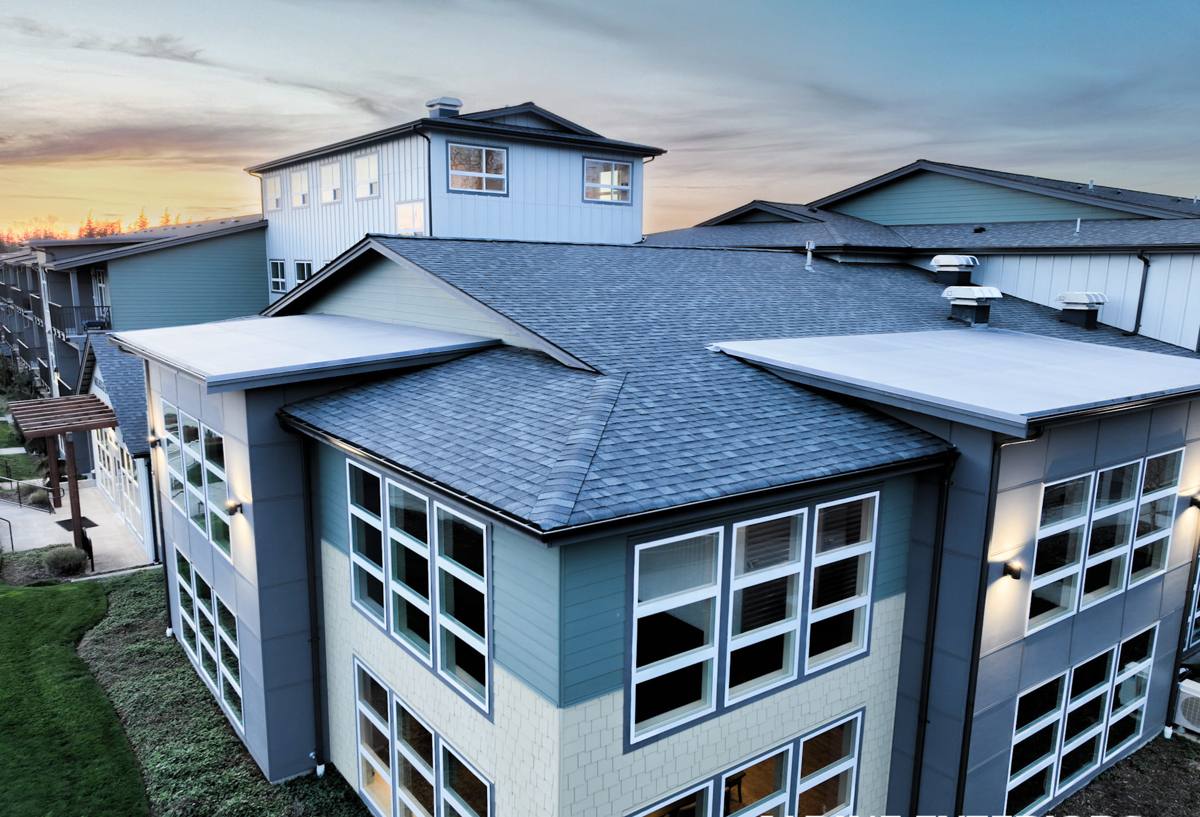
What a Correct Roof Replacement Looks Like Here
Tear-Off and Deck Inspection
A full tear-off is the only way to actually see the deck. In coastal Whatcom County homes, we routinely find soft or delaminated sheathing around old roof penetrations, valleys, and eave edges — spots where a slow leak had been quietly doing damage for years under an intact-looking shingle surface. Any soft, stained, or spongy decking gets replaced before anything else goes down. Skipping this step to save a day of labor is the single most common corner cut in roof replacement, and it's the one that costs homeowners the most later.
Underlayment and Ice/Water Barrier
A synthetic underlayment across the full deck, with self-adhered ice-and-water membrane at eaves, valleys, and around every penetration, is the baseline for a coastal roof — not an upgrade. Wind-driven rain can travel under shingle tabs at the eaves and in valleys even on a well-installed roof; the membrane is the backup layer that keeps that moisture out of the deck.
Flashing Details That Matter Most Near the Water
Step flashing at every wall intersection, properly lapped counter-flashing, and correctly sized drip edge at eaves and rakes matter everywhere, but they matter more here because wind and driving rain expose bad flashing work faster. Corrosion-resistant flashing metal and fasteners are worth insisting on — standard galvanized hardware pits and rusts noticeably faster within a few miles of the Strait than it does further inland.
Ventilation
Balanced intake at the soffits and exhaust at the ridge keeps the attic dry and temperature-stable, which protects the new decking and shingles from underneath. In a climate this damp, an under-ventilated attic is a slow path to trapped moisture, mold, and premature shingle failure — even with a perfectly installed top layer.
Choosing Roofing Materials for Salt Air and Moss
There's no single "correct" material for Blaine — the right call depends on the home, the budget, and how much long-term maintenance the owner wants to take on. Here's how the common options actually compare in this climate:
| Material | Salt air / coastal performance | Moss & algae resistance | Typical maintenance |
|---|---|---|---|
| Architectural asphalt shingle (algae-resistant, copper or zinc-infused granules) | Good with corrosion-resistant fasteners and flashing | Better than standard shingle; not moss-proof | Periodic gutter and moss checks |
| Standard asphalt shingle | Adequate, but shows granule loss faster in exposed spots | No built-in resistance — moss and algae take hold faster | More frequent cleaning needed |
| Metal (standing seam or panel) | Excellent when properly coated and fastened; long service life | Very good — moss struggles to grip a smooth metal surface | Low; occasional fastener/sealant check |
| Cedar shake/shingle | Handles moisture well when detailed and maintained correctly | Needs active upkeep — regular treatment and cleaning to resist moss/rot | Highest — ongoing treatment required |
We don't push cedar on every coastal roof, not because it's a bad product, but because it demands a level of ongoing maintenance many owners underestimate when they choose it. If a homeowner wants that look and is committed to the upkeep, we'll detail and install it correctly. If low maintenance is the priority, algae-resistant asphalt or metal are the more honest recommendation for this climate.
Moss, Algae, and the Long Wet Season
Moss doesn't just sit on top of a roof — its root structure lifts shingle edges and holds moisture against the surface, which accelerates rot in the mat underneath. In a climate where roofs can stay damp for weeks at a stretch, moss control is part of roof care, not an optional extra. A few things make a real difference:
- Zinc or copper strips near the ridge, which release trace metal ions that inhibit moss growth as rain washes over them
- Keeping tree overhang trimmed back so shaded, damp sections of roof get more light and airflow
- Clearing debris from valleys and gutters before it mats down and holds moisture against the shingles
- Gentle moss removal (never high-pressure washing, which strips protective granules) on an as-needed basis
Our Process for a Blaine Roof Replacement
- On-site inspection — we walk the roof, check the attic for ventilation and moisture signs, and look at flashing, valleys, and penetrations before quoting anything.
- Written estimate — material options, scope, and a clear price, with the reasoning behind any deck repair allowance explained up front.
- Tear-off and deck repair — full removal, deck inspection, and replacement of any compromised sheathing.
- Underlayment, ice-and-water membrane, and flashing — installed to the details above, not the minimum code requirement.
- New roofing material installed — per manufacturer specification, including proper nailing pattern and exposure for wind resistance.
- Ventilation check — intake and exhaust balanced before we call the job done.
- Cleanup and magnetic sweep — yard, driveway, and landscaping cleared of debris and stray fasteners.
- Final walkthrough — we go over the finished roof with the homeowner before wrapping up.
Why a Crew That Already Works Blaine Matters
Roofing crews who work Blaine and the surrounding Whatcom County coastline regularly know which fastener grades and flashing metals hold up here versus which corrode early. They know how to schedule tear-off around this area's weather patterns so a deck isn't left exposed overnight when rain is likely. And they're not learning the county's permitting process for the first time on your job. A crew that's mostly worked drier, inland jobs can still do competent work, but they're more likely to treat coastal details as optional upgrades instead of the baseline they should be.
We're based in Ferndale and work this stretch of Whatcom County regularly, including Blaine. That's not a marketing point — it's why we default to corrosion-resistant hardware and full ice-and-water coverage without needing to be asked.
Cost Factors for a Blaine Roof Replacement
Every roof is priced on its own specifics, but these are the factors that move the number most:
| Factor | Why it affects cost |
|---|---|
| Roof size and pitch | More surface area and steeper pitches mean more material and labor time |
| Deck condition | Hidden rot or delamination found during tear-off adds repair cost not visible in a pre-tear-off quote |
| Material choice | Standard asphalt, algae-resistant asphalt, metal, and cedar all sit at different price points and labor requirements |
| Number of penetrations and valleys | Each chimney, vent, skylight, and valley needs individual flashing work |
| Layers to remove | Tearing off multiple existing layers takes more labor and disposal cost than a single layer |
| Access and site conditions | Steep lots, limited driveway access, or tight setbacks can add staging and disposal time |
A Homeowner's Checklist Before You Hire
- Ask whether the quote includes full tear-off and deck inspection, not just a re-layer
- Confirm ice-and-water membrane is included at eaves, valleys, and penetrations — not just underlayment
- Ask what fastener and flashing metal grade they use, and why, given the coastal air
- Get the ventilation plan in writing — intake and exhaust balance, not just "we'll add some vents"
- Check that the estimate is itemized enough to show what happens if hidden deck damage is found
- Confirm they're licensed and insured, and ask how they handle cleanup and fastener sweep
- Ask directly whether they've worked in Blaine or elsewhere on this stretch of coast before
If you're weighing a roof replacement in Blaine and want a straight answer on what your specific roof needs — no pressure, no inflated scope — we're happy to take a look and put it in writing. Fill out the form below for a free estimate.