 Ferndale
 Why Storm Damage Hits Roofs in Custer Differently
Custer sits in the open, wind-exposed part of Whatcom County between Ferndale and the Canadian border, close enough to Georgia Strait and Boundary Bay that salt air is a daily fact of life, not an occasional visitor. Add the driving winter rain that comes off the water and a moss season that can run eight or nine months of the year in this climate, and you end up with roofs that fail in ways drier, more sheltered counties rarely see. A shingle that would hold up fine in a protected subdivision further inland can take a beating out here simply because the property sits in open farmland or near the water with nothing to break the wind.
Wind Across Open Ground
Much of the land around Custer is open field and rural acreage, which means wind doesn't lose speed the way it does moving through denser neighborhoods. During fall and winter storms, that unbroken wind gets under shingle tabs, lifts ridge caps, and works loose any flashing that wasn't sealed correctly the first time. The damage is often invisible from the ground: a few lifted tabs or a bent piece of flashing don't announce themselves the way a missing shingle does.
Salt Air and Slow Corrosion
Proximity to saltwater means metal components age faster here than they would twenty or thirty miles inland. Nails, flashing, vent boots, and gutter fasteners all corrode more quickly under a steady diet of salt-laden air, and once a fastener weakens, the shingle or flashing piece it's holding becomes the next thing a storm can grab.
A Moss Season That Barely Ends
Between the marine humidity, the shade from mature trees on many rural lots, and the sheer number of rainy days Whatcom County logs every year, moss finds a foothold on almost any roof that isn't actively maintained. Moss holds moisture against the roofing material, and that trapped moisture is often what turns a small storm-related crack or lifted shingle into a slow leak that isn't discovered until there's already water staining on a ceiling inside.
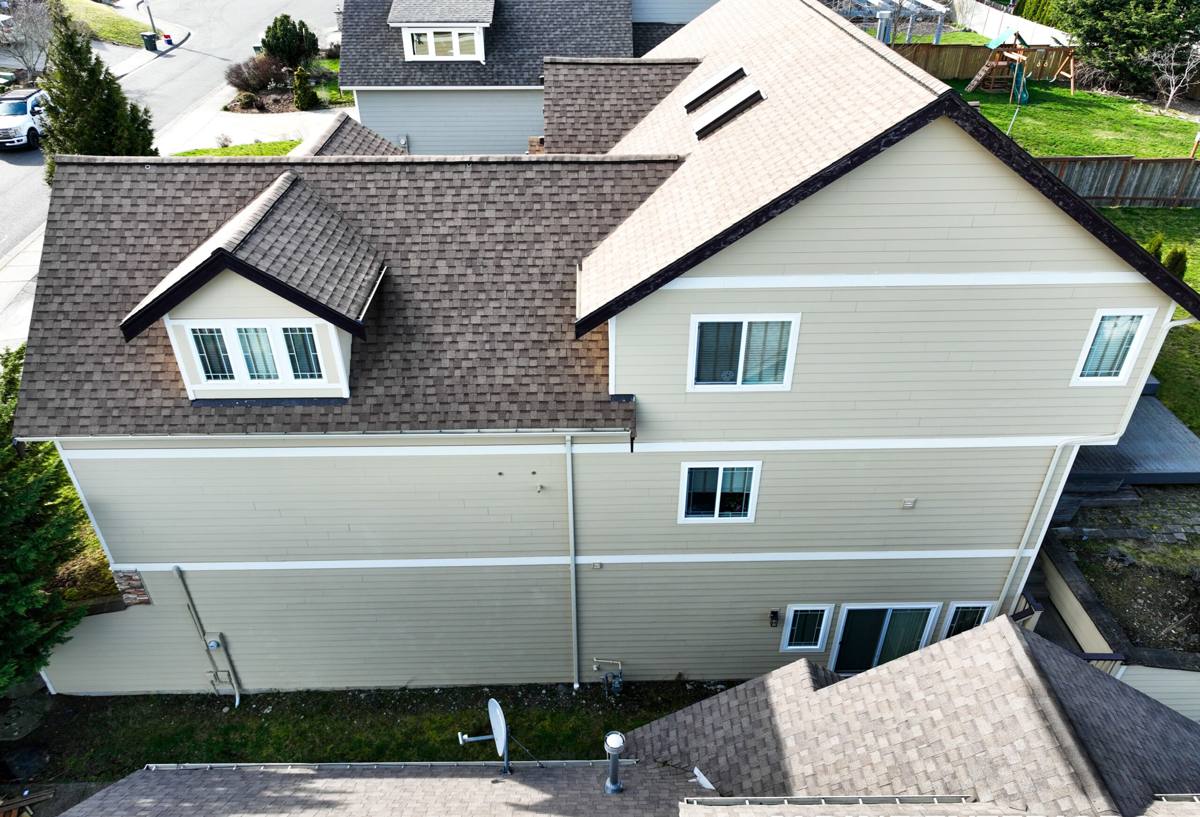
What Storm Damage Actually Looks Like
Storm damage rarely looks dramatic. Most of the calls we get after a windstorm or heavy rain event involve damage that's easy to miss unless someone knows what to look for.
Wind and Uplift Damage
Lifted or creased shingle tabs, missing ridge cap pieces, and shingles that have been blown back into place but no longer seal down flat are the most common wind damage we find. A shingle that looks fine from the driveway can have a broken seal strip that lets wind-driven rain track underneath it every time it storms.
Moss, Trapped Moisture, and Slow Rot
Where moss has been established for a season or more, we often find soft, spongy decking underneath once the moss and granule buildup are cleared away. This isn't storm damage in the sudden sense, but a storm is frequently what pushes a moss-weakened section past the point of holding back water, which is why the two issues show up together so often.
Flashing and Penetration Failures
Step flashing at chimneys and sidewalls, counterflashing, pipe boots, and vent flashing are the parts of a roof most likely to fail first, because they rely on sealant and mechanical fit rather than the layered shingle system itself. Wind can pull flashing loose at the edges, and once that happens, water finds its way in at the same spot every time it rains until the flashing is properly reset or replaced.
Debris Impact
Falling branches and wind-carried debris are common on rural and tree-lined properties around Custer. Impact damage can range from obvious punctures to cracked shingles that don't show a visible hole but have lost their waterproof integrity.
Why Storm Repair Isn't the Same Job as a Routine Leak Fix
A homeowner calling about a slow drip after months of neglect and a homeowner calling the day after a windstorm are dealing with two different situations, even if the fix ends up looking similar. Storm repair work needs to happen faster, because an open seam or a section of missing shingles left exposed through even one more heavy rain event can turn a modest repair into a much larger one. It also needs to be documented differently: photos of the damage, a clear description of when it happened, and an itemized scope of repair, because storm damage is the category of roof work most likely to involve a homeowner's insurance policy. Matching existing shingle color and profile matters more here too, since insurers and homeowners alike expect a storm repair to blend in, not stand out as an obvious patch.
Our Storm Damage Repair Process
We keep the process straightforward because homeowners dealing with storm damage are usually already stressed about water getting into their home. Here's how a typical job runs from the first call to final cleanup.
- Inspection. We walk the roof (or use a drone pass when pitch, height, or wet conditions make a walk-on inspection unsafe) and document every point of damage, not just the obvious one that prompted the call.
- Documentation. Photos and a written scope of the damage, dated and specific, which you can hand directly to an insurance adjuster if you're filing a claim.
- Temporary protection. If there's active water intrusion, we tarp or seal the affected area the same visit so the damage doesn't spread while a full repair is scheduled.
- Repair plan and estimate. A written estimate that spells out whether the job is a spot repair, a section replacement, or something larger, along with the materials involved.
- The repair itself. Matching shingle color and profile where possible, resetting or replacing flashing, replacing any rotted decking found underneath, and re-sealing all penetrations.
- Cleanup and final check. Debris removal, a magnetic sweep for stray nails in yards and driveways, and a final walkthrough so you can see exactly what was done.
Repair Options: Patch, Section Replacement, or Full Re-Roof
Not every storm-damaged roof needs the same level of work. The right call depends on the roof's age, how widespread the damage is, and what condition the rest of the roofing system is in underneath.
| Repair Type | When It Makes Sense | Typical Cost Range* |
|---|---|---|
| Spot patch repair | Isolated wind or debris damage on a roof under 10-12 years old, with sound decking underneath | $400-$1,500 |
| Section replacement | Damage concentrated in one slope or area, or moss/moisture damage that's spread past a single spot | $1,500-$6,000 |
| Full re-roof | Roof is near the end of its service life, damage is widespread, or repeated storm damage points to systemic wear | $9,000-$20,000+ |
*Ranges are general and vary with roof size, pitch, material, and how much decking needs replacing. We give exact numbers only after an on-site inspection.
Materials and Methods We Rely On for This Climate
Wind-Rated Shingles
For repairs and replacements in exposed areas like Custer, we favor shingle products from manufacturers such as GAF, CertainTeed, and Owens Corning that carry higher wind-rating classifications and stronger factory sealant strips, since standard-grade shingles are more prone to the exact wind-lift damage we're called out to fix.
Underlayment That Handles Driving Rain
Wind-driven rain in this area doesn't always run straight down a roof plane: it can push sideways under shingle edges. We use synthetic underlayment and ice-and-water shield at eaves, valleys, and any low-slope transition, because those are the spots where sideways-blown rain most often finds a way in.
Corrosion-Resistant Flashing and Fasteners
Given the salt air, we specify flashing and fastener materials chosen to resist corrosion rather than the cheapest option that technically meets code, since a fastener that rusts through in a few years just recreates the same failure point we were repairing.
Moss Treatment as Part of the Repair
Any time we're already on a roof for storm repair, we treat existing moss and clear debris from valleys and gutters, because leaving moss in place undermines the repair we just made.
What Homeowners in Whatcom County Should Know About Insurance
Most homeowner policies cover sudden, storm-related roof damage, but coverage details, deductibles, and depreciation schedules vary a lot by policy and carrier, and we're not insurance agents, so we don't advise on coverage specifics. What we can do is give you the same documentation an adjuster expects to see: dated photos, a written scope of damage, and a repair estimate that separates storm-caused damage from any pre-existing wear like moss buildup or age-related granule loss. That separation matters, because most policies cover storm damage but not gradual deterioration, and a clear paper trail helps your claim get processed without unnecessary back-and-forth.
Why It Matters That We Already Work in Custer
Storm damage repair is time-sensitive, and a crew that's already working in and around Ferndale and Custer can get to your property faster than one dispatching from further away, which matters when there's an active leak. Familiarity with this area also means we already know what to expect: the open-field wind exposure, the rural lot layouts with longer driveways and larger roof footprints, and the specific moss and salt-air conditions that shorten a roof's service life here compared to more sheltered parts of the county. That local knowledge shapes how we inspect a roof and what we flag as a risk even beyond the immediate storm damage.
After the Storm: A Practical Checklist
If you've just been through a windstorm or heavy rain event, here's what's worth checking or doing before you call anyone.
- Check ceilings and upper-floor closets for new water stains, even faint ones: they're often the first sign of a slow leak.
- Look at gutters and downspouts from the ground for granule buildup, which can indicate shingle wear or damage.
- Scan the yard and driveway for shingle pieces, flashing, or granules that may have blown off the roof.
- Photograph any visible damage immediately, including wide shots that show the damage in context, before any temporary repairs are made.
- Avoid walking on the roof yourself, especially if it's wet or moss-covered, since both conditions make for a genuinely dangerous surface.
- Call for an inspection promptly rather than waiting to see if a small issue gets worse; exposed decking degrades fast in this much rain.
Keeping the Next Storm From Doing the Same Damage
Once storm damage is repaired, a little ongoing maintenance goes a long way toward keeping the next windstorm from causing a repeat visit. Periodic moss treatment keeps growth from re-establishing itself and holding moisture against the roofing material. Keeping gutters and valleys clear prevents the standing water that both feeds moss and backs up under shingle edges during heavy rain. And a roof inspection every year or two, ideally before the fall storm season sets in, catches lifted shingles or worn flashing while they're still a cheap fix rather than an emergency call after the next storm front comes through.
If you've got storm damage on a roof in Custer or anywhere around Ferndale, we're happy to take a look and give you a straight answer on what it needs, with no pressure and no upsell, just an honest assessment. Use the form below to request a free estimate.