 Ferndale
 Decks Built for Cordata's Corner of Whatcom County
Cordata sits in the part of Whatcom County where the weather doesn't ask permission. Wind off the water carries salt inland, rain moves through in long soaking systems rather than short storms, and shaded yards stay damp enough to grow moss for months at a stretch. A deck built here has to be designed for that reality from day one, not patched to survive it later. This page covers what a custom deck for a Cordata home actually needs, what a correct build looks like from the ground up, and how our process works when we take on a project in this area.
A lot of deck problems we get called out to fix didn't start as bad workmanship — they started as a good build that was never adapted for this climate. The framing was sound, the boards were decent, but the fastener choice, the flashing detail, or the footing depth was more suited to a drier region. We build for Whatcom County conditions specifically, which means different decisions than a generic deck spec sheet would give you.
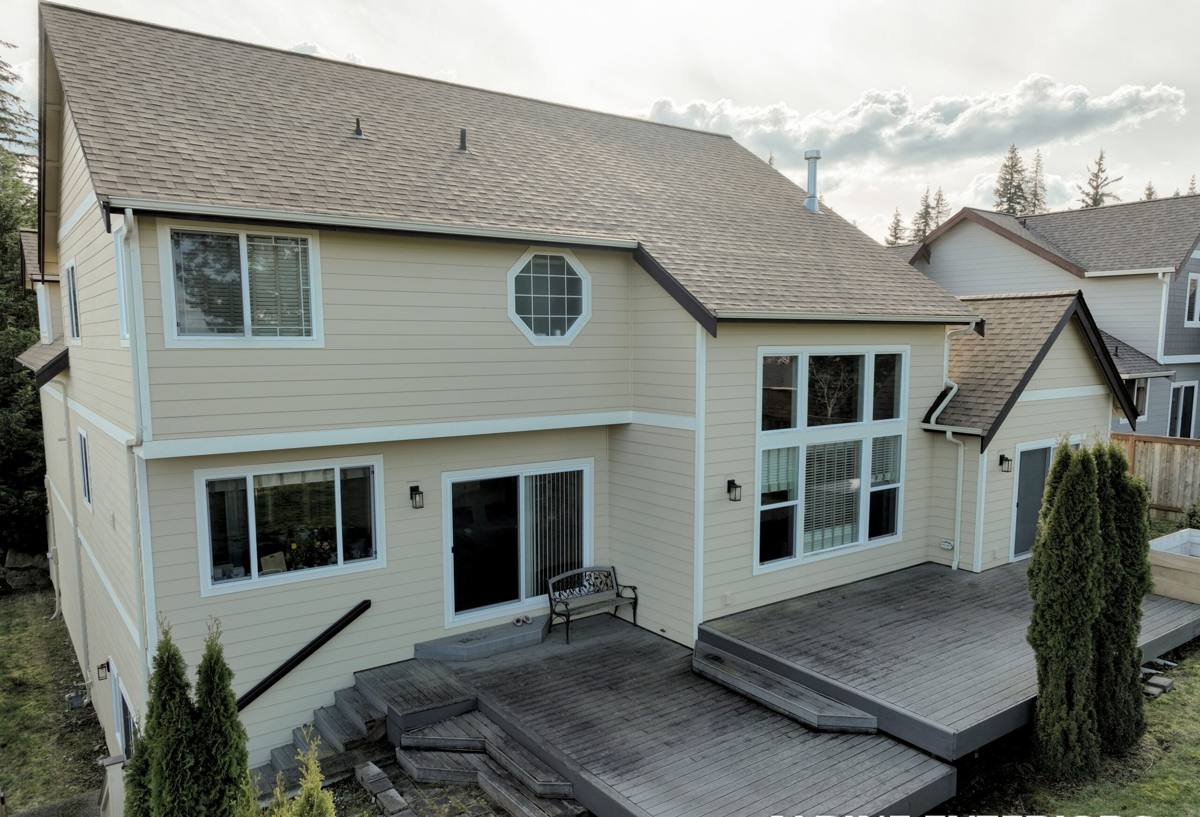
What Ferndale-Area Weather Does to a Deck Over Time
Salt Air and Metal Fatigue
Moist, salt-carrying air moving off the water corrodes unprotected or poorly coated metal faster than most homeowners expect. Screws, joist hangers, bolts, and post bases that aren't rated for coastal exposure can start rusting from the inside of a connection long before any surface staining shows up. Once a fastener weakens, it's usually hidden under decking boards — you don't see the problem until something starts to feel loose or squeak underfoot.
Driving Rain and Water Intrusion
Rain here doesn't just fall straight down — wind-driven rain gets pushed sideways into ledger connections, under poorly lapped flashing, and into end grain that isn't sealed. The ledger board (where the deck attaches to the house) is the single most common failure point we find on older decks, because water worked its way behind the flashing for years before anyone noticed rot in the rim joist.
The Long Moss Season
Whatcom County's moss season runs long — shaded and north-facing sections of a deck can stay damp for months, which is exactly what moss, algae, and mildew need to take hold. Beyond looking bad, a mossy deck surface gets slick fast, and moss holds moisture against the board surface, which accelerates rot in wood decking and can stain composite material if it's left unaddressed.
Choosing Decking Material for a Cordata Yard
There's no single "best" decking material — the right choice depends on how much upkeep you want to do, your budget, and how much sun versus shade your yard actually gets. Here's how the common options compare for this specific climate:
| Material | Upfront Cost | Maintenance | How It Handles Our Climate |
|---|---|---|---|
| Pressure-treated wood | Lowest | Annual cleaning, periodic sealing/staining | Affordable but needs consistent upkeep to resist moss and moisture; skipped maintenance shows fast in a wet climate |
| Cedar | Mid-range | Regular cleaning, sealing every 1–2 years | Naturally more rot-resistant than treated pine, but still needs sealing to keep moisture and moss from taking hold |
| Composite (capped) | Higher | Occasional washing, no staining/sealing | Doesn't rot or splinter; some boards can still stain if moss or organic debris sits on the surface too long |
| PVC / cellular decking | Highest | Lowest — soap and water | Fully synthetic, doesn't absorb moisture, generally the most forgiving in a long wet season |
We'll walk you through these trade-offs based on how you actually use the space and how much of the yard sits in shade — a full-sun deck and a shaded deck under mature trees have genuinely different needs, even on the same street.
Structural Basics That Actually Matter Here
Footings and Frost Depth
Footings need to be sized and set to local frost depth and soil conditions, not just poured to a minimum that happens to pass. Undersized or shallow footings are one of the more common causes of a deck that starts to heave, shift, or feel bouncy within a few years.
Ledger Flashing
The ledger board connection is where we spend extra attention on every build. Proper flashing — with the right lap sequence and a water-resistant barrier behind it — is what keeps driving rain from working its way into the house's rim joist over time. This detail is invisible once the deck is finished, which is exactly why it's the detail worth getting right the first time.
Joist Spacing and Board Direction
Joist spacing needs to match the decking material's span rating — composite and PVC boards often require tighter joist spacing than solid wood to avoid sagging between supports. Getting this wrong doesn't show up immediately; it shows up as a slightly springy feel a couple of years in.
Fasteners and Hardware: The Detail Most Decks Skip
Given the salt air common to this part of Whatcom County, we treat fastener and hardware selection as a real decision, not an afterthought. Standard electro-galvanized screws and connectors are not rated for long-term coastal exposure and can start corroding well before the wood around them shows wear.
- Stainless steel or heavy hot-dip galvanized fasteners for anything exposed to weather
- Structural connectors (joist hangers, post bases, hurricane ties) rated for exterior/coastal use
- Fastener type matched to the decking material — composite and PVC boards often need specific hidden-fastener systems, not general-purpose deck screws
- Stainless or coated hardware at the ledger connection specifically, since that's the hardest spot to inspect later
The cost difference between standard and corrosion-resistant hardware is small relative to the total project — the value shows up ten years later, when the connections are still tight instead of rusted and loosening.
Railings, Stairs, and Code Basics
Railing height, baluster spacing, and stair geometry are governed by code, and inspectors in Whatcom County check these details closely on new deck permits — for good reason, since these are the features most tied to actual safety. Beyond meeting minimums, we build railings and stair stringers using the same corrosion-resistant hardware as the rest of the structure, since these are high-touch, high-exposure components that take the brunt of weather and daily use.
If your project involves a deck attached to the house, elevated more than a couple feet, or built new rather than replaced board-for-board, it likely needs a permit. We handle that process as part of the job rather than leaving it for the homeowner to sort out separately.
Our Process for a Cordata Deck Project
Every property is different, but the sequence we follow stays consistent:
- On-site walkthrough to assess sun/shade exposure, drainage, existing structure (if replacing), and how you plan to use the space
- Material and layout discussion, with honest trade-offs on cost, maintenance, and how each option performs in this climate
- Permit handling with the local jurisdiction where required
- Footings, framing, and ledger flashing built to hold up to driving rain and long-term moisture exposure
- Decking, railing, and stair installation with corrosion-resistant fasteners throughout
- Final walkthrough covering maintenance expectations specific to the material you chose
What to look for in a correctly built deck, regardless of who builds it:
- Flashing properly lapped and sealed at the ledger board connection
- Footings sized to local frost depth, not a bare minimum
- Stainless or coated hardware used throughout, not just at visible points
- Joist spacing matched to the specific decking material's span rating
- Railing and stair details that meet code, not just look the part
- A clear maintenance plan handed off at the end of the job
Keeping Moss and Mildew Off a New Deck
A well-built deck still needs some seasonal attention in a climate like this one. A few habits go a long way through a typical Whatcom County wet season:
- Sweep leaves and debris off the surface regularly, especially in shaded corners where moss gets a foothold first
- Rinse the deck periodically to keep organic buildup from sitting on the surface
- Trim back overhanging branches where possible to let more light and air reach shaded sections
- For wood decking, keep sealing on schedule — this is the single biggest factor in how long the boards last here
- Check the ledger area and any hidden hardware once a year for early signs of rust or moisture staining
Why a Crew That Already Works in Cordata Matters
Building decks in this specific climate is different from building them somewhere dry. A crew that already works around Ferndale and the surrounding Whatcom County communities has already made the fastener, flashing, and footing decisions that hold up here — they're not guessing or applying a generic spec from a different region. That familiarity shows up in the details that don't get noticed until they fail: the ledger flashing, the hardware grade, the footing depth.
If you're planning a new deck or replacing one that's showing its age, we're happy to take a look and give you an honest read on what your yard and your budget call for — no pressure, no upsell on materials you don't need. Reach out for a free estimate using the form below.