 Ferndale
 Deck Building in Kendall: A Different Set of Problems Than Downtown Ferndale
Kendall sits up in the foothills along the Mount Baker Highway corridor, well inland from the coastal parts of Whatcom County we also serve out of Ferndale. That matters more than most homeowners expect when it comes to building a deck. Closer to the water, salt air and driving storms off the Strait are the main enemies of exterior wood. Out in Kendall, the fight is different: more tree cover, more shade, higher rainfall totals, and ground that stays damp longer into the season. Add in the long moss season that hits all of Whatcom County and you've got a climate that will find every weak point in a deck within a few years if it wasn't built correctly the first time.
We don't treat a Kendall deck like a generic build. The site conditions — heavier forest canopy, more standing moisture, occasional snow load at elevation — change how we frame, flash, and space the decking. This page covers what that actually looks like.
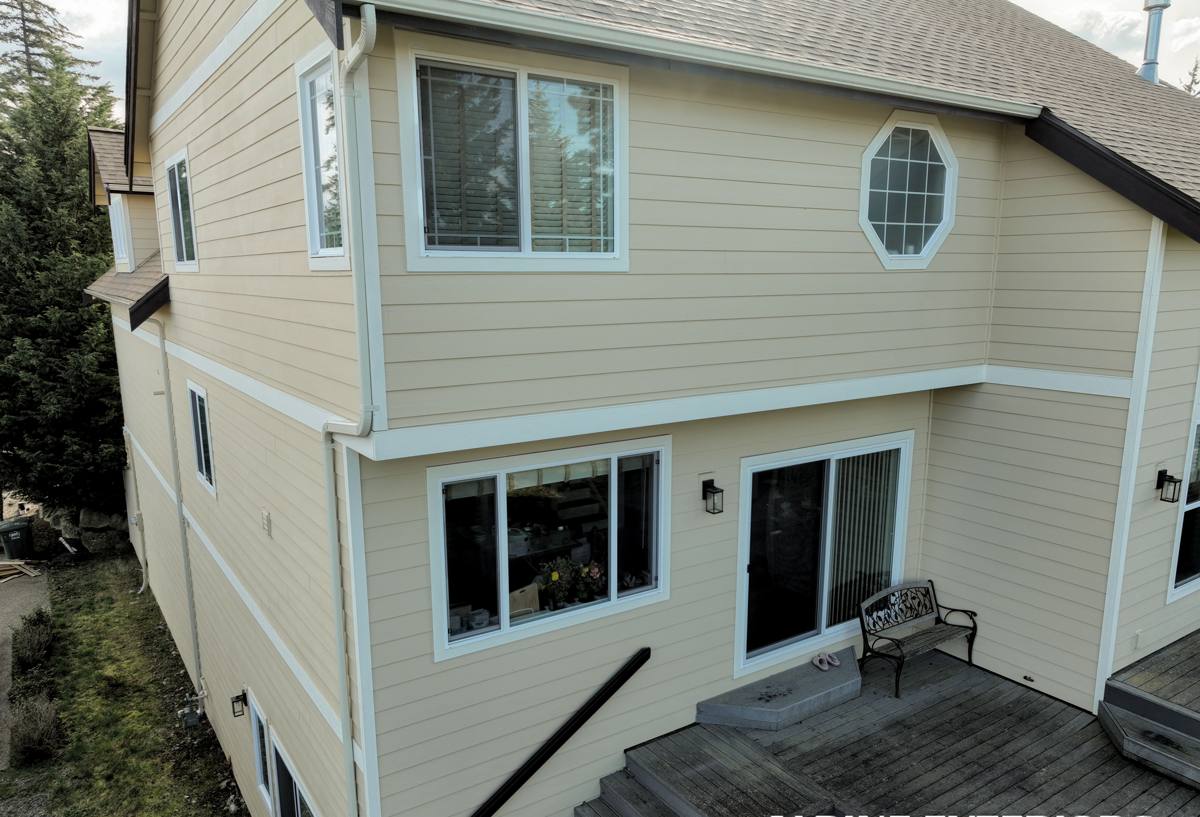
What Kendall's Climate Actually Does to a Deck
A deck built to a minimum spec might look fine for a season or two. In Kendall, the conditions that cause problems tend to be slow and cumulative:
- Shade and canopy cover — many Kendall lots back up to trees or sit in partial shade most of the day. Decking that never fully dries out is decking that grows moss, algae, and mildew faster than an open, sun-exposed deck would.
- Extended wet season — Whatcom County's fall-through-spring stretch means wood and fasteners can stay damp for months at a time. Any spot where water pools or can't drain becomes a rot starting point.
- Ground moisture near footings — rural and semi-rural lots in this area often have less drainage infrastructure than in-town properties, so footings and posts need to be set correctly for the actual soil conditions, not just to a generic minimum.
- Cooler, damper air at elevation — Kendall sits higher than Ferndale, which means slightly cooler temperatures and, in some winters, snow that a coastal deck rarely has to deal with.
None of this means a deck in Kendall can't hold up for decades. It means the build has to account for moisture management from the ground up, not just picking a decking board and calling it done.
Where We See Decks Go Wrong Out Here
Moss and Algae Buildup
This is the most visible problem and usually the first sign of a deeper issue. Moss loves shaded, damp wood, and once it takes hold it holds moisture against the board surface, which accelerates rot underneath. Board spacing, orientation, and material choice all affect how fast moss becomes a problem — a deck built without those factors in mind will need aggressive cleaning every year just to stay safe underfoot.
Ledger Board Rot
The ledger board — where the deck attaches to the house — is one of the most common failure points we find on older or poorly built decks anywhere in the region, and it's no different in Kendall. Without proper flashing and a gap for water to escape, moisture gets trapped between the ledger and the house siding. This is a structural issue, not a cosmetic one.
Undersized or Shallow Footings
On rural lots with variable soil, footings that are too shallow or too small for the load can shift over time, especially with seasonal ground saturation and freeze-thaw cycles. A deck that starts to feel bouncy or uneven a few years in is often a footing problem, not a decking problem.
Fastener Corrosion
Wet, shaded conditions are hard on exposed hardware. The wrong fastener spec — or an inconsistent one, where trim screws are used in place of structural-rated fasteners — shows up as rust streaks and, eventually, loose boards.
What a Correctly Built Deck Involves
Footings and Framing
We set footings to the depth and bearing the soil and local code actually call for, not a shortcut minimum. Framing is spaced and sized for the actual span and load, with attention to how water will move across and off the frame — no flat spots where it can sit against the joists.
Ledger Attachment and Flashing
Where the deck ties into the house, we flash it properly and keep a drainage gap so water sheds away from the structure instead of collecting behind it. This single detail is responsible for more long-term deck failures — and more expensive repairs — than almost anything else on the build.
Decking and Fasteners
Board spacing is set to let air move underneath and between boards, which matters even more on a shaded Kendall lot than it would on an open, sun-exposed site. Fasteners are matched to the decking material and rated for exterior structural use, not swapped for whatever's cheaper.
Railings and Code
Railings are built to current code height and baluster spacing, not just "close enough." This isn't optional on a deck of any real height, and it's one of the first things a building inspector will check.
Choosing the Right Decking Material for a Shaded, Wet Lot
Material choice matters more in Kendall's conditions than it does on a dry, open lot closer to town. Here's how the common options actually compare once shade and moisture are part of the equation:
| Material | Upfront Cost | Moisture & Moss Behavior | Maintenance | Typical Lifespan |
|---|---|---|---|---|
| Pressure-treated pine | Lowest | Absorbs moisture; needs sealing to resist rot and moss growth in shade | Annual cleaning and periodic sealing | 10-15 years with upkeep |
| Cedar | Mid | Naturally rot-resistant but still absorbs moisture in deep shade | Regular cleaning, periodic oil or sealant | 15-20 years with upkeep |
| Composite | Higher | Doesn't rot; can still grow surface algae/moss in constant shade if not cleaned | Occasional washing, no sealing needed | 25-30+ years |
| PVC/capped polymer | Highest | Fully moisture-resistant; least prone to moss adhesion of the group | Minimal — occasional rinse | 25-30+ years |
We don't push one material on every job. A homeowner on a tighter budget with an open, sunnier part of their Kendall lot might do perfectly well with cedar and a maintenance routine. A deck tucked under heavy tree cover is where composite or PVC starts to pay for itself in reduced upkeep and moss resistance. We'll walk the site with you and give you the honest tradeoffs before you commit to a material.
How We Approach a Kendall Deck Project
Site Walk and Assessment
We look at sun exposure, tree cover, drainage patterns, and the existing structure (if this is a rebuild) before we talk materials. A deck design that ignores how water and shade move across a specific lot is a design that will underperform no matter what it's built from.
Design and Permitting
Most decks attached to a house, or built above a certain height off grade, require a Whatcom County building permit. We handle the permitting process as part of the job so you're not left figuring out county requirements on your own.
Build
Footings, framing, ledger flashing, decking, and railings — each stage gets built to hold up specifically against the wet, shaded conditions common on Kendall lots, not just to a generic minimum spec.
Final Walkthrough
Before we call the job done, we walk the finished deck with you, cover basic maintenance for whatever material you chose, and make sure everything meets code and your expectations.
Keeping a New Deck Healthy Through the Moss Season
Even a well-built deck needs some seasonal attention in this climate. A simple annual routine keeps most problems from ever starting:
- Sweep debris (leaves, needles, seed pods) off the deck regularly — trapped organic matter is what feeds moss and mildew
- Wash the deck surface at least once a year, more often in heavily shaded areas
- Check and re-seal wood decking on the manufacturer's recommended schedule; composite and PVC don't need sealing but still benefit from a wash
- Inspect fasteners for rust or loosening, especially near the ledger board and stair stringers
- Confirm gaps between boards haven't closed up or filled with debris, which blocks drainage and airflow
- Look under the deck once a year for standing water, soft framing, or signs of pest activity
Why Hire a Crew That Already Works in Kendall
Deck building isn't the same job everywhere in Whatcom County. A crew that mostly builds decks on open, in-town lots doesn't always think about shade cover, ground moisture, or rural soil conditions the way a crew that regularly works the Kendall area does. We've seen how the local combination of tree cover and a long wet season plays out on a deck over time, and we design and build around it from the start instead of learning the hard way after a callback.
Working locally also means straightforward logistics — site visits, permitting coordination with the county, and follow-up service aren't a special trip for us. That's part of why Ferndale Siding takes on deck projects throughout the wider service area, not just close to home.
Get a Straightforward Estimate
If you're planning a new deck or replacing one that's showing its age, we're happy to walk the site, talk through material options for your specific lot, and give you a clear, no-pressure estimate. Use the form below to get started.