 Ferndale
 Why Sandy Point Homes Ask More of Their Windows
Sandy Point sits close enough to the water that the air itself is part of the building envelope's problem. Salt-laden marine air, wind-driven rain coming off the Strait, and a wet season that can stretch from October well into spring all put more load on windows here than they do on a similar house ten miles inland in Ferndale or Bellingham. A window that's rated fine on paper can still underperform if it wasn't chosen and installed with this specific exposure in mind.
That's the difference between a generic window swap and a custom window job done right for this neighborhood: it starts with what the site actually throws at the house, not just what fits the opening.
Salt Air and Hardware Corrosion
Salt air accelerates corrosion on anything metal — hinges, cranks, screws, and the fasteners holding trim and flashing in place. On homes closer to the shoreline, we see hardware that's pitted or seized years before it should be, even when the glass and frame are still in decent shape. Choosing corrosion-resistant hardware and fasteners up front costs little extra and saves a service call in five years.
Driving Rain and Water Management
Wind off the water doesn't just fall as rain — it drives it sideways, and it finds every gap in flashing, trim, or sealant that a calmer inland install could get away with. Water management around a window opening (not just the window unit itself) is where most leaks in this area actually start.
Moss, Mildew, and the Long Wet Season
Whatcom County's wet stretch is long, and shaded or north-facing walls near mature trees or close plantings stay damp for extended periods. That moisture supports moss and mildew growth on sills, trim, and cladding around window openings, which traps more moisture against the wood and finish than a dry surface ever would. Detailing that sheds water quickly and dries fast matters more here than in a drier climate.
What "Custom" Actually Means Here
"Custom" isn't a marketing word — it means the window is built or selected to match an opening, a style, and a set of exposure conditions that a stock size and stock spec don't always cover.
Matching Openings, Not Forcing Standard Sizes
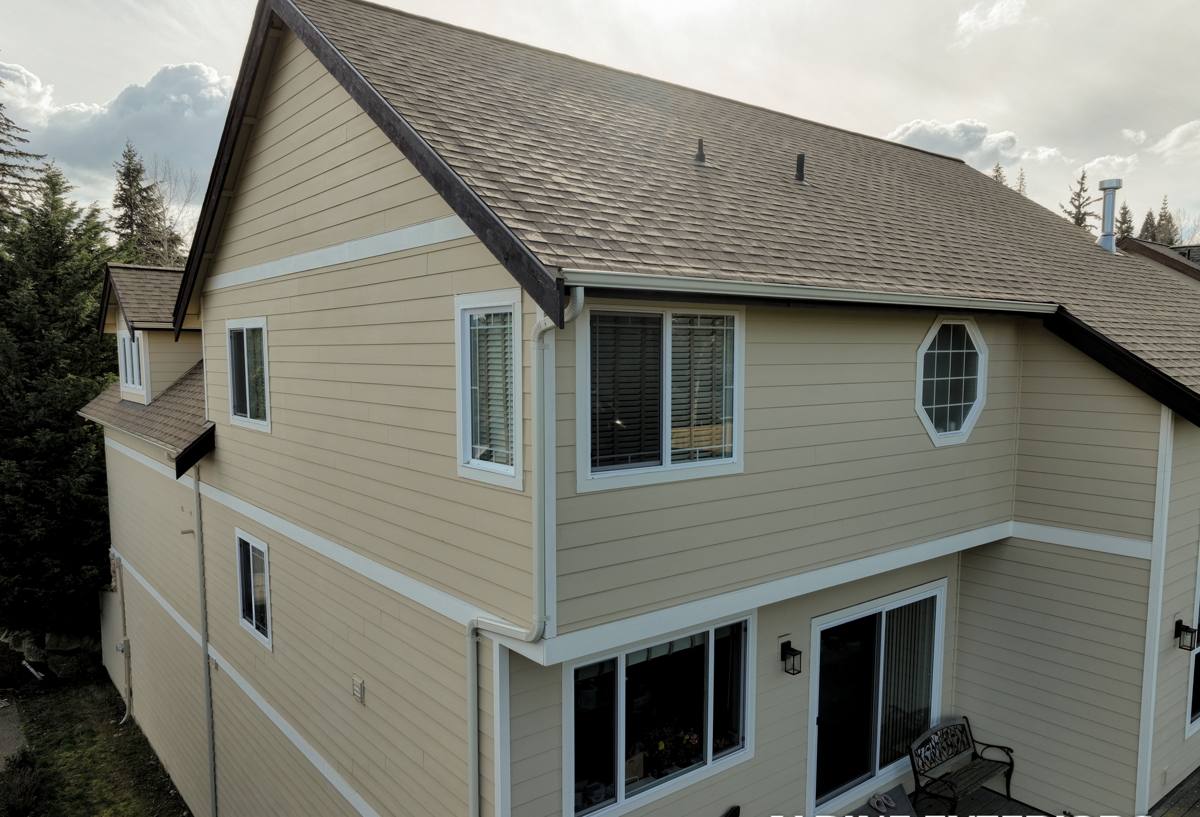
Many Sandy Point homes, especially older ones or those with additions and remodels over the years, have openings that don't match current standard window sizes. Rather than reframing an opening to fit a cheaper stock unit — which adds cost and disturbs more of the existing wall and siding than necessary — a custom-sized window lets us keep the original rough opening and its flashing history intact wherever that's the sounder choice.
Style and Sightlines for a Waterfront Setting
Homes with a water view or exposure toward the Strait often benefit from larger glass areas, picture windows paired with operable units for ventilation, or sightlines that keep sash and mullion width minimal. That's a design conversation as much as a performance one, and it's worth having before ordering rather than after.
Frame Materials: What Actually Holds Up Near the Water
There's no single "best" frame material for every home — the right choice depends on budget, maintenance appetite, and how exposed the wall is. Here's how the common options actually compare under Sandy Point's conditions, based on how they behave in the field rather than how they're marketed.
| Material | Salt Air Behavior | Maintenance | Typical Trade-offs |
|---|---|---|---|
| Vinyl | Doesn't corrode; UV can affect color/finish over decades | Low — no painting, occasional cleaning | Budget-friendly; limited color/profile options on some lines |
| Fiberglass | Very stable dimensionally; handles temperature swings and moisture well | Low | Higher upfront cost; strong long-term value in coastal exposure |
| Wood-clad | Cladding protects exterior face, but any breach exposes wood to moisture and salt | Moderate to high — sealant and joint checks matter more here | Best appearance for some traditional styles; installation quality is critical |
| Aluminum | Conducts heat/cold and can corrode faster in salt air without proper coating | Moderate | We use it selectively; not our default recommendation for direct marine exposure |
We don't push one material on every job. What we won't do is install a wood-clad window with sloppy sealant joints in a spot that takes direct wind-driven rain, or spec bare aluminum on a wall facing the water — those are choices that create callbacks, not durable installs.
What a Correct Installation Actually Involves
The window unit itself is maybe half the job. The other half — flashing, sealant, and integration with the existing wall assembly — is what decides whether the install still performs in year eight, not just on install day.
Flashing That Actually Sheds Water
Every opening gets flashed so water is directed out of the wall assembly, not just blocked at the surface. That means proper sill pan flashing, correct lapping order with the weather-resistive barrier, and head flashing that ties into the siding above it. On a Sandy Point wall facing prevailing wind and rain, skipping or shortcutting this step is where future leaks come from — even with an excellent window installed on top of it.
Sealants Chosen for the Exposure
Not every exterior sealant is built for constant UV, salt exposure, and repeated wet-dry cycling. We use sealants rated for the exposure the specific elevation gets, and we don't rely on caulk alone to do a flashing detail's job — caulk is a backup layer, not the primary water management strategy.
Insulation and Air Sealing at the Frame
Gaps between the window frame and rough opening need to be insulated and air-sealed correctly — not overpacked with expanding foam that can bow a frame, and not left loose enough to let moist air condense inside the wall cavity. This step affects both comfort and long-term moisture risk.
Signs Your Current Windows Are Losing to the Climate
Some warning signs are obvious; others get dismissed as normal aging when they're actually early failure signals specific to this kind of exposure. Worth checking for:
- Soft or discolored wood at the sill or bottom corners of the frame, inside or out
- Persistent black or green growth on trim or sills that returns quickly after cleaning
- Hardware (cranks, locks, hinges) that's stiff, pitted, or corroded
- Condensation building up between panes on double- or triple-glazed units, which usually means a failed seal
- Drafts or a noticeable temperature difference near the window on windy days
- Visible daylight or gaps around the frame where it meets the wall
- Paint or finish peeling specifically around the window opening rather than the whole wall
One or two of these on their own might just mean a maintenance item. Several together, especially on a wall that faces the water or prevailing wind, usually means the window and its flashing are due for a real look, not another round of caulk.
How We Approach a Sandy Point Window Project
Site Assessment First
We start by looking at the actual exposure of each opening — which walls take direct wind and rain, which are more sheltered, whether there's existing moisture damage, and what the current flashing and siding condition tells us about the wall behind it. That assessment drives the material and detailing recommendations, not a one-size answer for the whole house.
Ordering and Realistic Timelines
Custom-sized or higher-spec units take longer to arrive than stock sizes — that's true everywhere, and it's worth planning around rather than being surprised by. We give straight lead-time estimates up front so a project isn't held up mid-way waiting on materials nobody mentioned would take weeks.
Installation and Cleanup
We install one opening at a time to keep the wall protected from weather during the swap, follow the flashing and sealant details appropriate to that wall's exposure, and clean up debris and packaging as we go rather than leaving it for a final day.
Cost Factors Worth Understanding Before You Get a Quote
Custom window pricing varies a lot based on size, material, and site conditions, so a single "per window" number rarely tells the real story. The factors that actually move the price:
| Factor | Why It Matters |
|---|---|
| Opening size and shape | Non-standard or larger openings cost more to source and install than stock sizes |
| Frame material | Fiberglass and quality wood-clad units cost more upfront than vinyl but often cost less over the life of the window in this climate |
| Wall condition behind the window | Hidden rot or moisture damage found during removal adds repair scope before the new window can go in |
| Exposure level | Walls facing direct wind and rain justify upgraded flashing and sealant details, which adds labor |
| Number of openings done together | Bundling multiple windows in one project typically costs less per unit than doing them one at a time over separate visits |
We'd rather walk a homeowner through these factors honestly during the estimate than quote a flat number that doesn't hold up once we're actually into the wall.
Why Local, Sandy Point-Specific Experience Matters
A contractor who's worked on homes in this specific area already knows which elevations take the worst of the weather, how the local moss and moisture pattern typically shows up, and which detailing choices have held up over time versus which ones haven't. That's different from general Whatcom County or Ferndale experience — Sandy Point's direct waterfront exposure is its own microclimate, and a crew that treats it the same as a sheltered inland lot is more likely to under-spec the flashing and sealant work that actually matters here.
If you're weighing custom windows for a Sandy Point home, we're happy to take a look at your specific openings and exposure and put together a straightforward, no-pressure estimate — no guesswork, no upsell, just an honest read on what your house needs. The form below is the fastest way to get that started.