 Ferndale
 Energy-Efficient Windows for Everson Homes
Everson sits inland along the Nooksack River in the farm country east of Lynden and Bellingham, in a part of Whatcom County that still lives inside the same marine-influenced weather system as the coastal towns closer to the water. Homes here don't take direct salt spray, but they still get salt-tinged marine air carried up the valley on winter storms, long stretches of driving rain that comes in sideways more often than straight down, and a moss and mildew season that runs longer than it would in a drier inland climate. For windows specifically, that combination matters twice over: it's what wears out old glazing and seals, and it's what makes a poorly installed replacement window fail faster than it should.
Energy efficiency in a window isn't just about a lower heating bill, though that's real. It's about how well a window keeps the outside weather outside — heat, cold, humidity, and condensation — over years of the wet, mild winters and warm, dry summers this valley cycles through. A window that's efficient on paper but installed with sloppy flashing will still leak air and moisture around the frame, and a homeowner ends up paying for both a heating bill that didn't improve and a moisture problem building in the wall behind it.
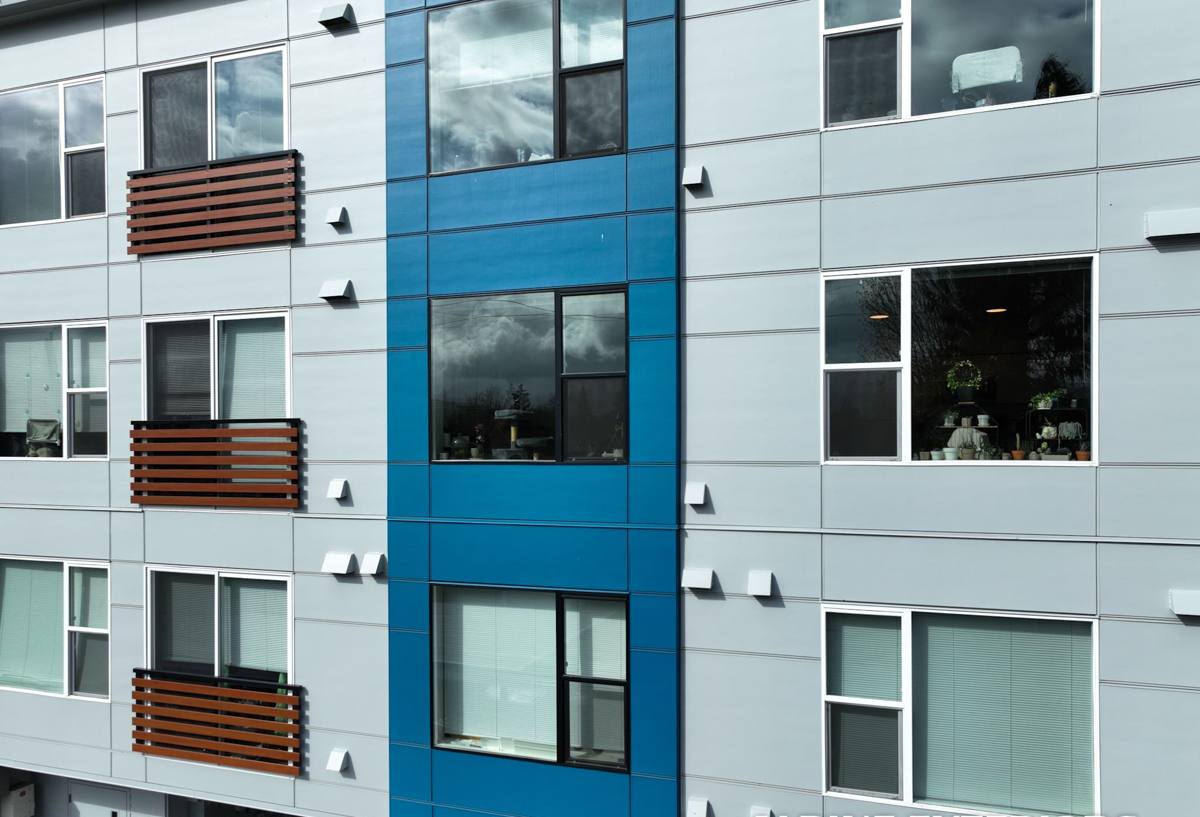
What Actually Drains Energy Through Old Windows
Single-Pane and Aging Double-Pane Glass
Older single-pane windows, and double-pane units well past their prime, are one of the biggest sources of heat loss in an Everson home. Glass alone conducts heat far faster than an insulated wall does, so during the county's cold, damp stretches, uninsulated or poorly insulated glass is constantly pulling heat out of the house and letting cold radiate back in near the window.
Failed Seals and Fogged Glass
Double- and triple-pane windows rely on a sealed gap between panes, often filled with an inert gas like argon, to do most of the insulating work. Once that seal fails, the gas escapes, moisture gets in, and the window fogs between the panes. A fogged window has lost most of its intended efficiency even though the glass itself still looks intact from a distance.
Air Leakage Around the Frame
A surprising amount of energy loss in older homes has nothing to do with the glass and everything to do with the frame. Warped sashes, dried-out weatherstripping, and gaps between the frame and the surrounding wall let conditioned air escape and outside air in, year-round. This kind of leakage is often invisible until you feel a draft directly at the window on a windy day.
Frame Material Conductivity
Some frame materials simply transfer heat and cold faster than others. Aluminum frames without a thermal break are the clearest example — metal conducts temperature efficiently, which is exactly what you don't want in a window frame during a cold, wet Whatcom County winter.
The Numbers That Actually Define an Efficient Window
Window efficiency isn't a marketing claim — it's measured, and understanding the basic ratings helps you compare products honestly instead of by price tag or brand name alone.
| Rating | What It Measures | Why It Matters in This Climate |
|---|---|---|
| U-Factor | How well the window resists heat flow (lower is better) | A low U-factor keeps heat inside during our long cold, wet stretches |
| SHGC (Solar Heat Gain Coefficient) | How much solar heat passes through the glass (lower blocks more) | Matters most on south- and west-facing walls that get direct summer sun |
| Visible Transmittance | How much natural light passes through | A balance point — you don't want to block so much heat gain that the house loses natural light through our short winter days |
| Air Leakage Rate | How much air passes through the assembly under pressure | Lower ratings mean less draft and less energy lost to leakage, not just glass performance |
Most homes here do well with a moderate-to-low U-factor and a glazing package that leans toward retaining heat rather than blocking it, since the bigger seasonal challenge in this valley is keeping warmth in during a long wet season, not keeping heat out during a short one.
Frame Material and Efficiency: The Real Trade-Offs
| Frame Material | Insulating Behavior | Moisture Resistance | Typical Maintenance |
|---|---|---|---|
| Vinyl | Good insulator; multi-chambered profiles improve it further | Won't rot; performance depends on seam and weld quality | Low |
| Fiberglass | Excellent; dimensionally stable across temperature swings | Very good, resists moisture and corrosion | Low |
| Wood, clad or painted | Naturally good insulator | Vulnerable at joints and sills without diligent upkeep | Higher; regular finish maintenance |
| Aluminum | Poor unless thermally broken | Can corrode in salt-influenced air without a quality finish | Moderate |
Vinyl and fiberglass cover the large majority of energy-efficient window projects we do in this part of the county, mostly because they combine strong insulating performance with minimal long-term maintenance in a climate that doesn't give a homeowner many dry weeks to keep up with painting or refinishing.
Glazing Packages: Choosing What This Climate Actually Needs
Double-pane windows with a low-E coating are the standard, reasonable choice for most Everson homes, and they perform well against this region's combination of cold, damp winters and mild summers. Triple-pane glass adds another layer of insulating gas and glass, which further reduces heat loss and interior condensation risk, but it also adds weight, cost, and sometimes requires a heavier frame to support it. For most homes here, the added cost of triple-pane only pays off if the house has unusually high heating demand, persistent condensation problems on the current windows, or a homeowner who's planning to stay long enough for the efficiency gain to matter financially. We'll walk through that math honestly rather than upselling glass a given home doesn't need.
Low-E Coatings and Gas Fills
Low-emissivity coatings are a thin, largely invisible layer that reflects heat back toward its source — keeping interior heat inside during winter and reducing unwanted solar heat gain during summer. Argon or krypton gas fills between panes add further insulating value over a plain air gap. Neither adds meaningfully to the visible appearance of the window, and both are standard on quality replacement windows sold today.
Why Installation Quality Determines Real-World Efficiency
A window's efficiency rating is measured under lab conditions, on a properly installed unit. In the field, a window that's efficient on paper can still perform poorly if it isn't installed correctly, and that gap shows up more in a valley climate like Everson's than it would somewhere drier and calmer.
Flashing and Air Sealing
Wind-driven rain finds its way into gaps at the head, jambs, and sill of a poorly flashed window, and once moisture is inside the wall assembly, insulation loses much of its effectiveness — wet insulation simply doesn't insulate as well as dry insulation. Correct flashing, a properly pitched sill pan, and continuous air sealing around the frame aren't upgrades; they're what make the window's rated efficiency actually apply to the finished house.
Insulation Around the Rough Opening
The gap between a new window frame and the rough opening in the wall needs to be filled with an appropriate insulating material, not left as an air gap or over-packed with a rigid foam that can bow the frame. Done correctly, it closes off a common path for both air leakage and moisture intrusion.
Full-Frame vs. Insert Replacement
Insert replacement — fitting a new window into the existing frame — is faster and less disruptive, and it works well when the existing frame and flashing are sound. Full-frame replacement costs more and takes longer, but it's the right call when there's already moisture damage at the sill or jambs, or when the original flashing was never done correctly. Choosing insert replacement on a compromised frame just seals an existing problem behind new glass.
Signs an Everson Home Is Losing Energy Through Its Windows
- Noticeable drafts or a cold spot near a window even when it's fully closed and latched
- Fogging or visible moisture trapped between panes on a double- or triple-pane window
- Interior condensation or water pooling on the sill during cold, wet stretches
- Rooms near windows that feel noticeably colder than the rest of the house in winter
- Heating bills that have crept up without a clear explanation elsewhere
- Difficulty opening, closing, or fully latching a window, which usually means the seal against the frame is compromised
- Visible daylight or gaps where the frame meets the siding or trim
Cost Factors for Energy-Efficient Window Projects in Everson
| Factor | What It Affects | Why It Matters Here |
|---|---|---|
| Frame material | Upfront cost and long-term insulating performance | Vinyl and fiberglass balance efficiency and low maintenance for this climate |
| Glazing package | U-factor, SHGC, and condensation resistance | Double-pane low-E covers most homes; triple-pane suits higher heating demand |
| Full-frame vs. insert | Labor scope and whether existing flashing gets rebuilt | Full-frame is necessary wherever sill or jamb moisture damage already exists |
| Number and size of openings | Total material and labor cost | Larger or custom-sized openings can also extend lead times |
| Existing wall condition | Whether framing or sheathing repair is needed before new windows go in | Long-term trapped moisture behind older windows isn't uncommon in this valley |
Exact pricing depends on the home and its specific exposure, which is why we look at the property in person before giving a real number rather than quoting off a generic price sheet.
Our Process for an Everson Window Project
We start with an on-site walk-through, checking existing frame condition, seal integrity, hardware function, and how the current flashing ties into the surrounding siding at each opening. From there we give an honest read on which windows are reasonable candidates for insert replacement and which call for a full-frame rebuild, along with a written scope before any work begins. Flashing, air sealing, and insulation around the rough opening are handled as standard practice on every job — not offered as an optional upgrade.
A Practical Checklist Before You Hire
- Ask specifically how the contractor handles flashing and air sealing, not just which window brand they sell
- Confirm current Washington contractor licensing and active liability insurance
- Get a written scope that separates the manufacturer's product warranty from the contractor's installation warranty
- Ask whether each window is a repair, insert replacement, or full-frame replacement candidate, and why
- Ask about lead times, since custom-sized window orders in this region can take several weeks
Why a Local Crew Matters in Everson
A crew that works this stretch of Whatcom County regularly understands how marine-influenced air, wind-driven rain, and a long moss season behave on real homes here through a full year — not just how a product performs on a spec sheet. That experience shapes small decisions on install day: how much lap a flashing detail gets, whether a given wall orientation needs extra attention because of shade or prevailing wind, and which glazing package actually makes financial sense for a specific home's heating demand. Everson's inland valley setting is a little different from a waterfront property closer to Bellingham Bay, and a crew with real local experience treats that difference seriously instead of applying one generic approach to every home in the county.
We also handle siding, roofing, and decks, so if a window project uncovers moisture damage in the surrounding wall or trim, we can address it as part of the same conversation instead of sending you to find a second contractor.
If your Everson home has windows that feel drafty, fog between the panes, or are just driving up your heating bill, we're glad to take a look and give you a straightforward, honest read on what it actually needs. Reach out using the form below to schedule a free, no-pressure estimate.