 Ferndale
 Siding Repair in Everson: A Different Job Than It Looks Like
Everson sits in the Nooksack River valley, close enough to Ferndale and the Salish Sea that the same marine weather pattern governs both towns — long wet stretches from fall through spring, short dry summers, and enough humidity in between to keep moss and mildew active most of the year. Add driving rain that comes in sideways during winter storms and the salt-tinged air that pushes inland off the water, and you have a climate that is quietly hard on exterior siding, whether it's wood, vinyl, fiber cement, or an engineered wood product.
Siding repair in a place like this isn't just about patching a cracked board or replacing a dented panel. It's about understanding why that board cracked or that panel failed in the first place, because in Whatcom County, cosmetic damage is often a visible symptom of a moisture problem that's been building for a while underneath. A repair that only addresses what you can see from the ground can leave the actual cause untouched — and it usually comes back.
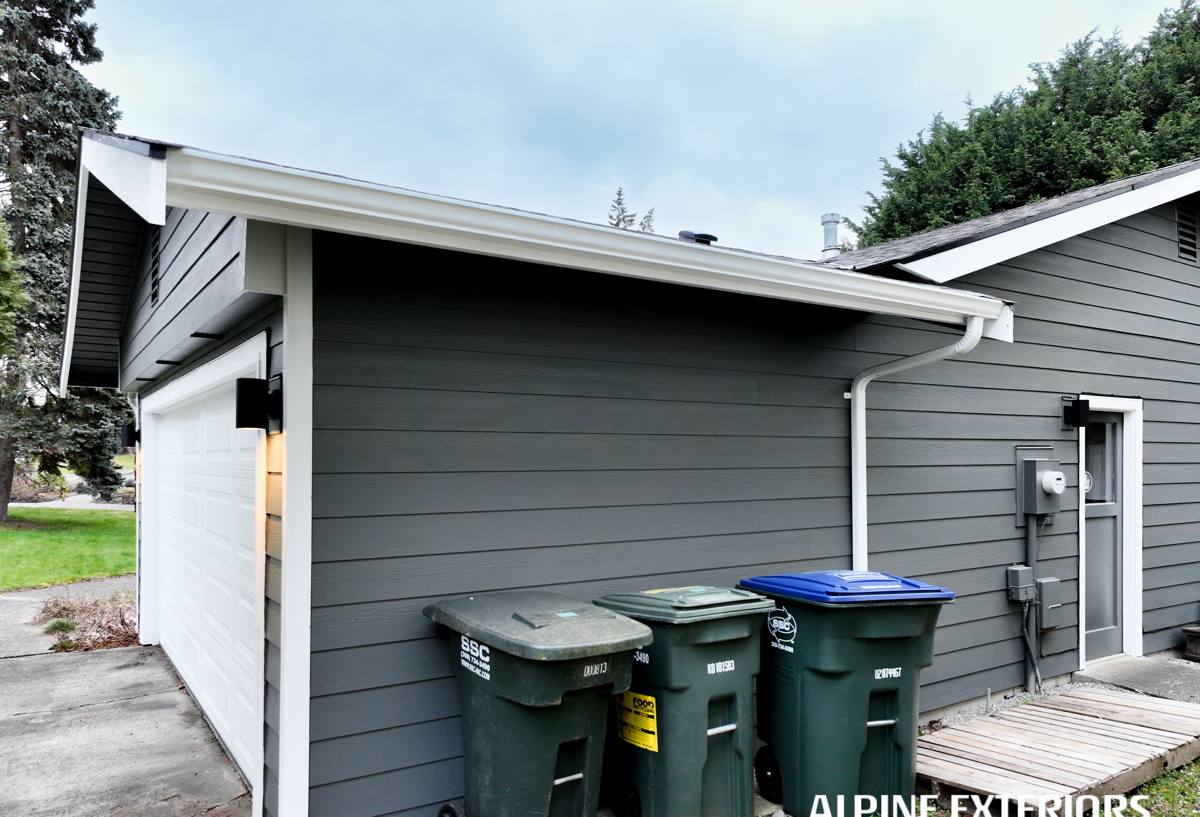
Why Everson Homes Wear the Way They Do
A few climate realities specific to this part of Washington drive most of the repair calls we get:
Driving Rain and Wind-Driven Moisture
Whatcom County storms rarely fall straight down. Wind pushes rain sideways into wall assemblies, especially on the west- and south-facing elevations of a home. Over years, that pattern finds every gap in caulking, every under-flashed window, and every seam where siding wasn't lapped correctly, and it drives water behind the cladding rather than off of it.
A Long Moss and Mildew Season
Shade from mature trees, damp ground, and mild temperatures mean moss and algae have a long growing window here — often nine months or more of conditions they can tolerate. Moss doesn't just look bad; it holds moisture against the siding surface far longer than open air would, which accelerates rot in wood-based products and can stain or degrade coatings on other materials.
Marine Air and Humidity Cycling
Everson is inland from the coast, but the region's marine air mass still reaches this far, keeping ambient humidity higher than in drier parts of the state. Siding here goes through more freeze-thaw and wet-dry cycling in a given year than siding in an arid climate, which stresses caulk joints, fasteners, and any seams that weren't detailed for that kind of movement.
Agricultural and Rural Exposure
Many Everson properties sit close to open fields, irrigation, or tree lines, which means more standing moisture near foundations and more organic debris — leaves, needles, seed fluff — that collects in siding laps and behind trim if it isn't cleared.
Signs Your Everson Home Needs Siding Repair, Not Just Cleaning
A pressure wash or a coat of paint can mask early damage without fixing it. Here's what actually signals a repair is needed:
- Soft or spongy spots when you press on the siding, especially near the bottom courses or under windows
- Visible cracking, splitting, or buckling in individual boards or panels
- Paint or finish that's bubbling, peeling, or chalking heavily in one area but not others
- Dark staining or streaking that comes back quickly after cleaning
- Gaps opening up at seams, corners, or where siding meets trim, windows, or doors
- Visible daylight or drafts felt from inside near exterior walls
- Moss or algae that returns within weeks of being removed
- Warped or wavy sections that weren't there a year or two ago
Any one of these can be minor. Several of them clustered in the same area, especially on a wall that takes the brunt of the weather, usually means water has already gotten past the surface.
What a Correct Siding Repair Actually Involves
A repair done right is more than swapping a bad board for a good one. Our process on Everson homes typically includes:
1. Diagnosing the Cause, Not Just the Symptom
We pull back damaged siding to look at what's underneath — the water-resistive barrier, the sheathing, the flashing around openings — before we decide what the repair needs to include. If the damage is isolated to the siding itself, that's a simpler fix. If water has reached the sheathing, the repair scope has to expand to address that, or the same failure repeats.
2. Checking Flashing and Water Management
A huge share of siding failures we see trace back to flashing that was missing, undersized, or installed in the wrong sequence around windows, doors, and roof-to-wall transitions. Repairing the siding without correcting the flashing underneath it is a temporary fix at best.
3. Matching Material and Finish
Where the existing siding is sound and only a section needs replacing, matching profile, exposure, and color matters for both appearance and long-term performance — mismatched materials can expand and contract at different rates, which reopens gaps.
4. Sealing and Fastening to Spec
Caulking and fastener choice sound minor, but in a climate with this much wet-dry cycling, the wrong sealant or a fastener that isn't corrosion-resistant is often the reason a "repaired" area fails again within a couple of seasons.
5. Verifying the Fix Before We Leave
We walk the repaired area and the surrounding siding with the homeowner so everyone can see the work and confirm nothing adjacent was missed.
Repair vs. Replacement: How We Help You Decide
Not every damaged wall needs full replacement, and not every repair is worth doing if the underlying siding is near the end of its life. We look at scope, age, and cause before recommending either path.
| Factor | Repair Usually Makes Sense | Replacement Usually Makes Sense |
|---|---|---|
| Extent of damage | Isolated to one or two areas or elevations | Recurring across multiple walls or the whole house |
| Underlying cause | A single identifiable issue (one bad flashing detail, one impact) | Systemic moisture intrusion or original installation errors |
| Age of existing siding | Siding is well within its expected service life | Siding is original to an older home and nearing end of life |
| Material condition | Surrounding siding is still sound and stable | Surrounding boards are also soft, cracking, or delaminating |
| Material match | Discontinued product with close available match | Product is discontinued with no reasonable match |
When a home's existing siding is genuinely past the point where repair is a good investment, we'll say so plainly and walk through what full replacement would look like — including why we install James Hardie fiber cement rather than vinyl, LP SmartSide, or other engineered wood products for that work. It comes down to how the material handles this exact climate: it doesn't absorb water the way wood-based products can, it isn't prone to the swelling and edge damage vinyl shows over time, and it holds a factory-applied ColorPlus finish through Whatcom County's wet-dry cycling far longer than field-applied paint. That's a longer conversation than a repair call usually needs, but we're glad to have it if a repair isn't the right answer.
Our Process for Everson Siding Repairs
- Inspection and diagnosis — We look at the visible damage and check adjacent areas, flashing, and any accessible sheathing to understand root cause, not just symptoms.
- Honest scope and estimate — You get a clear explanation of what needs to happen, why, and what it costs — including if we think repair isn't the better call.
- Material sourcing — We source a matching product where one exists, or discuss the closest reasonable match if the original siding is discontinued.
- Correct repair sequence — Remove damaged material, address the water barrier and flashing underneath, install the replacement to manufacturer spec, and seal and fasten correctly.
- Walkthrough — We review the completed repair with you before considering the job done.
Why It Matters to Hire a Crew That Already Works in Everson
Siding repair looks straightforward until you're the one diagnosing why a wall failed. A crew that's worked across Whatcom County has already seen how driving rain, moss, and marine humidity behave differently on a shaded rural lot in Everson than they do on an open, wind-exposed elevation closer to Ferndale or the water. That local pattern recognition shortens the diagnosis step and reduces the odds of a repair that only lasts a season or two.
It also matters for practical reasons: knowing what building department a project falls under, understanding typical construction types and siding products used on homes in this area over the decades, and having a track record you can actually check rather than a name that showed up in a search result after a storm. A local crew has a reputation in the county to protect, which tends to show up in the quality of the work.
A Note on Materials for Everson Repairs and Replacements
For repair work, we'll match what's already on your home whenever a sound match is available — that's the honest, cost-effective answer for a homeowner with a localized problem. But when a repair call turns into a replacement conversation, whether because the damage is too widespread or the existing material has reached the end of what it can reasonably give you, our answer is James Hardie fiber cement. We don't install vinyl, LP SmartSide, Cemplank, Allura, or primed wood siding, because after years of doing this work in exactly this climate, Hardie's combination of moisture resistance, non-combustible composition, factory-cured finish, and manufacturer warranty is what we're willing to put our name behind for a Whatcom County home. If that's the direction your project needs to go, we'll walk you through the product lines, colors, and what correct installation involves — no pressure either way.
If you're seeing damage, staining, or soft spots on your Everson home's siding, we're happy to take a look and give you a straight answer about what it needs. Reach out for a free, no-pressure estimate — we'll tell you honestly whether it's a repair job or something bigger.