 Ferndale
 Why Fairhaven Decks Wear Out Faster Than You'd Expect
Fairhaven sits close enough to the water that salt-laden air is part of daily life, and that air is harder on wood, fasteners, and finishes than most homeowners realize. Add in the long stretch of driving rain that Whatcom County gets from fall through spring, plus a moss season that can run half the year on shaded or north-facing decks, and you've got a combination that ages a deck well before its time. We see decks in this area that are barely ten years old with problems that would take twenty years to show up somewhere drier and further from salt water.
None of this means your deck is doomed — it means it needs to be built, repaired, and maintained with that environment in mind. A repair that works fine on a deck outside Spokane or in a low-humidity climate can fail fast here if the details aren't right for coastal Whatcom County conditions.
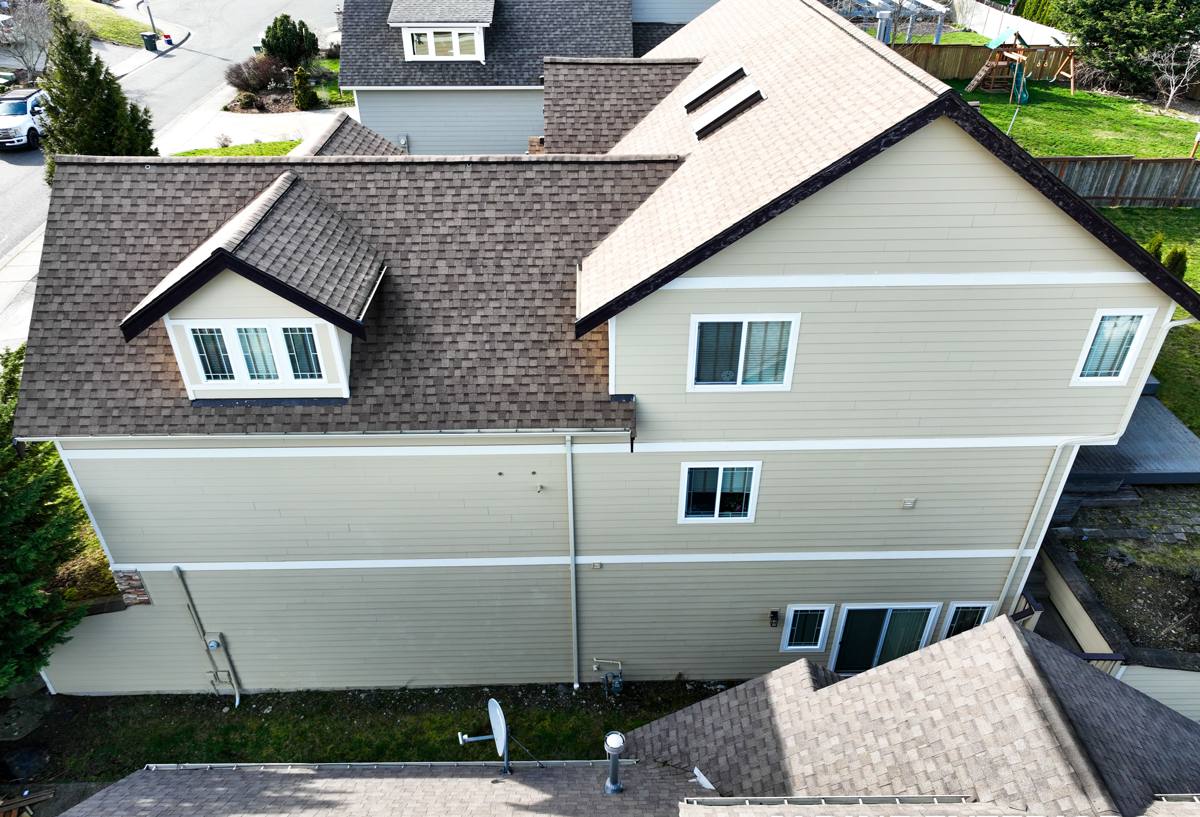
Signs a Fairhaven Deck Needs Repair
Deck problems in this area tend to show up in a few predictable ways. If you're seeing any of the following, it's worth having it looked at before it gets worse:
- Soft, spongy, or springy spots when you walk across the boards
- Dark staining or streaking around fasteners, especially where nail or screw heads are corroding
- Persistent green or black growth that comes back within weeks of cleaning
- Gaps opening up between the ledger board and the house, or visible daylight where the deck meets the siding
- Railings or posts that feel loose or flex more than they should
- Boards that are cupping, splitting along the grain, or lifting at the ends
- A musty smell coming from underneath the deck
Any one of these on its own might be minor. Several at once, or anything involving the ledger board or framing, usually means the damage has moved past the surface.
What We Actually Check During an Inspection
Framing and Structure
We get underneath the deck whenever possible and check the joists, beams, and posts for soft wood, rot, and corrosion at the hardware. A deck can look fine from the top and still have a compromised structure underneath — this is the part of the job that matters most for safety, and it's also the part a lot of quick "board swap" repairs skip entirely.
Ledger Board and Flashing
The ledger board — where the deck attaches to the house — is the single most common failure point we run into in this climate. Driving rain pushes water sideways and up under poorly flashed ledger connections, and once moisture gets trapped there, rot spreads quietly for years before it's visible. We check the flashing, the fastening pattern, and whether water is actually shedding away from the house or pooling against it.
Decking Boards and Fasteners
We look at fastener corrosion, board spacing (too tight and boards can't shed water or dry out between rains), and whether previous repairs used the right hardware for a coastal environment. Mismatched or undersized fasteners are a recurring issue on older Fairhaven decks that have had patch repairs over the years.
Repair or Replace? How We Help You Decide
Not every deck problem needs a full tear-off, and we don't push replacement when a targeted repair will hold up. The honest answer usually comes down to what's happening at the structural level versus the surface level.
| Situation | Usually a Repair | Usually a Replacement |
|---|---|---|
| A handful of boards cupped, cracked, or stained | Yes | No |
| Rot found in the ledger board or main beam | Sometimes, if isolated | Often, if widespread |
| Railings loose or a few posts soft | Yes | No |
| Joists showing rot in multiple spots | No | Yes |
| Deck is under 15 years old, good bones | Yes | No |
| Recurring moss/algae plus soft decking throughout | No | Yes |
We'll tell you straight if a repair is a temporary fix versus a lasting one, and we'll walk you through the cost difference so you can make the call with real information, not a sales pitch.
Materials That Actually Hold Up Near Salt Water
What we use for a repair depends on what's already on your deck and what you're trying to get out of it — matching the existing look, cutting down on maintenance, or just getting the most life out of the budget you have. Here's how the common options compare for this climate:
| Material | Moisture Behavior | Maintenance | Best Use |
|---|---|---|---|
| Pressure-treated lumber | Resists rot well if fasteners and flashing are correct | Needs re-sealing every 1-2 years in this climate | Framing, budget-conscious board repairs |
| Cedar | Naturally rot-resistant, but softens faster in constant wet/dry cycling | Regular sealing to hold color and resist moss | Matching an existing cedar deck |
| Composite decking | Doesn't absorb water or rot | Low — occasional cleaning | Long-term, low-maintenance repairs or partial replacements |
| Standard fasteners (uncoated or basic galvanized) | Corrodes visibly within a few seasons near salt air | Will need replacement | Not recommended here |
| Stainless steel or marine-grade coated fasteners | Holds up well against salt air corrosion | Minimal | Any repair in Fairhaven |
The fastener line matters more than most homeowners expect. We've replaced plenty of decking boards over the years that failed early not because the wood was bad, but because the screws holding it down corroded and let water into the fastener holes. It's a small cost difference upfront that saves a repeat repair down the line.
How Our Deck Repair Process Works
- On-site inspection — we check framing, ledger, flashing, and decking together, not just the boards you called about.
- Honest scope and estimate — you'll know what's structural, what's cosmetic, and what your real options are before any work starts.
- Repair or targeted rebuild — we replace what's failed, correct any flashing or fastening that caused the problem in the first place, and match materials to the rest of the deck where possible.
- Finish and seal — new or replaced wood gets sealed appropriately for our wet season so it isn't absorbing moisture from day one.
- Walkthrough — we show you what was done and what to watch for going forward.
We don't do drive-by patch jobs. If we find rot at the ledger board while we're out there for a railing repair, we're going to tell you — even if it means the scope grows beyond what you originally called about.
Keeping Moss, Algae, and Rot From Coming Back
A good repair only lasts if the deck is kept up afterward. Whatcom County's damp, shaded conditions mean moss and algae are a recurring fight, not a one-time cleanup. A few habits go a long way:
- Sweep leaves and debris off the deck regularly, especially in fall — trapped organic matter holds moisture and feeds moss
- Keep gutters and downspouts clear so runoff isn't dumping directly onto or under the deck
- Rinse or lightly clean boards a couple of times a year to knock back algae before it takes hold
- Re-seal wood decking on the schedule appropriate to the product — waiting too long lets water back into the grain
- Trim back overhanging branches and shrubs to let sun and air reach shaded sections
- Check under the deck once a year for standing water, soft framing, or new staining
Composite decking cuts down on most of this list, but even composite boards benefit from a periodic rinse to keep algae from building up in shaded corners.
Why It Matters to Hire a Crew That Already Works in Fairhaven
A lot of deck problems in this area trace back to repairs that were done correctly for a different climate — the wrong fastener, decking laid too tight, flashing details that work fine somewhere drier. A crew that regularly works in Fairhaven and the surrounding Whatcom County coastline knows which fastener grades actually hold up against the salt air, how much gap to leave between boards for our rain patterns, and where moss tends to take hold first on a shaded deck. That local pattern recognition is the difference between a repair that lasts one season and one that lasts fifteen years.
It also means less guesswork on your end. You're not the test case for whether a material choice works in this environment — we've already seen what holds up and what doesn't on decks just like yours.
If your deck has soft spots, corroding fasteners, recurring moss, or you just want an honest read on its condition, we're happy to take a look. Estimates are free and there's no pressure — you can use the form below to get one scheduled.