 Ferndale
 Building New Near the Water Changes the Window Job
New-construction window installs are a different job than swapping out an old window in an existing wall. On a new build, the window isn't just being set into an opening — it's being integrated into the wall assembly from the framing out: the rough opening, the water-resistive barrier (WRB), the flashing sequence, and the siding all have to work together as one system. Get that sequence wrong and the window itself can be flawless and the wall will still leak. Get it right and the window becomes one of the most weather-resistant parts of the house.
For homes going up in the Fairhaven area near Ferndale, that sequencing matters more than it does in a lot of inland builds. This stretch of Whatcom County sits close enough to open water that the air itself carries salt, the rain comes in sideways more often than straight down, and long gray stretches of the year keep siding and trim damp enough for moss to take hold. A new-construction window package that's specified and installed with those conditions in mind will outlast one that was installed to a generic national standard and hope for the best.
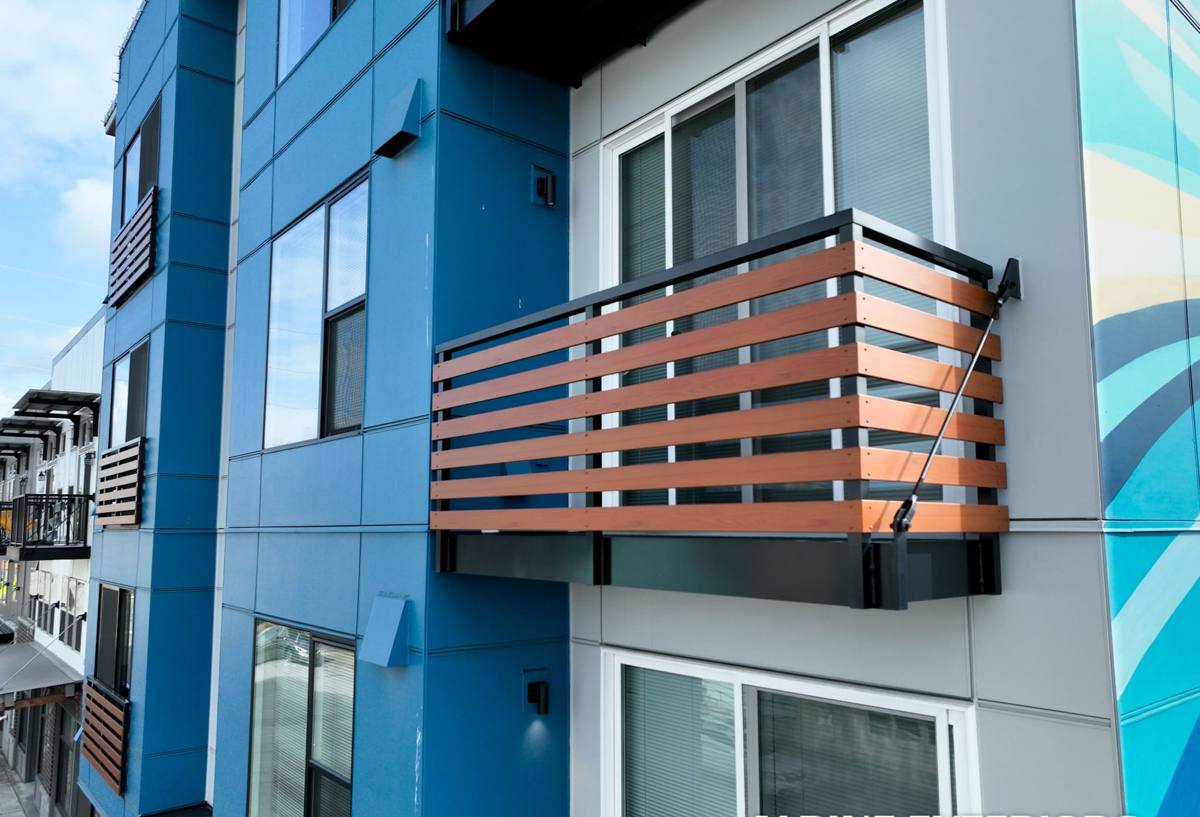
What the Local Climate Actually Does to a Window Over Time
Salt Air and Corrosion
Coastal and near-coastal air in Whatcom County carries fine salt particulate, especially with onshore wind. Over years, that salt settles on hardware, fasteners, and metal flashing and accelerates corrosion — especially on lower-grade steel screws, unprotected aluminum, and cheap window hardware. It's rarely dramatic; it's a slow pitting and staining that shows up as stiff locks, streaked sills, and rusted fastener heads five or ten years in. New-construction work is the one chance to spec corrosion-resistant fasteners and flashing metals before they're buried in the wall — you don't get a second shot once the siding is on.
Wind-Driven Rain and Water Management
Whatcom County storms don't always drop rain straight down. Wind off the water regularly drives rain sideways into west- and south-facing walls, which puts real pressure on window flashing, not just the window unit's own weatherstripping. A window can carry a strong water rating on paper and still leak if the flashing behind it doesn't shed water down and out past the WRB. This is the single biggest reason new-construction window failures happen here — not bad windows, but flashing details that were rushed or done out of sequence.
Moss, Shade, and Trapped Moisture
Long wet seasons and tree cover common around Fairhaven keep north- and shaded-wall surfaces damp for extended stretches, and moss and algae will colonize any surface that stays damp — window sills, trim, and the tops of casings included. Moss itself doesn't damage vinyl or fiberglass, but it does hold moisture against the surface longer, and on wood trim or sills that acts as a slow-motion rot accelerant. Sill design and drainage matter as much as the glass package for long-term durability in this environment.
New-Construction Windows vs. Replacement Windows
It's worth being clear about the distinction, because the products and the install method are genuinely different jobs, not just different price points.
| Factor | New-Construction Window | Replacement (Retrofit) Window |
|---|---|---|
| Frame type | Nail-fin or block frame, set into open framing | Insert unit, set into the existing frame |
| Flashing access | Full access to WRB and framing during install | Limited — existing siding and trim stay in place |
| Water management | Built into the wall assembly from scratch | Relies on the condition of the existing opening |
| Best fit | New builds, additions, full wall reframes | Existing homes with a sound, dry opening |
| Long-term risk if done wrong | Hidden leaks behind finished siding | Leaks usually show near the original frame |
On a Fairhaven-area new build, you get one chance to do the water management right before the siding closes it up for good. That's exactly why the flashing sequence gets so much attention on this type of job.
What a Correct New-Construction Install Actually Involves
Flashing and WRB Integration
The order of operations is what makes or breaks a new-construction window install: the WRB goes on first, then a properly lapped flashing sequence at the sill, jambs, and head — each layer overlapping the one below it so water is always directed outward and down, never trapped behind the cladding. Head flashing needs a drip cap or integrated flange that keeps water from ever reaching the top of the window frame directly. This sounds simple described in a paragraph; done correctly on every opening of a full house, it's the part of the job that separates a weathertight build from a callback in three years.
Sill Pans and Sloped Sills
A sloped sill pan under the window unit gives any water that does get past the primary seal somewhere to go — out, not down into the wall cavity. This is inexpensive to do at framing stage and genuinely difficult to retrofit later. On homes near the water, where wind-driven rain puts real pressure on the assembly, we treat sill pans as non-negotiable, not an upgrade.
Nail-Fin vs. Block-Frame Selection
Most residential new-construction windows in this region use a nail-fin (flange) frame, fastened directly to the sheathing and integrated with the WRB and siding. Block-frame windows, set deeper into a masonry or thicker-wall opening, show up more on specific architectural styles. The choice affects trim detailing, flashing method, and how the window reads from the exterior — we talk through this with the builder or homeowner before the opening is even framed, not after.
Our Process on a New-Construction Job
- Plan review and rough-opening check — confirm window sizes, sightlines, and manufacturer tolerances against the framed openings before anything is installed.
- WRB and flashing sequence — house wrap or building paper installed and lapped correctly, sill pan set, jamb and head flashing tied in.
- Window set and shim — unit leveled, plumbed, and squared, shimmed at the manufacturer's load points, not just tacked in place.
- Fastening — corrosion-resistant fasteners at the spacing the manufacturer's warranty actually requires.
- Sealant and backer rod — correct joint sealant at the right locations, with weep paths left open, not sealed shut.
- Interior air seal — low-expansion foam or backer rod at the interior gap, which does as much for energy performance as the glass package.
- Final check — operation, hardware function, and a visual sightline check across all openings before trim and siding close it in.
Every step in that sequence is inspectable while the wall is still open — which is exactly the point. Once siding goes on, the only sign of a mistake is a stain or a soft spot years later.
Frame and Glass Choices That Hold Up Here
Frame Material
Vinyl and fiberglass frames both perform well in this climate and don't corrode, which is a real advantage over bare aluminum in a salt-air environment. Fiberglass carries a higher up-front cost and holds up slightly better against long-term flexing from temperature swings; quality vinyl is a sound, more economical choice for most new-construction budgets. We steer clients away from unclad wood exteriors on water-facing walls here — not because wood windows are poor products, but because the maintenance burden of keeping exterior wood sealed against this much sustained moisture is more than most homeowners want to sign up for.
Glass Packages
Double-pane, low-E glass with argon fill is the practical baseline for this region's temperature swings and heating-season demands. Triple-pane is available and does add performance, at added cost and weight — worth discussing for specific rooms (a north-facing bonus room, for example) rather than defaulting to it on every opening.
Mistakes We See on New Builds in This Area
- WRB and flashing installed out of shingle-lap order, so water gets directed behind the barrier instead of over it
- Sealant used in place of proper flashing, as a shortcut — sealant fails; flashing sheds water passively for decades
- Weep holes and drainage paths caulked shut during the finish stage, trapping water inside the frame
- Standard fasteners used where corrosion-resistant hardware was specified, saving pennies now against a callback later
- Sill pans skipped on the assumption that "the window is watertight enough on its own"
- Trim and cladding closed in before a final water-test or visual check of the flashing sequence
Why a Crew That Already Works Fairhaven and Ferndale Matters
New-construction window detailing isn't universal — it has to answer to the specific exposure of the site. A crew that's already worked openings on this stretch of Whatcom County knows which walls take the worst of the wind-driven rain, understands why moss and shaded dampness change sill and trim decisions, and isn't guessing about corrosion-resistant hardware because they've seen what happens to the cheap stuff five years out. That local pattern recognition is worth more than a lower bid from an out-of-area crew treating this like any other job site.
It also means being available for the follow-up conversation — a builder walking the frame stage, or a homeowner with a question about a sill a few years after move-in — without a long drive being part of the equation.
Cost Factors on a New-Construction Window Package
| Factor | How It Moves the Price |
|---|---|
| Frame material (vinyl vs. fiberglass) | Fiberglass typically runs higher per unit |
| Glass package (double- vs. triple-pane) | Triple-pane adds cost and weight, best used selectively |
| Number and size of openings | Larger and more numerous openings scale total cost directly |
| Flashing and sill-pan detailing | A modest add now versus a major repair cost later |
| Wall complexity | Multiple stories, tricky rooflines, or tight access add labor time |
We give straightforward, honest ranges once we've seen the plans or the framed openings — broad national price lists rarely reflect what a specific site near the water actually needs.
After the Windows Are In
New-construction windows in this climate still benefit from basic seasonal attention: keeping weep holes and sill tracks clear of debris and moss buildup, checking that exterior sealant joints haven't cracked after a few winters, and keeping vegetation trimmed back from shaded, damp-prone walls. None of it is heavy maintenance, but a five-minute check each fall, before the wet season sets in, catches small issues while they're still small.
If you're framing a new build or addition in the Fairhaven area near Ferndale, we're happy to walk the plans or the framed openings with you and talk through window and flashing details before anything gets closed in. Reach out for a free, no-pressure estimate using the form below.