 Ferndale
 Point Roberts Is Its Own Kind of Exposure
Point Roberts sits on a small peninsula that juts south from the Canadian mainland into the Salish Sea, surrounded by water on three sides. That geography is part of what makes it a beautiful place to own a home — and part of what makes siding here fail faster than it does even a few miles inland. Homes take on salt-laden air coming off Boundary Bay and Georgia Strait, wind-driven rain with nowhere to break before it hits an exterior wall, and a moss and algae season that runs longer than almost anywhere else in Whatcom County. Siding that isn't engineered and installed for that combination doesn't just look tired sooner — it can trap moisture behind it and start causing real damage before a homeowner ever sees a visible problem.
This page is about one thing specifically: fiber cement siding, installed correctly, on Point Roberts homes. Not a general overview of siding options, not a sales pitch — an honest look at what this location demands and what a correct install looks like.
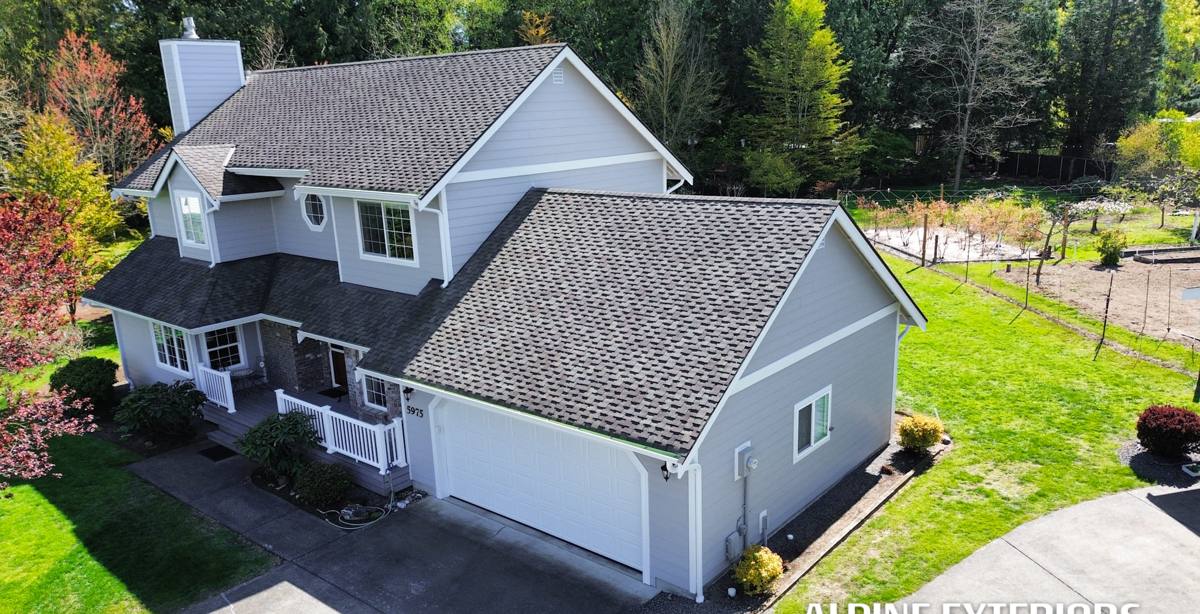
What the Climate Actually Does to Siding Here
Salt Air
Airborne salt is corrosive to metal fasteners, flashing, and trim, and it accelerates the breakdown of finishes that aren't formulated to resist it. On a peninsula exposed on multiple sides, that salt exposure is close to constant, not occasional. Paint film that would hold up for years in a more sheltered inland yard can chalk, fade, or fail early here.
Driving Rain
Point Roberts gets weather straight off open water with little to break the wind. Rain doesn't just fall here, it drives sideways into wall assemblies, which puts real pressure on every seam, joint, and penetration in the siding system. A house that's only "mostly" sealed up will find the gap.
Moss and Algae Season
Cool, damp, shaded conditions persist for a large part of the year in western Whatcom County, and Point Roberts' marine exposure keeps humidity high even between rain events. North-facing walls, tree-shaded elevations, and anywhere water sheds slowly will grow moss and algae if the siding material and the installation details don't account for it.
None of these three things are unique in isolation — plenty of Pacific Northwest towns deal with rain and moss. What's distinct about Point Roberts is having all three stacked together, on a landmass with no real inland buffer from the water.
Why We Install Only James Hardie Fiber Cement
We don't install vinyl, LP SmartSide, primed wood, cedar, or other fiber cement brands like Cemplank or Allura. That's a deliberate standard, not a lack of options. In an environment like Point Roberts, the material matters as much as the workmanship:
- Non-combustible core — fiber cement doesn't feed a fire the way wood-based products can, which matters anywhere with dry-season wildfire risk in the wider region.
- Moisture-resistant by composition — Hardie's fiber cement doesn't absorb and swell the way engineered wood siding can when it takes on water at a cut edge or fastener hole.
- HardieZone engineering — Hardie manufactures specific formulations for different climate zones (HZ5 and HZ10) rather than one generic product for the whole country. We spec the version engineered for wetter, cooler, more humid Pacific Northwest conditions.
- ColorPlus factory finish — a baked-on finish applied under controlled conditions, which holds color and resists fading and salt exposure far better than a field-applied paint job, and comes with its own finish warranty.
Vinyl can crack and fade in UV and cold snaps; LP SmartSide and cedar are wood-based products that are more sensitive to sustained moisture exposure at cut edges, seams, and fastener penetrations. None of those trade-offs make a product "bad" — they just don't hold up to Point Roberts conditions as well as we're willing to put our name behind. Fiber cement, installed to spec, is what we've standardized on.
What a Correct Fiber Cement Install Actually Involves
Fiber cement siding is only as good as the assembly behind it. In a high-exposure location, the details that don't show on the finished wall are the ones that determine whether it lasts.
Weather-Resistive Barrier and Flashing
Every wall gets a continuous weather-resistive barrier, and every window, door, and penetration gets properly lapped flashing so water sheds outward and down, never inward. On a house taking driving rain from multiple directions, flashing details at inside corners, kickouts above roof lines, and butt joints are where failures start if they're rushed.
Clearances and Gaps
Fiber cement needs proper clearance from grade, roof lines, decks, and other hard surfaces, and it needs gaps at butt joints and trim that are caulked with a product rated for the movement and moisture involved — not just tight-fit and painted over. Manufacturer clearance specs exist precisely because trapped moisture at the bottom edge of a board is one of the most common failure points on any fiber cement job.
Fastening
Corrosion-resistant fasteners, driven to the correct depth and pattern, matter more here than in a low-exposure inland install. Overdriven or underdriven nails compromise the board's ability to move and shed water correctly, and the wrong fastener material shortens its own life in salt air.
Field Cuts and Sealing
Any field-cut edge needs to be sealed per manufacturer spec before installation, particularly at inside corners and around penetrations. An unsealed cut edge is a moisture entry point that undermines the material's own resistance.
Coastal Exposure by Wall Orientation
Not every wall on a Point Roberts home faces the same conditions. We plan detailing and maintenance expectations around actual exposure, not a blanket approach for the whole house.
| Wall Condition | Primary Risk | What We Prioritize |
|---|---|---|
| Direct water-facing / unobstructed wind exposure | Driving rain, salt deposition | Extra attention to flashing laps, fastener corrosion resistance, joint sealing |
| North-facing or tree-shaded elevations | Persistent moisture, moss/algae growth | Proper clearances and drainage so surfaces dry between rain events |
| Sheltered / interior-facing walls | Lower immediate risk, but still marine humidity | Standard HZ5-spec installation, same warranty coverage |
The point of this table isn't to suggest some walls get a lesser install — every wall gets the same correct assembly. It's that we adjust where we spend extra care and what we tell a homeowner to expect for cleaning and inspection intervals on each elevation.
Our Process for a Point Roberts Project
- On-site assessment — we look at wall orientation, existing moisture damage, current siding and sheathing condition, and any trouble spots specific to the property before quoting anything.
- Material and logistics planning — Point Roberts is a U.S. exclave connected to the rest of Whatcom County only by water, air, or a drive back through Canada. We plan material delivery and crew scheduling around that reality upfront so a project doesn't stall mid-job waiting on a board order.
- Tear-off and inspection of what's underneath — removing old siding is when hidden rot, damaged sheathing, or past water intrusion actually gets found and addressed, not covered back up.
- Weather barrier and flashing installation — done before a single piece of Hardie board goes up, since this layer does the real waterproofing work.
- Fiber cement installation — HZ5-spec ColorPlus Hardie boards installed to manufacturer clearance, fastening, and sealing specifications.
- Final walkthrough — we go over the finished work with the homeowner, including what routine maintenance to expect given the wall's specific exposure.
Why Hiring a Crew That Already Works Point Roberts Matters
Point Roberts isn't a neighborhood you pass through on the way to somewhere else — getting a crew, equipment, and materials there takes real planning, since land access runs through the Canadian border. A contractor unfamiliar with that logistics reality can turn a straightforward siding job into a delayed one, with crews or materials stuck at a border crossing or a project scheduled without accounting for it. Beyond logistics, a crew that has actually worked on Point Roberts homes has seen firsthand what year-round marine exposure does to different products and different installation shortcuts. That's the kind of judgment that doesn't come from a general Whatcom County service area — it comes from having done the work here specifically.
Questions Worth Asking Before You Hire
- Does the contractor have a documented plan for getting crews and materials to Point Roberts on schedule?
- Do they install fiber cement to the manufacturer's published clearance, fastening, and sealing specifications — and can they explain what those are?
- Are they specifying a HardieZone product engineered for Pacific Northwest marine exposure, not a generic one-size version?
- Will flashing and weather-barrier work be inspected before siding goes on, not just covered up?
- What does the warranty actually cover — material, finish, and labor — and who backs each part of it?
- Can they speak to how different wall orientations on your specific home should be detailed and maintained?
What This Costs to Get Right
Pricing on any siding project depends on square footage, tear-off scope, the condition of what's underneath, and how much flashing and trim detail work is involved — Point Roberts jobs also factor in the added logistics of getting crews and materials to the peninsula. Rather than quote a number that doesn't mean anything without seeing the house, we'd rather walk the property, look at the actual exposure and existing condition, and give a real number based on what your home needs.
If you own a home on Point Roberts and want a straight answer on what your siding actually needs, we'll come take a look. The estimate is free, there's no pressure, and you'll get a clear explanation of what we see and what we'd recommend — use the form below to get started.