 Ferndale
 Fiber Cement Siding for Sumas, Washington
Sumas sits at the northern edge of Whatcom County, close enough to the border that homeowners here deal with the same marine-influenced weather system that soaks the rest of the county, plus its own share of wind and temperature swings that come with being farther from Bellingham Bay. That combination — damp air moving in off the Salish Sea, driving rain through the fall and winter, and long stretches of gray, humid days that never quite dry the exterior out — is exactly the environment that punishes the wrong siding choice and rewards the right one. We install James Hardie fiber cement siding for homeowners in Sumas and across Whatcom County because it's the one product system we trust to hold up to this specific climate over decades, not just seasons.
This page covers what fiber cement siding needs to do for a Sumas home, what a correct installation actually involves, and how our process works from first estimate to final walk-through.
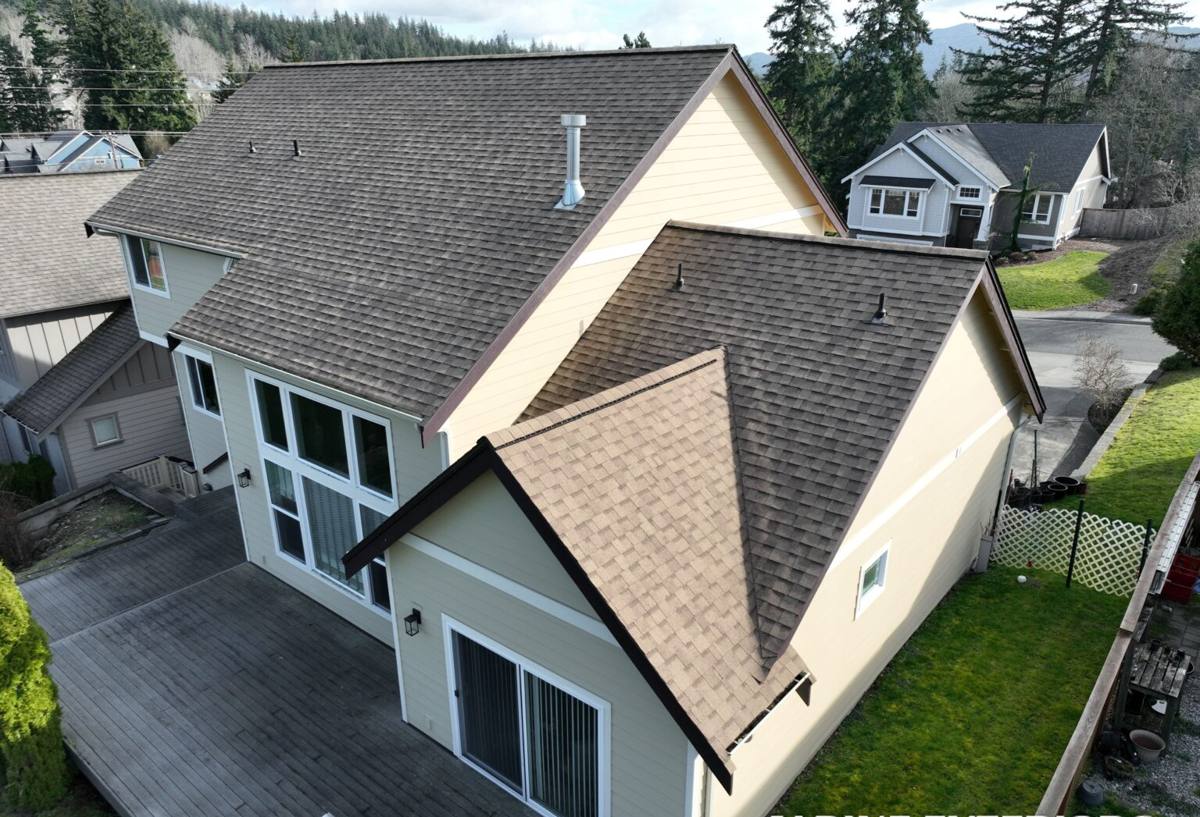
What Whatcom County's Climate Does to Siding
Homes in Sumas face a version of the same weather stress every siding contractor in this county deals with: prolonged moisture exposure, a moss season that can run eight or nine months out of the year, and repeated freeze-thaw and wet-dry cycling that most exterior materials weren't designed to absorb. A few specifics worth understanding:
Driving Rain and Wind-Driven Moisture
Storms coming through Whatcom County frequently arrive with enough wind to push rain sideways into wall assemblies rather than straight down. Siding that relies on face-sealing (caulk and paint alone, rather than proper drainage and flashing) tends to fail here faster than it would in a drier, calmer climate, because water finds its way behind the cladding and has nowhere to go.
Moss, Mildew, and Prolonged Dampness
Long gray stretches with high humidity and limited direct sun keep exterior surfaces damp for extended periods, which is exactly what moss and mildew need to establish. Wood-based and wood-fiber siding products absorb that moisture into the substrate itself; fiber cement doesn't, which matters a great deal over a 20- or 30-year ownership horizon.
Coastal-Influenced Humidity, Even Inland
Sumas is farther from open water than Ferndale, but the same marine air mass that defines Whatcom County's weather still reaches this far north and east. Homeowners sometimes assume that being "inland" buys them some protection from salt-laden, moisture-heavy air — in practice, the difference is smaller than people expect, and siding still needs to be chosen and installed with that humidity load in mind.
Why We Install Only James Hardie Fiber Cement
We don't install vinyl, LP SmartSide, primed wood, cedar, or other fiber cement brands. That's a standard we hold across every job, including here in Sumas, and it comes down to how each of those materials behaves under sustained moisture exposure rather than any single failure or complaint. Vinyl expands and contracts with temperature swings and can warp or crack in cold snaps. Engineered wood products use wood fiber and resin that, once the factory coating is breached, absorb moisture the way any wood product does. Cedar and primed spruce require ongoing refinishing to stay ahead of moisture intrusion — maintenance most homeowners underestimate until they're several years in.
James Hardie fiber cement is a cement, sand, and cellulose fiber composite. It doesn't rot, it isn't attractive to pests, it's non-combustible, and Hardie's HZ5 product line is engineered specifically for climates like ours — freeze-thaw cycling, high humidity, and prolonged wet weather. The factory-applied ColorPlus finish is baked on and warrantied against fading and peeling in a way field-applied paint on other materials generally isn't. That combination is why it's the only product we put on Sumas homes.
What a Correct Fiber Cement Installation Actually Involves
Fiber cement is only as good as its installation. A huge share of the siding problems we get called out to inspect trace back to shortcuts taken during the original install, not a flaw in the material itself. On every Sumas project, that means:
- Proper water-resistive barrier and weep path behind the siding, not a face-sealed system relying on caulk to keep water out
- Manufacturer-specified minimum gaps at butt joints, corners, and around penetrations to allow for expansion and drainage
- Correct fastener type, spacing, and placement — Hardie is specific about this, and it's frequently ignored on lower-bid jobs
- Flashing at every horizontal transition: window and door heads, roof-to-wall intersections, deck ledgers, and trim
- Starter strip installed at the correct reveal so the bottom course doesn't wick moisture from ground-level splashback
- Caulking only where Hardie's install guide calls for it — not as a substitute for proper flashing and clearance
Skipping any one of these doesn't usually show up as a problem in year one. It shows up in year five or eight, as trapped moisture, staining, or fastener failure — by which point it's a much more expensive repair than it would have been to do correctly the first time.
Our Process for Sumas Projects
- On-site assessment. We walk the exterior, check existing siding and sheathing condition where accessible, and look at drainage, grading, and moisture-prone areas specific to the property.
- Written estimate. You get a clear scope covering product line, color, trim details, and any repair or moisture-remediation work identified during the walkthrough — no vague allowances.
- Tear-off and substrate check. Old siding comes off and we inspect the sheathing underneath before anything new goes up. Hidden rot or water damage gets addressed before we close the wall back up, not covered over.
- Weather barrier and flashing. This is the step that determines whether the siding lasts 10 years or 40. We install house wrap or building paper and flash every transition point to manufacturer spec.
- Hardie installation. Panels or lap siding go up with correct fastening, gapping, and reveal, following James Hardie's published installation guidelines for our climate zone.
- Final walk-through. We go over the finished job with you, point out anything you should know for future maintenance, and make sure you have your warranty documentation.
Cost Factors for Fiber Cement Siding in Sumas
Every home is different, so we don't quote a number until we've seen the property, but the variables that move a project's cost are consistent:
| Factor | Why It Matters |
|---|---|
| Existing siding removal | Tear-off of old vinyl, wood, or damaged siding adds labor and disposal cost |
| Substrate repair | Rotted sheathing or framing found during tear-off needs to be repaired before new siding goes on |
| Product line (HardiePlank vs. HardiePanel vs. shingle styles) | Different profiles and textures carry different material costs |
| Trim and detail work | Corner boards, window/door trim, and fascia detailing add labor time |
| Home size and complexity | Roofline breaks, dormers, and multi-story walls take longer to flash and fit correctly |
| ColorPlus vs. field-painted finish | Factory-finished ColorPlus costs more up front but eliminates a repaint cycle down the road |
Living With Fiber Cement Siding in a Whatcom County Climate
Correctly installed Hardie siding is low-maintenance, but "low-maintenance" isn't "no-maintenance." A short annual routine keeps it performing the way it's designed to:
- Rinse the exterior once or twice a year to keep moss spores and mildew film from building up, especially on north-facing walls that stay shaded and damp longer
- Keep gutters clear so overflow doesn't run down the siding face repeatedly in the same spot
- Trim back vegetation and shrubs that hold moisture against the siding or block airflow
- Check caulking at trim joints and penetrations every couple of years and re-caulk if it's cracked or pulling away
- Watch for any staining or discoloration near ground level, which can indicate splashback or a grading issue worth correcting early
Why Hire a Crew That Already Works in Sumas and Whatcom County
A siding installer who mostly works drier inland climates or warmer regions doesn't always carry the same instincts about flashing, drainage, and moisture management that this part of Washington demands. We work Sumas, Ferndale, and the surrounding Whatcom County communities regularly, which means we're not guessing at how much rain exposure a wall assembly needs to handle or how long moss season really runs here — we're building to what we see every year on real jobs in this exact climate. That local familiarity, paired with sticking to one manufacturer's system we know inside and out, is what keeps callbacks low and siding performing the way it should for decades.
If you're considering new siding or need to replace what's failing on a Sumas home, we're happy to take a look and give you a straightforward, no-pressure estimate. Use the form below to get started.