 Ferndale
 Why Siding Choice Matters More in Sudden Valley
Homes around Sudden Valley deal with a specific mix of conditions: marine air moving in off the Whatcom County coastline, long stretches of driving rain through fall and winter, and heavy tree cover around the lake that keeps siding shaded and damp for days after a storm passes. That combination is exactly what wears out the wrong siding product fastest. Wood-based sidings absorb that moisture and eventually swell, delaminate, or invite rot at the edges. Vinyl expands and contracts with temperature swings and can crack in a hard freeze. None of that is a defect in those products so much as a mismatch with what this climate asks of an exterior.
We install James Hardie fiber cement siding exclusively, and we've done enough of these jobs around Ferndale and out toward Sudden Valley to know which details actually matter here versus which ones are just manufacturer boilerplate. This page walks through both.
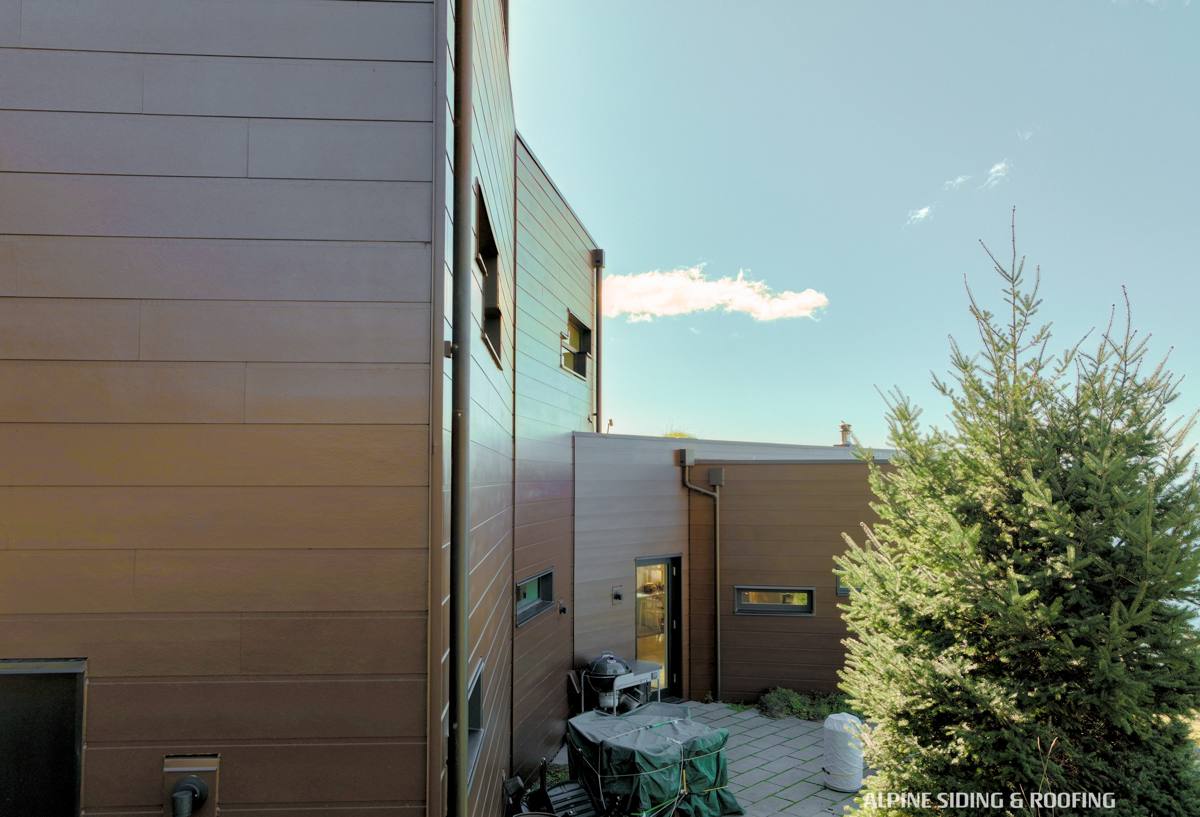
What This Climate Actually Does to Siding
Moisture load
Sudden Valley homes are often set back among trees near the lake, which is good for privacy and shade but bad for airflow. Siding in that setting stays wet longer after rain than siding on an open, sun-exposed lot. Over years, that extra dwell time is what accelerates moss growth, mildew staining, and — on the wrong substrate — actual material breakdown.
Moss and organic growth
Moss doesn't just look bad. It holds moisture against the siding surface and, on products that aren't dimensionally stable, that trapped moisture works its way behind the surface finish. On fiber cement with a factory-baked finish, moss is a surface nuisance you can wash off. On products with a field-applied or porous finish, it's a slower path to a bigger repair.
Wind-driven rain
Whatcom County storms regularly push rain sideways, not straight down. That means water is testing every horizontal joint, every panel seam, and every point where siding meets a window or door — not just the flat field of the wall. This is a big part of why installation quality matters as much as the product itself.
Why We Standardized on James Hardie
James Hardie fiber cement is engineered specifically for this kind of exposure. It's non-combustible, dimensionally stable across temperature and humidity swings, and finished with the ColorPlus factory coating system rather than a coat of paint applied on-site. That factory finish is baked on under controlled conditions, which gives it better fade and moisture resistance than field-applied paint can match, and it carries its own finish warranty separate from the substrate warranty.
Hardie also builds region-specific product formulations — its HZ5 line is engineered for the freeze-thaw and moisture conditions common in the Pacific Northwest, as opposed to a one-size-fits-all formulation. That's the version we spec for Whatcom County homes, including Sudden Valley.
We don't install LP SmartSide, vinyl, Cemplank, Allura, or raw wood siding. Each of those has legitimate uses somewhere, but for this climate specifically, we've seen enough of the maintenance calls and premature repairs to standardize on one product we can stand behind without qualifications.
James Hardie Product Lines and Where They Fit
| Product | Typical Use | Why It Works Here |
|---|---|---|
| HardiePlank lap siding | Most common wall application | Traditional look, sheds wind-driven rain well when lapped and flashed correctly |
| HardieShingle | Accent gables, dormers | Matches craftsman and PNW-style detailing without the upkeep of real cedar shingle |
| HardiePanel | Modern/board-and-batten looks | Clean vertical lines, good for contemporary remodels |
| HardieTrim | Corners, fascia, window trim | Same moisture resistance as the field siding, so trim doesn't become the weak point |
ColorPlus finishes come in a range of regionally-appropriate colors, and Hardie's palette is built with fade resistance in mind — a real consideration given how much UV even a cloudy Northwest sky still delivers over a few years.
What a Correct Installation Actually Involves
Most siding failures we get called out to inspect aren't product failures — they're installation shortcuts. Fiber cement is unforgiving of a few specific mistakes, and this is where hiring a crew that installs Hardie every day, rather than occasionally, shows up in the outcome.
- Weather-resistive barrier installed and lapped correctly before any siding goes up, not patched around afterward
- Proper flashing at every window, door, and roof-to-wall intersection — this is where wind-driven rain finds its way in if it's skipped
- Correct fastener type and placement, following Hardie's published nailing patterns rather than whatever's fastest
- Minimum clearance maintained between siding and grade, decks, and roof lines so water has somewhere to go
- Proper gapping and caulking at butt joints, sized for the specific plank profile
- Cut edges sealed before installation, since factory finish doesn't extend to a field cut
- Rain screen or drainage gap detailing on sides of the home that take the most direct weather
Any one of these done wrong can void the manufacturer warranty even though the siding itself is installed. That warranty language is worth reading before you sign with anyone — it typically requires installation to Hardie's written specifications, not just "close enough."
Our Process on a Sudden Valley Job
- Walkthrough and measure — we look at existing siding condition, sheathing condition where it's exposed, and problem areas like north-facing walls or spots with heavy tree shade
- Written estimate — line-itemed so you can see what's tear-off, what's new material, what's trim and flashing work
- Product and color selection — matched to your home's exposure and, if relevant, any community guidelines
- Removal and inspection — old siding comes off, sheathing gets inspected for hidden rot or moisture damage before anything new goes on
- Weather barrier and flashing — the unglamorous part that determines whether the job lasts
- Siding installation — to Hardie spec, with fastening and clearances checked as we go, not just at the end
- Final walkthrough — with you, before we call it done
Cost Factors for a Sudden Valley Home
| Factor | Why It Moves the Price |
|---|---|
| Tear-off vs. new construction | Removing and disposing of old siding adds labor and hauling |
| Sheathing condition | Rot found underneath old siding needs repair before new siding goes on |
| Home shape and story count | More corners, gables, and dormers mean more cutting, flashing, and trim detail |
| Access | Steep lots, tree-crowded lots, and lake-side setbacks common around Sudden Valley can add staging time |
| Trim scope | Full trim replacement costs more than siding-only but avoids mismatched old trim against new panels |
| Product line and texture | Shingle and panel profiles run different material costs than standard lap |
We won't quote a number without seeing the home — anyone who does is guessing. But these are the variables that actually move a Sudden Valley estimate up or down, and we'll walk through each one with you in plain terms.
Living With Hardie Siding in a Moss-Prone Climate
Correctly installed Hardie siding is low-maintenance, not no-maintenance. A few habits keep it looking right for the long haul:
- Rinse siding down once or twice a year, especially on shaded or tree-covered walls where moss and mildew get a head start
- Keep gutters clear so overflow isn't running down the siding face during heavy rain
- Trim back vegetation and tree limbs that keep a wall surface damp and shaded longer than it needs to be
- Recaulk joints if you notice cracking or gaps opening up over time — small maintenance now avoids water intrusion later
- Have flashing and trim points checked periodically, since these are the spots most likely to show wear first
None of this is heavy lifting compared to what wood siding demands, but it's not zero-effort either — anyone telling you fiber cement siding never needs attention is overselling it.
Why a Crew That Already Works This Area Matters
Sudden Valley has its own texture: lake-adjacent lots, heavier tree cover than open Ferndale flatland, and in many cases community guidelines around exterior appearance that a homeowner needs to work within. A crew that's already done siding jobs in the neighborhood knows to check for those guidelines up front, knows what access and staging typically look like on these lots, and isn't learning the local conditions on your dime. That familiarity shows up in fewer surprises mid-project and a more accurate estimate from the start.
We're a Ferndale-based crew that works Whatcom County as our home territory, not a company driving in from out of the area for one job. That matters when you need someone to answer the phone in year six over a warranty question, not just show up for the install and disappear.
If you're weighing a siding project for a Sudden Valley home, we're happy to walk the property, look at what you're currently dealing with, and give you a straightforward, no-pressure estimate — use the form below to get started.