 Ferndale
 Kendall's Weather Is Harder on Windows Than It Looks
Kendall sits up in the Whatcom County foothills, inland from Ferndale but still squarely inside the marine weather system that soaks this whole corner of the state. That means a long wet season, humidity that lingers under tree cover, and a moss season that can run most of the year on shaded roofs, siding, and window sills. Add wind-driven rain against west- and south-facing walls during winter storms, and you have conditions that quietly work on window seals, frames, and trim year after year — long before most homeowners notice a problem.
None of this means Kendall needs exotic products. It means the basics — flashing, sealing, frame material, and glass selection — have to be done right, every time, because the climate doesn't give a poorly installed window much room for error.
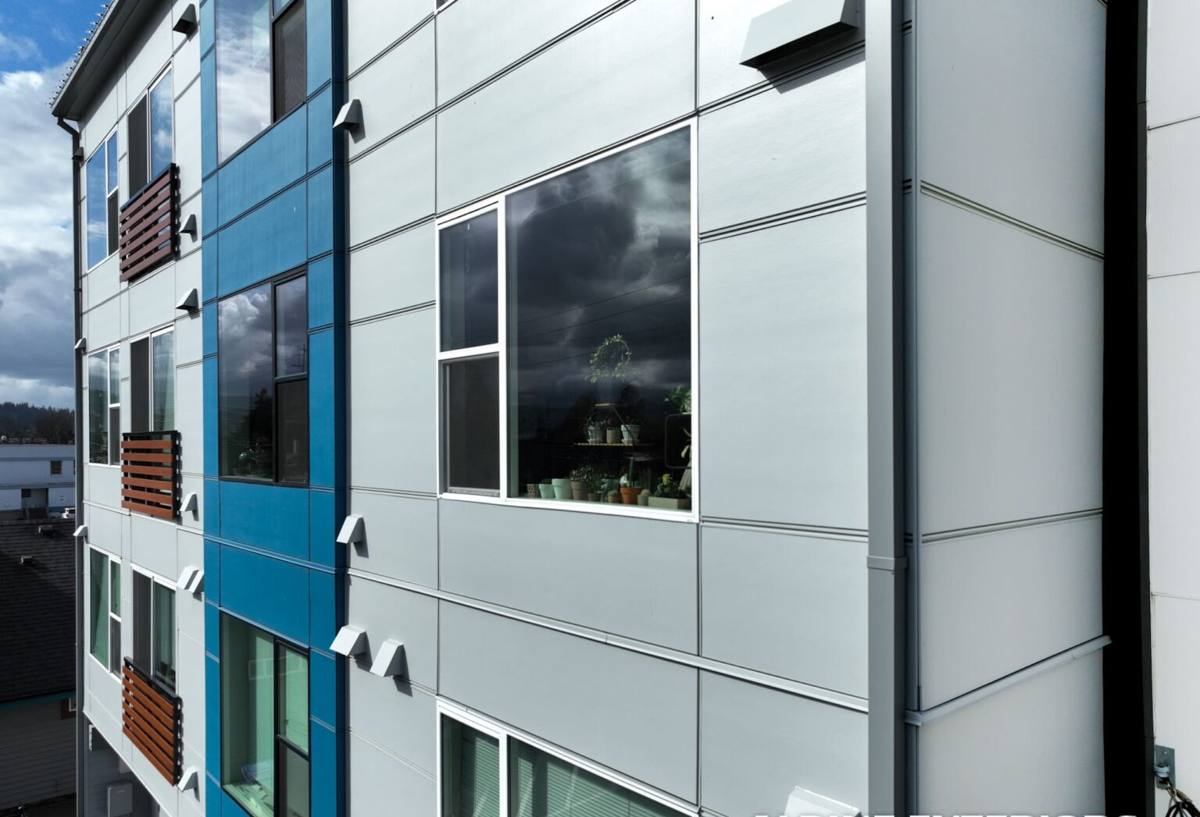
Signs Your Current Windows Are Falling Behind
Window failure in this climate is rarely dramatic. It shows up slowly, usually starting at the sill or the corners of the frame, and by the time it's obvious it's often been developing for a while.
- Fogging or a hazy film between panes of double-glazed glass — the seal has failed and the gas fill or dry air pocket is gone
- Sashes that stick, drag, or won't stay open — often swelling from moisture getting into the frame
- Soft, spongy, or discolored wood at the sill or lower corners — a sign rot has already started
- Condensation forming on the inside of the glass in cold weather, especially in bathrooms and bedrooms
- Visible daylight, a draft, or a whistling sound around the frame during wind
- Moss or dark streaking on the siding or trim directly below a window, which usually means water is running off the sill instead of being shed properly
Any one of these on its own isn't an emergency. Several at once, especially on the same window, usually means it's time to stop patching and start planning a replacement before the surrounding wall framing gets involved.
What "Custom" Actually Means on a Job Like This
Housing stock around Kendall isn't uniform — older farmhouses, ranch-style homes from the 1970s and 80s, newer builds, and the occasional log or timber-frame structure near the mountain corridor all show up on the same street. That variety is exactly why "custom" matters more than it sounds. A custom window job means:
Accurate field measurement, not stock sizing
Older openings settle out of square over decades. We measure each opening individually — width, height, and diagonal — rather than assuming a rough opening matches a catalog size.
Matching what's already there
Trim profiles, sill depth, and exterior cladding details vary by era of construction. A custom order accounts for that instead of forcing a generic unit into a space it doesn't quite fit.
Addressing what's behind the window, not just the window itself
On older Kendall homes especially, we often find the real issue isn't the sash — it's framing lumber that's absorbed moisture over the years. Custom work means fixing that framing before the new window ever goes in, not sealing a new unit over an old problem.
Frame and Glass Options We Weigh for This Area
We don't push one product line. What we do is weigh frame material and glass package against how much moisture and temperature swing a given wall actually sees — which varies even within one property depending on sun exposure and tree cover.
| Frame Material | Moisture Tolerance | Maintenance | Typical Fit for Kendall |
|---|---|---|---|
| Vinyl | Good — won't rot, minimal expansion issues | Low | Solid all-around choice for most homes, especially where budget matters |
| Fiberglass | Very good — dimensionally stable across temperature swings | Low | Worth the added cost on larger openings or south/west exposures with heavy sun and rain cycling |
| Wood, unclad | Requires ongoing upkeep to stay ahead of rot | High | We install these only where a homeowner wants the look and commits to regular maintenance |
| Aluminum or vinyl-clad wood | Good if flashed correctly | Moderate | Reasonable middle ground for period-appropriate exteriors |
On glass, we typically recommend a low-E coating with an argon or krypton gas fill for this climate — it does more for comfort and condensation resistance than most people expect, since it keeps interior glass temperature closer to room temperature and reduces the fogging that shows up on cold, damp mornings.
Double-pane vs. triple-pane
Triple-pane glass adds insulating value and can help with condensation resistance, but it also adds weight, cost, and sometimes requires a heavier frame to support it. For most Kendall homes, a well-installed double-pane low-E unit is enough; triple-pane makes more sense on homes with unusually cold rooms, large picture windows, or specific energy goals, not as a blanket upgrade.
Our Installation Process
- Walk-through and measurement of every opening, noting exposure, existing damage, and framing condition
- Assessment of the wall around each window for rot, moisture staining, or prior repair work
- Product selection based on that assessment, not a one-size recommendation
- Careful removal of the old unit, checking the opening for hidden damage once it's exposed
- Framing repair where needed, before anything new goes in
- Correct flashing and moisture-barrier sequencing — sill pan, flashing tape, and integration with the existing weather-resistive barrier
- Setting the new window plumb, level, and square, then shimming and fastening per manufacturer spec
- Sealing with the right sealant for the material, including backer rod where gaps call for it — not caulk alone
- Interior and exterior trim finish work
- Final operation check and walkthrough with the homeowner
Flashing and Moisture Management: The Detail That Actually Matters
Most window problems we get called out to fix in this climate aren't product failures — they're installation-detail failures. A window can be a perfectly good product and still leak within a few years if the sill pan wasn't formed correctly, if flashing tape wasn't lapped in the right order (always shingle-style, water running down and over each layer, never up into a seam), or if someone relied on a bead of caulk to do a flashing detail's job.
In a climate that gets sustained wind-driven rain, that shortcut catches up with a house fast. This is the step we won't rush, because it's the difference between a window that's technically installed and one that's actually going to hold up through a wet Whatcom County winter.
Why a Crew That Already Works in Kendall Matters
Custom window work goes better when the crew isn't guessing at local conditions. Working in the area regularly means we already have a feel for the age and construction style of homes on a given street, which exposures tend to take the worst weather, and what kind of framing surprises to expect once an old window comes out. It also means straightforward scheduling and follow-up — if a question comes up after the job, it's a short trip back, not a special arrangement.
That local familiarity doesn't replace a careful individual assessment of your home — every property still gets measured and evaluated on its own — but it does mean fewer surprises and a crew that isn't learning the region on your project.
Cost Factors for a Custom Window Project
Every quote is specific to the home, but the same handful of factors drive most of the cost variation we see on Kendall projects.
| Factor | Why It Affects Cost |
|---|---|
| Number and size of openings | More or larger windows means more material and labor |
| Frame material chosen | Vinyl, fiberglass, and clad-wood options sit at different price points |
| Glass package | Low-E coatings and gas fills add modest cost for real comfort gains |
| Existing rot or framing repair | Hidden damage found during removal adds time before the new unit goes in |
| Accessibility | Second-story or hard-to-reach openings take longer and may need staging |
| Trim and finish work | Matching existing interior or exterior trim profiles adds labor |
| Disposal | Hauling away old units and debris is usually included but varies with volume |
As a broad range, straightforward vinyl replacements tend to run at the lower end per opening, while larger fiberglass units, extensive trim matching, or framing repair push individual windows toward the higher end. We'll walk through where your project lands and why during the estimate — no surprise line items after the fact.
Maintaining Custom Windows Once They're In
A properly installed window in this climate should need very little — but "very little" isn't "nothing."
- Rinse moss and algae off sills, tracks, and exterior trim once or twice a year before it builds up and holds moisture against the frame
- Check exterior sealant every year or two, especially on sun-exposed sides, and have any cracked or shrinking sealant redone before water gets behind it
- Keep weep holes at the base of the frame clear so water can drain out instead of pooling
- Use mild cleaners on frames and glass — avoid pressure washing directly at seals, which can force water past a sound joint
- Operate each window a few times a season, even ones you rarely open, so hardware and seals don't seize up
If you're weighing whether your Kendall home's windows need attention, or you're ready to plan a full replacement, we're happy to take a look and walk you through what we find — no pressure, no upsell, just a straight assessment. Use the form below to request a free estimate.