 Ferndale
 Building New in Kendall Means One Shot at the Window Details
When you're building a new home in Kendall, the windows only get installed once before the wall assembly closes up behind them. There's no "we'll fix it later" on a new build the way there sometimes is on a retrofit — once the siding, trim, and interior finishes go on, the flashing and sealing details behind them are hidden for the next 20-plus years. That's the whole reason new-construction window installation is its own trade skill, separate from replacing an old window in an existing wall.
We install new-construction windows for builders and owner-builders working in Kendall and the surrounding parts of Whatcom County, tying the window into the wall assembly correctly the first time — sill pan, flashing sequence, and integration with the weather-resistive barrier — before anything gets covered up.
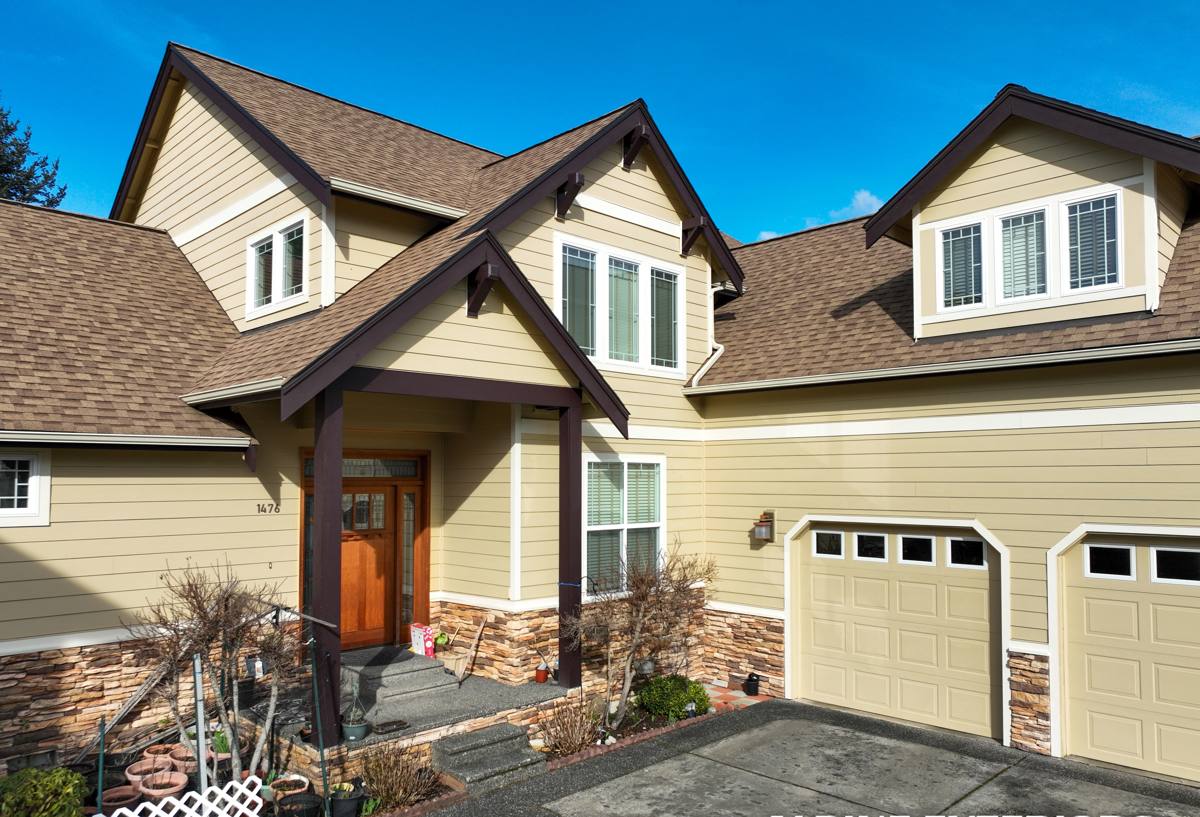
What Kendall's Climate Actually Demands From a Window Install
Whatcom County's marine-influenced weather doesn't spare the inland communities the way people assume. Kendall sits in a heavily wooded, foothill setting where shade, humidity, and slow-drying surfaces combine to keep moss and algae active on north-facing walls and rooflines for most of the year. Add wind-driven rain events that push moisture sideways into wall assemblies rather than just down, and any weak point in a window's flashing detail becomes a slow leak instead of an obvious one.
Driving rain is the real test for a new-construction window. It's not the water that hits the glass — it's the water that gets forced up and under the nailing flange during a storm, looking for any gap in the flashing tape or sealant bead. A window that's "close enough" on a mild day in a showroom can still fail in a February atmospheric river event if the sill pan wasn't formed correctly or the head flashing wasn't lapped over the housewrap in the right order.
The broader Whatcom County corridor also carries salt-laden air off Puget Sound and the Strait of Georgia on prevailing winds, which is one more reason we don't cut corners on fasteners, flashing metal, and sealants — corrosion-prone hardware and low-grade tapes age faster here than they would in a drier inland climate.
What This Means in Practice
- Every window opening gets a sloped, sealed sill pan — not just a bead of caulk under the frame
- Flashing tape and housewrap are lapped shingle-style, top over bottom, so water sheds outward at every layer
- Fasteners and flashing components are chosen to resist corrosion in a humid, moss-prone environment
- Sealant joints are sized and tooled correctly, not just smeared on to look finished
New-Construction Windows vs. Retrofit Windows — Why the Distinction Matters
New-construction windows use a nailing flange (fin) around the perimeter of the frame that gets fastened directly to the wall sheathing and integrated with the housewrap before siding goes on. Retrofit (or "block frame" / insert) windows are built without that flange, designed to slide into an existing opening where the original frame stays in place. They solve different problems, and using the wrong one — or installing a new-construction window with retrofit habits — is how leaks start.
| Factor | New-Construction (Nail-Fin) | Retrofit / Block-Frame |
|---|---|---|
| Best used for | New builds, additions, full wall openings | Replacing a window in an existing, undisturbed wall |
| Water management | Sill pan + flange integrated directly into the WRB | Relies on the existing frame and trim staying sound |
| Access to sheathing | Full access — sheathing, framing, and WRB are visible | Limited — existing exterior trim usually stays in place |
| Long-term risk if done wrong | Leak path hidden behind finished siding | Leak path hidden behind existing trim |
On a new build in Kendall, there's no excuse for treating a nail-fin window like a retrofit install. The sheathing is open, the WRB is exposed, and there's a real opportunity to get the water management layers right before anything closes up.
The Installation Sequence That Actually Keeps Water Out
Most window leaks don't come from a bad window. They come from an installation sequence that skipped a step or did the layers in the wrong order. Water management on a new-construction opening is entirely about sequencing — every layer has to shed water onto the layer below it, all the way down to the sill.
The order we follow on every opening
- Rough opening checked for level, plumb, and correct dimensions before the window ever shows up on site
- Sloped sill pan formed at the base of the opening so any water that gets in drains back out, not into the wall
- Housewrap or building paper cut and folded into the opening ahead of the window
- Window set, shimmed for square and level, and fastened per the manufacturer's schedule — not just "close enough"
- Flashing tape applied at the jambs first, then the head, lapping each piece over the one below it
- Housewrap integrated back over the flashing at the head so the whole assembly sheds outward and down
- Interior and exterior sealant joints tooled where the manufacturer specifies — and only where specified, since sealing the wrong spot can trap water instead of releasing it
Skip step three or do step five out of order, and the window can look perfect from the street while quietly feeding water into the wall cavity for years.
Choosing a Window Product for a Kendall New Build
Framing material, glass package, and hardware all matter, but for a new build the bigger decision is usually frame material and how well it holds up to a humid, tree-shaded, moss-prone site over decades rather than years.
| Frame Material | Typical Strengths | Trade-offs in This Climate |
|---|---|---|
| Vinyl | Lower upfront cost, no painting, good energy performance | Darker exterior colors can expand/contract more; quality varies widely between manufacturers |
| Fiberglass | Dimensionally stable, holds paint well, strong in wide sizes | Higher upfront cost than vinyl |
| Wood-clad | Traditional interior look, warm appearance | Clad exterior needs sound flashing detail at every joint; interior wood needs upkeep if exposed to moisture |
| Aluminum | Strong, slim sightlines | Conducts heat/cold; needs a thermal break for this climate; less common in residential new builds here |
We don't push one brand across every project — the right call depends on the home's design, budget, and how much exterior wood detailing is involved. What we won't compromise on is installation quality: a premium window installed with a shortcut sequence will underperform a mid-grade window installed correctly.
Washington Energy Code and Egress — Not Optional on a New Build
New-construction windows in Washington have to meet current state energy code requirements for U-factor and, depending on the design, solar heat gain coefficient — these aren't marketing numbers, they're compliance numbers your building department will check. Bedroom windows also have to meet egress sizing and sill-height requirements. We coordinate window selection with these requirements up front, so nothing gets flagged at inspection and the window schedule doesn't have to be redone mid-build.
How We Work With Builders and Owner-Builders in Kendall
On a new-construction project, window installation has to fit into someone else's schedule — the framer, the siding crew, the inspector. We work directly with general contractors and owner-builders in Kendall to time the install correctly: after the WRB is on and the openings are framed true, before siding closes the wall up. We flag rough-opening issues before the windows arrive rather than forcing a fix after the fact, and we document the flashing sequence on request so there's a clear record behind the finished wall.
Pre-Drywall Checklist We Walk Through
- Every sill pan slopes outward and drains clear — no standing water in the pan
- Flashing tape is fully adhered with no fishmouths, wrinkles, or gaps at corners
- Housewrap laps correctly over the head flashing, shingle-style
- Windows are square, level, and fastened per the manufacturer's schedule
- Interior sealant and insulation around the frame are complete, without gaps that let air or moisture track in
- Rough opening dimensions match what's on the window schedule and permit set
Why Local Experience in Kendall Matters
A crew that already works Kendall knows the difference between a wall that dries out quickly in open sun and one that stays damp for days under tree cover — and adjusts the flashing and sealant details accordingly. We know what a Whatcom County winter does to an unfinished or poorly sequenced opening left exposed too long, and we plan the install schedule to avoid it where we can. That local pattern recognition is the difference between a window install that's technically correct on paper and one that actually holds up through Kendall's rain and moss season year after year.
If you're framing a new home or addition in Kendall and want the window openings done right the first time, we're glad to take a look at your plans and walk the site. Reach out for a free, no-pressure estimate — the form below only takes a minute.