 Ferndale
 Why Window Installation in Kendall Isn't a One-Size-Fits-All Job
Kendall sits inland from Ferndale, closer to the foothills and away from the direct waterfront, but that doesn't mean the windows here have it easy. Whatcom County's marine air still finds its way this far inland, driving rain still hits siding and window trim at an angle during fall and winter storms, and the tree cover and shaded lots common in this area keep moisture sitting against wood and window frames longer than it would on an open, sunny lot. Add in a moss season that can stretch from October into spring, and you've got a climate that's quietly hard on windows even when nothing looks obviously wrong.
A window that was installed correctly ten or fifteen years ago in a drier climate might still be failing here simply because the flashing details, sealants, and drainage paths weren't built for this much sustained moisture. That's the starting point for how we think about window installation in Kendall: it's not just about picking a window, it's about installing it so water has nowhere to go but back outside.
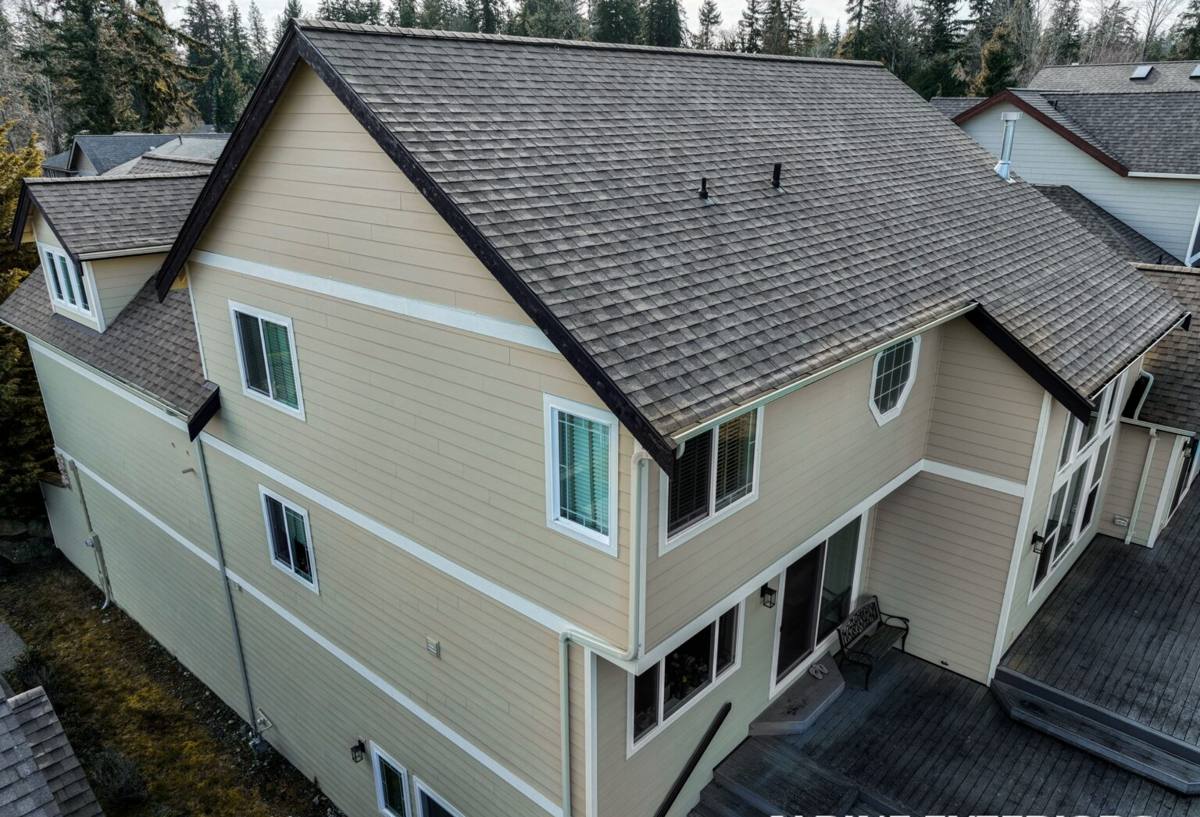
Signs a Kendall Home's Windows Need Attention
Most homeowners don't call about windows until something is obviously wrong, but there are earlier signs worth acting on before they turn into bigger repairs.
- Fogging or a hazy film between the panes — a sign the seal has failed and the insulating gas has escaped
- Soft or discolored wood trim around the window frame, especially on north- and west-facing walls that stay shaded and damp
- Visible moss or dark streaking on the sill or exterior casing
- Drafts you can feel near the frame even when the window is fully latched
- Difficulty opening, closing, or locking a window that used to operate smoothly
- Paint that's bubbling or peeling specifically around the window opening, not the wall in general
- Noticeably higher heating bills without any other clear cause
Any one of these on its own might just mean a caulking touch-up. Several together, especially combined with soft trim, usually means water has been getting behind the window for a while and it's time for a real inspection.
What a Correct Window Installation Actually Involves
The window itself is only part of the job. In a climate like this, the installation details matter as much as the product, because a good window installed poorly will still leak, and a mid-range window installed correctly will often outlast it.
Flashing and Drainage
Every window opening needs a drainage path so any water that gets past the exterior trim has somewhere to go besides your wall framing. That means properly lapped flashing tape at the sill, jambs, and head, in the right order, with the sill pan sloped so water runs back outside rather than pooling under the window.
Sealing Without Trapping Moisture
It's tempting to caulk everything shut and call it weatherproof, but sealing the wrong layer can trap moisture inside the wall instead of keeping it out. We seal the exterior against wind-driven rain while leaving the interior side able to manage the small amount of moisture that always finds its way in over time.
Insulation Around the Frame
The gap between the window frame and the rough opening needs to be filled with a low-expansion foam or backer rod and sealant — not stuffed with fiberglass batting, which does little to stop air movement and holds moisture against the frame.
Level, Plumb, and Square
A window that's slightly out of square will bind, won't seal evenly, and puts uneven stress on the frame that shows up as leaks or hardware failure within a few years, not right away.
Choosing the Right Window Material for This Climate
There's no single "best" window for every home, but some materials handle Whatcom County's damp, moss-prone conditions more predictably than others.
| Frame Material | How It Handles Local Moisture | Maintenance | Typical Fit |
|---|---|---|---|
| Vinyl | Won't rot; handles constant damp well | Low — occasional cleaning | Most Kendall homes, best value |
| Fiberglass | Very stable in wet, temperature-swinging conditions | Low | Homes wanting a longer-term investment |
| Wood-clad | Good if the cladding and flashing are done right; vulnerable where cladding is damaged | Higher — watch cut edges and joints | Homes prioritizing a traditional wood interior look |
| Aluminum | Durable but conducts cold and can condense in our winters | Moderate | Less common as a primary residential choice here |
For most homes in Kendall, vinyl or fiberglass frames make the most sense because they don't depend on paint or cladding staying intact to resist moisture. If you like the look of wood on the interior, a wood-clad window can still work well, but it depends more heavily on correct installation and ongoing upkeep of the exterior cladding.
How Our Window Installation Process Works
1. On-Site Assessment
We look at the existing windows and the wall assembly around them, not just the glass. That includes checking sill condition, existing flashing (if any is visible), and whether the surrounding siding or trim has moisture damage that needs addressing at the same time.
2. Measuring and Product Selection
We measure each opening individually — older homes in this area are rarely perfectly consistent from window to window — and talk through material, glass, and style options based on the specific wall, exposure, and budget.
3. Removal and Opening Prep
Old windows come out carefully so we can inspect the rough opening for hidden rot or past water damage before anything new goes in. Any damaged framing gets repaired before installation, not covered over.
4. Flashing and Installation
New flashing and a sloped sill pan go in first, then the window is set, shimmed level and plumb, fastened per manufacturer spec, and insulated around the frame.
5. Exterior Trim and Sealing
Exterior trim is reinstalled or replaced, sealed at the right layers, and finished so the whole assembly sheds water the way it's supposed to.
6. Final Check
We test operation, check for square and smooth function, and walk the job with the homeowner before we consider it done.
Full-Frame Replacement vs. Insert Windows
One of the first decisions on a project like this is whether to do a full-frame replacement or an insert (pocket) replacement, and it matters more here than in a drier climate.
- Insert replacement keeps the existing exterior frame and trim in place and fits a new window inside it. It's faster and less invasive, but it only makes sense if the existing frame and flashing are in good, dry condition — installing into a compromised frame just seals the moisture problem back up inside the wall.
- Full-frame replacement removes the window down to the rough opening, which lets us inspect and correct the flashing, sill, and framing. It costs more and takes more time, but it's the right call whenever there's any sign of past water intrusion, which is common on older homes in this area.
We'll tell you honestly which one your home needs rather than defaulting to whichever is faster for us.
What Affects the Cost
Every home is different, but the same handful of factors drive most of the price difference between one window job and another.
| Factor | Why It Matters |
|---|---|
| Full-frame vs. insert | Full-frame involves more labor, trim work, and often framing repair |
| Frame material | Vinyl is typically the most budget-friendly; fiberglass and wood-clad cost more |
| Glass package | Double-pane low-E is standard here; upgrades add cost with diminishing returns in this climate |
| Hidden damage | Rot found once the old window is out adds repair time before the new one can go in |
| Number and size of openings | Larger and taller windows require more careful handling and flashing detail |
| Access and site conditions | Second-story or hard-to-reach windows take longer to work safely |
We won't know your real number until we've looked at the openings in person, but these are the factors that move the price up or down.
Why It Matters to Hire a Crew That Already Works in Kendall
Window installation done to a manufacturer's generic instructions can still fail in a climate like this if it isn't adapted to real Whatcom County conditions — sustained damp, driving rain, and long stretches without much drying sun, especially on shaded lots. A crew that already works in and around Kendall and greater Ferndale has seen how local homes actually age: where moss tends to establish first, which wall orientations take the worst of the wind-driven rain, and what an opening usually looks like once the old window comes out. That's the difference between a job that looks fine on install day and one that's still performing in five or ten years.
After Installation: Keeping Windows Performing Long-Term
A correctly installed window still benefits from basic upkeep in this climate. Rinse pollen, moss spores, and grime off the glass and frame a couple of times a year. Check that weep holes on the exterior sill stay clear of debris so water can drain. Keep an eye on the caulk line at the trim edge and touch it up if it starts to crack or pull away — small gaps are far cheaper to reseal now than to let turn into a rot problem later. If you ever notice fogging between panes or new drafts, get it looked at early rather than waiting.
If your windows in Kendall are drafty, fogged, hard to operate, or just due for an honest look, we're happy to come out, assess what's actually going on, and give you a straightforward, no-pressure estimate using the form below.