 Ferndale
 Lummi Island Roofs Carry a Heavier Load Than Most
Lummi Island sits out in the water off the Whatcom County mainland, and that location changes what a roof has to deal with. A house a few miles inland in Ferndale gets some shelter from trees, hills, and neighboring buildings. A house on the island doesn't get that same buffer. Wind comes off the water with salt in it, rain arrives sideways more often than straight down, and the tree cover that shades so many island lots keeps roof surfaces damp long after a storm has passed. None of that means island roofs are built wrong — it means they age differently, and a repair that would hold up fine in a drier, more sheltered location can fail early out here if it doesn't account for those conditions.
We work roofs across Whatcom County, but Lummi Island jobs get planned differently from the start because the roof itself is dealing with a tougher environment. That shows up in three main ways: salt exposure, wind-driven rain, and an extended moss season.
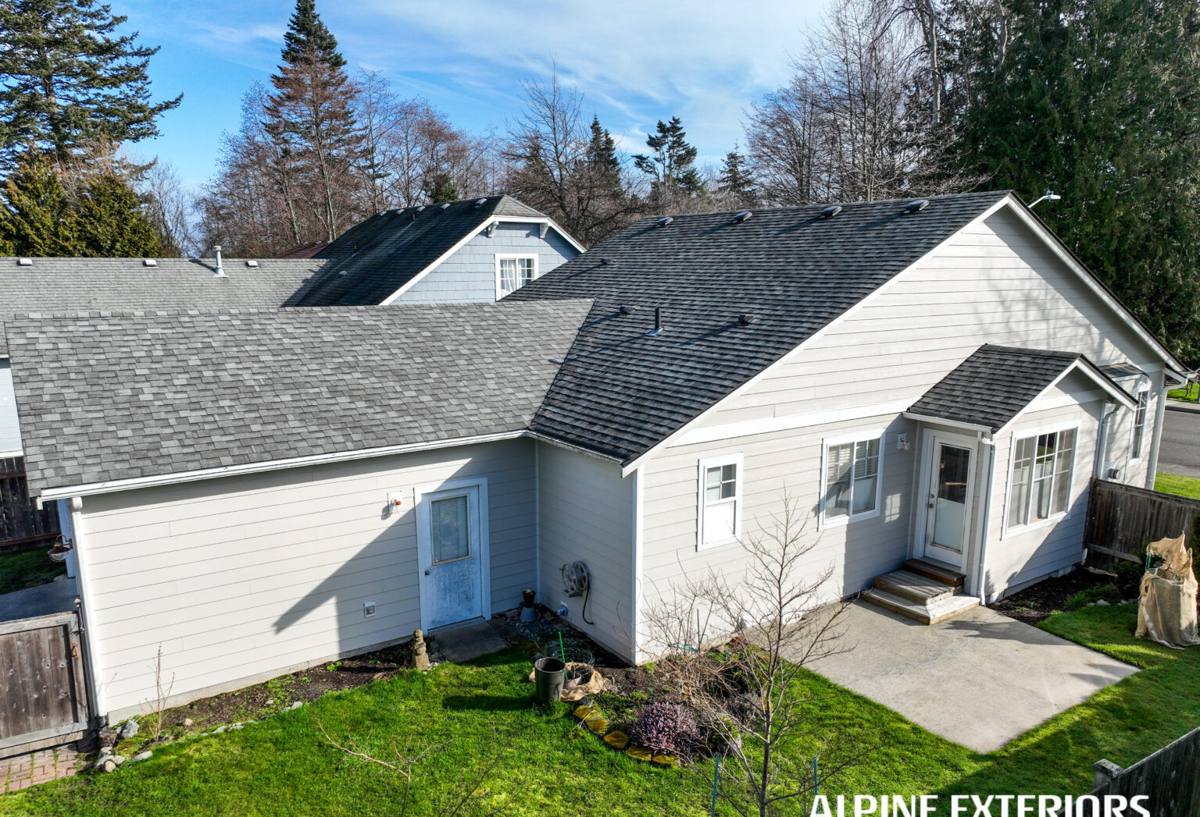
What Salt Air, Driving Rain, and Moss Actually Do to a Roof
Salt Air and Metal Fatigue
Salt-laden air speeds up corrosion on anything metal — nail heads, flashing, drip edge, gutter hangers, and any exposed fasteners. Once a fastener starts to rust, it loses grip on the material it's holding, and a small leak at a nail head can quietly become a bigger one. Where two different metals touch — say, an aluminum gutter against a steel bracket — the salt air can also speed up galvanic corrosion, which eats away at the weaker of the two metals faster than either would corrode on its own. On roofs closer to the water, we look harder at fastener and flashing condition than we would on a similar roof set back from the shoreline.
Wind-Driven Rain
Most roofing is designed on the assumption that water moves downhill in a straight line. Wind-driven rain doesn't cooperate — it gets pushed sideways and even slightly upward under shingle tabs, at valleys, around chimneys and vent pipes, and along eaves. A roof can look fine from the ground and still be taking on water at these pressure points during a hard blow off the water. This is one of the most common reasons a homeowner finds a ceiling stain with no obvious hole or missing shingle anywhere nearby — the water traveled sideways before it found a way in.
The Long Moss Season
Whatcom County's wet season runs long, and on shaded, tree-covered lots — common on the island — roofs can stay damp for days after a storm clears everywhere else. That moisture is exactly what moss needs. Moss doesn't just sit on top of shingles; it holds water against the surface, lifts shingle edges as it grows, and works its rhizoids into granule surfaces and seams. Left alone through a few wet seasons, moss growth accelerates granule loss and can eventually work moisture down to the decking itself.
The Repairs We're Most Often Called Out For
- Flashing replacement at chimneys, skylights, and wall-to-roof intersections where corrosion or original installation has let water in
- Valley repair where wind-driven rain and debris buildup have worn through the material
- Moss removal and treatment done at the roof surface, not with a pressure washer that strips granules and drives water under shingles
- Replacing rusted or failing fasteners and the boards around them before rot spreads further
- Gutter and downspout repair where clogged moss and needle debris have caused water to back up under the roof edge
- Ridge cap resealing and shingle replacement, matched as closely as possible to existing material
What an Actual Correct Repair Involves
A repair that just covers the spot where a stain showed up on the ceiling often doesn't fix the problem — it treats the symptom. Water travels before it drips, especially with wind-driven rain in the mix, so the visible damage and the actual entry point are frequently in different spots. A repair worth paying for starts with tracing the path of the water, not patching the first thing that looks wrong.
That means checking the attic space where it's accessible for moisture staining, checking flashing details around every penetration near the suspected area, and confirming the decking underneath hasn't already started to soften or rot. If the decking is compromised, patching over it just buys a little time before the same spot fails again. Materials matter too — shingle color and profile drift over the years, so an honest contractor will tell you upfront if an exact match isn't possible and let you decide whether a close match is acceptable or if a larger section should be redone for a cleaner look. Finally, the repair has to be sequenced correctly: underlayment, flashing, and shingle courses layered so water sheds downhill and outward, not caulked over as a shortcut. Caulk and roofing cement have a place in a proper repair, but they're not a substitute for correct flashing and shingle overlap — used as a stand-in for good technique, they fail faster than the materials around them.
Repair or Replace? What Actually Decides It
Not every roof issue on the island calls for a full replacement, and not every repair is worth doing if the roof is near the end of its life. These are the factors that actually tip the decision one way or the other.
| Factor | Leans Toward Repair | Leans Toward Replacement |
|---|---|---|
| Age of roof | Under roughly 15 years, or a newer roof with an isolated issue | Nearing or past the expected lifespan of its material |
| Extent of moss/algae | Surface growth, no lifted shingles or granule loss below | Widespread growth with shingle edges lifted or granules gone in patches |
| Decking condition | Solid, no soft spots found at the repair area | Soft or rotted decking found at multiple points |
| Number of past repairs | First or second repair on an otherwise sound roof | Repeated patch jobs in different spots over recent years |
| Flashing and fastener condition | Localized corrosion at one or two points | Corrosion showing up broadly across metal components |
We'll walk you through where your roof lands on these points honestly. If a repair is the right call, that's what we'll recommend — replacement isn't the answer just because it's more work.
How We Handle Jobs on the Island
Getting to Lummi Island means a ferry crossing, and that changes how a job gets planned compared to a mainland Ferndale address. We build that into scheduling from the start rather than treating it as an afterthought. That means confirming the scope of work and materials needed before the crew and equipment head over, so we're not making a return trip for something that could have been anticipated. It also means being realistic with homeowners about timing — weather windows and ferry logistics can shift a schedule by a day here and there, and we'd rather tell you that upfront than promise a time slot we can't guarantee.
Once on site, the process is straightforward: confirm the diagnosis matches what was found during the initial assessment, complete the repair with materials suited to the island's conditions, clean up debris (including old moss and granules, which we don't just sweep into the gutters), and walk the homeowner through what was done and what to watch for going forward.
Materials We Choose for This Climate
Given the salt exposure and long wet season, we lean toward corrosion-resistant fasteners — stainless steel or hot-dip galvanized rather than standard electroplated fasteners that corrode faster near salt air. Flashing gets the same consideration; where budget and roof design allow, a more corrosion-resistant flashing material earns its cost back in fewer callbacks down the line. On shingle roofs, algae-resistant shingle lines can help slow the return of moss and algae growth on shaded, damp sections of roof, though they don't eliminate the need for periodic moss treatment — nothing does, on a lot with heavy tree cover. We also pay attention to attic and roof ventilation during repairs, since trapped moisture underneath the roofing material feeds the same problems from the inside that salt air and rain cause from the outside.
Between-Visit Maintenance Checklist
A little upkeep between professional inspections goes a long way toward keeping small issues small. This is what we tell island homeowners to keep an eye on:
- Clear gutters and downspouts of moss, needles, and leaf debris at least twice a year, more often under heavy tree cover
- Look for moss buildup along the shaded, north-facing slopes of the roof — that's usually where it starts
- Trim back branches that keep a section of roof shaded and damp longer than the rest
- Check gutters after storms for accumulated granules, which can signal accelerating shingle wear
- After a hard windstorm, look for lifted or missing shingles and any new staining on interior ceilings
- Have the roof looked at by a professional roughly once a year rather than waiting for a visible leak
Why a Crew That Already Works the Island Matters
A contractor who only occasionally makes it out to Lummi Island has to build ferry time and logistics into every estimate, which tends to mean higher costs or reluctance to take on smaller repair jobs at all. A crew that regularly works the island already has that logistics figured out, knows what corrosion and moss damage typically look like on homes out here versus the mainland, and isn't guessing at how the local conditions affect the timeline or the materials that make sense. That familiarity also means a more accurate first assessment — less back-and-forth, fewer surprises once work starts, and a better sense of whether a repair will actually hold up through another wet season or whether it's a stopgap.
If you're dealing with a leak, visible moss buildup, or damage from a recent storm on your Lummi Island roof, we're happy to take a look and give you a straight answer on what it needs. Reach out for a free, no-pressure estimate using the form below.