 Ferndale
 Board & Batten Siding Built for the Lummi Nation Area
Homes in and around the Lummi Nation sit right up against the marine environment that defines this part of Whatcom County — open water, wind off the bay, and a growing season for moss that most inland Ferndale properties never have to deal with. Board & batten siding has always had a natural fit here: the vertical lines read well against the flat farmland and shoreline landscape, and the style has deep roots in Pacific Northwest barn and farmhouse architecture. But the same style that looks right on a coastal home can fail fast if it's built with the wrong material or the wrong details behind the boards.
We work this area regularly, which matters more than it sounds like it should. A board & batten job that's correct in a dry inland neighborhood can be wrong out here, because the assumptions about moisture, wind-driven rain, and salt exposure change once you're this close to the water.
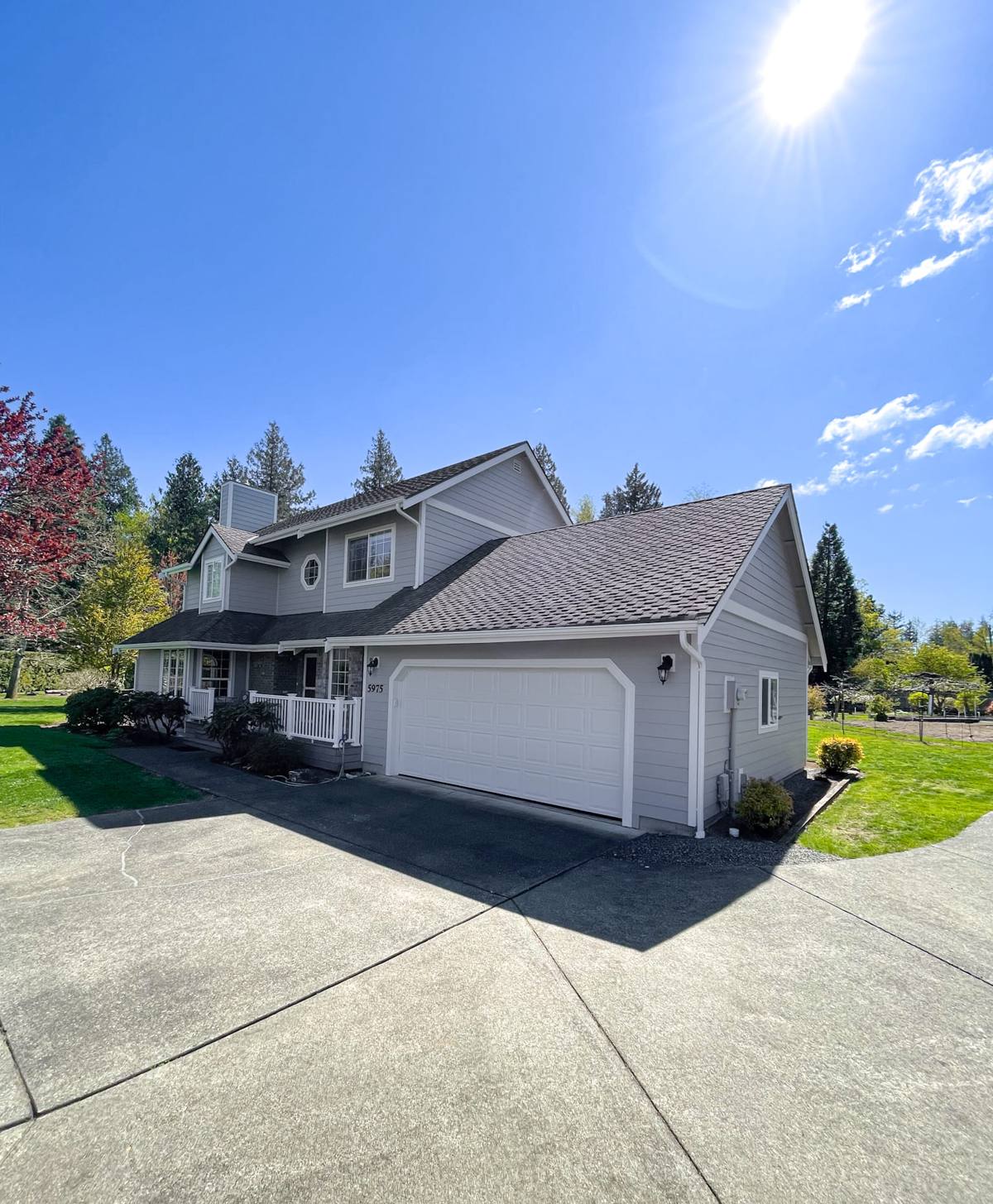
What This Climate Actually Does to Vertical Siding
Three things drive nearly every siding failure we see in this stretch of Whatcom County:
Salt Air
Airborne salt accelerates corrosion on anything metal — fasteners, flashing, trim caps. On board & batten specifically, the battens themselves cover a seam, and every seam has fasteners underneath it. If those fasteners corrode before the siding wears out, water finds its way behind the boards long before the material itself is due for replacement.
Driving Rain
Wind off the bay doesn't let rain fall straight down — it pushes it sideways, into laps, seams, and butt joints. Board & batten has more vertical seams than horizontal lap siding, and every one of those seams is a place water can be forced upward and inward if the assembly behind it isn't built to shed it.
Moss Season
Shade, moisture, and mild temperatures give moss a long season here — often most of the year on north-facing walls and anything close to trees. Moss holds moisture against the siding surface, and on the wrong substrate that constant dampness leads to swelling, delamination, or rot at the exact spots where boards and battens meet the wall.
What a Correct Board & Batten Installation Involves
A Drainage Plane Behind the Boards
Vertical siding needs a way for incidental moisture to drain and for the wall to dry out. That means a water-resistive barrier, properly lapped and taped, with furring strips or a rainscreen gap behind the panels — not boards nailed flat against the house wrap. This gap is what lets bulk water and vapor escape instead of sitting against the sheathing.
Fastening That Won't Corrode
Given the salt exposure here, fastener choice isn't optional — it's the difference between a batten that stays put for decades and one that starts bleeding rust streaks and loosening within a few years. Corrosion-resistant fasteners, sized and spaced to the manufacturer's specification, are non-negotiable this close to the water.
Flashing at Every Horizontal Transition
Window heads, belly bands, roof-to-wall intersections — anywhere a horizontal element crosses vertical siding needs proper flashing that directs water out and away, not just caulk. Caulk is a maintenance item; flashing is the actual water management system.
Batten Spacing and Panel Layout
Battens need consistent spacing that matches the panel module underneath, with attention to how the layout meets corners, window trim, and the foundation line. Sloppy layout is one of the most common cosmetic complaints we see on board & batten jobs done by crews unfamiliar with the style.
Why We Only Install James Hardie for This
Board & batten is often built with engineered wood panels, vinyl vertical panels, or fiber cement — and we've made a deliberate call to only offer it in James Hardie fiber cement. Here's the honest reasoning:
- Moisture behavior: Fiber cement doesn't swell, delaminate, or feed rot the way wood-based panel products can when moss and moisture sit against them for months at a time.
- Non-combustible material: Hardie panels are fiber cement, not an organic wood product — a real advantage on a material that will spend years exposed to a wet climate and, further inland, wildfire smoke season.
- Factory-cured finish: ColorPlus finish is baked on at the factory, not field-applied, which matters on vertical siding where UV and rain hit every seam and edge directly.
- Rigid, stable panels: Fiber cement holds its shape and fastener grip over time far better than vinyl vertical panel systems, which can bow, oil-can, or pull loose in sustained coastal wind.
- Purpose-built trim system: HardieTrim boards are engineered specifically to be used as battens over HardiePanel, so the whole assembly is designed to work together rather than mixed from unrelated product lines.
We're not going to tell a homeowner that other board & batten materials are junk — vinyl vertical siding and engineered wood panels both have legitimate uses. But for homes this close to salt water, wind-driven rain, and a long moss season, we don't think they hold up as well as fiber cement, and we'd rather install the product we trust to still look right in fifteen years than the one that's cheaper today.
How Board & Batten Materials Compare in This Climate
| Material | Salt Air / Corrosion | Driving Rain / Seams | Moss & Sustained Moisture |
|---|---|---|---|
| Vinyl vertical panel | Panels don't corrode, but fasteners and trim can | Can bow or loosen at seams under wind pressure | Traps moisture behind panel if ventilation is poor |
| Engineered wood panel | Moderate — depends on edge sealing | Vulnerable at cut edges and butt joints | Most at risk — wood-based core can swell or delaminate |
| James Hardie fiber cement | Stable material; only fasteners/flashing need corrosion resistance | Rigid seams hold their line and caulk joints | Doesn't absorb or swell from surface moisture |
Our Process for Lummi Nation Area Homes
- On-site walkthrough: We look at wall exposure, existing moisture damage, roof-to-wall details, and how much sun versus shade each elevation gets — the moss risk map for your specific house.
- Removal and inspection: Old siding comes off and we check sheathing underneath for hidden rot before anything new goes up. This step catches problems that are invisible from outside.
- Water-resistive barrier and drainage plane: We install and properly lap the weather barrier, then build out the rainscreen gap that lets the wall breathe and drain.
- Panel and batten installation: HardiePanel goes up to spec, then HardieTrim battens are fastened over the seams with corrosion-resistant fasteners at the manufacturer's spacing.
- Flashing and sealant details: Every window, door, and horizontal transition gets proper flashing before final trim and caulking.
- Final walkthrough: We go over the finished job with you, including what routine maintenance actually looks like for your specific exposure.
What Drives the Cost
| Factor | Why It Matters Here |
|---|---|
| Wall exposure and elevation count | Shaded, north- or west-facing walls near the water often need extra flashing detail and drainage attention |
| Existing sheathing condition | Coastal moisture and past moss growth sometimes mean sheathing repair before new siding goes on |
| Batten spacing and trim complexity | Tighter batten spacing and more window/corner trim add labor and material |
| Home size and stories | Taller walls and multi-story sections take more staging, time, and fastening care |
| Removal of existing siding | Full tear-off versus siding over existing material changes both cost and long-term performance |
We give a firm number after seeing the actual walls — anyone quoting board & batten sight unseen is guessing at your specific exposure and sheathing condition, both of which matter more here than in a drier inland market.
Keeping Board & Batten Siding Looking Right Out Here
- Rinse siding annually, especially shaded and north-facing walls, to slow moss buildup before it takes hold
- Keep gutters clear so overflow doesn't run down the wall face and feed moss growth at the top courses
- Trim back vegetation that shades the siding or holds moisture against the wall
- Watch fastener heads and trim caps for early rust streaking — a sign it's time for a closer look, not a full repair yet
- Recaulk window and trim joints on the manufacturer's recommended schedule rather than waiting for visible gaps
Why Hiring a Crew That Already Works This Area Matters
Board & batten done wrong doesn't usually fail in the first year — it fails in year five or six, after a few full moss seasons and a couple of hard windstorms off the water have worked on the seams and fasteners. A crew that only occasionally works this close to the coast may not think about drainage planes, fastener corrosion resistance, or batten layout the same way a crew that works the Lummi Nation area routinely does. We've built our process around this specific combination of salt air, driving rain, and moss — not a generic siding install adapted after the fact.
If you're considering board & batten siding for a home in or around the Lummi Nation, we're happy to take a look and give you a straightforward, no-pressure estimate — just fill out the form below.