 Ferndale
 Roof Repair Built for Lynden's Climate, Not a Generic Checklist
Lynden sits inland from the water but still gets the full package of what makes Whatcom County roofs age fast: long stretches of drizzle from October through May, heavy morning dew off the surrounding farmland, and just enough salt-tinged marine air drifting in from Bellingham Bay and the Strait of Georgia to accelerate corrosion on fasteners and flashing. None of that is dramatic on any single day. It's the accumulation over years that causes the actual damage — moss working under shingle tabs, valleys that never fully dry out, and metal components that rust from the inside of a lap joint where nobody's looking.
When we get called out to a Lynden roof, the underlying causes are usually similar even when the visible symptom looks different: a stain on a bedroom ceiling, a soft spot near a chimney, granules collecting in the gutters, or moss thick enough to look like a small hedge running along the north slope. We treat roof repair here as diagnostic work first and patching work second — fixing the visible spot without finding why it happened just buys a homeowner another year or two before the same leak reappears somewhere close by.
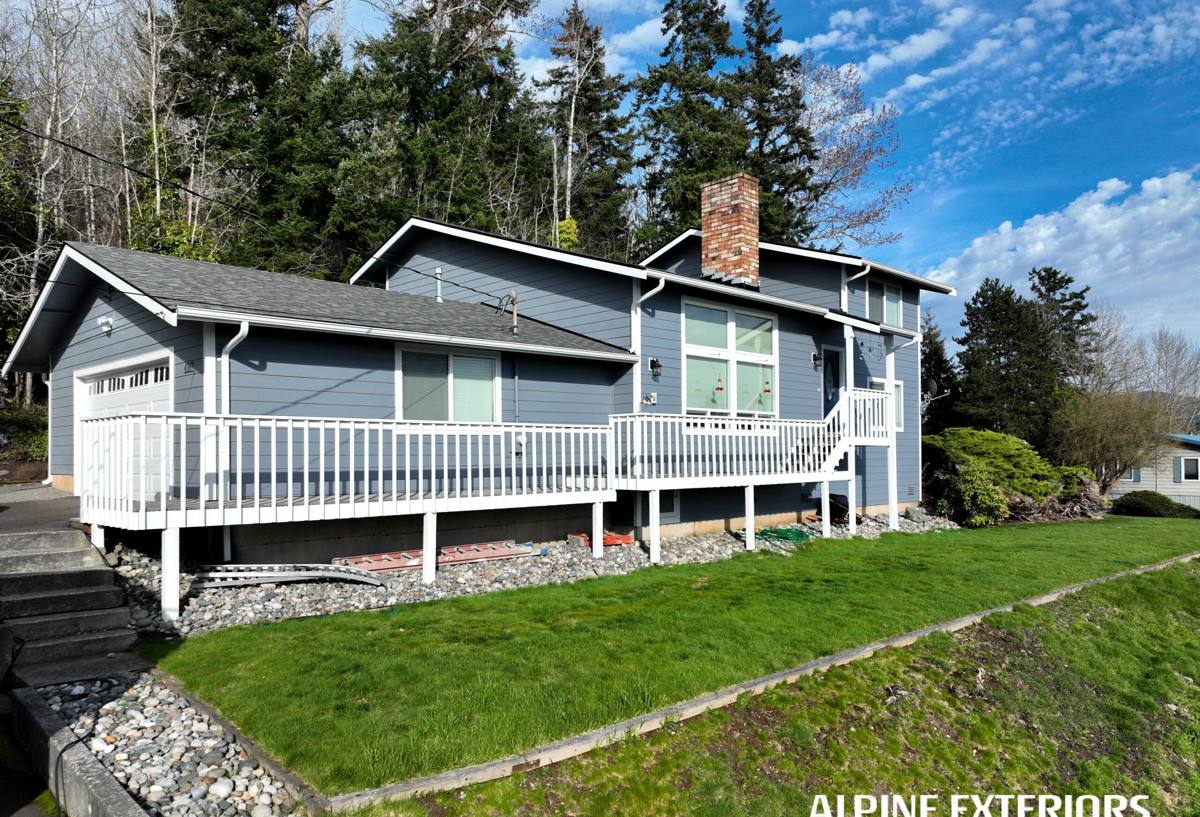
What Lynden's Weather Actually Does to a Roof
Moss Season Is Longer Than People Think
Moss doesn't need direct rain to grow — it needs moisture that lingers, and Whatcom County's overcast, low-sun winters give it exactly that. North-facing slopes and anything shaded by mature trees stay damp for days after a storm passes. Moss roots work into the granule layer of asphalt shingles and lift the tabs slightly, which is enough to let wind-driven rain get underneath. On cedar or wood-look products, moss holds moisture directly against the wood fiber, which speeds up rot at the exact spots where nails hold the piece down.
Driving Rain Finds the Weak Points
Most of this region's rain isn't a heavy downpour — it's wind-driven drizzle that comes in at an angle for hours or days at a stretch. That kind of rain doesn't test a roof's ability to shed water straight down; it tests every seam, every flashing lap, every nail penetration. A roof that would be fine in a short, hard thunderstorm can leak steadily in a three-day Lynden rain event because the water has time and angle on its side.
Salt Air and Metal Fatigue
Lynden is far enough inland that salt exposure is lighter than it is on the coast, but it's not zero, and combined with constant dampness it still shortens the working life of exposed metal — nail heads, drip edge, valley metal, and vent flashing. Once that metal starts to pit or rust, it stops sealing the way it did when it was new, and that's often where a "mystery leak" traces back to.
Signs a Lynden Homeowner Shouldn't Wait On
- Ceiling or wall stains that appear or darken after a multi-day rain, even if they seem to dry out between storms
- Moss or thick algae streaking on north- or shade-facing slopes, especially where it's raised above the shingle surface
- Granules collecting in gutters or at downspout outlets — a sign the shingle surface is wearing thin
- Soft or spongy decking felt when walking the attic, particularly near chimneys, skylights, or plumbing vents
- Daylight visible through the roof deck from inside the attic
- Curling, cracked, or missing shingle tabs after a windstorm
- Rust streaks running down from metal flashing or vent boots
- Ice or heavy frost lingering unusually long on one section of roof, which can point to insulation or ventilation issues underneath
What a Correct Roof Repair Actually Involves
A repair that holds up in this climate isn't just "match the shingle and nail it down." Every repair we do on a Lynden roof follows the same sequence, because skipping a step is exactly how a two-year-old repair reappears as a leak.
1. Find the Real Entry Point
Water travels. A stain on a ceiling is rarely directly below the actual failure — it's often several feet upslope, following a rafter or the underside of the decking before it drips. We trace the path from the interior damage back to the roof surface rather than assuming the two are stacked directly on top of each other.
2. Assess What's Under the Surface
Shingles and cladding are the visible layer, but underlayment, decking condition, and ventilation are what determine whether a repair lasts. If decking has softened from long-term moisture, patching the shingle above it without addressing the deck just hides the problem for one more season.
3. Match Materials and Method, Not Just Color
A patch that looks right but uses the wrong nailing pattern, the wrong underlayment lap direction, or mismatched flashing metal will fail faster than the surrounding roof. We match the repair method to how the original roof was built, not just to what's visually closest.
4. Rebuild Flashing Details Properly
Most repeat leaks trace back to flashing — around chimneys, skylights, dormers, and where two roof planes meet. Flashing has to be layered correctly with the underlayment and shingle courses (step flashing under, counter-flashing over) so water is shed downhill at every layer, not just sealed with caulk at the surface.
5. Clear Moss and Address the Cause, Not Just the Symptom
Removing moss without addressing what's keeping that section damp — tree overhang, poor airflow, a low-slope valley — means it grows back within a season or two. We treat moss removal as part of the repair, not a separate cosmetic service.
Repair vs. Replacement: How We Help You Decide
| Factor | Repair usually makes sense | Replacement is the honest answer |
|---|---|---|
| Age of roofing | Under roughly 12-15 years, isolated issue | Near or past manufacturer's expected service life |
| Extent of damage | Localized to one slope, valley, or penetration | Granule loss, curling, or moss widespread across most slopes |
| Decking condition | Solid, dry decking around the damaged area | Soft or delaminated decking in multiple spots |
| Leak history | First occurrence or isolated to one known cause | Repeated leaks in different spots over recent years |
| Ventilation | Adequate attic airflow, no widespread moisture damage | Chronic condensation or ice buildup pointing to systemic ventilation issues |
We'll always tell a homeowner honestly which side of that table their roof falls on. A roof with 20 more years of realistic life left doesn't need to be replaced because one section failed; a roof nearing the end of its service life doesn't need a third or fourth patch job that just delays an inevitable full replacement.
Why Local Experience in Lynden Specifically Matters
Roofing problems in Lynden aren't identical to problems on a coastal Bellingham home or a drier east-county property. Lynden's mix of farmland-adjacent humidity, tree cover in the older residential neighborhoods, and the region's long wet season creates a specific pattern of wear: moss on shaded slopes, flashing fatigue from sustained dampness, and slow leaks that show up gradually rather than all at once after one storm. A crew that works this area regularly recognizes that pattern immediately instead of treating every roof as a blank slate.
That familiarity also means knowing which materials and details actually perform here versus which ones look fine on paper but struggle with this much sustained moisture. It affects underlayment choice, how aggressively we recommend ventilation improvements, and how we sequence a repair so it's not undone by the next rain event before it's even fully cured.
Our Roof Repair Process, Step by Step
- Inspection and diagnosis — We assess the roof surface, attic, and interior damage together to find the actual cause, not just the visible symptom.
- Honest scope and estimate — You get a clear explanation of what's needed, what it costs, and why — including whether repair or replacement is the more responsible recommendation.
- Repair the right layers — Decking, underlayment, flashing, and surface material are addressed in the correct order, not just the top layer.
- Moss and debris cleanup — Any moss or organic buildup contributing to the problem is cleared as part of the job.
- Final check — We confirm the repair sheds water correctly and matches the surrounding roof before we call the job done.
Cost Factors for Roof Repair in Lynden
Roof repair pricing varies with the scope of damage, so we won't quote a number without seeing the roof — but a few factors consistently move the price up or down on jobs in this area:
- How many roof planes or penetrations are affected versus a single isolated spot
- Whether decking needs to be replaced or is sound underneath the surface material
- Roof pitch and access — steeper or higher roofs take longer and require more safety setup
- Extent of moss or organic growth removal needed before repair can begin
- Whether flashing around chimneys, skylights, or vents needs to be rebuilt versus resealed
- Matching existing materials, especially on older roofs where original products may be discontinued
We'll walk through these factors on-site so you understand exactly what's driving the number, rather than handing you a total with no explanation behind it.
Maintenance That Extends the Life of a Repair
A well-done repair still benefits from basic upkeep given how wet this region stays for most of the year. Clearing gutters and downspouts before the fall rains keeps water moving off the roof instead of backing up under the edge. Trimming back tree limbs that overhang the roofline reduces both moss growth and debris buildup in valleys. A periodic visual check after major windstorms — looking for lifted or missing shingles — catches small problems while they're still small. None of this replaces a professional inspection, but it meaningfully slows the wear pattern that's typical for Lynden's climate.
Get a Free, No-Pressure Estimate
If you're dealing with a leak, visible moss buildup, or storm damage on a Lynden roof, we're happy to take a look and give you a straight answer — repair or replacement, and why. Use the form below to request a free estimate with no obligation attached.