 Ferndale
 Why Lynden Roofs Wear Out Differently Than Roofs Inland or Further South
Lynden sits in a part of Whatcom County that gets a specific combination of weather stresses most roofing crews from outside the area don't plan for correctly. Storms moving in off the Salish Sea carry damp, salt-tinged marine air well inland, and that moisture doesn't just fall as rain — it sits in the air for days at a time, especially under the tree cover and low winter sun angles common on Lynden properties. Add driving rain that comes in sideways during fall and winter storms, and you get a roof that's dealing with wind-driven moisture intrusion at edges, valleys, and flashing points far more than a roof in a drier climate ever would.
Then there's moss. Whatcom County's long, mild, wet stretch from October through May is close to ideal moss-growing weather, and Lynden's mix of mature trees and shaded rooflines makes it worse. Moss isn't cosmetic — it holds moisture against the roofing material, lifts shingle edges as it grows, and slowly breaks down the granule surface that protects asphalt shingles from UV and water. A roof that would last 25+ years in a drier, sunnier climate can lose meaningful life to moss damage alone if it isn't addressed.
None of this means Lynden homes need exotic materials or constant babysitting. It means the replacement has to be installed with this climate in mind from the start — correct underlayment, correct ventilation, correct attention to the details that keep water moving off the roof instead of sitting on it.
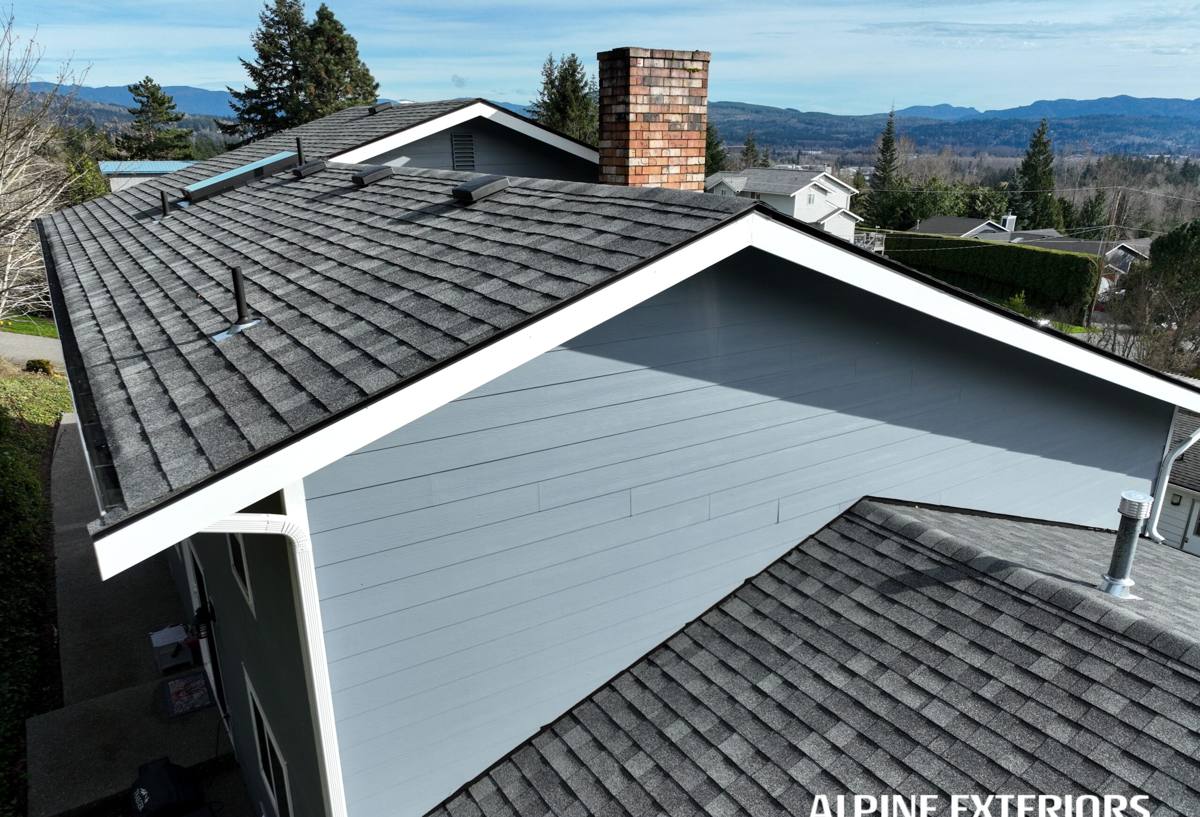
Signs a Lynden Home Actually Needs a Roof Replacement
Not every roof problem means a full replacement — sometimes a repair is the honest answer. But there are signs that point to a roof at the end of its useful life rather than one that just needs patching:
- Shingles that are cupping, curling at the edges, or missing granules in patches (not just a few spots near a vent)
- Heavy moss growth that's been there more than one season, especially if it's thickest on the north-facing or shaded slopes
- Soft spots or sagging when you walk the attic joists or look at the roofline from the street
- Daylight visible through the roof deck from inside the attic
- Water stains on interior ceilings or in the attic that show up after wind-driven rain specifically, not just any rain
- A roof that's 20+ years old with the original underlayment, regardless of how it looks from the ground
- Granules collecting in gutters and downspouts every time it rains hard
If a Lynden roof is showing two or more of these, it's worth a real inspection rather than another round of spot repairs.
What a Correct Roof Replacement Actually Involves
A roof replacement is not just stripping old shingles and nailing down new ones. Done right, for this climate, it's a sequence where each step protects the one after it:
Tear-Off and Deck Inspection
Full tear-off to the deck lets us actually see what's underneath — which matters in a climate where trapped moisture can rot sheathing without any visible sign from the outside. Any soft, delaminated, or water-damaged decking gets replaced before anything new goes down. Roofing over a compromised deck just hides the problem for a few more years.
Ice and Water Barrier at Vulnerable Points
Eaves, valleys, and areas around chimneys and skylights get a self-adhering water and ice barrier membrane, not just standard felt. In a region with driving rain and occasional freeze-thaw swings, this is the layer that stops wind-driven water from working its way under the shingles at the roof's weak points.
Underlayment Across the Field
Synthetic underlayment across the rest of the roof gives a second line of defense if wind or ice ever gets under the shingle layer — which happens more in a wet, windy climate than a mild, dry one.
Flashing, Not Just Sealant
Chimneys, wall intersections, and roof-to-siding transitions get properly formed metal flashing, not caulk or sealant used as a substitute for it. Sealant degrades; well-installed flashing sheds water for decades.
Ventilation
Balanced intake and exhaust ventilation keeps the attic space at a consistent temperature and moisture level, which matters twice over here — it prevents condensation buildup in our damp winters and helps the new roofing material last through summer heat cycles without trapping moisture that encourages moss and mildew from underneath.
Roofing Material Comparison for Lynden's Climate
| Material | Typical Lifespan | Moss/Moisture Behavior | Trade-Offs |
|---|---|---|---|
| Architectural asphalt shingle | 25–30 years | Good with algae-resistant granules; needs periodic moss treatment | Best value, wide color range, easiest to source matching repairs later |
| Standing seam metal | 40–50+ years | Sheds moisture fast, very moss-resistant on steep pitches | Higher upfront cost, requires experienced installers for correct seaming |
| Synthetic/composite shingle | 30–40 years | Resists moisture absorption well | Higher material cost than asphalt; fewer installers stock it locally |
| Cedar shake | 20–30 years with upkeep | Prone to moss and rot without regular treatment | Traditional look, but the highest maintenance burden in this climate |
Most Lynden homes are well served by a quality architectural asphalt shingle with algae-resistant granules — it balances upfront cost, moss resistance, and long-term serviceability. Metal makes sense on steep, shaded roofs where moss is a recurring fight. We'll walk through the honest trade-offs for your specific roof rather than push one product across every job.
How We Approach a Lynden Roof Replacement
- On-site inspection — we get on the roof and in the attic, not just a look from the driveway, to check decking, ventilation, and current flashing condition.
- Written estimate — a clear scope of work and price, including what's driving the cost (deck repair, layers to remove, pitch, material choice), before any commitment.
- Material selection — we walk through options against your budget and the realities of moss, rain exposure, and how shaded your particular roof is.
- Weather-aware scheduling — install days are planned around Whatcom County's forecast windows; we don't leave a roof exposed when rain is rolling in off the water.
- Tear-off and install — deck inspection, membrane, underlayment, shingles or panels, flashing, and ventilation, done in sequence, not skipped for speed.
- Site cleanup — magnetic sweep for nails, full debris removal, so the property looks better than when we arrived.
- Final walkthrough — we go over the finished roof with you before calling the job done.
What Drives the Cost of a Roof Replacement
| Factor | Why It Matters |
|---|---|
| Roof size and pitch | Steeper roofs take longer and require more safety setup; larger roofs need more material and labor |
| Number of existing layers | Tear-off of multiple old layers adds disposal cost and labor time |
| Deck condition | Rotted or soft sheathing found during tear-off requires replacement before roofing can proceed |
| Material choice | Asphalt, metal, and composite materials carry different price points and installation labor |
| Roof complexity | Valleys, dormers, chimneys, and skylights each add flashing detail and time |
| Ventilation upgrades | Adding or correcting intake/exhaust vents is a smaller add-on cost that pays off in roof longevity |
We don't quote a roof over the phone — too many of these factors only show up once we're actually on it. What we can promise is a written estimate that breaks down exactly what you're paying for.
Why It Matters That We Already Work in Lynden
A roofing crew that works Whatcom County regularly already understands the local building department's permitting expectations, knows how to schedule around this region's rain patterns instead of getting caught mid-tear-off by a storm, and has a feel for how moss and moisture actually behave on roofs in this specific area — not just in general training material. That local familiarity shows up in fewer surprises during the job and a roof that's built for the weather it's actually going to face, year after year, not a generic install.
Maintenance That Extends a New Roof's Life Here
- Keep gutters and downspouts clear so water isn't backing up under the roof edge during heavy rain
- Trim back tree limbs that shade the roof and drop debris — less shade and less organic buildup means less moss
- Have moss treated (not scraped or pressure-washed, which can damage granules) at the first sign of regrowth
- Schedule a roof check after major windstorms to catch lifted shingles or damaged flashing early
- Have the attic checked periodically for proper ventilation and any early signs of condensation
A correctly installed roof in this climate is low-maintenance, not no-maintenance. A little attention each year is what gets you the full lifespan out of the material you paid for.
If your Lynden roof is showing its age or you just want an honest read on what shape it's really in, we're glad to come take a look. The estimate is free, there's no pressure attached to it, and you'll get a straight answer about whether you need a full replacement or something less.