 Ferndale
 Building New Near Semiahmoo? Get the Windows Right the First Time
If you're framing a new home in the Semiahmoo area, the windows are one of the few components you genuinely cannot fix cheaply later. Once siding, trim, and interior finish work close in around a window opening, correcting a bad flashing job means tearing back out work that's already paid for. We install new-construction windows on builds around Ferndale and greater Whatcom County, and the single biggest lesson from doing it here year after year is this: this stretch of Washington's coastline is unusually hard on window openings, and a window that would be fine in a drier inland climate can fail early here if it isn't detailed correctly at install.
This page is about that one job — new-construction window installation for a Semiahmoo-area build — not a general product overview. If you're a homeowner working with a builder, or a builder looking for a window crew that already understands this stretch of coastline, here's what actually matters.
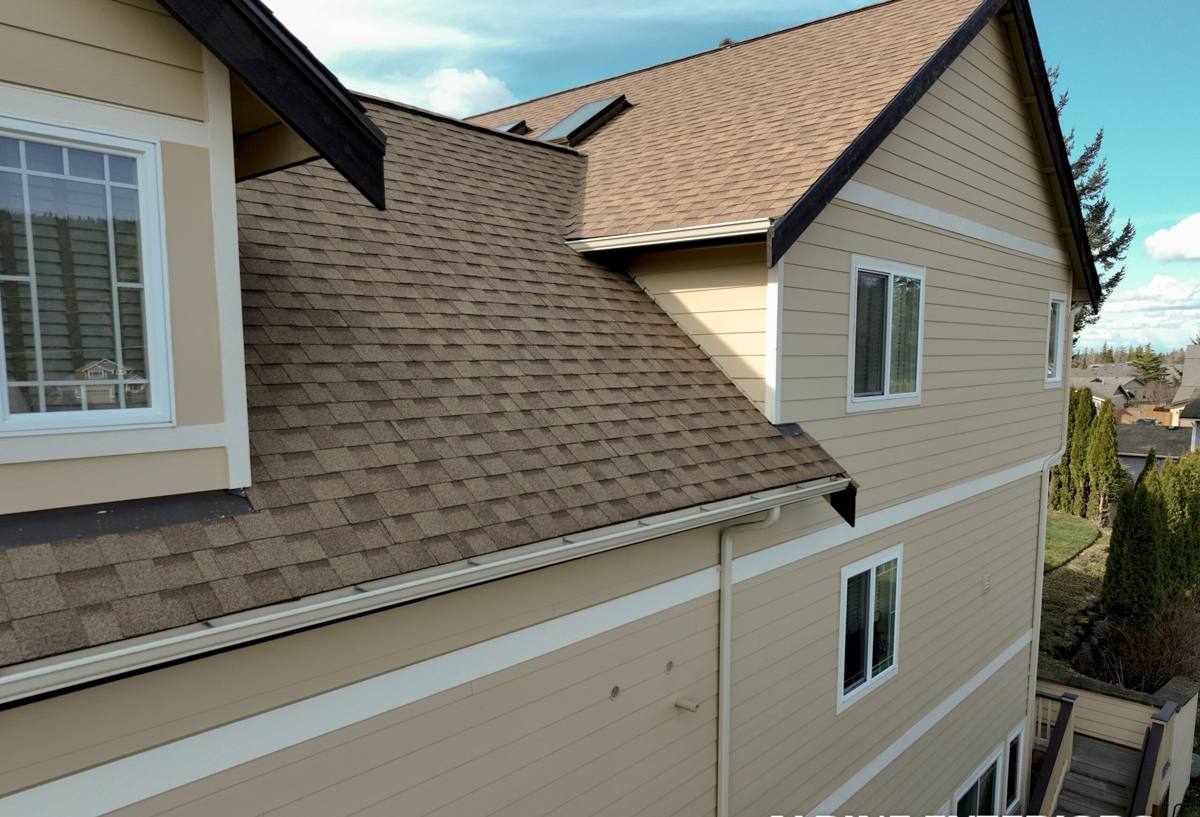
What This Coastal Climate Demands From a New Window Opening
Semiahmoo sits close enough to the water that salt-laden air, near-constant wind exposure, and long stretches of wet weather are just normal conditions, not an occasional event. New-construction windows have to be installed with that in mind from day one, because the flashing and sealant details are what stand between the framing and years of moisture cycling.
Salt Air and Metal Components
Salt air accelerates corrosion on unprotected fasteners, hinges, and cheaper hardware finishes faster than most people expect. On a new build, this mostly comes down to spec choices: stainless or coated fasteners at the flange, hardware finishes rated for coastal exposure, and avoiding bare or poorly plated metal anywhere near the sill or exterior trim.
Driving Rain and Flashing
Wind off the water pushes rain sideways, which means water is hitting window openings from angles a calm-climate flashing detail was never designed for. The header flashing, side flashing, and sill pan all have to shed water outward and downward in the right sequence — there's very little margin for a shortcut here, because wind-driven rain finds gaps that still water never would.
The Long Moss Season
Whatcom County's moss season runs long — shaded, north-facing walls stay damp for months at a time. Moss and algae growth right at a window's exterior trim holds moisture against the frame and caulk joints. That's a maintenance issue for the homeowner later, but it starts as an install decision now: trim details and sealant choices that don't give moss and mildew a foothold in the first place.
New-Construction Windows vs. Replacement Windows — Why the Distinction Matters
"New-construction" isn't a marketing label — it describes a specific window type and a specific installation method, and mixing the two up on a build causes real problems. A true new-construction window has a nail fin (or flange) around the perimeter that gets integrated directly into the wall's weather-resistive barrier (WRB) before siding goes on. A replacement window, by contrast, is a block-frame unit designed to go into an existing, already-finished opening without disturbing the surrounding wall.
| Factor | New-Construction Window | Replacement Window |
|---|---|---|
| Frame type | Nail fin/flange, integrates with WRB and flashing | Block frame, fits inside existing opening |
| When it's used | New builds, additions, full wall openings | Existing homes with finished siding and trim |
| Water management | Sill pan and flashing tie directly into house wrap | Relies on sealant and existing wall flashing |
| Best fit for Semiahmoo builds | Yes — proper choice while walls are open | Not typically used at initial construction |
Using a replacement-style window during new construction (or vice versa) is a common mistake on smaller or owner-managed builds, and it's one of the fastest ways to end up with a leak-prone opening in a high-exposure area like this. On every new build we frame windows into, we're using the flange design specifically so it ties into the WRB the way a coastal wall assembly needs it to.
What a Correct New-Construction Install Actually Involves
Getting a new-construction window right isn't about the window unit itself so much as the sequence of everything around it. The window is only as good as the opening it sits in.
The Sill Pan and Flashing Sequence
Before the window ever goes in, the rough opening needs a sloped sill pan so any water that gets past the window has somewhere to go — outward, not into the wall cavity. Flashing tape then goes on in a specific order (sill, then jambs, then head) so each layer overlaps the one below it, shingle-style, so water is always directed down and out, never trapped behind a layer above it.
Setting, Shimming, and Fastening
The window has to be set level, plumb, and square in the opening, shimmed at the right load points so the frame doesn't bow, and fastened through the flange per the manufacturer's schedule — skipping fastener locations to save time is a common shortcut that shows up later as air and water infiltration.
Sealing and Insulating Without Trapping Moisture
The gap between the window frame and the rough opening gets insulated (typically low-expansion foam or backer rod, not standard high-expansion foam that can bow the frame) and sealed on the exterior with the right sealant at the right joints — but not sealed everywhere. A new-construction install needs to manage water that gets past the primary defenses, which means some joints are intentionally left as drainage paths rather than fully caulked shut. Sealing every gap solid is actually a mistake in this climate; it can trap moisture inside the wall instead of letting it drain.
Choosing Frame Materials and Glass for a Semiahmoo Build
Material choice matters more here than in a drier climate, because whatever you pick has to hold up to salt air, constant moisture, and UV exposure over decades, not just look good on day one.
| Frame Material | Coastal Performance | Maintenance |
|---|---|---|
| Vinyl | Good moisture resistance; quality varies widely by manufacturer | Low — occasional cleaning |
| Fiberglass | Excellent dimensional stability, holds up well to wind and moisture cycling | Low |
| Wood-clad | Attractive, but exposed wood or failed cladding seams are a real risk in wet, salty air | Higher — cladding seams and any exposed wood need monitoring |
We'll talk through trade-offs honestly rather than push one product line. A clad-wood window can be the right call for a specific architectural look, but on a home this close to the water, the owner needs to go in understanding that any exposed end grain or a failed cladding seam becomes a moisture entry point that's harder to catch than it would be on a vinyl or fiberglass unit. That's a maintenance and inspection conversation, not a claim that any particular product is bad — it's about matching the material to how much upkeep you're willing to commit to.
Glass Packages Worth Considering Here
Double-pane, low-E glass with argon fill is the baseline worth building around in this climate — it helps with both heat retention through the wet, overcast months and comfort near large window walls that catch wind. Given how much of the year is damp and overcast rather than sunny, a very low solar heat gain coefficient (SHGC) isn't usually the priority it would be in a hot, sunny climate — we size the glass spec to the actual exposure of each opening rather than applying one spec to the whole house.
Our Process for a Semiahmoo New-Construction Window Job
- Walk the plans with the builder or homeowner before framing is finalized, so window sizes and rough openings are confirmed early.
- Order units to spec — frame material, glass package, and hardware finish confirmed against the coastal exposure of each wall.
- Inspect the rough openings once the WRB is on, before any window is set, to confirm sill pans and flashing planes are ready.
- Set, shim, square, and fasten each window per manufacturer specification, with photos at each stage.
- Flash and integrate each opening into the WRB, sill pan first, working shingle-style up the sides and across the head.
- Insulate and seal using drainage-conscious details, not a solid bead of caulk everywhere.
- Final check for level, square, smooth operation, and weather-tight seal before trim and siding close in around the opening.
Why a Crew That Already Works Semiahmoo Matters
A window installer who mostly works drier, more sheltered inland sites can do a technically fine job and still under-detail a coastal opening, simply because that's not the environment they usually build for. Working new-construction windows around Ferndale and the Semiahmoo area regularly means we're already calibrated to this exposure: how much wind-driven rain a given wall orientation actually sees, which details hold up through a wet Whatcom County winter, and where builders on other local jobs have run into trouble. That local repetition is worth more than a spec sheet — it's the difference between a flashing detail that's technically correct and one that's actually been proven on homes facing the same wind and salt exposure yours will face.
A Homeowner's Checklist Before Windows Go In
- Confirm the window units are true new-construction (nail-fin) product, not block-frame replacement units, if the wall is still open.
- Ask what sill pan and flashing sequence will be used, and in what order.
- Confirm fastener and hardware finishes are rated for coastal/salt-air exposure.
- Ask which joints will be sealed solid and which are left open for drainage, and why.
- Get the frame material trade-offs explained in plain terms for your specific wall exposures, not a one-size answer for the whole house.
- Have the rough openings inspected after the WRB goes on and before any window is set.
What Drives Cost on a Job Like This
Costs on a new-construction window package vary by unit count, size, frame material, and glass spec more than by labor alone — a small home with a handful of standard-size windows in vinyl will land well below a home with large, custom window walls in fiberglass or clad wood. Rather than quote a number that won't fit your specific plan, we walk the actual window schedule with you and price it against the exposure of each opening, so you're not over-spending on hardware a sheltered wall doesn't need, or under-spending on the walls that take the worst of the weather.
If you're framing a home near Semiahmoo or anywhere else around Ferndale and want a straight answer on what your window openings actually need, we're happy to walk the plans with you. Reach out for a free, no-pressure estimate — the form below gets you started.