 Ferndale
 Why Bellingham Roofs Wear Differently Than Roofs Inland
A roof in Bellingham does not fail the same way a roof in Spokane or Yakima does. Out here, the damage is slower and sneakier. Salt-laden air off Bellingham Bay works on exposed metal fasteners, flashing, and vent housings year-round. Driving rain, pushed sideways by wind off the water, finds the smallest gap in flashing or underlayment and keeps finding it, storm after storm, for years. And because the marine layer keeps roofs damp for long stretches of the fall, winter, and spring, moss and algae get a head start that drier parts of the state never deal with.
None of that means a Bellingham roof needs to be exotic or overbuilt. It means the installation details that get skipped on a lot of jobs — the ones that don't show up until year six or seven — are exactly the details that matter most here. That's the difference between a roof that looks fine at the driveway and one that's actually built for this climate.
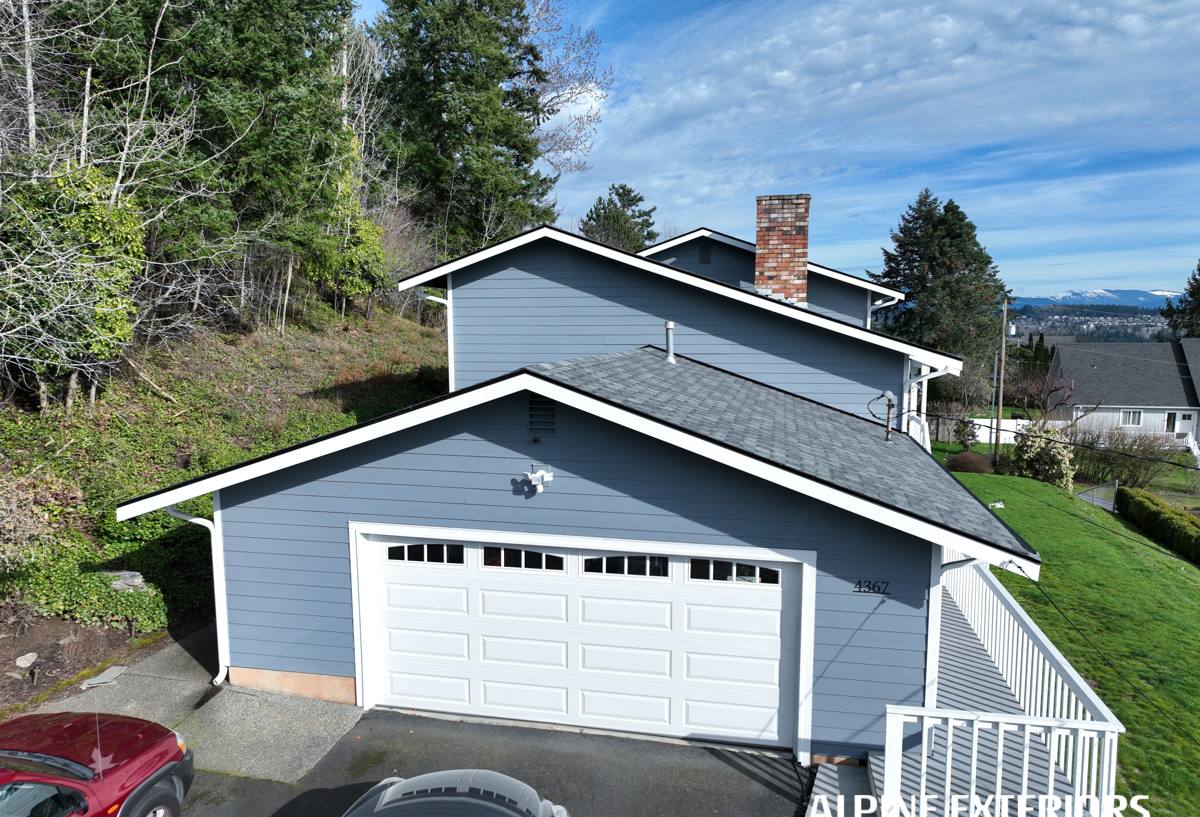
Signs a Bellingham Home Needs a New Roof, Not Another Repair
We get called out for a lot of "just patch this one spot" requests, and sometimes that's the right call. Other times, the roof has quietly reached the point where repairs are just delaying an inevitable full tear-off. Common signs we look for on Bellingham homes:
- Granule loss heavy enough that you're finding grit in gutters every time it rains
- Shingles that are cupping, curling, or have gone brittle at the edges
- Moss that's rooted under the shingle tabs rather than just sitting on the surface
- Soft spots or sag visible from the ground, especially near valleys or chimneys
- Daylight or water staining in the attic, particularly around vents and flashing
- A roof that's 20+ years old with no documented tear-off or major repair history
If a roof is showing two or more of these, a full replacement is usually the more honest recommendation — patching a roof that's structurally at the end of its life just delays the cost and risks interior damage in the meantime.
What a Correct Roof Installation Actually Includes
A new roof is more than shingles nailed to plywood. In a climate with this much wind-driven rain and moss pressure, the layers underneath the visible surface are what separate a roof that lasts from one that starts leaking early.
Tear-Off and Deck Inspection
We don't install a new roof over an old one. A full tear-off lets us actually see the sheathing — soft, delaminated, or water-stained plywood gets replaced before anything new goes down. Skipping this step to save time is one of the more common shortcuts we see on roofs that fail early in this area.
Underlayment and Ice-and-Water Protection
Whatcom County doesn't get heavy ice damming most winters, but it gets plenty of wind-driven rain, which behaves a lot like ice damming when it comes to forcing water sideways and upward under shingles. We use synthetic underlayment across the full roof and self-adhering ice-and-water membrane at the eaves, valleys, and around every roof penetration — the spots where wind-driven rain actually gets in.
Flashing Details
Chimneys, skylights, sidewalls, and vent stacks are where the vast majority of real-world leaks originate — not the open field of shingles. Correct step flashing, counter-flashing, and properly lapped kick-out flashing at roof-to-wall transitions matter more here than in drier climates, because there are simply more rain events per year testing every seam.
Ventilation
A roof that can't breathe traps moisture in the attic, which speeds up sheathing rot and gives moss and mold more to work with from underneath. Balanced intake (at the soffits) and exhaust (at the ridge) keeps attic humidity down and extends the life of both the roof deck and the shingles themselves.
Choosing a Roofing Material for This Climate
There's no single "best" roofing material for Bellingham — it depends on budget, roof style, and how much long-term maintenance a homeowner wants to take on. Here's how the common options actually compare for a coastal Whatcom County home:
| Material | Moss/Algae Resistance | Wind & Rain Performance | Typical Lifespan | Relative Cost |
|---|---|---|---|---|
| Architectural asphalt shingle | Moderate (better with algae-resistant granules) | Good when installed with proper fastening pattern | 25–30 years | Lower–mid |
| Standing seam metal | High — moss struggles to root on smooth metal | Excellent; sheds wind-driven rain well | 40–50+ years | Higher |
| Cedar shake | Low without diligent upkeep — moss-prone in shade | Fair; needs correct ventilation underneath | 20–30 years with maintenance | Mid–higher |
| Synthetic composite shingle | Good, similar to asphalt with treated products | Good; consistent manufacturing tolerances | 30–50 years (product dependent) | Mid–higher |
We're upfront with homeowners about trade-offs rather than pushing one product. Cedar shake has real appeal in this region, but on heavily shaded lots it needs consistent moss maintenance or it will hold moisture against the deck. Metal costs more up front but the lower long-term maintenance often makes sense for homeowners planning to stay put for decades. Asphalt remains the most common choice because it balances cost, appearance, and performance well when the underlayment and ventilation are done correctly — the shingle brand matters less than the installation quality underneath it.
Our Installation Process
- On-site inspection and estimate — we walk the roof (or use a drone where pitch or access makes that safer), check the attic for ventilation and moisture issues, and give a written estimate with material options.
- Material selection — we go over the trade-offs above based on your budget, roof style, and how much maintenance you want going forward.
- Tear-off — old roofing removed down to the deck, with damaged sheathing flagged and priced before replacement, not after.
- Deck repair — any soft or water-damaged plywood is replaced and re-fastened to current code.
- Underlayment and flashing — synthetic underlayment, ice-and-water membrane at vulnerable areas, new flashing at every penetration and transition.
- Roofing installation — shingles, metal panels, or shakes installed to manufacturer spec and local wind-exposure requirements.
- Ventilation check — intake and exhaust balanced, with additional vents added where the existing setup was insufficient.
- Final walkthrough — cleanup, magnetic nail sweep of the yard and driveway, and a walkthrough of the finished roof and warranty paperwork.
Living With a Roof in a Moss-Prone, Salt-Air Region
Even a well-installed roof benefits from a little seasonal attention out here. A short annual checklist keeps small issues from becoming leaks:
- Clear gutters and downspouts before the fall rains start in earnest
- Remove moss buildup gently — soft washing or manual removal, never aggressive pressure washing that can strip granules
- Trim back overhanging branches to reduce shade and debris on north- and west-facing slopes
- Check attic ventilation isn't blocked by insulation at the soffits
- Have flashing around chimneys and vents visually checked every couple of years, especially after a hard windstorm
None of this requires a contractor visit every year — it's mostly homeowner-level upkeep. But knowing what to look for catches problems while they're still a caulk-and-flashing fix instead of an interior repair.
Why Local Roofing Experience Matters in Bellingham
A crew that mostly works drier inland climates doesn't always think about wind-driven rain the same way, or about how fast moss establishes itself on a north-facing slope a block from the water. Working Bellingham and the surrounding Whatcom County area regularly means knowing which details actually matter here — the flashing at roof-to-wall transitions, the ventilation balance, the underlayment coverage at valleys — because we see what happens when those get skipped. It also means we're not guessing at permit requirements or typical roof-to-wall configurations common in this area's housing stock.
What Affects the Cost of a New Roof
Every roof is priced individually after inspection, but the main cost drivers on a Bellingham job are usually:
- Roof size and the number of planes, valleys, and penetrations
- Pitch and access — steep or hard-to-reach roofs take longer and require more safety setup
- Deck condition — how much sheathing replacement is needed once the old roofing comes off
- Material choice — asphalt, metal, cedar, and composite carry different material and labor costs
- Ventilation upgrades — adding intake or exhaust vents where the existing setup falls short
We'd rather give a homeowner an honest range after actually seeing the roof than a number over the phone that changes once we're up there — surprises during a roofing job usually come from skipping the inspection step, not from the weather.
If your roof is showing its age or you just want a straight answer on whether it's a repair or a replacement, we're happy to take a look. Fill out the form below for a free, no-pressure estimate on your Bellingham home.