 Ferndale
 Roofing Built for a Salt-Air, High-Moisture Coastline
Homes in and around the Fairhaven area near Ferndale sit close enough to the water that roofing has to do more work than it does a few miles inland. Salt-laden air accelerates corrosion on fasteners and flashing. Driving rain off the Strait pushes water sideways under shingles that aren't properly lapped. And the long, wet Whatcom County shoulder seasons keep roofs damp for months at a stretch, which is exactly the condition moss and moisture-loving organisms need to take hold. A roof that would hold up fine in a dry inland climate can fail early here if it isn't installed with these specific conditions in mind.
This page covers what a correct roof installation looks like for a coastal Ferndale-area home, the material and detail choices that actually matter in this climate, and how we approach the job from tear-off to final inspection.
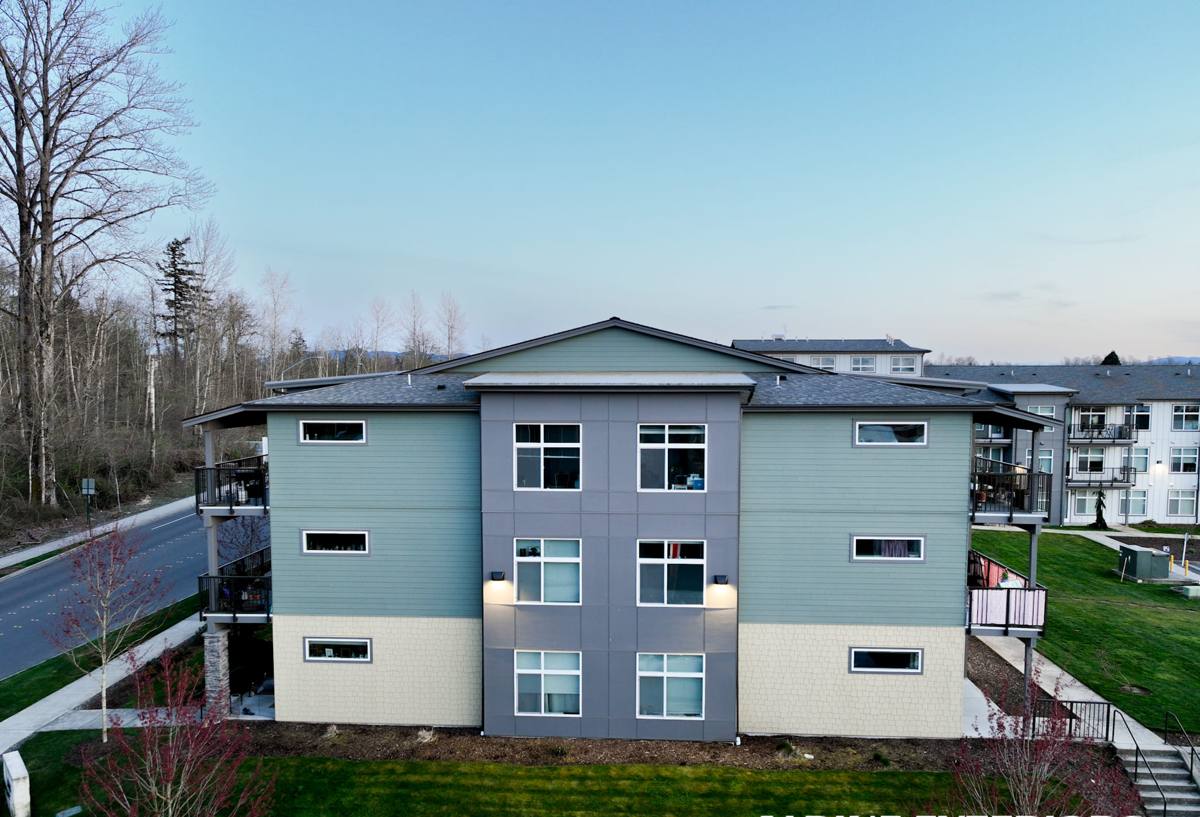
What Driving Rain and Salt Air Actually Do to a Roof
Wind-Driven Rain
Rain that comes in at an angle, rather than straight down, gets pushed up and under shingle edges, into exposed nail heads, and along poorly sealed valleys. A roof designed for calmer inland weather often relies on gravity alone to shed water. On an exposed or elevated coastal lot, that's not enough — every seam, valley, and penetration needs to be treated as a place water will actively try to enter, not just a spot water might occasionally reach.
Salt Air and Metal Components
Every roof has metal in it somewhere — flashing, fasteners, vent caps, drip edge. Standard galvanized components can corrode faster near the coast than the shingles above them wear out, which is how a roof ends up with rust streaks and leaks around flashing years before the field of the roof is actually due for replacement. Choosing corrosion-resistant metal in the first place is cheaper than replacing flashing on a roof that's otherwise still sound.
Moss Season
Whatcom County's wet fall-through-spring stretch gives moss and algae plenty of time to establish on any roof surface that stays damp — particularly north-facing slopes and areas shaded by trees. Moss isn't just cosmetic. As it grows, it holds moisture against the roofing material and can work its way under shingle tabs, lifting them and creating entry points for water. A roof installed without moss-resistant products or adequate airflow will need more aggressive, more frequent maintenance than one that accounts for this from day one.
What a Correct Installation Involves
A new roof is more than laying shingles over what's there. Done right, it includes:
- Full tear-off to bare decking so the deck itself can be inspected, not just the surface
- Repair or replacement of any rotted, delaminated, or soft decking before new material goes down
- A synthetic or self-adhered underlayment appropriate for a wet climate, not just builder's felt
- Ice-and-water shield or equivalent membrane at eaves, valleys, and other vulnerable transitions
- New flashing at every wall, chimney, skylight, and roof-to-roof intersection — old flashing is not reused
- Corrosion-resistant fasteners and metal components suited to coastal exposure
- Balanced intake and exhaust ventilation sized to the actual attic space
- A final walk-through covering the roof, gutters, and any disturbed siding or trim
Skipping any one of these doesn't necessarily show up right away. It shows up two, five, or ten years later as a leak, premature moss growth, or a roof deck that's soft underfoot.
Choosing a Roofing Material for This Climate
There's no single "best" roofing material — the right choice depends on budget, roof slope, tree cover, and how much maintenance a homeowner wants to take on. Here's how the common options compare for a Fairhaven-area home:
| Material | Coastal/Moss Performance | Maintenance | Relative Cost |
|---|---|---|---|
| Architectural asphalt shingle | Good with proper underlayment and algae-resistant granules | Periodic moss treatment on shaded slopes | Lower-Mid |
| Standing seam metal | Excellent — sheds moisture fast, minimal surface for moss to grip | Low; occasional fastener/sealant check | Mid-Upper |
| Cedar shake | Attractive but moisture-sensitive; needs consistent airflow and upkeep | Higher — regular treatment and inspection | Upper |
| Composite/synthetic shake or slate | Good moisture resistance, low moss uptake | Low-Moderate | Mid-Upper |
For most homes in this area, we recommend an architectural asphalt shingle rated for algae resistance, or standing seam metal on lower-slope or heavily shaded roofs where moss has historically been a persistent problem. We'll walk your specific roof and give you a straight recommendation rather than steering you toward whatever is easiest to install.
A Note on Cedar Shake
Cedar shake has real curb appeal and a long history in the Pacific Northwest, but it's also the material most sensitive to the exact conditions this climate produces: sustained moisture, shade, and salt air. It can absolutely be done well, but it requires more consistent airflow underneath it and a homeowner willing to keep up with maintenance. We won't talk anyone out of it, but we'll be honest about what it takes to keep it performing.
Ventilation and Moisture Control
Roof ventilation is one of the most overlooked parts of an installation, and one of the most important in a wet climate. Balanced intake (at the soffits) and exhaust (at the ridge) keep air moving through the attic, which does two things: it dries out moisture that works its way in, and it helps regulate roof deck temperature so moss and mildew have a harder time establishing. An underventilated attic stays damp longer after every rain event, which in this climate can mean most of the year.
Before installing a new roof, we check existing ventilation — soffit vents that have been painted shut, insulation blocking airflow, or a ridge vent that was never properly connected — and correct it as part of the job rather than leaving a known problem under a new roof.
Flashing and the Details That Actually Prevent Leaks
Most roof leaks don't happen in the open field of the roof — they happen at transitions: chimneys, skylights, dormers, sidewalls, and valleys. This is where flashing does its job, and it's also where corner-cutting shows up fastest in a climate with driving rain and salt exposure.
We install new flashing with every roof, sized and formed for the specific transition rather than relying on generic pieces or excessive sealant. Valleys get either a metal valley system or a properly woven shingle valley depending on the roof design, and any wall-to-roof transition gets step flashing integrated with the siding, not just caulked at the surface.
Our Installation Process
- On-site inspection — we assess the current roof, decking condition, ventilation, and any moss or moisture damage before quoting anything
- Material selection — we go over options suited to your roof's slope, shade exposure, and budget
- Tear-off and deck inspection — old roofing comes off completely so we can see and address the actual deck condition
- Underlayment and membrane installation — including ice-and-water shield at vulnerable areas
- Flashing and ventilation work — all new flashing, corrected ventilation where needed
- Roofing material installation — installed to manufacturer spec, with attention to fastening patterns appropriate for wind and rain exposure
- Cleanup and final walk-through — site cleared of debris, roof and gutters reviewed with the homeowner
Maintaining a New Roof in a Moss-Prone, Salt-Air Area
A well-installed roof still benefits from basic upkeep in this climate. A short annual routine goes a long way:
- Clear gutters and downspouts before the fall rains, and again mid-winter if the property has significant tree cover
- Look for early moss or algae growth on shaded, north-facing slopes and treat it before it spreads
- Check that soffit vents remain unobstructed by insulation, paint, or debris
- Inspect flashing around chimneys and skylights for lifted edges or gaps after major storms
- Trim back overhanging branches that keep sections of the roof shaded and damp
Why Local Experience in Fairhaven Matters
A roofing crew that regularly works this stretch of Whatcom County already knows which slopes tend to hold moisture, which flashing details fail first under driving rain, and which materials hold up under sustained salt exposure. That's the difference between a roof installed to a generic spec sheet and one installed for the conditions it will actually face. We're not guessing at how this climate behaves — we see it on roofs in this area every season.
If your roof is showing its age, holding moss it shouldn't, or you're just planning ahead, we're happy to take a look and give you a straightforward assessment — no pressure, no upsell. Reach out for a free estimate using the form below.