 Ferndale
 Building a Deck That Actually Holds Up in Nooksack
Nooksack sits far enough inland from the Salish Sea that people sometimes assume salt air isn't a factor here, but Whatcom County's marine weather pattern doesn't stop at the water's edge. Wind-driven rain, heavy fall and winter moisture, and long stretches of overcast, damp days reach the valley just as reliably as they hit the coast. Add in the shade from mature fir and cedar cover common on rural and semi-rural Nooksack lots, and you get exactly the conditions that shorten a deck's life: standing moisture, slow-drying wood, and moss that gets a foothold and never really leaves.
A deck built here without accounting for that isn't a deck problem waiting to happen — it's one already in progress. Fasteners loosen as wood swells and shrinks through repeated wet-dry cycles. Ledger boards rot from the inside if they weren't flashed correctly at the start. Railings and stair stringers, which take the most direct weather exposure, are usually the first things to show real wear. None of this is inevitable. It's a function of material choice, framing detail, and drainage planning done right the first time.
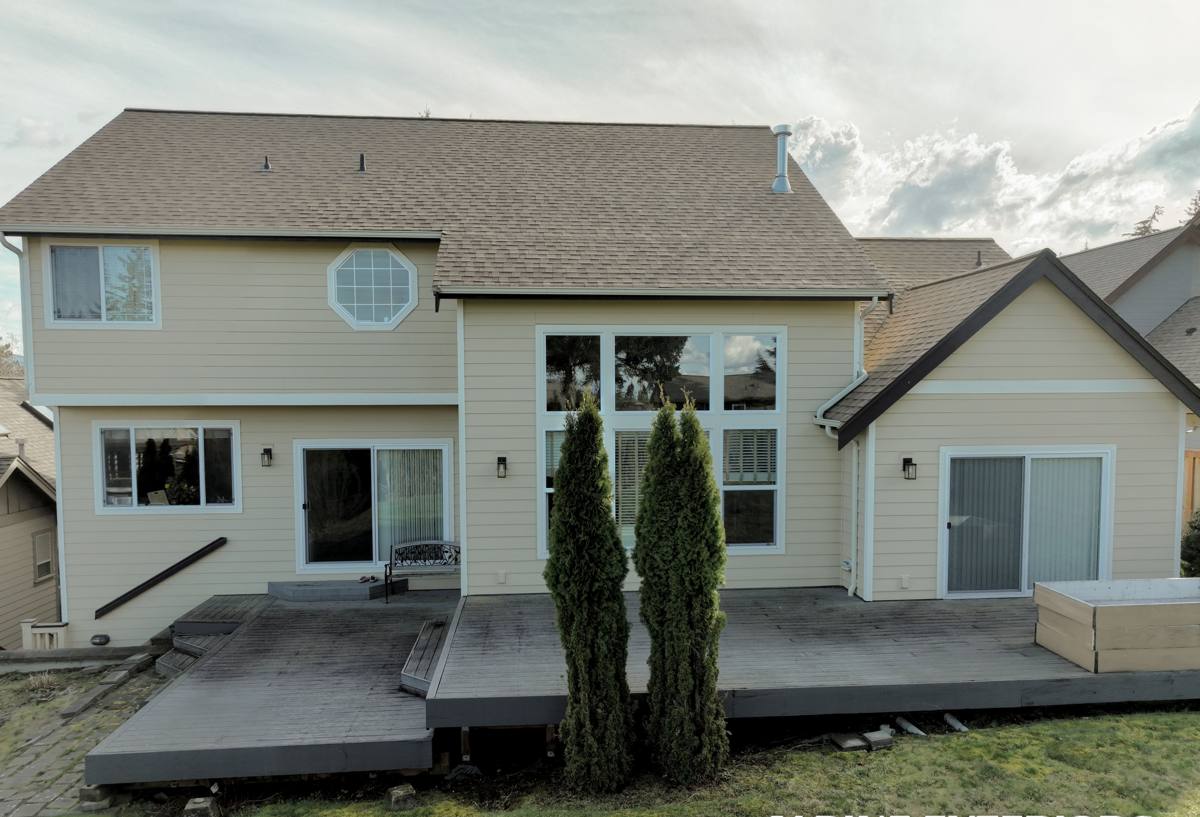
What a Correct Deck Build Involves Here
Ledger Attachment and Flashing
Most deck failures we get called out to inspect start at the ledger board — the point where the deck attaches to the house. If that connection isn't properly flashed to shed water away from the rim joist and sheathing, moisture works its way behind the siding over several wet seasons before anyone notices a problem. In a climate that gets sustained rain events like ours, this is not a place to cut corners or reuse old flashing.
Footings and Post Bases
Frost depth in Whatcom County isn't extreme, but saturated, poorly draining soil is common on Nooksack properties, especially those with clay-heavy ground or low-lying yard sections. Footings need to be sized and set below the point where seasonal moisture will shift them, and post bases should hold the post above the deck surface — never buried in concrete or sitting in a pool of water after every rain.
Joist Spacing and Protection
Joist tape or a comparable protective barrier over the top of each joist keeps water from soaking directly into cut lumber, which is one of the most common places rot starts on an otherwise sound deck. It's a small material cost relative to the labor of tearing out and replacing a rotted frame five or eight years down the line.
Drainage Under and Around the Deck
On grade-level or low decks especially, water needs somewhere to go. Grading, gap spacing between boards, and keeping the area under the deck from turning into a standing-water trap all matter more here than they would in a drier climate.
Choosing Decking Material for This Climate
There's no single "best" decking material — there's a best fit for your yard, your sun/shade balance, your budget, and how much upkeep you actually want to do. Here's how the common options hold up under Nooksack's conditions specifically.
| Material | How it handles our climate | Upkeep | Typical lifespan here |
|---|---|---|---|
| Pressure-treated wood | Affordable, but shaded/damp areas need consistent sealing to resist moss and checking | Annual cleaning, resealing every 1-2 years | 10-15 years with upkeep |
| Cedar | Naturally rot-resistant and handles our moisture well, but still needs finish maintenance to keep its look | Cleaning + finish every 1-3 years | 15-20 years with upkeep |
| Capped composite | Best moss and moisture resistance of any option; won't absorb water or swell | Periodic washing, no sealing/staining | 25-30+ years |
| Uncapped composite | Better than wood in wet shade, but older/lower-grade uncapped boards can hold moisture at the surface and grow moss faster than capped versions | Regular cleaning | 15-25 years |
For lots with heavy tree cover or north-facing shade — common in and around Nooksack — we lean toward capped composite or well-maintained cedar. For sunnier, more open lots, pressure-treated framing with a composite or cedar decking surface is often the more cost-effective call. We'll walk your specific site with you rather than pushing one product regardless of conditions.
Why We're Selective About Which Composite Lines We Install
Not all composite decking is built the same way, and we've been doing this long enough in this climate to know which board profiles and cap technologies actually resist moss growth in constant shade versus which ones just look good on a showroom sample. We install products with a track record of holding up to sustained damp exposure, not just the lowest-cost option on the shelf. That's a maintenance and longevity decision, not a brand preference.
Railings, Stairs, and Code Considerations
Railings and stair components take the brunt of direct weather exposure since they're rarely covered, which is why we see them fail before the deck surface itself. A few things matter more here than people expect:
- Metal hardware and connectors should be corrosion-resistant rated for exterior/coastal-adjacent use, not standard interior-grade fasteners
- Stair stringers need the same moisture protection as joists — they're structural, and they're exposed on both faces
- Railing height and baluster spacing follow Whatcom County building code, which we build to as a minimum, not an afterthought
- Post-to-frame connections need to be engineered for lateral load, since railings take repeated stress from people leaning on them over the deck's lifetime
Our Process for a Nooksack Deck Project
- On-site assessment. We look at sun/shade exposure, drainage, existing structure (if replacing), and how the deck will actually be used before recommending materials.
- Design and material selection. We walk through the tradeoffs in plain terms — cost, upkeep, and how each option performs against moss and moisture specifically on your lot.
- Permitting. Most new decks and many replacements in Whatcom County require a permit. We handle that process rather than leaving it on the homeowner.
- Framing and structural work. This is where the long-term performance of the deck is actually decided — footings, ledger flashing, joist protection, and post bases done to hold up through repeated wet seasons.
- Decking, railings, and finish work. Surface installation, railing systems, stairs, and any built-in features like benches or planters.
- Final walkthrough. We go over the finished deck with you, including what maintenance (if any) the material you chose actually needs.
Deck Replacement vs. Repair
Not every aging deck needs a full teardown. If the framing is sound and the damage is limited to surface boards or railings, targeted replacement can make sense. But there's a point where patching an old deck costs more over a few years than replacing it once, correctly. A few signs it's time to talk replacement rather than repair:
- Soft or spongy spots in the decking surface, especially near the house
- Visible rot or dark staining at the ledger board or post bases
- Persistent moss or algae that returns within weeks of cleaning
- Loose railings or stair stringers that flex under normal weight
- A deck older than 15-20 years built without joist protection or proper flashing
What Drives the Cost of a Nooksack Deck
| Factor | Why it matters here |
|---|---|
| Size and footprint | Larger decks mean more framing, footings, and material — the biggest cost driver overall |
| Decking material | Capped composite and cedar cost more upfront than pressure-treated wood but reduce moss and moisture-related maintenance |
| Height and access | Elevated decks need more substantial railings, stairs, and structural support than grade-level builds |
| Site conditions | Sloped, shaded, or poor-draining lots — common around Nooksack — may need extra grading or drainage work |
| Demolition and disposal | Full teardown of an existing deck adds labor and haul-away cost versus new construction on a clear site |
We give firm, itemized quotes after seeing the site — not ballpark numbers pulled from a national average that doesn't account for our climate or your specific lot.
Keeping a Deck Moss-Free Once It's Built
Even the best-built deck in this climate benefits from some basic seasonal upkeep. This isn't heavy maintenance — it's the difference between a deck that looks good for decades and one that starts looking tired within a few years.
- Sweep leaves and debris off regularly, especially in fall — trapped organic matter holds moisture and feeds moss
- Rinse or lightly scrub shaded areas a couple times a year where moss is most likely to establish
- Check gaps between boards periodically to make sure they haven't filled with debris that blocks drainage
- Inspect railings and stair connections annually for looseness or corrosion at the hardware
- Re-seal wood decking on the manufacturer's recommended schedule — don't wait until it's visibly graying
Why Local Experience on This Kind of Build Matters
A deck built by a crew that hasn't worked much in Whatcom County's specific moisture pattern can still look right on installation day. The problems show up later — in year three or four, when a ledger board that wasn't flashed for our rain pattern starts letting water in, or when a decking product that's fine in a drier climate starts holding moss in a shaded Nooksack yard. We've built and repaired enough decks in this area to know which details matter here specifically, not just in general. That's less about brand names and more about framing choices, material selection, and drainage planning suited to this exact climate.
If you're planning a new deck or looking at replacing one that's past its prime, we're happy to come take a look and give you a straightforward, no-pressure estimate — just fill out the form below.