 Ferndale
 Decks in Point Roberts Take a Different Kind of Beating
Point Roberts sits out on its own peninsula, surrounded by water on three sides, which means every deck out there is dealing with conditions that decks in more sheltered parts of Whatcom County simply don't see as often. Salt-laden air off the water works into wood fiber and metal fasteners year-round. Driving rain off the Strait doesn't just fall straight down — it gets pushed sideways under railings and into ledger boards where regular rain wouldn't reach. And because the peninsula stays shaded and damp for long stretches of the fall and winter, moss and algae get a head start here that inland decks don't deal with until later in the season, if at all.
We work throughout Ferndale and the surrounding Whatcom County area, and Point Roberts decks consistently show a specific pattern of wear: fastener corrosion first, surface graying and moss second, and structural softening at ledger boards and post bases third — usually in that order, over years. Knowing that pattern is what lets us look at a deck and tell you honestly whether you're looking at a repair or a rebuild.
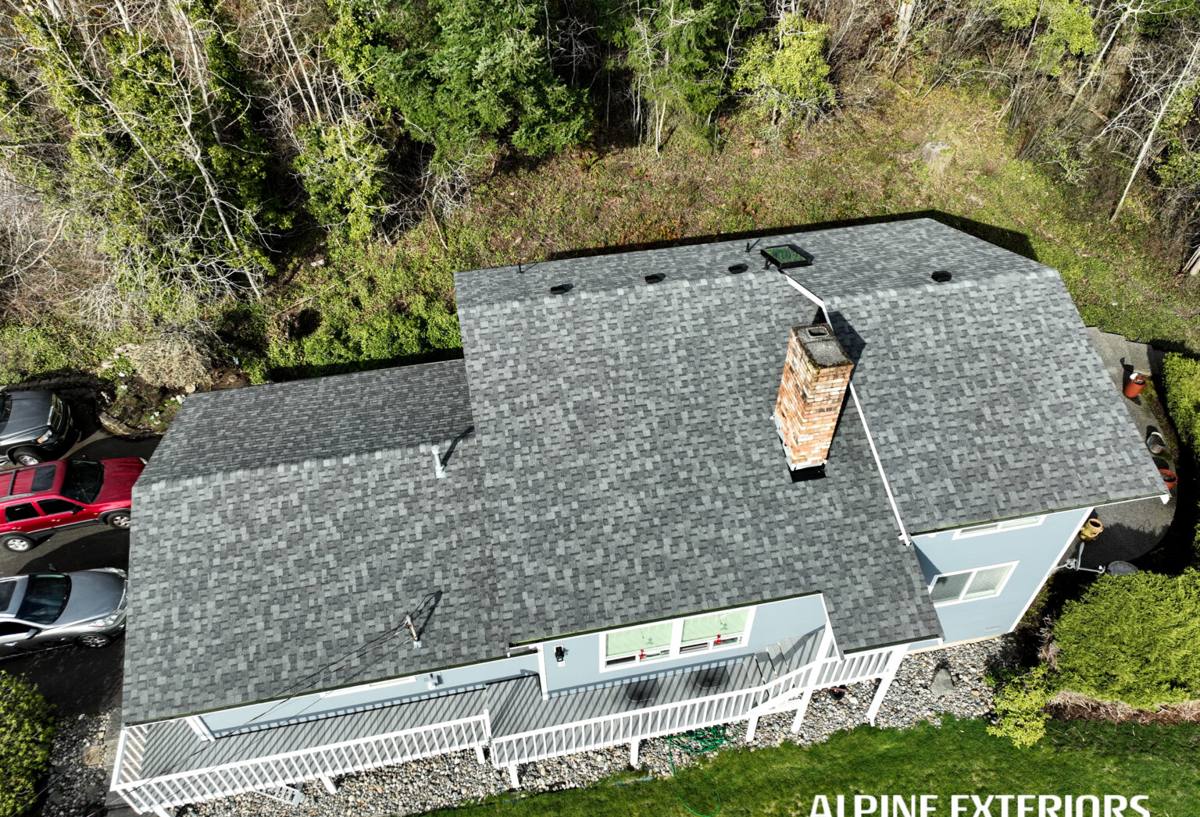
What Salt Air and Long Wet Seasons Actually Do to a Deck
Fasteners and Hardware
Ordinary galvanized screws and nails corrode faster near salt air than most homeowners expect. Once a fastener starts rusting, it loses grip in the wood around it, and you get the telltale sign of boards that feel slightly loose or that squeak even though nothing looks obviously broken. On older Point Roberts decks we've looked at, this is often the first real failure point — long before the wood itself is compromised.
Wood Fiber and Coatings
Salt combined with constant moisture accelerates the breakdown of wood fiber and speeds up the failure of stains and sealers. A deck that would need refinishing every 3-4 years in a drier inland spot might need attention every 2 years out here. Skipping that maintenance doesn't just mean it looks worn — it means water gets a more direct path into the wood.
Moss, Algae, and Trapped Moisture
Point Roberts' shaded, damp stretches of the year let moss and algae establish on deck boards, especially on the north side of a house or under overhangs. Beyond being slippery and unsightly, moss holds moisture against the board surface long after the rain stops, which is exactly the condition that leads to soft, rotted wood underneath a still-decent-looking top surface.
Where Deck Damage Actually Starts
When we inspect a deck repair call in this area, we check the same handful of spots first, because that's where the failures show up nearly every time:
- The ledger board where the deck attaches to the house — the single most common source of hidden rot, because water tracks down the siding and behind the flashing
- Post bases and any wood-to-concrete contact points, where moisture wicks up from below
- Fastener heads across the decking surface — look for rust streaks bleeding out around screws or nails
- Stair stringers and railing posts, which take direct weather exposure from multiple sides
- Joist hangers and any hidden structural hardware underneath the deck
- Gaps between boards that have closed up with swelling, trapping debris and moisture
Most of these are not places a homeowner walking across their own deck would think to check, which is exactly why decks that "look fine" sometimes have real structural issues underneath.
Repair or Rebuild: How We Make That Call
| Condition | Usually a Repair | Usually Points to Rebuild |
|---|---|---|
| Ledger board | Isolated soft spot, flashing failure caught early | Rot along most of its length, sagging attachment |
| Decking boards | A handful of boards cupped, cracked, or gray | Widespread softness, boards failing a screwdriver push-test in multiple spots |
| Fasteners | Scattered rust, otherwise sound wood | Corrosion throughout, boards loose across the whole surface |
| Framing/posts | One or two posts showing base rot | Multiple posts or joists compromised, structural flex when walked on |
| Railings | Loose balusters, minor surface wear | Posts pulling from framing, code-non-compliant spacing or height |
We'd rather tell you a repair will hold for several more good years than talk you into a rebuild you don't need — and we'd rather tell you honestly when a repair is just delaying an inevitable, more expensive fix. Both calls come from the same inspection; we just tell you what we actually find.
What a Correct Deck Repair Involves Out Here
Fastener Upgrades
Where corrosion is part of the problem — which it usually is this close to the water — we don't just replace failed fasteners with the same grade that failed. We use fasteners rated for coastal and treated-lumber exposure, because putting standard hardware back into a salt-air environment just resets the clock on the same failure.
Flashing and Ledger Work
If the ledger board is involved, the fix isn't just swapping the board — it's correcting the flashing detail behind it so water sheds away from the house instead of tracking down into the connection again. A new ledger board with the same bad flashing behind it will fail again, just more slowly.
Board Replacement and Matching
We replace individual boards where the damage is isolated rather than resurfacing an entire deck when it isn't necessary, and we take care matching board profile and fastener pattern so repaired sections don't stand out or create uneven wear points down the line.
Moss and Surface Treatment
Once repairs are done, we deal with the moss and algae problem directly — cleaning, treating, and where useful, addressing the drainage or shade issue that's letting moss establish in the first place, rather than just power-washing it off for a season.
Our Process for Point Roberts Deck Repairs
- On-site inspection — we check the ledger, posts, framing, and fastener condition in person, not just the visible decking surface
- Honest scope and estimate — you get a clear written breakdown of what needs repair, what's optional, and what we'd watch but leave alone for now
- Repair work — matched materials, corrosion-appropriate fasteners, and corrected flashing where the ledger is involved
- Final walkthrough — we show you what was done and what to keep an eye on given how this specific deck sits relative to weather and shade
Simple Maintenance That Extends the Life of a Repair
A repaired deck out here still needs upkeep, and the schedule genuinely is tighter than it would be a few miles inland. A short list that actually matters:
- Sweep debris out of board gaps regularly so moisture doesn't sit trapped against wood
- Re-treat or reseal on a shorter cycle than you'd use in a drier area — check condition every year rather than assuming a 4-year product schedule applies
- Address moss as soon as it appears rather than waiting for it to spread
- Keep an eye on the ledger board area after heavy rain events, since that's where hidden problems start
- Check fastener heads periodically for early rust streaks — catching that early is far cheaper than catching it after the board underneath has softened
Why Local Experience on This Specific Peninsula Matters
Point Roberts is geographically part of Whatcom County but physically cut off from the rest of it, and its weather exposure is genuinely different from decks even a short drive away in Ferndale proper. A crew that hasn't worked this specific area can misjudge how fast salt air and moss will come back after a repair, or use standard fastener and flashing details that don't hold up to the exposure here. We've done exterior and deck work across Whatcom County long enough to know what actually lasts in this particular environment versus what looks fine for a season and fails again.
That local knowledge is also what lets us give you a straight answer about scope. We're not guessing at how this climate treats a deck — we've seen the failure patterns repeat, and that's what informs whether we tell you it's a repair or tell you it's time to rebuild.
Getting Started
If you've got a deck in Point Roberts that's showing rust streaks, soft spots, persistent moss, or just doesn't feel as solid as it used to, we're happy to take a look and give you a straightforward, no-pressure assessment of what it actually needs. Fill out the form below and we'll set up a time to come out and give you an honest read on your deck.