 Ferndale
 Point Roberts Puts Siding Through a Harder Test Than Most of Whatcom County
Point Roberts sits on its own peninsula, surrounded on three sides by the Strait of Georgia and cut off from the rest of Washington by the Canadian border. That geography is great for water views and privacy, but it means the homes there take a beating that inland Ferndale and Bellingham houses simply don't see. Salt-laden air moves in off the water daily, wind-driven rain hits siding at angles that never dry out fully, and the shaded, damp pockets around mature trees and north-facing walls stay wet long enough to grow moss and algae for months at a stretch. Siding on a Point Roberts home isn't decorative — it's the only thing standing between that environment and the framing underneath.
When we talk about siding replacement here, we're not just swapping old boards for new ones. We're solving for a specific set of conditions: chloride exposure from salt spray, near-constant moisture cycling, and a growing season for moss and algae that runs longer than almost anywhere else in the county.
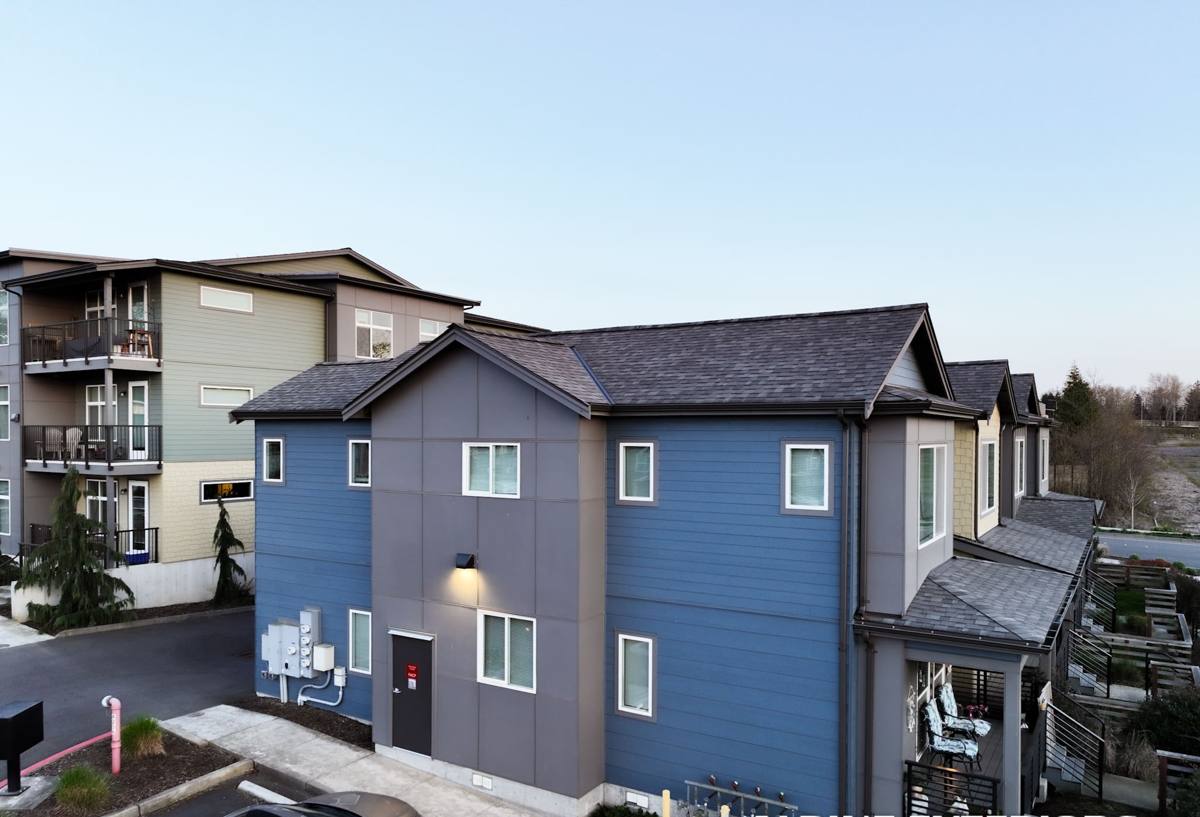
Why Homes Here Wear Differently Than Homes 20 Minutes Inland
Salt Air Accelerates Everything
Airborne salt doesn't just sit on the surface of siding — it works into hairline cracks, fastener heads, and seams, holding moisture against the substrate longer than plain rainwater would. On wood-based products, that means faster rot at butt joints and corners. On metal fasteners and trim, it means corrosion and staining that show up years before they would on a home a few miles inland.
Driving Rain Finds Every Gap
Because Point Roberts is exposed on multiple sides with little terrain to break the wind, rain doesn't just fall — it's pushed sideways into wall assemblies. Any siding installed without a proper drainage plane, correct lap spacing, or sealed penetrations will eventually let water behind the cladding, where it can sit against sheathing that never gets a chance to fully dry between storms.
A Long Moss and Algae Season
Shade, moisture, and mild temperatures are exactly what moss and algae need to establish themselves, and this stretch of coastline offers all three for much of the year. Moss holds water against siding surfaces, and on products that aren't dimensionally stable or properly sealed, that constant dampness is what eventually leads to swelling, delamination, or paint failure.
Signs a Point Roberts Home Needs Replacement, Not Just a Patch
Not every siding problem calls for a full tear-off. But in this climate, small issues escalate faster than they would elsewhere, so it's worth knowing what to watch for:
- Persistent moss or dark streaking that returns within weeks of cleaning
- Soft, spongy sections when you press on siding near the bottom courses or around windows
- Paint that's peeling, bubbling, or chalking heavily rather than just fading
- Visible cupping, warping, or separation at seams and corner boards
- Rust streaks bleeding down from fastener heads or trim
- Gaps opening up around window and door trim that weren't there a year or two ago
- A musty smell or visible staining on interior walls that back up to exterior siding
Any one of these on its own might be a repair. Several at once, especially on a home that's had the same siding for 15-20+ years in this environment, usually means the material and the water management behind it have both reached the end of their useful life.
What a Correct Siding Replacement Involves Here
A marine-climate tear-off and reinstall isn't just faster carpentry — it's a different sequence of checks than you'd bother with on a dry inland lot.
Tear-Off and Moisture Inspection
Once old siding comes off, we inspect the sheathing and framing underneath for soft spots, staining, or rot before anything new goes up. On a Point Roberts home, this step matters more than most places — years of trapped moisture behind failing siding can do real damage that isn't visible from outside.
Water-Resistive Barrier and Rainscreen
A correctly lapped weather-resistive barrier, sealed penetrations, and a rainscreen gap behind the siding give bulk water a path to drain and air a path to dry the wall assembly. In a location that sees this much wind-driven rain, skipping or shortcutting this layer is one of the most common reasons siding fails early.
Flashing at Every Transition
Windows, doors, roof-to-wall intersections, and deck ledgers all need flashing detailed to shed water outward, not into the wall. These details take longer to do right, but they're what actually keeps water out — the siding itself is really the second line of defense.
Fastening for Wind and Salt Exposure
Fastener type and placement matter more in a coastal environment. We follow manufacturer fastening schedules and use corrosion-resistant fasteners appropriate for the exposure, so you're not looking at rust bleed a few years down the road.
Why We Install Only James Hardie Fiber Cement
We made a decision as a company to install James Hardie fiber cement siding exclusively — not vinyl, not LP SmartSide, not cedar or primed spruce, not other fiber cement brands. That's not a marketing position, it's a standard we hold because of what we've seen these products do over time in exactly this kind of climate.
What the Alternatives Get Right — and Where They Struggle Here
| Product | What It Does Well | Trade-Off in a Salt Air / High-Moisture Climate |
|---|---|---|
| Vinyl siding | Low upfront cost, no painting required | Can warp or become brittle with temperature swings; seams and moisture behind panels are harder to manage; not repainted, so fading is permanent |
| LP SmartSide (wood strand) | Lighter weight, easier to cut and install | Wood-based core is more sensitive to sustained moisture exposure and requires diligent caulking and paint maintenance to keep water out at edges |
| Cedar / primed spruce | Natural look, traditional appearance | Requires ongoing sealing and repainting; more vulnerable to rot and insect damage in a wet, salt-air environment without constant upkeep |
| James Hardie fiber cement | Non-combustible, dimensionally stable, factory-baked ColorPlus finish | Heavier material and more labor-intensive install; higher upfront cost than vinyl |
The Case for Hardie in This Specific Environment
Fiber cement doesn't warp, rot, or feed insects the way wood-based products can, and it holds its shape through the wet-dry cycling that's constant on this peninsula. Hardie's ColorPlus finish is baked on at the factory and formulated to hold color better than field-applied paint, which matters when UV and salt air are both working against a painted surface. Hardie also engineers specific product lines — including versions built for wetter, harsher climates — and backs installations with a strong transferable warranty when the work is done to spec. For a home taking this much weather, we think that combination is worth the added upfront cost.
Cost Factors for a Point Roberts Siding Replacement
Every home is different, but these are the variables that actually move the number on a project here:
| Factor | Why It Matters |
|---|---|
| Home size and wall complexity | More square footage and more corners, gables, and dormers mean more material and more cutting |
| Condition of the sheathing underneath | Rot or water damage found during tear-off adds repair work before new siding can go on |
| Existing siding removal | Full tear-off costs more than installing over a compliant existing surface, but it's usually the right call on an older, moisture-compromised home |
| Trim and detail work | Custom trim, corner details, and extensive flashing at windows and rooflines add labor time |
| Hardie product line and color | Panel vs. lap profiles and premium ColorPlus color options vary in material cost |
| Site access and logistics | Material staging and crew scheduling for a Point Roberts address take more planning than a job a few miles from our shop |
Why the Access Situation Actually Matters for Who You Hire
Point Roberts is a U.S. exclave — the only way in by land is through Canada. That's not a small detail when you're scheduling a construction project. Material deliveries, crew travel, and any mid-project adjustments all have to account for that crossing, and a contractor who hasn't planned around it before can end up with delays that have nothing to do with the actual siding work. A crew that already works this area knows to stage materials in advance, plan crew schedules around border wait times, and avoid the back-and-forth trips that eat into a project timeline elsewhere. That familiarity translates into fewer surprises and a job that moves at the pace we quote.
Our Process, Start to Finish
- On-site assessment — we look at your current siding, check for moisture damage, and evaluate wall orientation and exposure to wind and salt spray
- Product and color selection — we walk through Hardie plank and panel options and ColorPlus colors suited to a coastal home
- Tear-off and inspection — old siding comes off and we check sheathing and framing before moving forward
- Water management install — weather-resistive barrier, rainscreen, and flashing go in first, correctly lapped and sealed
- Siding installation — Hardie siding installed to manufacturer fastening and clearance specs for this exposure
- Trim, caulking, and final details — corners, window and door trim, and transitions finished out
- Walkthrough and cleanup — we review the finished work with you and clear the site
Keeping Siding Performing After Installation
Even the right product needs a little upkeep in this environment. Rinsing off salt residue and moss buildup a couple of times a year, keeping gutters clear so water isn't sheeting down walls, and trimming back vegetation that keeps siding shaded and damp all go a long way toward getting the full lifespan out of your investment. Hardie's factory finish reduces how much of this falls on you compared to field-painted siding, but no material is entirely maintenance-free on a peninsula this exposed.
If your Point Roberts home is showing wear from the salt air, rain, or moss this stretch of coastline is known for, we're glad to take a look and give you a straight answer on whether it's time for a repair or a full replacement. Reach out for a free, no-pressure estimate — there's a form right below.