 Ferndale
 Why Roofs Near Lummi Nation Take a Different Kind of Beating
Homes in and around Lummi Nation sit close enough to the water that the roof overhead is doing a different job than a roof twenty miles inland. Salt-laden air off the bay works on metal year-round, driving rain comes in sideways during winter storms instead of falling straight down, and the shade and dampness that blanket this part of Whatcom County keep moss growing for most of the year instead of just a few wet months. None of that is unique to any one street or block — it's the shared reality of shoreline and near-shoreline roofing anywhere on this part of the Salish Sea, and it means a roof here ages differently than the same roof would inland.
Most of the repair calls we get in this area aren't from roofs that failed all at once. They're roofs that got a little worse every season — a loose shingle here, a soft spot at an eave there — until small problems combined into a leak. Catching and fixing those small problems correctly, with materials and methods suited to this climate, is what keeps a repair from becoming a replacement.
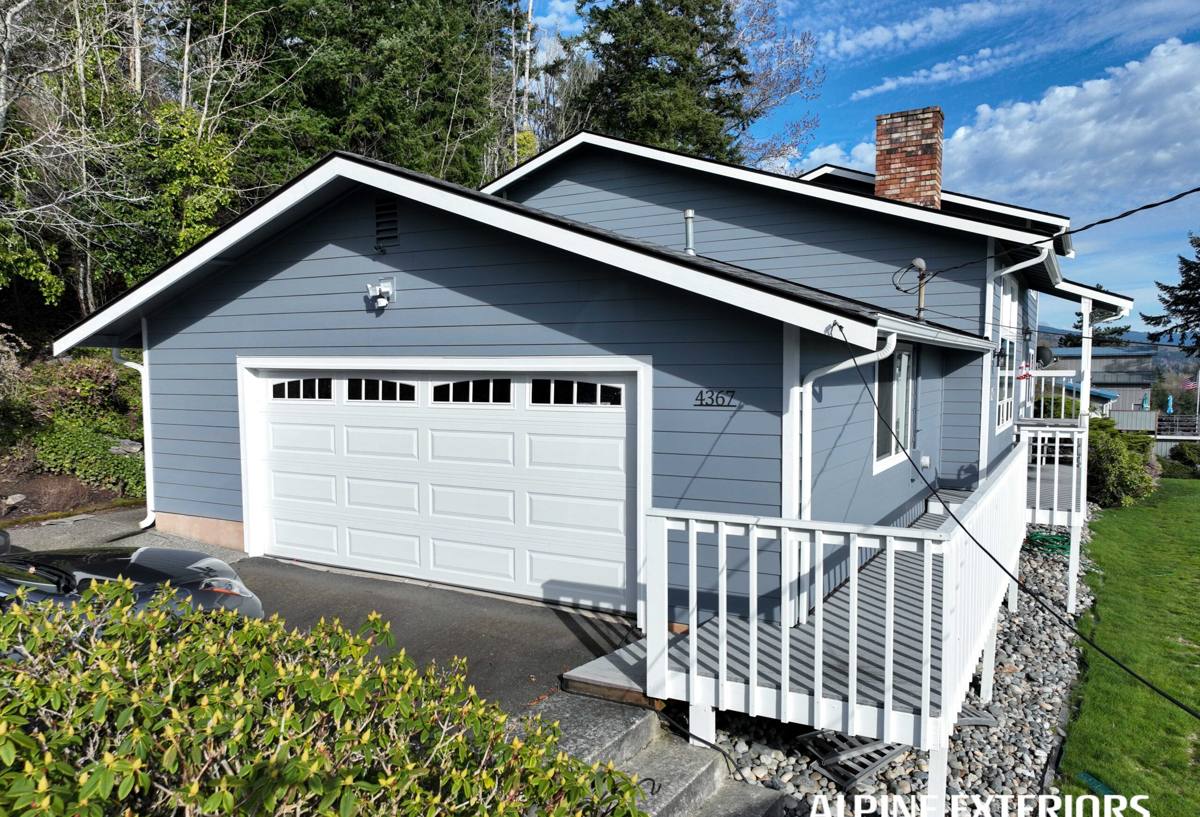
What Salt Air, Rain, and Moss Actually Do to a Roof
Salt Air and Metal Fatigue
Airborne salt accelerates corrosion on anything metal on your roof: nails, flashing, vent caps, and gutter hardware. Galvanized fasteners that would last decades inland can start rusting and backing out years sooner near the water. Once a nail head corrodes and loosens, the shingle or panel it's holding starts to lift, and lifted material is exactly what wind-driven rain needs to get underneath.
Driving Rain and Wind Direction
Rain that falls straight down mostly runs off a healthy roof without issue. Rain that's being pushed sideways by wind off the water behaves differently — it can work its way under shingle tabs, around chimney and vent flashing, and into any gap that a calmer climate would never test. This is why roofs here need flashing details and shingle sealing that are built for wind-driven exposure, not just average rainfall totals.
Moss, Shade, and a Long Wet Season
Whatcom County's moss season runs long — north-facing slopes and roofs shaded by mature trees can stay damp for months at a stretch, which is exactly what moss and algae need to take hold. Moss does more than look bad: its root structure lifts shingle edges, holds water against the roof deck, and channels runoff under laps instead of over them. Left alone through a few wet seasons, moss growth can turn a roof that has years of life left into one with hidden rot underneath.
Signs Your Roof Needs Repair, Not Just a Cleaning
A lot of roof problems in this climate look cosmetic from the ground and turn out to be structural once you get up close. Here's what we tell homeowners to watch for between inspections:
- Dark streaking or thick moss growth concentrated on shaded or north-facing slopes
- Granules collecting in gutters or at the base of downspouts
- Shingles that look cupped, curled, or lifted at the edges, especially after a windy storm
- Rust staining running down from vent pipes, flashing, or metal roof edges
- Soft or spongy spots on the roof deck (often noticeable when walked on)
- Water stains, sagging, or a musty smell in the attic below the roofline
- Daylight visible through the roof deck from inside the attic
- Flashing that's separated from a chimney, skylight, or sidewall
Any one of these on its own might just need attention. Several together, especially near an area with heavy moss buildup, usually means water has already found a way in.
What a Correct Repair Job Involves
Diagnosing Beyond the Visible Symptom
A leak rarely shows up directly above where it enters the roof — water travels along the underlayment or framing before it drips somewhere visible. A repair that just patches the ceiling stain, or the shingle nearest to it, often misses the actual entry point. We trace leaks back to their source, which sometimes means checking flashing, valleys, or vent boots several feet away from where the damage is showing.
Flashing, Fasteners, and Underlayment
Given how hard salt air is on metal here, we pay close attention to flashing condition and fastener corrosion during any repair, not just the shingle itself. If flashing around a chimney, skylight, or wall intersection is corroded or pulling away, replacing just the shingles nearby and leaving the flashing in place is a short-term fix that will leak again. Correct repair means addressing the flashing and underlayment along with the surface material.
Moss Removal Without Damaging the Roof
Pressure washing moss off a roof is one of the fastest ways to strip granules and shorten a roof's life. We remove moss by hand or with low-pressure methods, then treat the area to slow regrowth, rather than blasting it with equipment that does more harm than the moss itself.
Ventilation Matters More Than People Expect
A roof deck that can't breathe stays damp longer after every rain, which feeds moss growth and accelerates rot. Part of a correct repair — especially on an older roof — is checking that attic and roof ventilation is actually working, not just present.
Repair vs. Replacement: How We Help You Decide
Not every roof with damage needs to be replaced, and not every roof that looks rough from the ground is actually failing. We walk homeowners through the real trade-offs rather than defaulting to the bigger job.
| Factor | Leans Toward Repair | Leans Toward Replacement |
|---|---|---|
| Age of roofing material | Under roughly 15 years, isolated damage | Near or past its expected lifespan |
| Extent of damage | Localized (one slope, one flashing point) | Spread across multiple slopes or layers |
| Deck condition | Solid, no soft spots found | Soft, rotted, or delaminating decking |
| Moss/algae history | Recent growth, caught early | Years of untreated growth with granule loss |
| Number of past repairs | First or second repair in this area | Repeated patch jobs in the same spot |
We give an honest answer either way. If a repair will genuinely hold up through the next few wet seasons, that's what we recommend — replacement isn't the goal, a dry, sound roof is.
Our Process for Lummi Nation Roof Repairs
- Inspection. We get on the roof (not just a look from the driveway) and check flashing, fasteners, moss coverage, and the deck itself.
- Diagnosis and plan. We explain what we found, what's causing it, and what fixing it correctly involves — in plain terms, before any work starts.
- Written estimate. You get a clear scope and price before we schedule anything.
- Repair. We address the root cause — flashing, fasteners, decking, and moss — not just the visible symptom.
- Cleanup and walkthrough. We clear debris and show you exactly what was done and why.
Why Local Experience in This Area Matters
A roofing crew that regularly works around Lummi Nation and the surrounding Ferndale shoreline knows what to expect before they climb the ladder: which roof orientations tend to hold moss longest, how much wind exposure a given site typically sees, and what corrosion looks like at three years versus ten in this air. That familiarity shortens the diagnosis and means fewer surprises once work is underway.
It's also worth noting that building and permitting requirements on tribal land can differ from those inside Ferndale city limits or unincorporated Whatcom County. We'll always be upfront if a project needs sign-off from a different authority than usual, rather than assuming one set of rules applies everywhere in the area.
Maintenance That Extends a Repair's Lifespan
A good repair buys you time — how much time depends partly on upkeep afterward. In this climate, that mostly comes down to keeping water moving off the roof instead of sitting on it.
- Clear gutters and downspouts at least twice a year, more often under overhanging trees
- Have moss treated at the first sign of regrowth rather than waiting for a visible mat
- Trim back branches that keep a section of roof shaded and damp
- Check attic ventilation isn't blocked by insulation or debris
- Have the roof looked at after any major windstorm, even if nothing looks obviously wrong
Get a Straight Answer About Your Roof
If you're seeing moss buildup, a stain on a ceiling, or just want a second opinion before winter storms roll in off the water, we're glad to take a look. Fill out the form below for a free, no-pressure estimate — we'll tell you honestly whether you need a repair, and what that repair actually involves.