 Ferndale
 Sandy Point Roofs Take a Different Kind of Beating
Sandy Point sits close enough to the water that its homes deal with a combination of stresses most inland Whatcom County properties never see at the same intensity. Salt-laden air moves through constantly, driving rain comes in sideways off the water during winter storms, and shaded, moisture-heavy lots keep roofs wet longer than roofs just a few miles inland. None of these factors are dramatic on their own. Together, over years, they're what turns a small flashing gap or a handful of lifted shingles into a leak that shows up as a stain on a bedroom ceiling.
A roof repair here isn't just patchwork. It's an assessment of how salt air, wind-driven rain, and moss have interacted with that specific roof over time, and a fix that accounts for all three — not just the symptom that happens to be visible right now.
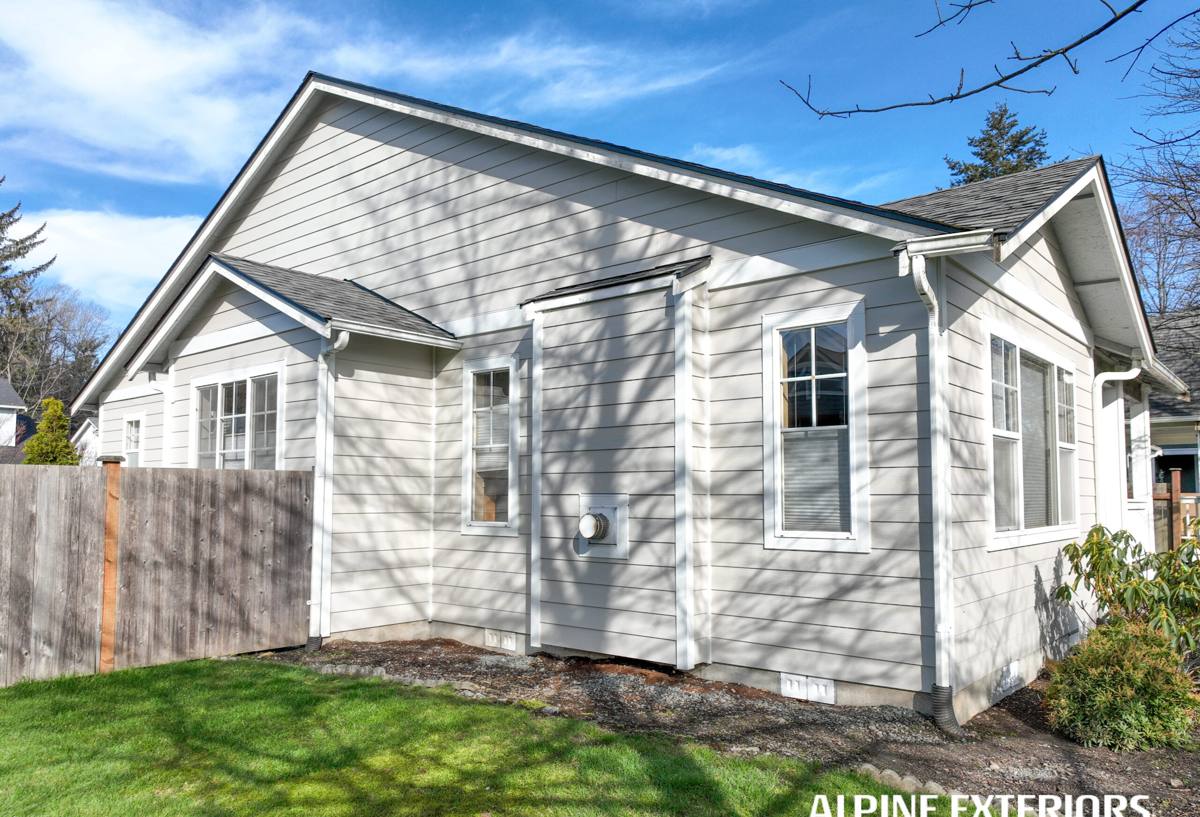
How Salt Air, Rain, and Moss Actually Damage a Roof
Salt Air
Airborne salt accelerates corrosion on exposed metal — flashing, fasteners, gutter hardware, vent boots with metal collars. A fastener that would last decades inland can start weeping rust streaks or losing its grip years earlier near the water. Once a fastener backs out or corrodes through, the seal around it fails, and that's a direct path for water.
Driving Rain
Rain that falls straight down mostly runs off. Rain that's pushed sideways by wind off open water finds every weak point sideways: under shingle tabs, behind poorly lapped flashing, into vent boot seams, and along wall-to-roof transitions. Roofs that would perform fine in calm rain start leaking specifically during wind events, which is why a lot of Sandy Point leaks show up "only when it storms."
Moss and Sustained Moisture
Whatcom County's long wet season means roofs here stay damp for extended stretches, and shaded or north-facing slopes barely dry out at all between fall and spring. Moss and algae take hold in that moisture, and moss does more than look bad — its root structure lifts shingle edges and granules as it grows, and mats of it hold water against the roof surface far longer than bare shingle would. That trapped moisture is what eventually works its way under the roofing material.
Signs a Sandy Point Roof Needs Repair — Not Full Replacement
Most roofs don't fail all at once. They fail in localized spots first, which is exactly why targeted repair makes sense before those spots turn into structural or interior damage. Common signs we look for and that homeowners can watch for between visits:
- Granule buildup in gutters or at downspout outlets, especially after a windy rain
- Dark streaking or green-black patches concentrated on shaded or north-facing slopes
- Curling, cracking, or lifted shingle tabs, particularly on the side of the roof facing prevailing wind and water
- Rust staining around flashing, vent boots, or exposed fasteners
- Soft spots or slight sagging when walked on or viewed from a ladder
- Interior water stains that appear or worsen specifically during storms, not steady rain
- Daylight visible through the roof deck from inside an attic or crawlspace
- Moss or algae growth thick enough that it holds visible moisture a day or more after rain stops
Any one of these, caught early, is usually a repair. Several of them together, especially combined with roof age past 15-20 years, starts to shift the math toward replacement — which is part of why an honest inspection matters more than a quick patch quote.
What a Correct Roof Repair Actually Involves
A repair that holds up in this climate isn't just sealing the visible gap. It generally includes:
1. Finding the Real Entry Point
Water travels before it stains. A ceiling spot in one room can trace back to a flashing failure several feet away, especially with wind-driven rain. We trace the path, not just the symptom, before deciding what to fix.
2. Removing and Replacing Compromised Material
Damaged shingles, deteriorated underlayment, and corroded flashing get removed and replaced — not covered over. Sealing over a rusted flashing or a cracked shingle without replacing it just delays the same failure by a season or two.
3. Correct Flashing and Fastener Work
Given the corrosion risk from salt air, flashing laps and fastener choices matter more here than in a low-exposure area. Proper shingle-over-flashing sequencing and corrosion-appropriate fasteners are part of doing the job right, not an upgrade.
4. Moss and Debris Clearing
Where moss or algae contributed to the damage, it gets cleared from the repair area and, where it makes sense, from the broader roof so it doesn't immediately re-establish over the new work.
5. Matching the Repair to the Existing Roof
Shingle profile, color batch, and exposure are matched as closely as possible so a repair doesn't stand out as an obvious patch and so it performs consistently with the surrounding material.
Repair vs. Replacement: What Actually Drives the Decision
| Factor | Leans Toward Repair | Leans Toward Replacement |
|---|---|---|
| Roof age | Under 15 years | Past 20-25 years, or nearing shingle manufacturer's rated life |
| Extent of damage | Localized — one slope, one flashing point, one leak source | Spread across multiple slopes or recurring in different spots |
| Underlying deck condition | Solid, no soft spots or rot | Soft decking, rot, or repeated water intrusion into the structure |
| Moss/algae history | First significant growth, caught early | Long-term, heavy growth with granule loss across large areas |
| Corrosion of flashing/fasteners | Isolated to one area | Widespread rust staining or failing metal across the roof |
We'll tell you honestly which side of that table your roof falls on. A repair that's likely to need another repair in a year isn't a good use of your money — but plenty of roofs genuinely just need a repair, and we won't push replacement on a roof that doesn't need it.
Our Process for a Sandy Point Repair
- Inspection: We walk the roof (not just a ground-level look) and check attic or interior access points where leaks are suspected, so we're diagnosing the actual source.
- Honest assessment: You get a clear explanation of what's failing, why, and whether it's a repair or a replacement conversation — in plain language, not a sales pitch.
- Written scope and estimate: What's being replaced, what's being resealed, and what materials are used, before any work starts.
- The repair itself: Compromised material removed and replaced, flashing corrected, moss cleared from the work area, and the roof left weather-tight and matched to the surrounding roofing.
- Walkthrough: We show you what was done and what to watch for going forward, especially if moss or algae was a contributing factor.
Why Local Experience in Sandy Point Specifically Matters
A crew that only works a few miles inland doesn't see wind-driven salt spray and prolonged shaded-roof moisture as often as a crew that regularly works Sandy Point and the surrounding Ferndale coastline. That regular exposure matters in a few concrete ways: knowing which slopes on a given lot orientation tend to hold moss longest, recognizing salt-driven corrosion patterns on flashing and fasteners before they become leaks, and understanding how wind direction off the water tends to drive rain into specific roof details. It's the difference between a repair that addresses today's leak and one that also accounts for why this particular roof, in this particular spot, is under more stress than a roof a few miles away.
What to Expect: Timing and Materials
Most localized roof repairs in Sandy Point are completed in a single day, weather permitting — Whatcom County's rain windows mean we schedule with some flexibility rather than forcing a repair into a storm. Materials are matched to the existing roof where possible, and where corrosion resistance matters (flashing, fasteners, vent components), we use materials suited to a coastal-exposure environment rather than defaulting to whatever's cheapest. If moss has been a recurring issue, we'll talk through realistic upkeep — there's no roofing material that's maintenance-free in this climate, and we'd rather tell you that up front than let a roof coating or treatment oversell what it can actually do.
Ready for an Honest Look at Your Roof?
If you're seeing granules in the gutters, a stain that only shows up during windy storms, or moss that's holding water longer than it should, it's worth getting a straight answer before it turns into a bigger repair. We offer a free, no-pressure estimate — walk the roof with us, hear what we find, and decide from there. Use the form below to get started.