 Ferndale
 Building a Deck That Can Actually Handle Sandy Point
Sandy Point sits right up against the water, and that changes what a deck has to survive compared to a deck built a few miles inland in Ferndale or elsewhere in Whatcom County. Homes here take on salt-laden air, wind off the water, driving rain that comes in sideways instead of straight down, and a wet season that stretches long enough to grow moss on almost any horizontal surface that doesn't dry out quickly. A deck built to a generic spec sheet will show its age fast out here. A deck built for this specific exposure will not.
This page is about one job — deck building — in one place: Sandy Point. What follows is how the local conditions should actually shape the materials, the framing, the fasteners, and the maintenance plan for a deck that's meant to last, not just look good on install day.
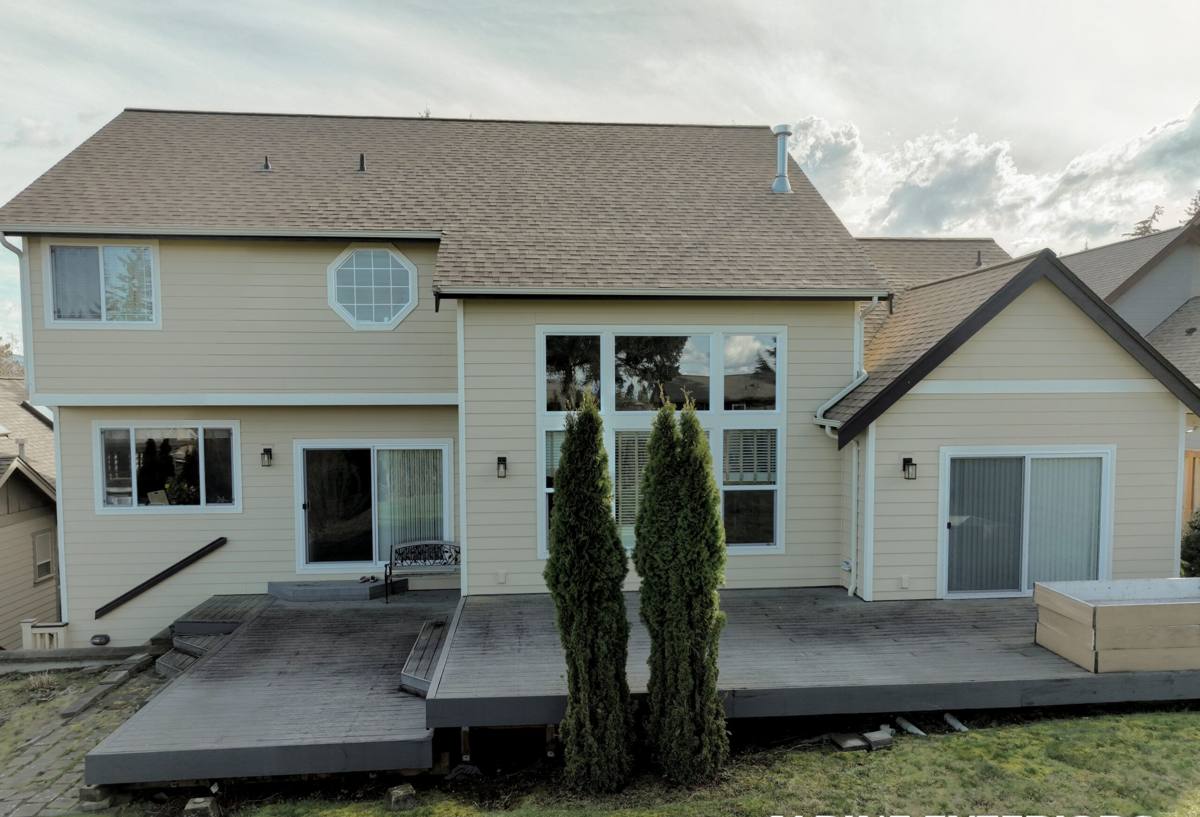
What Salt Air, Wind, and Rain Actually Do to a Deck
Salt air and metal
Airborne salt accelerates corrosion on anything metal — screws, nails, joist hangers, post bases, railing brackets, and bolts. On a deck built inland, standard exterior-rated hardware can hold up fine for decades. On a waterfront lot, the same hardware can start showing rust and pitting years earlier. Once fasteners corrode, they lose holding strength long before the wood or composite around them looks like it's failed, which is exactly why so many deck problems near the water start underneath, out of sight.
Driving rain and water intrusion
Wind-driven rain doesn't just fall on a deck, it gets pushed into every seam, gap, and joint — especially where the deck meets the house at the ledger board. If that connection isn't flashed correctly, water works its way behind the siding and into the house framing, which is a far more expensive problem than anything happening on the deck surface itself. End grain on wood boards is also especially absorbent; any cut end that isn't sealed becomes a place where water sits and rot starts.
Moss, algae, and constant dampness
Whatcom County's wet season runs long, and Sandy Point's proximity to water and tree cover keeps humidity and shade in play even on days it isn't actively raining. Anywhere a deck holds moisture — tight board spacing, low airflow underneath, north-facing or shaded sections — moss and algae move in. Beyond looking bad, wet moss is genuinely slippery and it holds water against the decking surface far longer than open air would, which speeds up rot in wood and can dull or stain composite and PVC products over time.
Choosing a Decking Material for This Coastline
There's no single "best" decking material for every project — it depends on budget, how much upkeep you're willing to do, and how exposed the specific deck location is. Here's how the common options actually perform in a salt-air, high-moisture environment like Sandy Point.
| Material | Salt Air / Corrosion Exposure | Moss & Algae Resistance | Maintenance Needed |
|---|---|---|---|
| Cedar / natural wood | Wood itself doesn't corrode, but fasteners and connectors need to be rated for coastal exposure | Low — needs regular cleaning and sealing to resist growth and moisture uptake | Highest — annual cleaning, periodic sealing or staining, fastener checks |
| Pressure-treated lumber | Treatment resists rot but hardware still needs coastal-rated fasteners | Low to moderate — still porous, still needs cleaning | High — regular cleaning and refinishing over the life of the deck |
| Composite decking | Board material is largely unaffected; connectors and hidden fasteners still need corrosion resistance | Moderate to good, depending on the product's surface finish | Low — periodic washing, no staining or sealing |
| PVC / capped polymer decking | Fully unaffected by salt exposure in the board itself; hardware is still the weak point | Good — non-porous surface sheds moisture and resists staining | Lowest — occasional washing only |
Whatever material you choose, understand that the boards are only part of the equation. Out here, the hardware holding everything together often determines how long a deck actually lasts more than the decking surface does.
Framing, Fasteners, and Hardware: Where Sandy Point Decks Fail First
A correct deck build in this environment means paying attention to the parts that don't show, not just the parts that do.
- Fasteners and connectors: stainless steel or heavy-duty coated fasteners rated for coastal or high-moisture exposure, not standard interior-grade hardware.
- Joist hangers and post bases: corrosion-resistant connectors sized correctly for the load, installed with matching corrosion-resistant nails or screws — mixing metals invites galvanic corrosion.
- Ledger board flashing: proper flashing and waterproofing where the deck attaches to the house, so wind-driven rain can't track behind the siding.
- Post bases off the ground: posts set on standoff bases rather than sitting directly on concrete or soil, keeping end grain away from standing moisture.
- Footing depth: footings dug to the correct depth for the soil and frost conditions, not just poured shallow to save time.
Skipping any of these doesn't usually show up right away. It shows up three, five, or ten years in, as a wobble in the railing, a soft spot near the house, or hardware bleeding rust stains down the face of the boards.
Designing for Drainage and Moss Season
A deck that's designed with drainage in mind will spend a lot less time growing moss and a lot more time actually usable. A few things we build into every deck out here:
Board spacing and airflow
Correct gapping between boards lets water pass through instead of pooling, and keeping the space under the deck ventilated helps everything dry out between storms rather than staying damp for days.
Slope away from the house
Decks should be framed with a slight slope so water runs off and away from the house foundation and siding, rather than pooling against the structure.
Shade and vegetation management
We can't control what's growing near a client's deck, but we do talk homeowners through how nearby trees and shrubs affect drying time and moss growth, since that's an ongoing factor even after the deck is built correctly.
Permits and Site Considerations Near the Water
Deck projects on or near the water in Whatcom County can involve additional permitting considerations beyond a standard inland build — things like setback requirements from the shoreline, height restrictions, or additional review depending on how close the structure sits to the water. Requirements vary by exact site and can change, so we pull the actual permit requirements for each property rather than assuming a Sandy Point job follows the same rules as a deck built elsewhere in Ferndale. Handling that correctly up front avoids delays or rework later.
Soil conditions near the water can also differ from inland lots, which affects how footings are sized and how deep they need to go. This is part of why we assess each site rather than reusing a one-size-fits-all framing plan.
Our Deck-Building Process
- Site visit and assessment: we look at sun and wind exposure, drainage, soil, and how the deck will connect to the house.
- Design and material selection: we walk through material options honestly, including maintenance trade-offs, based on how exposed the specific spot on your property is.
- Permitting: we handle the permit application and make sure the design meets current Whatcom County and local requirements before framing starts.
- Framing and inspection: footings, posts, and framing go in with coastal-rated hardware, and framing is inspected before decking goes down.
- Decking and railing installation: boards, railings, and any stairs are installed with attention to spacing, fastening, and finish detail.
- Final walkthrough: we go over the finished deck with you and explain what maintenance it actually needs going forward, specific to the material you chose.
Why a Crew That Already Works Sandy Point Matters
A contractor who mostly builds decks well inland can still do competent framing, but they may not automatically default to coastal-rated hardware, correct ledger flashing for driving rain, or drainage details suited to a long moss season — because they haven't had to solve those problems repeatedly. A crew that already works this stretch of Whatcom County has already seen what salt air does to standard fasteners over a few winters, already knows how wind off the water affects railing and framing choices, and already understands the permitting path for waterfront and near-waterfront properties in this area. That's fewer surprises for you, and a deck that's built right the first time instead of needing early repairs.
Maintaining a Sandy Point Deck Through the Wet Season
Even a correctly built deck needs some seasonal attention in this climate. A simple maintenance routine goes a long way toward protecting the investment.
- Sweep leaves and debris out of board gaps before fall rains set in, so water keeps draining freely.
- Check for moss or algae buildup on shaded sections and clean it off before it gets slick or holds moisture long-term.
- Inspect visible fasteners, brackets, and railing hardware once a year for early signs of rust or corrosion.
- For wood decks, reapply sealant or stain on the schedule recommended for your specific product — don't wait until it's visibly failing.
- Confirm the deck still slopes properly away from the house and isn't pooling water anywhere.
- Keep gutters and downspouts near the deck clear so runoff isn't dumping extra water onto or under the structure.
None of this is complicated, but skipping it in a climate like this shortens a deck's life a lot faster than it would somewhere drier.
Get a Straight Answer for Your Property
Every lot in Sandy Point sits a little differently — some catch more wind, some more shade, some more direct salt exposure. If you're planning a new deck or need an honest read on what an older one needs, we're happy to come take a look. Fill out the form below for a free, no-pressure estimate.